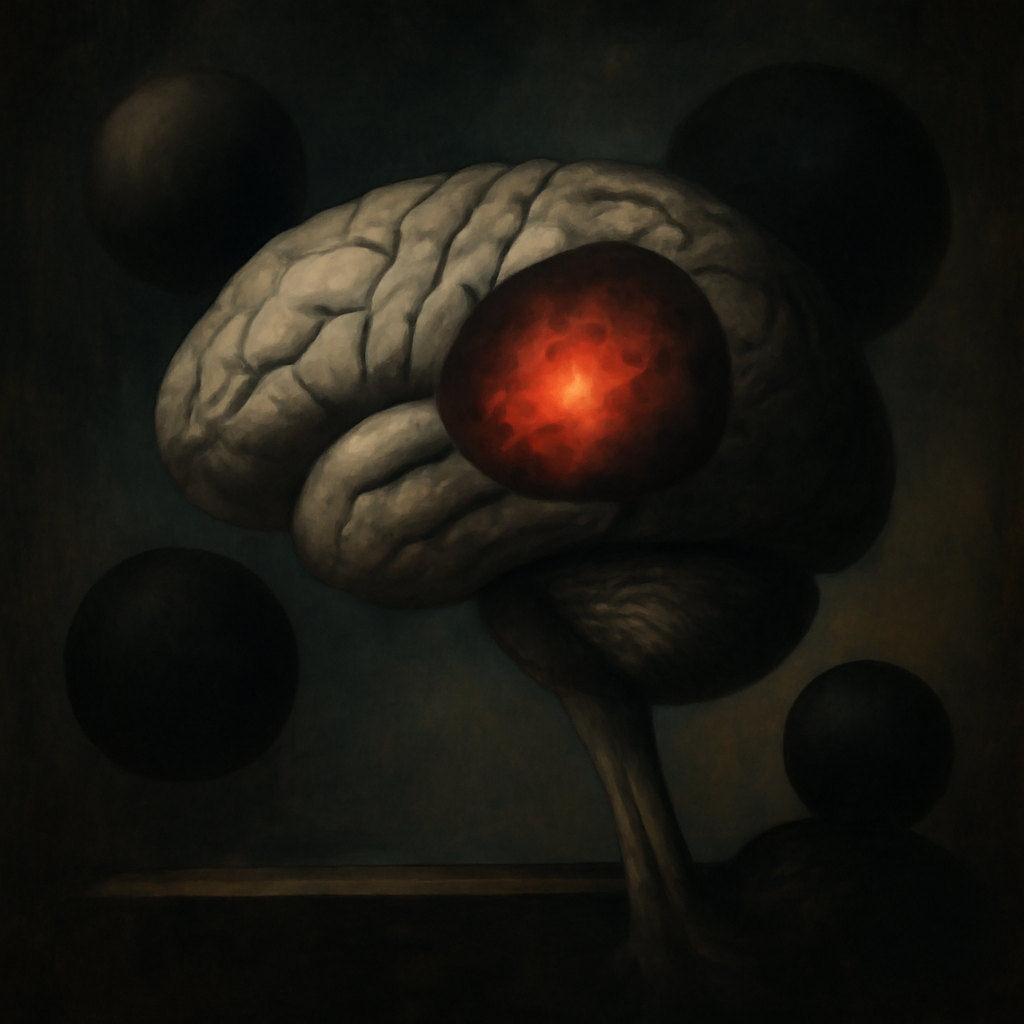
The Brain's Hidden Players in Addiction: Exploring Key Regions
Addiction is not just about willpower or bad choices — it’s a complex condition deeply rooted in the architecture of the brain itself. At the heart of addiction lie three critical brain regions that shape how we seek rewards, manage stress, and control impulses. These are the basal ganglia, the extended amygdala, and the prefrontal cortex. Each plays a distinct role in the cycle of addiction, from the rush of pleasure to the pain of withdrawal, and the relentless craving that follows.
The basal ganglia act as the brain’s reward center, lighting up when we experience pleasure. This area drives the motivation to repeat behaviors that feel good, which drugs hijack by flooding it with dopamine. Meanwhile, the extended amygdala handles stress and the negative feelings that accompany withdrawal, pushing people to seek relief through substances. Finally, the prefrontal cortex is the brain’s decision-maker and self-control hub, often weakened by addiction, leading to poor choices and compulsive drug use. Understanding these parts reveals why addiction is a brain disease, not a moral failing, and why recovery requires more than just willpower.
“Addiction rewires the brain’s reward, stress, and control centers, turning choice into compulsion.”
Reflect
If addiction hijacks the brain’s decision-making circuits, how might understanding this reshape how we treat and support those affected?
Research·3 sources·Well-Established confidence·Investigated 19 Jul 2026(2 months ago)·Grounded; verification trace not recorded·Investigation may be outdated
Your next question, in
Visual Trail
See The Brain's Hidden Players in Addiction: Exploring Key Regions
A guided visual explanation assembled from QE artwork and sourced documentary images.
01 / 02
QE visual interpretation
Frame 01
The Brain's Hidden Players in Addiction: Exploring Key Regions
Addiction involves the basal ganglia, extended amygdala, and prefrontal cortex—key brain areas for reward, stress, and self-control.
Image provenance and limitation
Source: AI-generated visual interpretation
Creator: Question Everything
Limitation: This image explains or evokes the subject. It is not documentary evidence and should not be used to verify a factual claim.
Evidence
What do we know?
Verified claims with confidence scoring and cited sources.
Living footnotes
Claims remain in the reading flow. Select a citation number to inspect the source behind it.
01
AcademicSupported
The basal ganglia control the rewarding effects of substance use and contribute to habitual drug taking.
The basal ganglia are deep brain structures that play a central role in the brain’s reward system. When a person uses drugs, this area responds by releasing dopamine, a neurotransmitter associated with pleasure and motivation. Over time, repeated drug use changes the basal ganglia, making drug-seeking behaviors more automatic and habitual, often overriding other activities and desires. This shift is why addiction feels compulsive and difficult to control.
02
AcademicSupported
The extended amygdala is involved in the negative emotional states associated with drug withdrawal and stress.
Addiction is not just about chasing pleasure; it’s also about avoiding discomfort. The extended amygdala processes stress, anxiety, and irritability that emerge during withdrawal from substances. This brain region becomes more sensitive with continued drug use, which can drive a person to use again just to relieve these unpleasant feelings instead of to get high. This cycle of negative reinforcement is a powerful force that fuels addiction's persistence.
03
AcademicSupported
The prefrontal cortex is responsible for executive functions like decision-making and impulse control, which are impaired in addiction.
The prefrontal cortex acts as the brain’s control center. It helps us plan, weigh consequences, and regulate impulses. In addiction, this area is compromised, weakening a person’s ability to resist urges and make rational decisions about drug use. This impairment makes it hard to stop despite knowing the harmful effects. Moreover, this area is the last part of the brain to fully mature, which partly explains why adolescents are especially vulnerable to addiction.
The complete record below preserves every citation, confidence input and recorded limitation.
Read the full evidence record3 findings · citations · limitations
Evidence review3 findings3 openable sources
01
Finding 1 of 3Academic
1
0/1 verified
The basal ganglia control the rewarding effects of substance use and contribute to habitual drug taking.
The basal ganglia are deep brain structures that play a central role in the brain’s reward system. When a person uses drugs, this area responds by releasing dopamine, a neurotransmitter associated with pleasure and motivation. Over time, repeated drug use changes the basal ganglia, making drug-seeking behaviors more automatic and habitual, often overriding other activities and desires. This shift is why addiction feels compulsive and difficult to control.
Supportedmodel score 98%
One source, not peer-reviewed. Thinner than the score suggests.
REFERENCE
›View sources and limits— 1 citation, limits
Supporting passage
The basal ganglia are deep brain structures that play a central role in the brain’s reward system. When a person uses drugs, this area responds by releasing dopamine, a neurotransmitter associated with pleasure and motivation. Over time, repeated drug use changes the basal ganglia, making drug-seeking behaviors more automatic and habitual, often overriding other activities and desires. This shift is why addiction feels compulsive and difficult to control.
Rests on a single source. No independent corroboration.
No peer-reviewed source among the citations.
The generator scored this 98%, which would read as “Established”. Its citations reach only “Supported”, so that is what is shown.
02
Finding 2 of 3Academic
1
0/1 verified
The extended amygdala is involved in the negative emotional states associated with drug withdrawal and stress.
Addiction is not just about chasing pleasure; it’s also about avoiding discomfort. The extended amygdala processes stress, anxiety, and irritability that emerge during withdrawal from substances. This brain region becomes more sensitive with continued drug use, which can drive a person to use again just to relieve these unpleasant feelings instead of to get high. This cycle of negative reinforcement is a powerful force that fuels addiction's persistence.
Supportedmodel score 95%
One source, not peer-reviewed. Thinner than the score suggests.
REFERENCE
›View sources and limits— 1 citation, limits
Supporting passage
Addiction is not just about chasing pleasure; it’s also about avoiding discomfort. The extended amygdala processes stress, anxiety, and irritability that emerge during withdrawal from substances. This brain region becomes more sensitive with continued drug use, which can drive a person to use again just to relieve these unpleasant feelings instead of to get high. This cycle of negative reinforcement is a powerful force that fuels addiction's persistence.
Rests on a single source. No independent corroboration.
No peer-reviewed source among the citations.
The generator scored this 95%, which would read as “Established”. Its citations reach only “Supported”, so that is what is shown.
03
Finding 3 of 3Academic
1
0/1 verified
The prefrontal cortex is responsible for executive functions like decision-making and impulse control, which are impaired in addiction.
The prefrontal cortex acts as the brain’s control center. It helps us plan, weigh consequences, and regulate impulses. In addiction, this area is compromised, weakening a person’s ability to resist urges and make rational decisions about drug use. This impairment makes it hard to stop despite knowing the harmful effects. Moreover, this area is the last part of the brain to fully mature, which partly explains why adolescents are especially vulnerable to addiction.
Supportedmodel score 97%
One source, not peer-reviewed. Thinner than the score suggests.
REFERENCE
›View sources and limits— 1 citation, limits
Supporting passage
The prefrontal cortex acts as the brain’s control center. It helps us plan, weigh consequences, and regulate impulses. In addiction, this area is compromised, weakening a person’s ability to resist urges and make rational decisions about drug use. This impairment makes it hard to stop despite knowing the harmful effects. Moreover, this area is the last part of the brain to fully mature, which partly explains why adolescents are especially vulnerable to addiction.
Enter a viewpoint. Notice what it reveals, what it leaves out, and whether it changes the question for you.
The EmpiricistScientific viewpointEstablished lens
From a neuroscience perspective, addiction is a chronic brain disease that alters key circuits involved in reward, stress, and self-control. Research shows that these brain changes are long-lasting and affect behavior deeply. This explains why addiction is not simply a matter of poor choices but involves real neurobiological shifts that require targeted treatment and support.
What this lens notices
01Addiction involves neuroadaptations in the basal ganglia, extended amygdala, and prefrontal cortex.
02Dopamine plays a central role in reinforcing drug use by modifying reward pathways.
03Impairment in executive function reduces impulse control and decision-making ability.
Application
Why does this matter to you?
Personal reflections and applications for your life.
Thought experimentSelf-Reflection
How might understanding addiction as a brain disease change your view of people struggling with it?
Why it changes the question
Recognizing that addiction involves real changes in brain areas controlling reward and self-control can foster empathy. It reminds us that addiction is not simply a choice or flaw but a medical condition requiring support.
Try this
Try reading stories or watching documentaries about addiction that focus on neuroscience and recovery to deepen your understanding.
Media
QE Smart Glass
Curated media selected for this investigation.
QE Glass
YOUTUBE
What causes addiction, and why is it so hard to treat? - Judy Grisel
TED-Ed
Take a look at the science of how addictive drugs affect your body and why substance addiction can be so difficult to treat. -- As of ...
QE Glass
YOUTUBE
Drug Addiction and the Brain
Professor Dave Explains
We are able to become physically dependent on a wide variety of substances, which results in what we call drug addiction.
QE Glass
YOUTUBE
Addiction Neuroscience 101
The Science of Addiction
This is an overview of the neurobiology of addiction References below ...
QE Glass
YOUTUBE
5.1 What Is the Basic Neurobiology of Recovery? – Addiction Treatment Course
YaleCourses
How does the brain heal from addiction? This lesson explores the remarkable concept of neuroplasticity and how lifestyle ...
QE Glass
YOUTUBE
How an Addicted Brain Works
Yale Medicine
For more information on addiction services at #YaleMedicine, visit: ...
QE Glass
YOUTUBE
Addiction And The Brain
Franciscan Health
Addiction is a treatable brain disorder that is based in the inability to control impulses. It is not a moral failing or an individual ...
QE Glass
PODCAST
Radiolab: Addiction and the Brain
Radiolab
An investigative episode exploring addiction’s impact on the brain and human behavior.
Keep Going
Where this leads
Questions this investigation opens up — and what QE has already looked into.
No AI help here — no suggestions, no autocomplete, nothing finishing your sentences. That is deliberate. Working out what you think is effortful, and the effort is the part that changes you: reasoning is trained like a muscle, and a muscle that is always carried gets weaker. Let something else do the thinking and you keep the answer but lose the capacity to have reached it.
Write your current position.
Not what the page says. What you think, having read it.0 words · Nothing written yet.
Sign in to leave a mark. Your draft is saved here in the meantime.