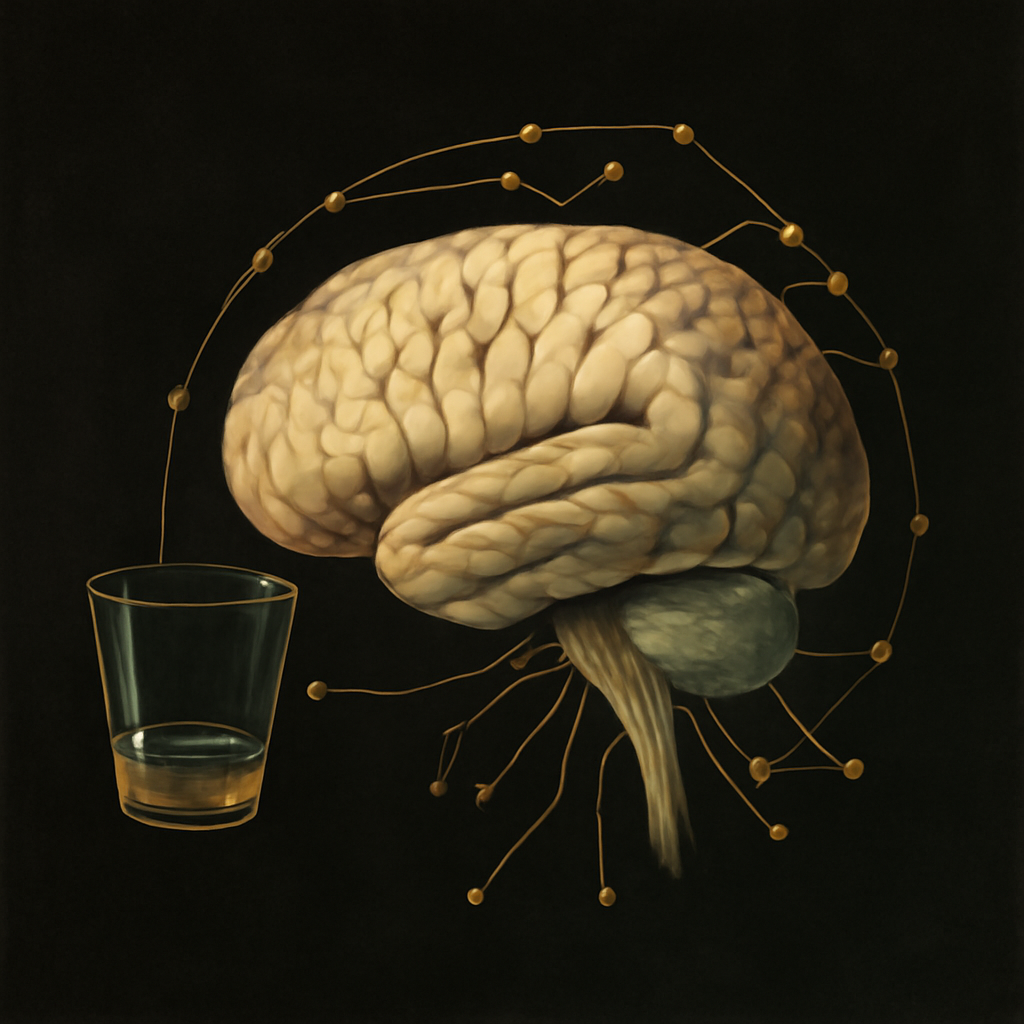
The Great Rewire: What Happens When You Quit Alcohol
Think of your brain like a busy house party. Alcohol acts like a heavy blanket, quietening the noise by slowing down your brain cells. To fight this sleepiness, your brain adapts by turning its inner volume dial all the way up. When you suddenly stop drinking, that heavy blanket is ripped away. Instantly, the volume is deafening. This sudden rush of brain activity is why you feel anxious, sweaty, and unable to sleep in the first few days. It is your brain's electrical grid running dangerously hot.
But then, a quiet miracle happens. Within a couple of weeks, your brain begins to rewire itself. It dials down the noise and starts repairing damaged areas, like a garden growing back after a storm. The chemical receptors that let you feel joy from simple things—like a good meal—slowly wake up again. Over months, your brain actually regrows physical volume, clearing the mental fog.
✨
Wonder Moment
“Within just two weeks of quitting alcohol, the brain's gray matter begins to physically grow back and repair the shrinkage caused by drinking.”
Reflect
If our brains can literally rebuild their physical structure once we stop harming them, what other hidden powers of self-repair are waiting to be unlocked inside us?
1 source·Developing confidence·Investigated 19 Aug 2026(8 days ago)·Source-verified·May need refresh
Your next question, in
Visual Trail
See The Great Rewire: What Happens When You Quit Alcohol
A guided visual explanation assembled from QE artwork and sourced documentary images.
01 / 02
QE visual interpretation
Frame 01
The Great Rewire: What Happens When You Quit Alcohol
Your brain first goes into overdrive, but soon rewires itself, regrowing lost tissue and bringing back natural feelings of joy.
Image provenance and limitation
Source: AI-generated visual interpretation
Creator: Question Everything
Limitation: This image explains or evokes the subject. It is not documentary evidence and should not be used to verify a factual claim.
Evidence
What do we know?
Verified claims with confidence scoring and cited sources.
2 of 3 findings need extra caution. Finding 1, Finding 3 rest on weaker sourcing than the other findings.
Living footnotes
Claims remain in the reading flow. Select a citation number to inspect the source behind it.
01
ObservationalNot confirmed
Brain matter starts growing back within two weeks of stopping alcohol.
When you drink heavily, your brain actually shrinks. But once you stop, the recovery is incredibly fast. Researchers found that the brain's gray matter—the part that helps you think and process info—starts growing back and repairing itself within just fourteen days of your last drink. It is like a bruised plant finally getting fresh water and springing back to life.
02
ObservationalSupported
Sudden alcohol withdrawal causes the brain to become dangerously overstimulated like a speeding car with no brakes.
Alcohol acts like a heavy brake pedal on your brain, slowing down its chemical signals. To cope, your brain revs its engine harder to stay awake. If you suddenly take away the alcohol, that revved-up engine has no brakes. This causes extreme overstimulation, leading to shakes, sweating, and anxiety starting within five to ten hours. In severe cases, it can trigger life-threatening confusion.
03
ExperimentalNot confirmed
Stopping alcohol allows the hippocampus to regenerate and restore memory functions.
Years of heavy drinking can shrink the hippocampus, which is the brain's main filing cabinet for memories. This is why long-term drinkers often struggle to remember things. When you quit, this vital area begins to heal and grow new cells. This healing process restores your brain volume and helps you regain your memory, focus, and ability to learn new things.
The complete record below preserves every citation, confidence input and recorded limitation.
Read the full evidence record3 findings · citations · limitations
Evidence review3 findings1 openable sources
01
Finding 1 of 3ObservationalNeeds caution
0/0 verified
Brain matter starts growing back within two weeks of stopping alcohol.
When you drink heavily, your brain actually shrinks. But once you stop, the recovery is incredibly fast. Researchers found that the brain's gray matter—the part that helps you think and process info—starts growing back and repairing itself within just fourteen days of your last drink. It is like a bruised plant finally getting fresh water and springing back to life.
Not confirmedmodel score 30%
Scored as if sourced, but every citation failed verification.
NO SURVIVING CITATION
›View sources and limits— limits
Supporting passage
When you drink heavily, your brain actually shrinks. But once you stop, the recovery is incredibly fast. Researchers found that the brain's gray matter—the part that helps you think and process info—starts growing back and repairing itself within just fourteen days of your last drink. It is like a bruised plant finally getting fresh water and springing back to life.
Citations (0 of 1 survived verification)
Nothing openable. Every citation was removed by provenance validation.
What limits this
All 1 citation on this claim failed verification and were removed. Nothing openable supports it.
02
Finding 2 of 3Observational
0/1 verified
Sudden alcohol withdrawal causes the brain to become dangerously overstimulated like a speeding car with no brakes.
Alcohol acts like a heavy brake pedal on your brain, slowing down its chemical signals. To cope, your brain revs its engine harder to stay awake. If you suddenly take away the alcohol, that revved-up engine has no brakes. This causes extreme overstimulation, leading to shakes, sweating, and anxiety starting within five to ten hours. In severe cases, it can trigger life-threatening confusion.
Supportedmodel score 95%
One source, not peer-reviewed. Thinner than the score suggests.
REFERENCE
›View sources and limits— 1 citation, limits
Supporting passage
Alcohol acts like a heavy brake pedal on your brain, slowing down its chemical signals. To cope, your brain revs its engine harder to stay awake. If you suddenly take away the alcohol, that revved-up engine has no brakes. This causes extreme overstimulation, leading to shakes, sweating, and anxiety starting within five to ten hours. In severe cases, it can trigger life-threatening confusion.
Rests on a single source. No independent corroboration.
No peer-reviewed source among the citations.
The generator scored this 95%, which would read as “Established”. Its citations reach only “Supported”, so that is what is shown.
03
Finding 3 of 3ExperimentalNeeds caution
0
0/0 verified
Stopping alcohol allows the hippocampus to regenerate and restore memory functions.
Years of heavy drinking can shrink the hippocampus, which is the brain's main filing cabinet for memories. This is why long-term drinkers often struggle to remember things. When you quit, this vital area begins to heal and grow new cells. This healing process restores your brain volume and helps you regain your memory, focus, and ability to learn new things.
Not confirmedmodel score 30%
Scored as if sourced, but every citation failed verification.
NO SURVIVING CITATION
›View sources and limits— limits
Supporting passage
Years of heavy drinking can shrink the hippocampus, which is the brain's main filing cabinet for memories. This is why long-term drinkers often struggle to remember things. When you quit, this vital area begins to heal and grow new cells. This healing process restores your brain volume and helps you regain your memory, focus, and ability to learn new things.
Citations (0 of 1 survived verification)
Nothing openable. Every citation was removed by provenance validation.
What limits this
All 1 citation on this claim failed verification and were removed. Nothing openable supports it.
The reference archive
Sources & Further Reading
Continue exploring the research, reporting and reference material available on this subject.
These were found while researching this question but are not used as evidence for any claim above.
These visualizations respond to your curiosity. Interact to go deeper.
process flow
The Brain's Healing Timeline
5 to 10 Hours
2 Weeks
1 Month
1 Year
statistics card
Alcohol's Impact by the Numbers
1 in 20
Severe withdrawal cases
Only about 5% of people experiencing alcohol withdrawal develop delirium tremens, a dangerous state of confusion.
14 Days
Time to start regrowing gray matter
The brain's physical repair of gray matter begins incredibly fast once alcohol is removed.
Perspectives
How is this interpreted?
Enter a viewpoint. Notice what it reveals, what it leaves out, and whether it changes the question for you.
The EmpiricistScientific viewpointLive tension
Scientists view addiction through a biological lens, showing that alcohol physically rewires the brain's reward networks. Chronic drinking damages the pathways we use for self-control and decision-making, making it incredibly hard to quit without help. By studying how the brain heals over time, researchers can develop better medical treatments to help people rebuild these broken neural circuits and find their balance again.
What this lens notices
01Brain scans show physical damage to decision-making areas.
02Neurotransmitters become severely unbalanced during heavy use.
03Medical treatments can stabilize brain chemistry during detox.
Application
Why does this matter to you?
Personal reflections and applications for your life.
Thought experimentSelf-Reflection
What are you running from?
Why it changes the question
When you feel a strong urge to drink or distract yourself, stop and ask what feeling you are trying to escape. Understanding your triggers is the first step to changing how your brain reacts to stress.
Try this
Write down the exact times of day you crave a drink, and note down what you were feeling right before that craving hit.
Media
QE Smart Glass
Curated media selected for this investigation.
QE Glass
YOUTUBE
What Happens to Your Brain After You Quit Alcohol
Dopaminedial
The initial 72 hours after quitting alcohol can be extremely challenging, with intense withdrawal symptoms as the brain adapts to ...
QE Glass
YOUTUBE
What Happens When You Quit Alcohol?
AsapSCIENCE
Today we are going to explain EXACTLY what happens to your brain and body when you try to quit alcohol! FOLLOW US!
No AI help here — no suggestions, no autocomplete, nothing finishing your sentences. That is deliberate. Working out what you think is effortful, and the effort is the part that changes you: reasoning is trained like a muscle, and a muscle that is always carried gets weaker. Let something else do the thinking and you keep the answer but lose the capacity to have reached it.
Write your current position.
Not what the page says. What you think, having read it.0 words · Nothing written yet.
Sign in to leave a mark. Your draft is saved here in the meantime.