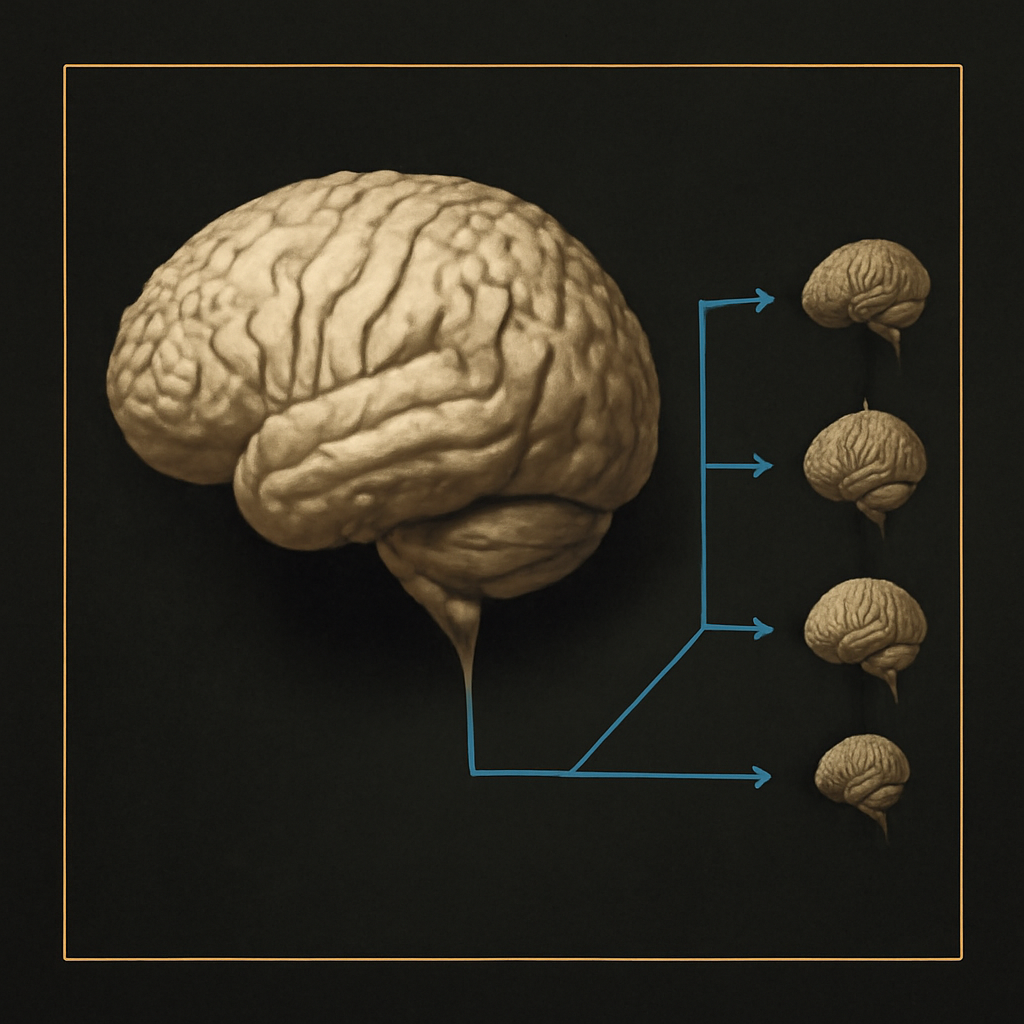
Rewiring the Mind: The Timeline of Brain Recovery from Addiction
Think of a brain on addiction like a stereo played at maximum volume for years. The speakers blow out. When you stop, the silence is deafening. This silence is the crash of dopamine—the brain's feel-good chemical—making everyday life feel completely grey and flat. But the brain is incredibly resilient. It immediately starts a massive cleanup operation. Within the first few weeks, the physical toxins clear out, but the real work of rebuilding the brain's internal communication lines is just beginning.
It takes about fourteen months of sobriety for the brain’s reward system to mostly reset. During this time, the brain slowly rebuilds its receptors, like a trampled lawn growing back its green grass. By the two-year mark, brain scans show that decision-making areas look almost identical to someone who never struggled with addiction. It is a physical healing process, proving recovery requires time, not just willpower.
✨
Wonder Moment
“Even after severe drug use, the human brain can almost completely rebuild its damaged pleasure centers in about fourteen months.”
Reflect
If our brains have such a powerful ability to rebuild themselves after damage, what other habits or patterns could we completely rewrite with enough time?
1 source·Developing confidence·Investigated 19 Aug 2026(8 days ago)·Source-verified·May need refresh
Your next question, in
Visual Trail
See Rewiring the Mind: The Timeline of Brain Recovery from Addiction
A guided visual explanation assembled from QE artwork and sourced documentary images.
01 / 02
QE visual interpretation
Frame 01
Rewiring the Mind: The Timeline of Brain Recovery from Addiction
It takes about 14 months to two years for the brain's chemistry and decision-making areas to physically heal and reset after addiction.
Image provenance and limitation
Source: AI-generated visual interpretation
Creator: Question Everything
Limitation: This image explains or evokes the subject. It is not documentary evidence and should not be used to verify a factual claim.
Evidence
What do we know?
Verified claims with confidence scoring and cited sources.
2 of 3 findings need extra caution. Finding 1, Finding 2 rest on weaker sourcing than the other findings.
Living footnotes
Claims remain in the reading flow. Select a citation number to inspect the source behind it.
01
ObservationalNot confirmed
Brain scans show that damaged reward systems can return to nearly normal levels after fourteen months of sobriety.
When someone uses heavy stimulants like methamphetamine, it wipes out the brain's natural pleasure docks. But science shows our bodies can heal. Brain scans of people recovering from meth show that after just one month of staying clean, the brain is still very quiet and damaged. But by month fourteen, the brain's pleasure pathways look almost identical to a healthy brain that has never used drugs.
02
ExperimentalNot confirmed
Heavy methamphetamine users require between fourteen and twenty-four months of abstinence to show normal brain activity.
Different drugs damage the brain in different ways, meaning recovery speeds vary. For people recovering from strong stimulants like meth, the wait for normal brain function is quite long. Researchers found it takes between fourteen and twenty-four months of staying clean for their brain activity to look like someone who has never used. This shows that while the brain is highly resilient, deep rewiring is a slow, gradual journey.
03
ObservationalSupported
The brain's decision-making center requires six to twelve months of sobriety to show significant improvement.
Addiction heavily damages the prefrontal cortex, which is the brain's front section responsible for making choices and resisting temptation. Without it working well, saying no is incredibly hard. Data shows it takes about six to twelve months of recovery for this area to start working properly again. Once this healing happens, making healthy choices and managing daily stress becomes much easier because the brain's brakes are finally working.
The complete record below preserves every citation, confidence input and recorded limitation.
Read the full evidence record3 findings · citations · limitations
Evidence review3 findings1 openable sources
01
Finding 1 of 3ObservationalNeeds caution
0/0 verified
Brain scans show that damaged reward systems can return to nearly normal levels after fourteen months of sobriety.
When someone uses heavy stimulants like methamphetamine, it wipes out the brain's natural pleasure docks. But science shows our bodies can heal. Brain scans of people recovering from meth show that after just one month of staying clean, the brain is still very quiet and damaged. But by month fourteen, the brain's pleasure pathways look almost identical to a healthy brain that has never used drugs.
Not confirmedmodel score 30%
Scored as if sourced, but every citation failed verification.
NO SURVIVING CITATION
›View sources and limits— limits
Supporting passage
When someone uses heavy stimulants like methamphetamine, it wipes out the brain's natural pleasure docks. But science shows our bodies can heal. Brain scans of people recovering from meth show that after just one month of staying clean, the brain is still very quiet and damaged. But by month fourteen, the brain's pleasure pathways look almost identical to a healthy brain that has never used drugs.
Citations (0 of 1 survived verification)
Nothing openable. Every citation was removed by provenance validation.
What limits this
All 1 citation on this claim failed verification and were removed. Nothing openable supports it.
02
Finding 2 of 3ExperimentalNeeds caution
0
0/0 verified
Heavy methamphetamine users require between fourteen and twenty-four months of abstinence to show normal brain activity.
Different drugs damage the brain in different ways, meaning recovery speeds vary. For people recovering from strong stimulants like meth, the wait for normal brain function is quite long. Researchers found it takes between fourteen and twenty-four months of staying clean for their brain activity to look like someone who has never used. This shows that while the brain is highly resilient, deep rewiring is a slow, gradual journey.
Not confirmedmodel score 30%
Scored as if sourced, but every citation failed verification.
NO SURVIVING CITATION
›View sources and limits— limits
Supporting passage
Different drugs damage the brain in different ways, meaning recovery speeds vary. For people recovering from strong stimulants like meth, the wait for normal brain function is quite long. Researchers found it takes between fourteen and twenty-four months of staying clean for their brain activity to look like someone who has never used. This shows that while the brain is highly resilient, deep rewiring is a slow, gradual journey.
Citations (0 of 1 survived verification)
Nothing openable. Every citation was removed by provenance validation.
What limits this
All 1 citation on this claim failed verification and were removed. Nothing openable supports it.
03
Finding 3 of 3Observational
0/1 verified
The brain's decision-making center requires six to twelve months of sobriety to show significant improvement.
Addiction heavily damages the prefrontal cortex, which is the brain's front section responsible for making choices and resisting temptation. Without it working well, saying no is incredibly hard. Data shows it takes about six to twelve months of recovery for this area to start working properly again. Once this healing happens, making healthy choices and managing daily stress becomes much easier because the brain's brakes are finally working.
Supportedmodel score 80%
One source, not peer-reviewed. Thinner than the score suggests.
REFERENCE
›View sources and limits— 1 citation, limits
Supporting passage
Addiction heavily damages the prefrontal cortex, which is the brain's front section responsible for making choices and resisting temptation. Without it working well, saying no is incredibly hard. Data shows it takes about six to twelve months of recovery for this area to start working properly again. Once this healing happens, making healthy choices and managing daily stress becomes much easier because the brain's brakes are finally working.
These visualizations respond to your curiosity. Interact to go deeper.
timeline
The Brain's Healing Timeline
Loading timeline…
statistics card
Brain Recovery by the Numbers
14 Months
Meth Dopamine Recovery
The time needed for dopamine receptors to return to near-normal levels.
6-12 Months
Frontal Cortex Healing
The window when logical decision-making and self-control start to recover.
2-5 Years
Complete Brain Rewiring
The overall time required for deep, lasting neural pathways to fully stabilize.
Perspectives
How is this interpreted?
Enter a viewpoint. Notice what it reveals, what it leaves out, and whether it changes the question for you.
The EmpiricistScientific viewpointLive tension
Medical experts view addiction as a chronic brain disease, not a lack of willpower. Over time, drugs physically alter the brain's wiring, shifting control from the logical front brain to the habit-driven deep brain. Healing is a biological process of growing new pathways. Just like healing a broken leg, the brain simply needs time, the right environment, and professional support to rebuild its physical structures.
Personal reflections and applications for your life.
Thought experimentBehavioural
How can you break a bad habit by changing your daily environment?
Why it changes the question
The brain associates physical spaces with specific habits, making triggers hard to resist. Changing your surroundings helps weaken these old pathways and makes new habits easier to form.
Try this
Identify one bad habit and change the physical environment where it happens, like keeping your phone in another room overnight.
Media
QE Smart Glass
Curated media selected for this investigation.
QE Glass
YOUTUBE
Alcohol Addiction: How To Detox & Begin Recovery | Stanford
Stanford Center for Health Education
In this video, Dr. Anna Lembke explains what it's like to detox from alcohol and begin the recovery process. She describes how to ...
QE Glass
YOUTUBE
Can The Brain Recover From Addiction
Brief Brain Snacks
In this episode, Can The Brain Recover From Addiction, we explore the brain's recovery from addiction to substances, like opioids ...
QE Glass
YOUTUBE
How To Rewire Your Brain After Addiction (Science-Backed & Real Talk)
Recovered On Purpose
Wondering how to rewire your brain from addiction—and whether it's even possible? In this video, I break down the science of ...
QE Glass
YOUTUBE
Can Your Brain Heal From Long Term Benzodiazepine Use?
The Coleman Institute for Addiction Medicine
Dr. Peter Coleman, who is Board-certified in Addiction Medicine and has been in recovery from opioid use himself since 1984, ...
QE Glass
YOUTUBE
Overcome Addiction | 174Hz + 40Hz + 741Hz Full Body & Brain Detox | Remove Toxins | Frequency Music
Inner Lotus Music
Support your brain, your body and your mind in its natural detoxification and addiction healing process. Improve your mental and ...
QE Glass
YOUTUBE
Do People in Recovery Have to Live With Low Dopamine Levels?
The Coleman Institute for Addiction Medicine
Dr. Peter Coleman, who is Board-certified in Addiction Medicine and has been in recovery from opioid use himself since 1984, ...
QE Glass
YOUTUBE
Drug Addiction and the Brain
Professor Dave Explains
We are able to become physically dependent on a wide variety of substances, which results in what we call drug addiction.
QE Glass
PODCAST
Understanding and Treating Addiction
Huberman Lab
A deep but accessible look into the dopamine system, brain plasticity, and scientific tools to help rewire the brain.
Connected context
Connected entities
The people, places, concepts, and events that matter here.
Keep Going
Where this leads
Questions this investigation opens up — and what QE has already looked into.
No AI help here — no suggestions, no autocomplete, nothing finishing your sentences. That is deliberate. Working out what you think is effortful, and the effort is the part that changes you: reasoning is trained like a muscle, and a muscle that is always carried gets weaker. Let something else do the thinking and you keep the answer but lose the capacity to have reached it.
Write your current position.
Not what the page says. What you think, having read it.0 words · Nothing written yet.
Sign in to leave a mark. Your draft is saved here in the meantime.