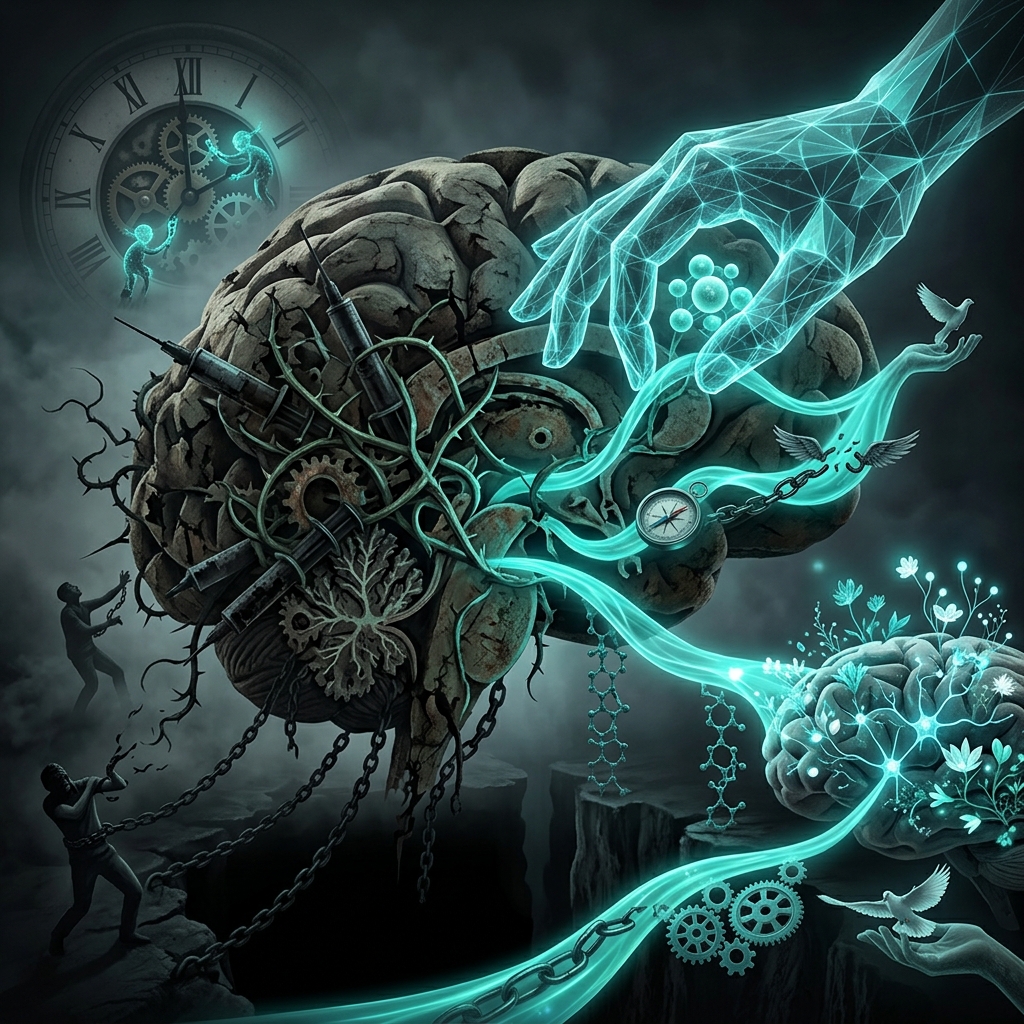
Rewiring the Addicted Brain: Scientific Paths to Recovery
The human brain is a masterpiece of natural engineering. Yet, when confronted with highly addictive substances, its delicate circuits can be hijacked. The prefrontal cortex—our inner compass for decision-making and self-control—weakens under the weight of chronic drug use. This is a biological struggle, not a moral failure. To break this cycle, modern science offers practical tools that reshape how we think, react, and live.
Recovery is a journey of active rewiring. It begins with changing our immediate environment and learning to navigate intense cravings. Techniques like urge surfing teach us to ride out the waves of desire rather than fighting them. Behavioral therapies, alongside targeted medications, provide the scaffolding needed to rebuild. Step by step, the brain's natural plasticity allows it to heal, restoring control to the individual.
“The human brain is so adaptable that even after severe damage from chronic substance use, the prefrontal cortex can physically rebuild its pathways during recovery.”
Reflect
If our brains can physically reshape themselves in response to how we think and behave, what positive habits could you feed your brain today to build a stronger mind tomorrow?
Research·4 sources·Well-Established confidence·Investigated 23 Jul 2026(1 month ago)·Grounded; verification trace not recorded·Investigation may be outdated
Your next question, in
Visual Trail
See Rewiring the Addicted Brain: Scientific Paths to Recovery
A guided visual explanation assembled from QE artwork and sourced documentary images.
01 / 02
QE visual interpretation
Frame 01
Rewiring the Addicted Brain: Scientific Paths to Recovery
Overcoming addiction relies on rewiring the brain through behavioral therapy, environmental changes, and learning to ride out cravings.
Image provenance and limitation
Source: AI-generated visual interpretation
Creator: Question Everything
Limitation: This image explains or evokes the subject. It is not documentary evidence and should not be used to verify a factual claim.
Evidence
What do we know?
Verified claims with confidence scoring and cited sources.
Living footnotes
Claims remain in the reading flow. Select a citation number to inspect the source behind it.
01
ObservationalSupported
The psychological technique of urge surfing helps individuals ride out drug cravings without fighting or judging them.
Cravings are like waves in the ocean. Many people try to fight them with pure willpower, but this struggle often makes the urge feel more intense. Urge surfing teaches individuals to mentally step back and observe the physical sensations of a craving. By riding the wave as it rises, peaks, and eventually breaks, the person learns that cravings are temporary and will pass on their own.
This technique removes the judgment and panic that often accompany a craving. Instead of reacting, the individual remains mindful of their body and breathing. Over time, this weakens the automatic response to use drugs and builds deep psychological resilience.
02
ExperimentalSupported
Chronic drug use damages the prefrontal cortex, but abstinence and treatment can stimulate brain plasticity to recover these executive functions.
The prefrontal cortex is the brain's executive center. It regulates our emotions, decisions, and self-control. Chronic drug use inflicts physical damage on this region, making it incredibly difficult for individuals to resist immediate rewards or see the long-term consequences of their actions.
However, the brain possesses an extraordinary ability to heal. Neuroimaging studies show that sustained abstinence, paired with behavioral therapies, triggers neuroplasticity. The damaged pathways in the prefrontal cortex begin to rebuild, gradually restoring the individual's ability to regulate their behavior and make healthy choices.
03
AcademicSupported
Cognitive Behavioral Therapy helps individuals recognize, avoid, and cope with situations that trigger drug use.
Addiction is heavily driven by learned associations. Specific people, places, or emotional states can trigger an intense urge to use. Cognitive Behavioral Therapy (CBT) is a structured approach that helps individuals identify these highly specific personal triggers.
Once triggers are identified, CBT teaches practical coping strategies. Patients learn how to restructure negative thought patterns, develop refusal skills, and create emergency plans for high-risk situations. This active behavioral training helps break the automatic link between a trigger and the act of drug use.
04
StatisticalSupported
Digital self-help programs without professional contact can successfully help adults curb problem drinking.
Access to professional treatment can be limited by cost, location, or social stigma. Fortunately, structured self-help programs delivered online have proven to be highly effective. These digital interventions offer personalized feedback and strategies that individuals can use in the privacy of their own homes.
By tracking their behavior and receiving automated, evidence-based guidance, users can successfully reduce their alcohol consumption. The low cost and easy scalability of these digital tools make them an incredibly valuable resource for public health.
The complete record below preserves every citation, confidence input and recorded limitation.
Read the full evidence record4 findings · citations · limitations
Evidence review4 findings4 openable sources
01
Finding 1 of 4Observational
0/1 verified
The psychological technique of urge surfing helps individuals ride out drug cravings without fighting or judging them.
Cravings are like waves in the ocean. Many people try to fight them with pure willpower, but this struggle often makes the urge feel more intense. Urge surfing teaches individuals to mentally step back and observe the physical sensations of a craving. By riding the wave as it rises, peaks, and eventually breaks, the person learns that cravings are temporary and will pass on their own.
This technique removes the judgment and panic that often accompany a craving. Instead of reacting, the individual remains mindful of their body and breathing. Over time, this weakens the automatic response to use drugs and builds deep psychological resilience.
Supportedmodel score 90%
One source, not peer-reviewed. Thinner than the score suggests.
REFERENCE
›View sources and limits— 1 citation, limits
Supporting passage
Cravings are like waves in the ocean. Many people try to fight them with pure willpower, but this struggle often makes the urge feel more intense. Urge surfing teaches individuals to mentally step back and observe the physical sensations of a craving. By riding the wave as it rises, peaks, and eventually breaks, the person learns that cravings are temporary and will pass on their own.
This technique removes the judgment and panic that often accompany a craving. Instead of reacting, the individual remains mindful of their body and breathing. Over time, this weakens the automatic response to use drugs and builds deep psychological resilience.
Rests on a single source. No independent corroboration.
No peer-reviewed source among the citations.
The generator scored this 90%, which would read as “Established”. Its citations reach only “Supported”, so that is what is shown.
02
Finding 2 of 4Experimental
1
0/1 verified
Chronic drug use damages the prefrontal cortex, but abstinence and treatment can stimulate brain plasticity to recover these executive functions.
The prefrontal cortex is the brain's executive center. It regulates our emotions, decisions, and self-control. Chronic drug use inflicts physical damage on this region, making it incredibly difficult for individuals to resist immediate rewards or see the long-term consequences of their actions.
However, the brain possesses an extraordinary ability to heal. Neuroimaging studies show that sustained abstinence, paired with behavioral therapies, triggers neuroplasticity. The damaged pathways in the prefrontal cortex begin to rebuild, gradually restoring the individual's ability to regulate their behavior and make healthy choices.
Supportedmodel score 95%
A single peer-reviewed source. No independent corroboration.
PRIMARY STUDY
›View sources and limits— 1 citation, limits
Supporting passage
The prefrontal cortex is the brain's executive center. It regulates our emotions, decisions, and self-control. Chronic drug use inflicts physical damage on this region, making it incredibly difficult for individuals to resist immediate rewards or see the long-term consequences of their actions.
However, the brain possesses an extraordinary ability to heal. Neuroimaging studies show that sustained abstinence, paired with behavioral therapies, triggers neuroplasticity. The damaged pathways in the prefrontal cortex begin to rebuild, gradually restoring the individual's ability to regulate their behavior and make healthy choices.
Rests on a single source. No independent corroboration.
The generator scored this 95%, which would read as “Established”. Its citations reach only “Supported”, so that is what is shown.
03
Finding 3 of 4Academic
1
0/1 verified
Cognitive Behavioral Therapy helps individuals recognize, avoid, and cope with situations that trigger drug use.
Addiction is heavily driven by learned associations. Specific people, places, or emotional states can trigger an intense urge to use. Cognitive Behavioral Therapy (CBT) is a structured approach that helps individuals identify these highly specific personal triggers.
Once triggers are identified, CBT teaches practical coping strategies. Patients learn how to restructure negative thought patterns, develop refusal skills, and create emergency plans for high-risk situations. This active behavioral training helps break the automatic link between a trigger and the act of drug use.
Supportedmodel score 95%
One source, not peer-reviewed. Thinner than the score suggests.
REFERENCE
›View sources and limits— 1 citation, limits
Supporting passage
Addiction is heavily driven by learned associations. Specific people, places, or emotional states can trigger an intense urge to use. Cognitive Behavioral Therapy (CBT) is a structured approach that helps individuals identify these highly specific personal triggers.
Once triggers are identified, CBT teaches practical coping strategies. Patients learn how to restructure negative thought patterns, develop refusal skills, and create emergency plans for high-risk situations. This active behavioral training helps break the automatic link between a trigger and the act of drug use.
Rests on a single source. No independent corroboration.
No peer-reviewed source among the citations.
The generator scored this 95%, which would read as “Established”. Its citations reach only “Supported”, so that is what is shown.
04
Finding 4 of 4Statistical
0/1 verified
Digital self-help programs without professional contact can successfully help adults curb problem drinking.
Access to professional treatment can be limited by cost, location, or social stigma. Fortunately, structured self-help programs delivered online have proven to be highly effective. These digital interventions offer personalized feedback and strategies that individuals can use in the privacy of their own homes.
By tracking their behavior and receiving automated, evidence-based guidance, users can successfully reduce their alcohol consumption. The low cost and easy scalability of these digital tools make them an incredibly valuable resource for public health.
Supportedmodel score 90%
A single peer-reviewed source. No independent corroboration.
PRIMARY STUDY
›View sources and limits— 1 citation, limits
Supporting passage
Access to professional treatment can be limited by cost, location, or social stigma. Fortunately, structured self-help programs delivered online have proven to be highly effective. These digital interventions offer personalized feedback and strategies that individuals can use in the privacy of their own homes.
By tracking their behavior and receiving automated, evidence-based guidance, users can successfully reduce their alcohol consumption. The low cost and easy scalability of these digital tools make them an incredibly valuable resource for public health.
Rests on a single source. No independent corroboration.
The generator scored this 90%, which would read as “Established”. Its citations reach only “Supported”, so that is what is shown.
Interactive Exploration
Touch, drag, and discover
These visualizations respond to your curiosity. Interact to go deeper.
process flow
The Three Steps of Urge Surfing
Acknowledge the Craving
Focus on the Body
Breathe and Ride
comparison table
Comparing Key Behavioral Therapies
Core Strategy
Best Used For
Cognitive Behavioral Therapy (CBT)
Identifying and reshaping negative thought patterns and triggers
Developing long-term coping and avoidance skills
Contingency Management
Using positive reinforcement and tangible rewards for remaining drug-free
Encouraging immediate behavior change and treatment retention
Motivational Interviewing
A collaborative conversation style to help individuals find their own reasons to change
Resolving mixed feelings and building motivation at the start of recovery
Tap any row to highlight and compare
statistics card
The Impact of Digital Self-Help
0.44
Medium Effect Size (g)
Online self-help tools without professional contact significantly reduce problem drinking.
1,553
Study Participants
Data analyzed across nine randomized controlled trials in high-income countries.
Perspectives
How is this interpreted?
Enter a viewpoint. Notice what it reveals, what it leaves out, and whether it changes the question for you.
The EmpiricistScientific viewpointLive tension
From a neurobiological perspective, addiction is a chronic, relapsing brain disease. It alters the pathways responsible for reward, stress, and self-control. Scientists view recovery as a process of physical brain rehabilitation. By using target medications to stabilize brain chemistry and behavioral therapies to rebuild neural pathways, we can restore the prefrontal cortex's control over impulsive behavior.
What this lens notices
01Chronic drug use physically alters prefrontal cortex structure.
02Targeted medications like buprenorphine reduce cravings and stabilize chemistry.
03Neuroplasticity allows the brain to heal during prolonged abstinence.
Application
Why does this matter to you?
Personal reflections and applications for your life.
Thought experimentBehavioural
How can you practice 'urge surfing' when faced with everyday temptations?
Why it changes the question
Urge surfing is not just for drug addiction. It works for any unwanted habit, like reaching for junk food, checking your phone constantly, or losing your temper. By learning to sit with the physical discomfort of the urge without giving in, you build mental muscle.
Try this
The next time you feel a strong urge to check your phone or eat a sugary snack, stop. Close your eyes. Breathe deeply. Notice where you feel the urge in your body. Watch it peak like a wave, and wait five minutes for it to subside.
Media
QE Smart Glass
Curated media selected for this investigation.
QE Glass
YOUTUBE
Alcohol Addiction: How To Detox & Begin Recovery | Stanford
Stanford Center for Health Education
In this video, Dr. Anna Lembke explains what it's like to detox from alcohol and begin the recovery process. She describes how to ...
QE Glass
YOUTUBE
What are some tips for going through opioid withdrawal? #addiction #rehab #recovery #sobriety
American Addiction Centers
https://americanaddictioncenters.org/tiktok Find out if your insurance covers addiction treatment: ...
QE Glass
YOUTUBE
How to Stop Addictions (Nicotine, Alcohol, & Drugs)
Dr. Eric Berg DC
Get access to my FREE resources https://drbrg.co/49EjNM8 Just so you know, my full line of high-quality supplements is ...
QE Glass
YOUTUBE
How to Help Someone with an Alcohol Addiction | Akhil Anand, MD
Cleveland Clinic
To learn more about helping someone overcome an addiction, please visit https://cle.clinic/3QCyNCd More than 15 million ...
QE Glass
YOUTUBE
A Comprehensive Guide to Addiction Treatment Options
Partnership to End Addiction
Are you or a loved one seeking help for addiction? This video breaks down the wide range of treatment options available for ...
QE Glass
YOUTUBE
The Neuroscience of Addiction - with Marc Lewis
The Royal Institution
Neuroscientist and former addict Marc Lewis makes the case that addiction isn't a disease at all, although it has been recently ...
QE Glass
PODCAST
Huberman Lab: Understanding and Treating Addiction
Huberman Lab
A deep dive into the neurological pathways of dopamine, cravings, and evidence-based tools for recovery.
Connected context
Connected entities
The people, places, concepts, and events that matter here.
Keep Going
Where this leads
Questions this investigation opens up — and what QE has already looked into.
No AI help here — no suggestions, no autocomplete, nothing finishing your sentences. That is deliberate. Working out what you think is effortful, and the effort is the part that changes you: reasoning is trained like a muscle, and a muscle that is always carried gets weaker. Let something else do the thinking and you keep the answer but lose the capacity to have reached it.
Write your current position.
Not what the page says. What you think, having read it.0 words · Nothing written yet.
Sign in to leave a mark. Your draft is saved here in the meantime.