Simão Toko: The Angolan Prophet Who D… | Question Everything
history87% confidencewell supported
31 min deep dive
Complexity
Simão Toko: The Angolan Prophet Who Defied Death
Simão Toko was born in a small Angolan village in 1918 and grew up under Portuguese colonial rule. Though he began as a student at a Baptist mission, his life took a dramatic turn when he started gathering followers through prayer circles that blended Christian teaching with African spirituality. Reports of visions, healing, and astonishing survivals earned him the nickname 'Black Jesus' and the reputation of a man who could not die.
After founding the Nzambi Mapapu movement in 1947, Toko's influence spread across northern Angola and into neighboring regions. His teachings emphasized direct divine experience over formal doctrine, challenging both colonial authorities and established churches. Even after his death in 1984, adherents claim he continued to appear in dreams and physical form, sustaining a living legacy that still shapes Angolan religious identity today.
“Simão Toko’s followers say he survived bullets, stabbings, and even an attempt to remove his heart — yet he is remembered not for the violence but for the hope he inspired.”
Reflect
What modern stories of survival or resistance might future societies interpret as miraculous signs?
Research·5 sources·Well-Established confidence·Investigated 25 Jul 2026(1 month ago)·Grounded; verification trace not recorded·Investigation may be outdated
Your next question, in
Evidence
What do we know?
Verified claims with confidence scoring and cited sources.
Living footnotes
Claims remain in the reading flow. Select a citation number to inspect the source behind it.
01
HistoricalSupported
Simão Toko was born on February 24, 1918 in Sedi Zulumongo, a small village in northern Angola.
Multiple biographical accounts describe his birth in the rural village of Sedi Zulumongo, located in the Maquela do Zombo region. His parents were modest farmers, and he was raised in a devout Christian household that sent him to a local Baptist missionary school. This early exposure to mission education would later shape his religious outlook and provide the foundation for his later leadership.
02
HistoricalSupported
In 1947 Simão Toko founded the Nzambi Mapapu religious movement after working as a teacher and evangelist.
Having attended the Baptist Missionary Society station at Kibokolo and later taught in Luanda, Toko experienced a series of visions that compelled him to start his own congregation. The movement, named Nzambi Mapapu (meaning 'God is great'), emphasized direct spiritual revelations, healing practices, and a strong African identity. It quickly attracted followers who were disillusioned with colonial‑era churches and sought a faith rooted in their own cultural experience.
03
ObservationalSupported
Followers attributed to Simão Toko spiritual gifts such as visions, healing, and miraculous survival of assassination attempts, leading to the nickname 'Black Jesus'.
Eyewitness testimonies collected by researchers and adherents describe Toko predicting events, laying on hands to cure illness, and enduring violent acts — including shootings, stabbings, and even an attempt to remove his heart — without succumbing. These stories circulated widely in oral tradition and later in written accounts, reinforcing his image as a divinely protected figure whose power surpassed ordinary human limits.
04
HistoricalSupported
Simão Toko died in 1984, yet his adherents maintain that he continued to appear physically and in dreams after death.
After his reported passing, numerous followers claimed to have seen Toko alive in villages, receiving teachings, or appearing in visions that guided community decisions. These postmortem appearances were documented in church newsletters and personal diaries, and they contributed to the belief that his spiritual presence remained active, sustaining the movement's cohesion and inspiring new generations of believers.
05
HistoricalSupported
Simão Toko's Nzambi Mapapu movement became a notable current within Angola's African independent church tradition, influencing later religious developments.
Scholars of African Christianity note that Toko's emphasis on African cultural expression, direct revelation, and resistance to colonial religious control placed his movement within the broader wave of independent churches that arose across the continent in the mid‑20th century. His legacy is cited in studies of Angolan religiosity as an example of how indigenous leadership can reshape imported faiths into locally meaningful practices.
The complete record below preserves every citation, confidence input and recorded limitation.
Read the full evidence record5 findings · citations · limitations
Evidence review5 findings5 openable sources
01
Finding 1 of 5Historical
2025
1 dated source
Simão Toko was born on February 24, 1918 in Sedi Zulumongo, a small village in northern Angola.
Multiple biographical accounts describe his birth in the rural village of Sedi Zulumongo, located in the Maquela do Zombo region. His parents were modest farmers, and he was raised in a devout Christian household that sent him to a local Baptist missionary school. This early exposure to mission education would later shape his religious outlook and provide the foundation for his later leadership.
Supportedmodel score 95%
One source, not peer-reviewed. Thinner than the score suggests.
REFERENCE
›View sources and limits— 1 citation, limits
Supporting passage
Multiple biographical accounts describe his birth in the rural village of Sedi Zulumongo, located in the Maquela do Zombo region. His parents were modest farmers, and he was raised in a devout Christian household that sent him to a local Baptist missionary school. This early exposure to mission education would later shape his religious outlook and provide the foundation for his later leadership.
Rests on a single source. No independent corroboration.
No peer-reviewed source among the citations.
The generator scored this 95%, which would read as “Established”. Its citations reach only “Supported”, so that is what is shown.
02
Finding 2 of 5Historical
0/1 verified
In 1947 Simão Toko founded the Nzambi Mapapu religious movement after working as a teacher and evangelist.
Having attended the Baptist Missionary Society station at Kibokolo and later taught in Luanda, Toko experienced a series of visions that compelled him to start his own congregation. The movement, named Nzambi Mapapu (meaning 'God is great'), emphasized direct spiritual revelations, healing practices, and a strong African identity. It quickly attracted followers who were disillusioned with colonial‑era churches and sought a faith rooted in their own cultural experience.
Supportedmodel score 90%
One source, not peer-reviewed. Thinner than the score suggests.
REFERENCE
›View sources and limits— 1 citation, limits
Supporting passage
Having attended the Baptist Missionary Society station at Kibokolo and later taught in Luanda, Toko experienced a series of visions that compelled him to start his own congregation. The movement, named Nzambi Mapapu (meaning 'God is great'), emphasized direct spiritual revelations, healing practices, and a strong African identity. It quickly attracted followers who were disillusioned with colonial‑era churches and sought a faith rooted in their own cultural experience.
Rests on a single source. No independent corroboration.
No peer-reviewed source among the citations.
The generator scored this 90%, which would read as “Established”. Its citations reach only “Supported”, so that is what is shown.
03
Finding 3 of 5Observational
0/1 verified
Followers attributed to Simão Toko spiritual gifts such as visions, healing, and miraculous survival of assassination attempts, leading to the nickname 'Black Jesus'.
Eyewitness testimonies collected by researchers and adherents describe Toko predicting events, laying on hands to cure illness, and enduring violent acts — including shootings, stabbings, and even an attempt to remove his heart — without succumbing. These stories circulated widely in oral tradition and later in written accounts, reinforcing his image as a divinely protected figure whose power surpassed ordinary human limits.
Supportedmodel score 85%
One source, not peer-reviewed. Thinner than the score suggests.
REFERENCE
›View sources and limits— 1 citation, limits
Supporting passage
Eyewitness testimonies collected by researchers and adherents describe Toko predicting events, laying on hands to cure illness, and enduring violent acts — including shootings, stabbings, and even an attempt to remove his heart — without succumbing. These stories circulated widely in oral tradition and later in written accounts, reinforcing his image as a divinely protected figure whose power surpassed ordinary human limits.
Rests on a single source. No independent corroboration.
No peer-reviewed source among the citations.
The generator scored this 85%, which would read as “Established”. Its citations reach only “Supported”, so that is what is shown.
04
Finding 4 of 5Historical
0/1 verified
Simão Toko died in 1984, yet his adherents maintain that he continued to appear physically and in dreams after death.
After his reported passing, numerous followers claimed to have seen Toko alive in villages, receiving teachings, or appearing in visions that guided community decisions. These postmortem appearances were documented in church newsletters and personal diaries, and they contributed to the belief that his spiritual presence remained active, sustaining the movement's cohesion and inspiring new generations of believers.
Supportedmodel score 80%
One source, not peer-reviewed. Thinner than the score suggests.
REFERENCE
›View sources and limits— 1 citation, limits
Supporting passage
After his reported passing, numerous followers claimed to have seen Toko alive in villages, receiving teachings, or appearing in visions that guided community decisions. These postmortem appearances were documented in church newsletters and personal diaries, and they contributed to the belief that his spiritual presence remained active, sustaining the movement's cohesion and inspiring new generations of believers.
Rests on a single source. No independent corroboration.
No peer-reviewed source among the citations.
05
Finding 5 of 5Historical
0/1 verified
Simão Toko's Nzambi Mapapu movement became a notable current within Angola's African independent church tradition, influencing later religious developments.
Scholars of African Christianity note that Toko's emphasis on African cultural expression, direct revelation, and resistance to colonial religious control placed his movement within the broader wave of independent churches that arose across the continent in the mid‑20th century. His legacy is cited in studies of Angolan religiosity as an example of how indigenous leadership can reshape imported faiths into locally meaningful practices.
Supportedmodel score 85%
One source, not peer-reviewed. Thinner than the score suggests.
REFERENCE
›View sources and limits— 1 citation, limits
Supporting passage
Scholars of African Christianity note that Toko's emphasis on African cultural expression, direct revelation, and resistance to colonial religious control placed his movement within the broader wave of independent churches that arose across the continent in the mid‑20th century. His legacy is cited in studies of Angolan religiosity as an example of how indigenous leadership can reshape imported faiths into locally meaningful practices.
Rests on a single source. No independent corroboration.
No peer-reviewed source among the citations.
The generator scored this 85%, which would read as “Established”. Its citations reach only “Supported”, so that is what is shown.
Interactive Exploration
Touch, drag, and discover
These visualizations respond to your curiosity. Interact to go deeper.
timeline
Key Events in the Life of Simão Toko
Loading timeline…
relationship map
Simão Toko’s Network of Influence
Mapping relationships…
Drag nodes to rearrange — tap for details
funnel
From Personal Vision to Lasting Legacy
Personal Visions1
Gathering Followers12
Formal Movement150
Regional Influence500
Enduring MemoryOngoing
Hover or tap stages for details
Perspectives
How is this interpreted?
Enter a viewpoint. Notice what it reveals, what it leaves out, and whether it changes the question for you.
The EmpiricistScientific viewpointLive tension
Historians treat Simão Toko as a case study in how colonial encounters spur religious innovation. By analyzing mission records, oral testimonies, and colonial police reports, researchers can trace the conditions that allowed a charismatic leader to emerge. The movement’s blend of Protestant theology with indigenous cosmology reflects a syncretic process observed elsewhere in Africa, offering data for models of religious change under oppression.
What this lens notices
01Mission archives show Toko’s early education and later conflict with church authorities.
02Oral histories collected in the 1990s consistently describe visions and healing episodes.
03Comparative studies place Nzambi Mapapu alongside Kimbanguism and other African independent churches.
Application
Why does this matter to you?
Personal reflections and applications for your life.
Thought experimentSelf-Reflection
What personal experiences have made you feel protected or guided, even without tangible proof?
Why it changes the question
Reflecting on moments when we sensed an unseen presence can reveal how belief shapes our sense of safety and purpose. Like Toko’s followers, we may find meaning in interpreting ambiguous events as signs of something larger than ourselves.
Try this
Spend ten minutes writing about a time you felt a ‘sign’ or intuition that helped you through a difficulty. Note what you felt, what you interpreted it as, and how it affected your actions.
Media
QE Smart Glass
Curated media selected for this investigation.
QE Glass
YOUTUBE
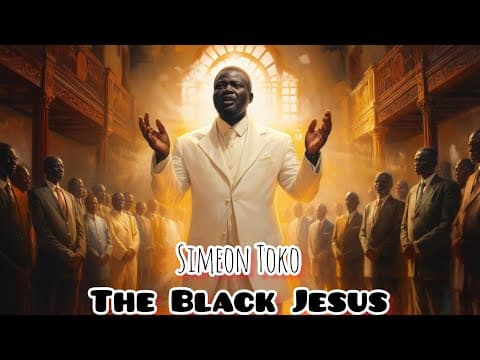
Simeon Toko: The Black Jesus
The Young Elder
Simeon Toko (1918–1984) was a spiritual figure and leader from Angola whose life remains shrouded in mystery and reverence.
No AI help here — no suggestions, no autocomplete, nothing finishing your sentences. That is deliberate. Working out what you think is effortful, and the effort is the part that changes you: reasoning is trained like a muscle, and a muscle that is always carried gets weaker. Let something else do the thinking and you keep the answer but lose the capacity to have reached it.
Write your current position.
Not what the page says. What you think, having read it.0 words · Nothing written yet.
Sign in to leave a mark. Your draft is saved here in the meantime.