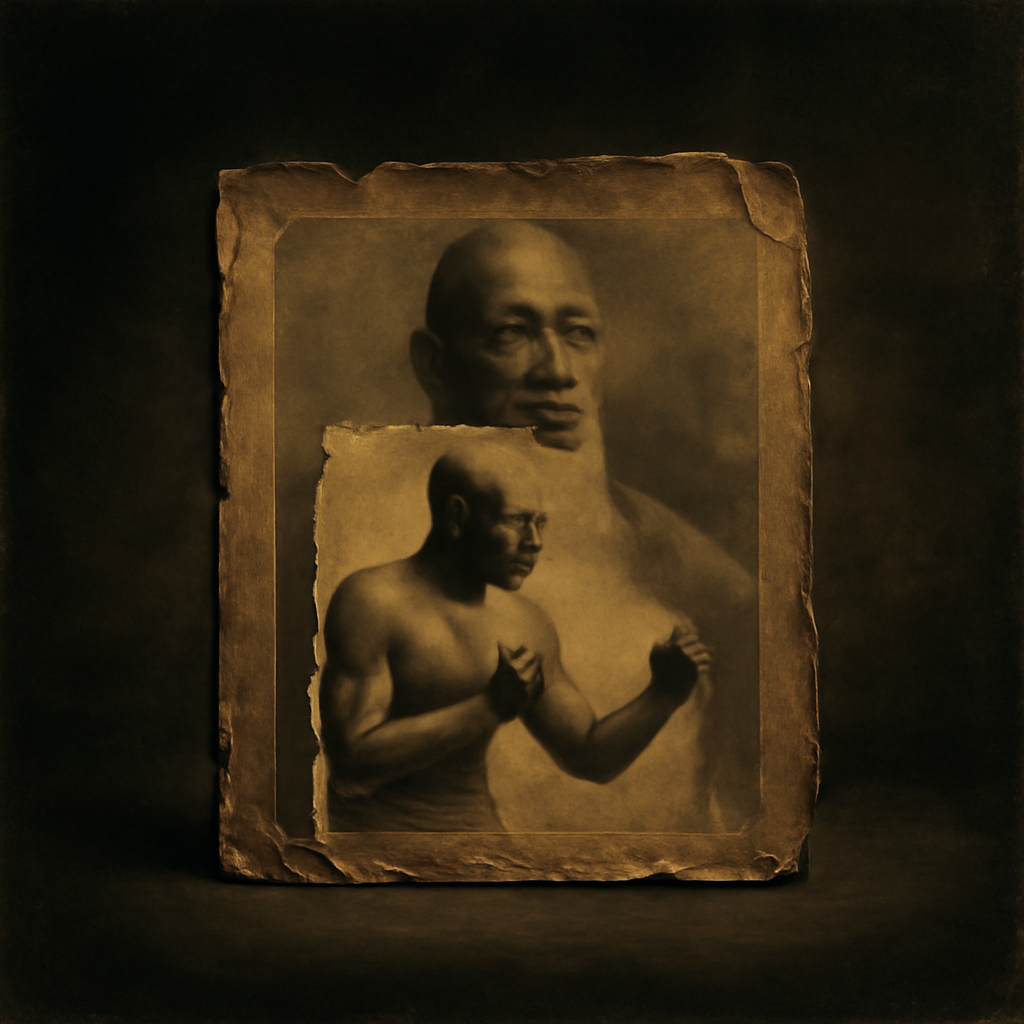
In the golden age of segregation, one man fought his way to the top of the world and refused to apologize for being there. Jack Johnson was the first Black heavyweight champion. He was a force of nature who did not just defeat his opponents—he toyed with them. He smiled while he fought, flashing gold teeth, completely unfazed by the hostile crowds screaming for his downfall.
His brilliance sparked a desperate search for a "Great White Hope" to reclaim the title, culminating in his legendary clash with Jim Jeffries. Johnson did not just win; he dismantled the myth of racial supremacy with every jab. Off the canvas, he lived just as loudly, driving fast cars and defying the oppressive laws of Jim Crow America. He was a true pioneer who used his fists to force a nation to look in the mirror.
“As the first Black heavyweight champion, Jack Johnson's victories and unapologetic lifestyle so threatened the racial order that the US government banned the interstate distribution of his fight films.”
Reflect
How do modern athletes continuing Johnson's legacy of political defiance navigate the boundary between sports and social rebellion?
Research·3 sources·Well-Established confidence·Investigated 5 Aug 2026(1 month ago)·Grounded; verification trace not recorded·Investigation may be outdated
Your next question, in
Visual Trail
See The Defiant Reign of Jack Johnson
A guided visual explanation assembled from QE artwork and sourced documentary images.
01 / 05
QE visual interpretation
Frame 01
The Defiant Reign of Jack Johnson
Jack Johnson shattered racial barriers as the first Black heavyweight champion, defying Jim Crow America with brilliant skill and unshakeable pride.
Image provenance and limitation
Source: AI-generated visual interpretation
Creator: Question Everything
Limitation: This image explains or evokes the subject. It is not documentary evidence and should not be used to verify a factual claim.
Evidence
What do we know?
Verified claims with confidence scoring and cited sources.
Living footnotes
Claims remain in the reading flow. Select a citation number to inspect the source behind it.
01
HistoricalSupported
Jack Johnson became the first African American World Heavyweight Champion in 1908.
Born to former slaves in Texas, Jack Johnson did the unthinkable. He won the World Heavyweight Championship in 1908. He held it for seven defiant years. In Jim Crow America, a Black champion was a threat. Johnson did not hide. He drove fast cars, wore fine clothes, and loved white women. He lived on his own terms. His victory in Sydney made him a global star, but it also made him a target.
02
HistoricalSupported
Johnson's ring victories sparked a global political backlash, leading to the creation of formal color bars in boxing.
Johnson's wins shook empires. His success terrified white authorities worldwide. They feared his dominance would inspire anti-colonial rebellions. In response, the British government banned Black boxers from fighting for titles. This color bar stretched from London to Cape Town. It was a desperate attempt to protect the myth of white supremacy. Physical equality in the ring was simply too dangerous for empires to allow.
03
HistoricalSupported
Johnson's physical dominance and defiant lifestyle cemented his status as a controversial archetype in American folklore.
To white America, Johnson was a nightmare. He became a legendary folk figure—the unapologetic rebel who refused to bow. He spent his money freely. He loved who he wanted. He smiled at his opponents while beating them. This defiance earned him deep love from Black communities and raw hatred from the establishment. The government eventually used the courts to break him, unable to tolerate a Black man who refused to know his place.
The complete record below preserves every citation, confidence input and recorded limitation.
Read the full evidence record3 findings · citations · limitations
Evidence review3 findings3 openable sources
01
Finding 1 of 3Historical
2011
1 dated source
Jack Johnson became the first African American World Heavyweight Champion in 1908.
Born to former slaves in Texas, Jack Johnson did the unthinkable. He won the World Heavyweight Championship in 1908. He held it for seven defiant years. In Jim Crow America, a Black champion was a threat. Johnson did not hide. He drove fast cars, wore fine clothes, and loved white women. He lived on his own terms. His victory in Sydney made him a global star, but it also made him a target.
Supportedmodel score 100%
A single peer-reviewed source. No independent corroboration.
PRIMARY STUDY
›View sources and limits— 1 citation, limits
Supporting passage
Born to former slaves in Texas, Jack Johnson did the unthinkable. He won the World Heavyweight Championship in 1908. He held it for seven defiant years. In Jim Crow America, a Black champion was a threat. Johnson did not hide. He drove fast cars, wore fine clothes, and loved white women. He lived on his own terms. His victory in Sydney made him a global star, but it also made him a target.
Rests on a single source. No independent corroboration.
The generator scored this 100%, which would read as “Established”. Its citations reach only “Supported”, so that is what is shown.
02
Finding 2 of 3Historical
2011
1 dated source
Johnson's ring victories sparked a global political backlash, leading to the creation of formal color bars in boxing.
Johnson's wins shook empires. His success terrified white authorities worldwide. They feared his dominance would inspire anti-colonial rebellions. In response, the British government banned Black boxers from fighting for titles. This color bar stretched from London to Cape Town. It was a desperate attempt to protect the myth of white supremacy. Physical equality in the ring was simply too dangerous for empires to allow.
Supportedmodel score 95%
A single peer-reviewed source. No independent corroboration.
PRIMARY STUDY
›View sources and limits— 1 citation, limits
Supporting passage
Johnson's wins shook empires. His success terrified white authorities worldwide. They feared his dominance would inspire anti-colonial rebellions. In response, the British government banned Black boxers from fighting for titles. This color bar stretched from London to Cape Town. It was a desperate attempt to protect the myth of white supremacy. Physical equality in the ring was simply too dangerous for empires to allow.
Rests on a single source. No independent corroboration.
The generator scored this 95%, which would read as “Established”. Its citations reach only “Supported”, so that is what is shown.
03
Finding 3 of 3Historical
1971
1 dated source
Johnson's physical dominance and defiant lifestyle cemented his status as a controversial archetype in American folklore.
To white America, Johnson was a nightmare. He became a legendary folk figure—the unapologetic rebel who refused to bow. He spent his money freely. He loved who he wanted. He smiled at his opponents while beating them. This defiance earned him deep love from Black communities and raw hatred from the establishment. The government eventually used the courts to break him, unable to tolerate a Black man who refused to know his place.
Supportedmodel score 95%
A single peer-reviewed source. No independent corroboration.
PRIMARY STUDY
›View sources and limits— 1 citation, limits
Supporting passage
To white America, Johnson was a nightmare. He became a legendary folk figure—the unapologetic rebel who refused to bow. He spent his money freely. He loved who he wanted. He smiled at his opponents while beating them. This defiance earned him deep love from Black communities and raw hatred from the establishment. The government eventually used the courts to break him, unable to tolerate a Black man who refused to know his place.
Rests on a single source. No independent corroboration.
The generator scored this 95%, which would read as “Established”. Its citations reach only “Supported”, so that is what is shown.
Interactive Exploration
Touch, drag, and discover
These visualizations respond to your curiosity. Interact to go deeper.
timeline
The Rise, Reign, and Exile of Jack Johnson
Loading timeline…
relationship map
The Global Web of Johnson's Defiance
Mapping relationships…
Drag nodes to rearrange — tap for details
Visual Gallery
Images & artifacts
Historical images, diagrams, and visual knowledge from Wikimedia Commons.
Perspectives
How is this interpreted?
Enter a viewpoint. Notice what it reveals, what it leaves out, and whether it changes the question for you.
The EmpiricistScientific viewpointLive tension
Sociologists analyze Johnson through the lens of racial hegemony and social control. His dominance in the ring disrupted the pseudo-scientific racial hierarchies of the early twentieth century. By physically defeating white opponents, Johnson disproved theories of white biological supremacy. This forced the dominant culture to use legal and political systems, rather than athletic competition, to reassert control and suppress the symbolic power of his victories.
What this lens notices
01Disrupted pseudo-scientific theories of racial hierarchy
02Exposed the limits of athletic meritocracy under Jim Crow
03Prompted systemic legal retaliation to restore social control
Application
Why does this matter to you?
Personal reflections and applications for your life.
Thought experimentSelf-Reflection
When do you choose to conform to social expectations, and when do you stand your ground?
Why it changes the question
Jack Johnson paid a massive personal price to live authentically in a world that hated his freedom. Reflecting on his life helps us see where we compromise our own values just to fit in.
Try this
Identify one area in your life where you act to please others rather than yourself, and make one small, authentic choice there today.
Media
QE Smart Glass
Curated media selected for this investigation.
QE Glass
YOUTUBE
The Bigotry Surrounding the Jack Johnson vs. Jim Jeffries Fight
Smithsonian Channel
On paper, the 1910 boxing match between champion Jack Johnson and Jim Jeffries was just that - a contest for boxing supremacy ...
QE Glass
YOUTUBE
Jack Johnson: Beyond The Waves 🏄♂️ | Outside The Lines
ESPN
Jack Johnson: Beyond The Waves ♂️ | Outside The Lines Outside The Lines shares the story behind Jack Johnson's journey ...
QE Glass
YOUTUBE
How Jack Johnson Became The BOLDEST Man In Boxing History
Rhythm Boxing
Jack Johnson was the first black heavyweight champion in the history of boxing. When he won the title in 1908 he spent 7 years ...
QE Glass
YOUTUBE
Jack Johnson Boxer.Jack Johnson Black History.Deeper Than Read(Ep. 10)🥊 🏆 💵
Deeper Than Read
Jack Johnson Boxer.Jack Johnson Black History.Deeper Than Read(Ep. 10) #deeperthanread #blackhistorymonth ...
QE Glass
YOUTUBE
Mann Act (1910)
Seek Learning
This video clip is a brief excerpt from Sex in the 20th Century. This video is for exclusive use by History classes at Richland ...
QE Glass
YOUTUBE
How Did Jack Johnson Rewrite Boxing History As The First Black Champion?
The Culture Explained
About This Video: Dive into the remarkable story of Jack Johnson, a name synonymous with resilience and triumph in the face of ...
QE Glass
YOUTUBE
UNFORGIVABLE BLACKNESS THE RISE AND FALL OF JACK JOHNSON DOCUMENTARY REVIEW
stoplyinn
A great compliment to the book.
QE Glass
PODCAST
The Dollop: Jack Johnson
The Dollop
An engaging, deep dive into the wild, hilarious, and deeply tragic life of the champion boxer.
Connected context
Connected entities
The people, places, concepts, and events that matter here.
Keep Going
Where this leads
Questions this investigation opens up — and what QE has already looked into.
No AI help here — no suggestions, no autocomplete, nothing finishing your sentences. That is deliberate. Working out what you think is effortful, and the effort is the part that changes you: reasoning is trained like a muscle, and a muscle that is always carried gets weaker. Let something else do the thinking and you keep the answer but lose the capacity to have reached it.
Write your current position.
Not what the page says. What you think, having read it.0 words · Nothing written yet.
Sign in to leave a mark. Your draft is saved here in the meantime.