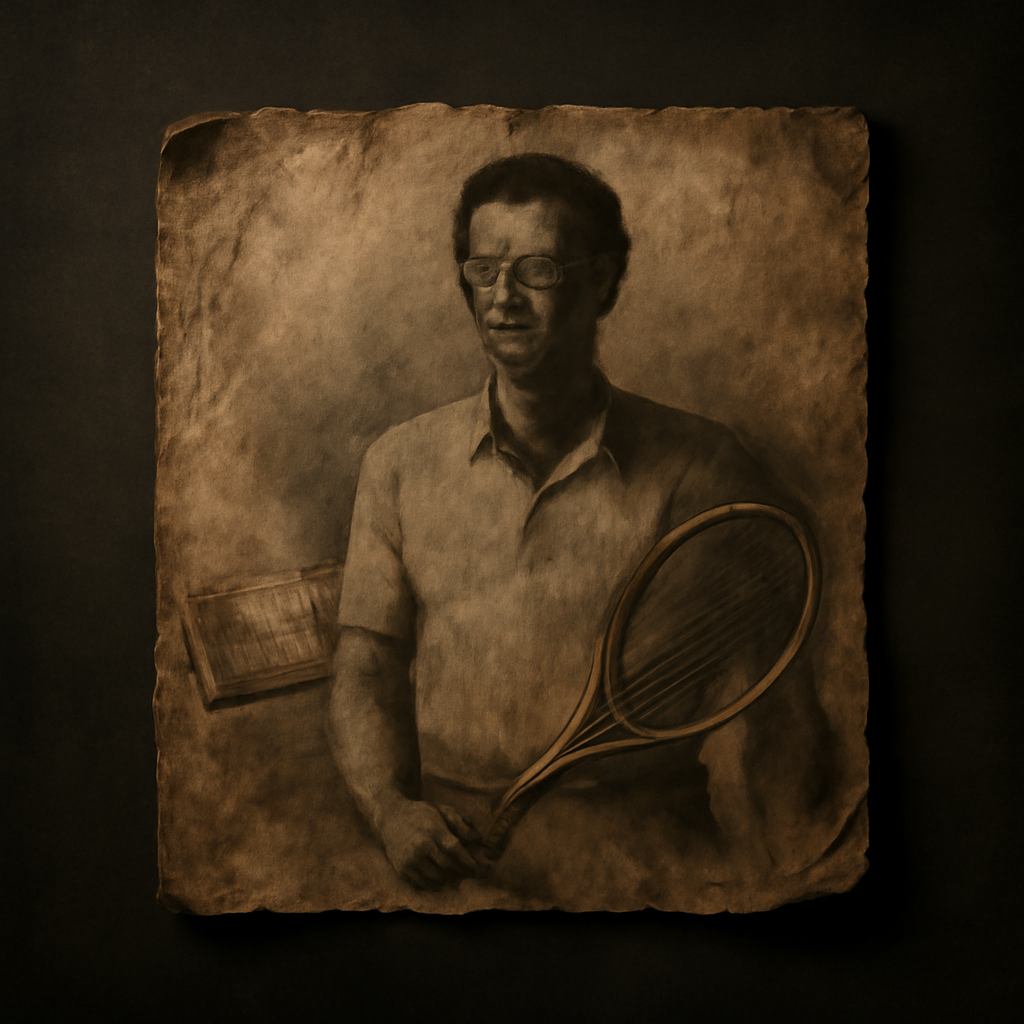
Arthur Ashe was more than a tennis champion. He was a quiet force. On the court, his game was elegant, precise, and devastatingly calm. In 1968, he shattered barriers by winning the US Open, becoming the first Black man to do so. He did it during a time of immense racial tension in America. He did not shout. He let his racket do the talking, forcing a segregated world to look him in the eye.
Off the court, his battle only grew. Ashe fought South African apartheid with the same quiet resolve he used at Wimbledon. Later, when a tainted blood transfusion left him with HIV, he turned his private tragedy into a public crusade. He educated a frightened world about the disease. He showed us that true strength is not about physical dominance. It is about grace under pressure.
“Arthur Ashe remains the only Black man in history to win the singles titles at Wimbledon, the US Open, and the Australian Open.”
Reflect
How can an athlete's quiet, dignified resistance influence global geopolitics more effectively than loud, aggressive protests?
Research·2 sources·Well-Established confidence·Investigated 5 Aug 2026(1 month ago)·Grounded; verification trace not recorded·Investigation may be outdated
Your next question, in
Visual Trail
See Arthur Ashe: Grace Under Fire
A guided visual explanation assembled from QE artwork and sourced documentary images.
01 / 05
QE visual interpretation
Frame 01
Arthur Ashe: Grace Under Fire
Arthur Ashe was a barrier-breaking tennis champion and humanitarian who fought racial injustice and HIV/AIDS stigma with quiet dignity.
Image provenance and limitation
Source: AI-generated visual interpretation
Creator: Question Everything
Limitation: This image explains or evokes the subject. It is not documentary evidence and should not be used to verify a factual claim.
Evidence
What do we know?
Verified claims with confidence scoring and cited sources.
Living footnotes
Claims remain in the reading flow. Select a citation number to inspect the source behind it.
01
HistoricalSupported
Arthur Ashe was the first Black male tennis player to win the U.S. Open, the Australian Open, and Wimbledon.
Ashe broke through the deep racial barriers of mid-century tennis. He clinched the U.S. Open in 1968, the Australian Open in 1970, and Wimbledon in 1975. To this day, he remains the only Black man to hold these three singles titles. His elegant, powerful style of play dismantled the prejudice of a historically segregated sport, proving that grace could triumph over systemic exclusion.
02
HistoricalSupported
Arthur Ashe used his athletic platform to actively fight South African apartheid, resulting in the country's exclusion from the Davis Cup in 1970.
Ashe was far more than an athlete; he was a fierce champion for human rights. After South African authorities repeatedly denied him a visa to play in their national open due to apartheid, Ashe lobbied the international tennis community. His efforts bore fruit on March 23, 1970, when South Africa was officially banned from the Davis Cup. He later co-founded Artists and Athletes Against Apartheid to keep the pressure on.
03
HistoricalSupported
Arthur Ashe contracted HIV from a blood transfusion during a 1983 heart bypass surgery and dedicated his final years to AIDS advocacy.
Life dealt Ashe a tragic hand. After undergoing a second bypass surgery in 1983, he received a contaminated blood transfusion. He kept his HIV status private until April 1992. Once public, he poured his remaining energy into founding the Arthur Ashe Foundation for the Defeat of AIDS. He fought the stigma of the disease with the same quiet dignity he brought to the court, before passing away in 1993.
The complete record below preserves every citation, confidence input and recorded limitation.
Read the full evidence record3 findings · citations · limitations
Evidence review3 findings3 openable sources
01
Finding 1 of 3Historical
2024
1 dated source
Arthur Ashe was the first Black male tennis player to win the U.S. Open, the Australian Open, and Wimbledon.
Ashe broke through the deep racial barriers of mid-century tennis. He clinched the U.S. Open in 1968, the Australian Open in 1970, and Wimbledon in 1975. To this day, he remains the only Black man to hold these three singles titles. His elegant, powerful style of play dismantled the prejudice of a historically segregated sport, proving that grace could triumph over systemic exclusion.
Supportedmodel score 100%
One source, not peer-reviewed. Thinner than the score suggests.
REFERENCE
›View sources and limits— 1 citation, limits
Supporting passage
Ashe broke through the deep racial barriers of mid-century tennis. He clinched the U.S. Open in 1968, the Australian Open in 1970, and Wimbledon in 1975. To this day, he remains the only Black man to hold these three singles titles. His elegant, powerful style of play dismantled the prejudice of a historically segregated sport, proving that grace could triumph over systemic exclusion.
Rests on a single source. No independent corroboration.
No peer-reviewed source among the citations.
The generator scored this 100%, which would read as “Established”. Its citations reach only “Supported”, so that is what is shown.
02
Finding 2 of 3Historical
2024
1 dated source
Arthur Ashe used his athletic platform to actively fight South African apartheid, resulting in the country's exclusion from the Davis Cup in 1970.
Ashe was far more than an athlete; he was a fierce champion for human rights. After South African authorities repeatedly denied him a visa to play in their national open due to apartheid, Ashe lobbied the international tennis community. His efforts bore fruit on March 23, 1970, when South Africa was officially banned from the Davis Cup. He later co-founded Artists and Athletes Against Apartheid to keep the pressure on.
Supportedmodel score 100%
One source, not peer-reviewed. Thinner than the score suggests.
REFERENCE
›View sources and limits— 1 citation, limits
Supporting passage
Ashe was far more than an athlete; he was a fierce champion for human rights. After South African authorities repeatedly denied him a visa to play in their national open due to apartheid, Ashe lobbied the international tennis community. His efforts bore fruit on March 23, 1970, when South Africa was officially banned from the Davis Cup. He later co-founded Artists and Athletes Against Apartheid to keep the pressure on.
Rests on a single source. No independent corroboration.
No peer-reviewed source among the citations.
The generator scored this 100%, which would read as “Established”. Its citations reach only “Supported”, so that is what is shown.
03
Finding 3 of 3Historical
2024
1 dated source
Arthur Ashe contracted HIV from a blood transfusion during a 1983 heart bypass surgery and dedicated his final years to AIDS advocacy.
Life dealt Ashe a tragic hand. After undergoing a second bypass surgery in 1983, he received a contaminated blood transfusion. He kept his HIV status private until April 1992. Once public, he poured his remaining energy into founding the Arthur Ashe Foundation for the Defeat of AIDS. He fought the stigma of the disease with the same quiet dignity he brought to the court, before passing away in 1993.
Supportedmodel score 100%
One source, not peer-reviewed. Thinner than the score suggests.
REFERENCE
›View sources and limits— 1 citation, limits
Supporting passage
Life dealt Ashe a tragic hand. After undergoing a second bypass surgery in 1983, he received a contaminated blood transfusion. He kept his HIV status private until April 1992. Once public, he poured his remaining energy into founding the Arthur Ashe Foundation for the Defeat of AIDS. He fought the stigma of the disease with the same quiet dignity he brought to the court, before passing away in 1993.
Rests on a single source. No independent corroboration.
No peer-reviewed source among the citations.
The generator scored this 100%, which would read as “Established”. Its citations reach only “Supported”, so that is what is shown.
Interactive Exploration
Touch, drag, and discover
These visualizations respond to your curiosity. Interact to go deeper.
timeline
The Life and Legacy of Arthur Ashe
Loading timeline…
statistics card
Arthur Ashe: Career by the Numbers
3
Grand Slam Singles Titles
U.S. Open (1968), Australian Open (1970), and Wimbledon (1975).
1
World Ranking
Reached the peak of men's professional tennis in 1975.
33
Major Titles
Won over thirty major titles throughout his illustrious career.
49
Years of Life
A short but incredibly impactful life dedicated to sport and human rights.
Visual Gallery
Images & artifacts
Historical images, diagrams, and visual knowledge from Wikimedia Commons.
Perspectives
How is this interpreted?
Enter a viewpoint. Notice what it reveals, what it leaves out, and whether it changes the question for you.
The EmpiricistScientific viewpointEstablished lens
From a medical history perspective, Ashe's tragic infection highlights the critical vulnerabilities in blood transfusion protocols during the early years of the HIV pandemic. Before the development of rigorous screening tests in 1985, thousands of patients received tainted blood. Ashe's high-profile struggle destigmatized the virus. It forced the public to view HIV not as a moral failing, but as a complex public health challenge requiring urgent scientific research and systemic healthcare reforms.
What this lens notices
01Tainted transfusions were a major early transmission vector
02Ashe's advocacy accelerated public funding for AIDS research
03Destigmatization helped shift HIV from a social taboo to a medical priority
Application
Why does this matter to you?
Personal reflections and applications for your life.
Thought experimentPhilosophical
How can you use your unique skills or platform to advocate for others?
Why it changes the question
Arthur Ashe believed that athletic talent was merely a vehicle for social good. He used his tennis fame to fight apartheid and educate the world about HIV.
Try this
Identify one area in your community where you have influence, and take a small, concrete action to support someone who has less power.
Media
QE Smart Glass
Curated media selected for this investigation.
QE Glass
YOUTUBE
The Story Of Arthur Ashe's Activism
Forehand Frenzy
The Story Of Arthur Ashe's Activism The Story of Arthur Ashe's Activism - A Tennis Legend's Impact Beyond the Court Description: ...
QE Glass
YOUTUBE
Arthur Ashe - African American Trailblazers
LibraryofVa
The African American Trailblazers honors the African American contribution to the American story and the significant ...
QE Glass
YOUTUBE
Arthur Ashe biography
ajd72jfer
This is my black/womens history project for world history 7. I would like to thank my teacher Sarah Peterson and all my classmates.
No AI help here — no suggestions, no autocomplete, nothing finishing your sentences. That is deliberate. Working out what you think is effortful, and the effort is the part that changes you: reasoning is trained like a muscle, and a muscle that is always carried gets weaker. Let something else do the thinking and you keep the answer but lose the capacity to have reached it.
Write your current position.
Not what the page says. What you think, having read it.0 words · Nothing written yet.
Sign in to leave a mark. Your draft is saved here in the meantime.