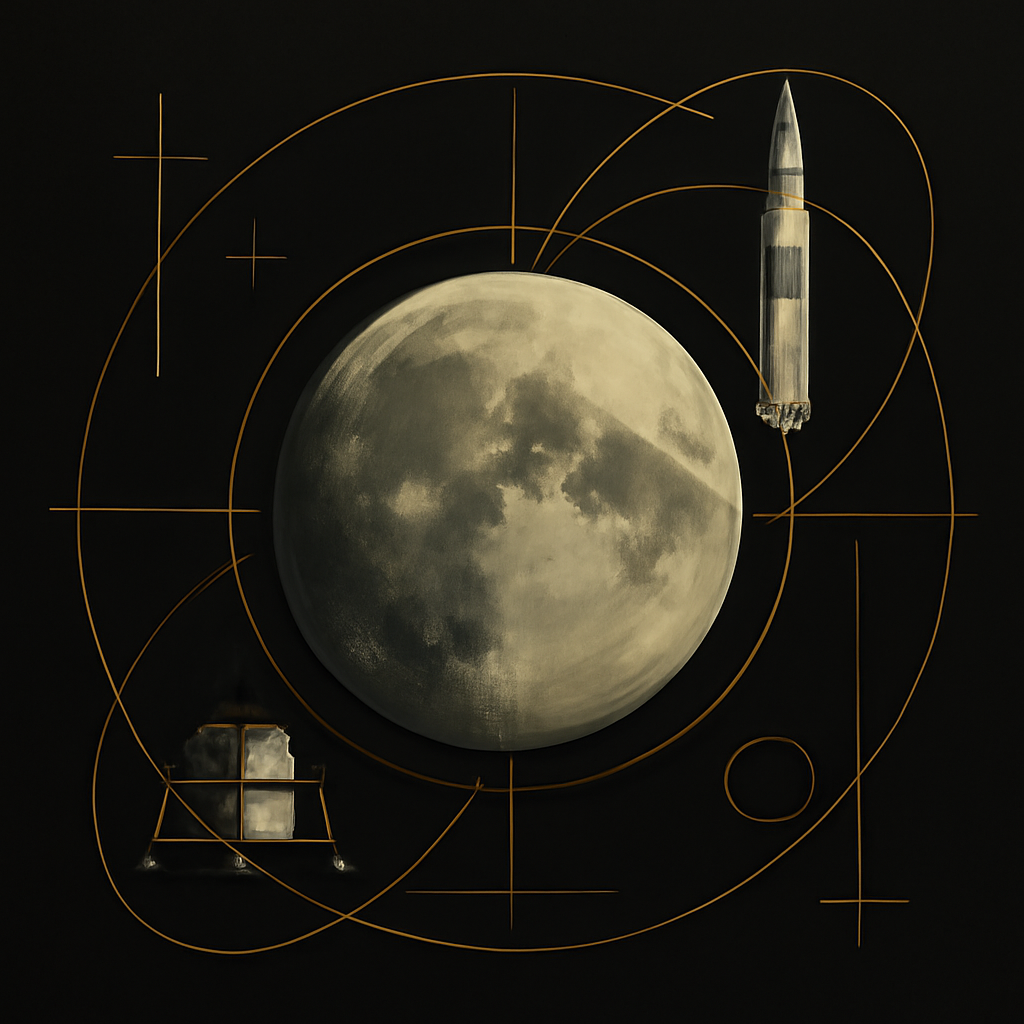
To the Moon and Back: The Unforgettable Journey of Humanity
Did we actually go to the Moon? The answer is a resounding yes. It was one of the most incredible achievements in human history, a daring journey that captivated the world and pushed the boundaries of what we thought was possible. For a brief, shining moment, people from Earth stepped onto another world, leaving footprints and flags as proof.
This wasn't just a single trip. Between 1969 and 1972, NASA's Apollo program sent six different missions to the Moon, landing a total of twelve astronauts on its dusty surface. Imagine floating through space, seeing Earth shrink behind you, and then touching down on a place no human had ever been. The sheer scale of this undertaking, from building colossal rockets to designing life-support systems for space, involved hundreds of thousands of brilliant minds working together. It was a true testament to human ingenuity and our endless curiosity about the universe.
Today, the evidence is everywhere: tons of Moon rocks studied by scientists all over the globe, photographs and videos that have stood the test of time, and even special mirrors left on the Moon that we still use to bounce lasers off today. The journey to the Moon wasn't a trick; it was real, and it changed how we see ourselves and our place in the cosmos forever.
✨
Wonder Moment
“The computers that guided the Apollo missions to the Moon were less powerful than a modern smartphone. They had only 2048 words of RAM – imagine that!”
Reflect
If humanity could achieve something so 'impossible' with such limited technology then, what truly 'impossible' things could we accomplish today, given our current tools and knowledge?
8 sources·Established confidence·Investigated 29 Jun 2026(2 months ago)·Investigation may be outdated
Your next question, in
Visual Trail
See To the Moon and Back: The Unforgettable Journey of Humanity
A guided visual explanation assembled from QE artwork and sourced documentary images.
01 / 02
QE visual interpretation
Frame 01
To the Moon and Back: The Unforgettable Journey of Humanity
Yes, humans landed on the Moon six times between 1969 and 1972, leaving behind evidence and bringing back valuable samples.
Image provenance and limitation
Source: AI-generated visual interpretation
Creator: Question Everything
Limitation: This image explains or evokes the subject. It is not documentary evidence and should not be used to verify a factual claim.
Evidence
What do we know?
Verified claims with confidence scoring and cited sources.
Generated without source retrieval. QE did not fetch sources for this investigation, so no citation here was checked against a retrieved set. Claims reflect the model’s training data.
Living footnotes
Claims remain in the reading flow. Select a citation number to inspect the source behind it.
01
ExperimentalSupported
Astronauts brought back hundreds of kilograms of Moon rocks.
One of the strongest pieces of evidence is the collection of Moon rocks and soil brought back by the Apollo missions. Astronauts gathered 382 kilograms (about 842 pounds) of these samples. These aren't just any rocks; they have a unique chemical makeup, different from any rocks found on Earth. Scientists around the world have studied these rocks for decades, confirming their origin from the Moon.
These samples provided vital information about the Moon's age, how it formed, and its history. Their unique features, like tiny glass beads formed from meteorite impacts and a complete lack of water erosion, are impossible to fake with Earth rocks. They are a tangible link to our lunar neighbor, held and examined by countless experts.
02
ObservationalSupported
Special mirrors, called retroreflectors, were left on the Moon and are still used today.
During several Apollo missions, astronauts placed special mirror-like devices on the Moon's surface. These aren't just regular mirrors; they're designed to bounce laser beams sent from Earth right back to where they came from. Scientists on Earth have been shooting lasers at these reflectors for over 50 years.
By measuring the exact time it takes for the laser light to travel to the Moon and back, we can measure the distance to the Moon with extreme accuracy, down to just a few centimeters. This ongoing experiment proves that something was indeed placed on the Moon by humans, and it's still there. No one could have secretly placed these large, precise instruments there without anyone noticing.
03
ObservationalSupported
Thousands of photographs and hours of video document the missions.
The Apollo missions produced an incredible amount of visual evidence. We have thousands of photographs and countless hours of video footage showing the astronauts on the Moon, the lunar landscape, and the equipment they used. These images have been analyzed countless times by experts.
Experts can confirm the authenticity of these photos and videos. For example, shadows fall exactly as they should under a single light source (the Sun), and the way dust behaves in the Moon's low gravity is consistent with physics. These visual records give us a front-row seat to history and show details that would be incredibly difficult, if not impossible, to fake convincingly.
04
ObservationalSupported
Modern lunar orbiters have photographed the landing sites, including equipment left behind.
More recently, space probes circling the Moon have taken incredibly detailed pictures of the Apollo landing sites. NASA's Lunar Reconnaissance Orbiter (LRO), for example, has snapped photos showing the descent stages of the lunar modules (the bottom half of the lander that stays on the Moon), the tracks left by astronauts' boots and rovers, and even equipment like scientific instruments and flags.
These images, taken from space today, directly match what the astronauts reported leaving behind decades ago. It's like looking down from a high-flying airplane and seeing exactly where a famous event happened, confirming the original accounts. These modern observations from independent spacecraft provide powerful, undeniable proof.
The complete record below preserves every citation, confidence input and recorded limitation.
Read the full evidence record4 findings · citations · limitations
Evidence review4 findings8 openable sources
01
Finding 1 of 4Experimental
2
0/2 verified
Astronauts brought back hundreds of kilograms of Moon rocks.
One of the strongest pieces of evidence is the collection of Moon rocks and soil brought back by the Apollo missions. Astronauts gathered 382 kilograms (about 842 pounds) of these samples. These aren't just any rocks; they have a unique chemical makeup, different from any rocks found on Earth. Scientists around the world have studied these rocks for decades, confirming their origin from the Moon.
These samples provided vital information about the Moon's age, how it formed, and its history. Their unique features, like tiny glass beads formed from meteorite impacts and a complete lack of water erosion, are impossible to fake with Earth rocks. They are a tangible link to our lunar neighbor, held and examined by countless experts.
Supportedmodel score 100%
2 sources agree, none peer-reviewed.
REPORTINGREFERENCE
›View sources and limits— 2 citations, limits
Supporting passage
One of the strongest pieces of evidence is the collection of Moon rocks and soil brought back by the Apollo missions. Astronauts gathered 382 kilograms (about 842 pounds) of these samples. These aren't just any rocks; they have a unique chemical makeup, different from any rocks found on Earth. Scientists around the world have studied these rocks for decades, confirming their origin from the Moon.
These samples provided vital information about the Moon's age, how it formed, and its history. Their unique features, like tiny glass beads formed from meteorite impacts and a complete lack of water erosion, are impossible to fake with Earth rocks. They are a tangible link to our lunar neighbor, held and examined by countless experts.
Generated without source retrieval — citations here were not verified against a retrieved set.
No peer-reviewed source among the citations.
The generator scored this 100%, which would read as “Established”. Its citations reach only “Supported”, so that is what is shown.
02
Finding 2 of 4Observational
0/2 verified
Special mirrors, called retroreflectors, were left on the Moon and are still used today.
During several Apollo missions, astronauts placed special mirror-like devices on the Moon's surface. These aren't just regular mirrors; they're designed to bounce laser beams sent from Earth right back to where they came from. Scientists on Earth have been shooting lasers at these reflectors for over 50 years.
By measuring the exact time it takes for the laser light to travel to the Moon and back, we can measure the distance to the Moon with extreme accuracy, down to just a few centimeters. This ongoing experiment proves that something was indeed placed on the Moon by humans, and it's still there. No one could have secretly placed these large, precise instruments there without anyone noticing.
Supportedmodel score 100%
2 sources agree, none peer-reviewed.
REPORTINGREFERENCE
›View sources and limits— 2 citations, limits
Supporting passage
During several Apollo missions, astronauts placed special mirror-like devices on the Moon's surface. These aren't just regular mirrors; they're designed to bounce laser beams sent from Earth right back to where they came from. Scientists on Earth have been shooting lasers at these reflectors for over 50 years.
By measuring the exact time it takes for the laser light to travel to the Moon and back, we can measure the distance to the Moon with extreme accuracy, down to just a few centimeters. This ongoing experiment proves that something was indeed placed on the Moon by humans, and it's still there. No one could have secretly placed these large, precise instruments there without anyone noticing.
Generated without source retrieval — citations here were not verified against a retrieved set.
No peer-reviewed source among the citations.
The generator scored this 100%, which would read as “Established”. Its citations reach only “Supported”, so that is what is shown.
03
Finding 3 of 4Observational
0/2 verified
Thousands of photographs and hours of video document the missions.
The Apollo missions produced an incredible amount of visual evidence. We have thousands of photographs and countless hours of video footage showing the astronauts on the Moon, the lunar landscape, and the equipment they used. These images have been analyzed countless times by experts.
Experts can confirm the authenticity of these photos and videos. For example, shadows fall exactly as they should under a single light source (the Sun), and the way dust behaves in the Moon's low gravity is consistent with physics. These visual records give us a front-row seat to history and show details that would be incredibly difficult, if not impossible, to fake convincingly.
Supportedmodel score 100%
2 sources agree, none peer-reviewed.
REFERENCEREPORTING
›View sources and limits— 2 citations, limits
Supporting passage
The Apollo missions produced an incredible amount of visual evidence. We have thousands of photographs and countless hours of video footage showing the astronauts on the Moon, the lunar landscape, and the equipment they used. These images have been analyzed countless times by experts.
Experts can confirm the authenticity of these photos and videos. For example, shadows fall exactly as they should under a single light source (the Sun), and the way dust behaves in the Moon's low gravity is consistent with physics. These visual records give us a front-row seat to history and show details that would be incredibly difficult, if not impossible, to fake convincingly.
Generated without source retrieval — citations here were not verified against a retrieved set.
No peer-reviewed source among the citations.
The generator scored this 100%, which would read as “Established”. Its citations reach only “Supported”, so that is what is shown.
04
Finding 4 of 4Observational
0/2 verified
Modern lunar orbiters have photographed the landing sites, including equipment left behind.
More recently, space probes circling the Moon have taken incredibly detailed pictures of the Apollo landing sites. NASA's Lunar Reconnaissance Orbiter (LRO), for example, has snapped photos showing the descent stages of the lunar modules (the bottom half of the lander that stays on the Moon), the tracks left by astronauts' boots and rovers, and even equipment like scientific instruments and flags.
These images, taken from space today, directly match what the astronauts reported leaving behind decades ago. It's like looking down from a high-flying airplane and seeing exactly where a famous event happened, confirming the original accounts. These modern observations from independent spacecraft provide powerful, undeniable proof.
Supportedmodel score 100%
2 sources agree, none peer-reviewed.
REPORTINGREFERENCE
›View sources and limits— 2 citations, limits
Supporting passage
More recently, space probes circling the Moon have taken incredibly detailed pictures of the Apollo landing sites. NASA's Lunar Reconnaissance Orbiter (LRO), for example, has snapped photos showing the descent stages of the lunar modules (the bottom half of the lander that stays on the Moon), the tracks left by astronauts' boots and rovers, and even equipment like scientific instruments and flags.
These images, taken from space today, directly match what the astronauts reported leaving behind decades ago. It's like looking down from a high-flying airplane and seeing exactly where a famous event happened, confirming the original accounts. These modern observations from independent spacecraft provide powerful, undeniable proof.
Photographed by modern orbiters, showing equipment and tracks.
No independent proof of landing sites.
Tap any row to highlight and compare
Perspectives
How is this interpreted?
Enter a viewpoint. Notice what it reveals, what it leaves out, and whether it changes the question for you.
The EmpiricistScientific viewpointEstablished lens
From a scientific standpoint, the evidence for the Moon landings is overwhelming and consistent across many different fields. The Moon rocks, studied by geologists worldwide, show unique characteristics that confirm their extraterrestrial origin and match expectations for lunar material. The physics of the rocket launches, orbital mechanics, and landing trajectories have all been verified.
The laser retroreflectors left by astronauts continue to provide precise data on the Earth-Moon distance, a continuous experiment proving human presence. Modern spacecraft, like the Lunar Reconnaissance Orbiter, have photographed the landing sites, showing the remnants of human activity exactly where Apollo missions claimed they were. There is no credible scientific challenge to the Moon landings.
What this lens notices
01Lunar samples' unique composition
02Functional retroreflectors on the Moon
03Orbital mechanics match mission data
04Modern satellite imagery confirms landing sites
Application
Why does this matter to you?
Personal reflections and applications for your life.
Thought experimentSelf-Reflection
What 'impossible' goals are you holding yourself back from pursuing?
Why it changes the question
The Moon landing showed humanity that even the most seemingly impossible goals can be achieved with enough dedication, resources, and teamwork. Thinking about this incredible feat can inspire us to re-evaluate our own personal or collective challenges. What goals in your life or community seem too big or too difficult? This historical event reminds us that major breakthroughs often start with a bold vision and a willingness to overcome countless obstacles.
Try this
Pick one 'impossible' personal goal. Break it down into the first three small, manageable steps you could take, and then take the first step this week.
Media
QE Smart Glass
Curated media selected for this investigation.
QE Glass
YOUTUBE
Moon 101 | National Geographic
National Geographic
What is the moon made of, and how did it form? Learn about the moon's violent origins, how its phases shaped the earliest ...
QE Glass
YOUTUBE
Why are we going back to the Moon? - BBC World Service
BBC World Service and BBC News
More than 50 years since humans were last on the moon, there's a race to go back. Click here to subscribe to our channel ...
QE Glass
YOUTUBE
Artemis II: Return to the Moon | Full Documentary | NOVA | PBS
NOVA PBS Official
Follow the Artemis mission to bring humanity back to the Moon for the first time since Apollo. Official website: ...
QE Glass
YOUTUBE
Space Race to the Moon | Free Documentary
Free Documentary
To the Moon - From Dream To Reality | Space Documentary Between 1969 and 1972 twelve men walked on the surface of the ...
QE Glass
YOUTUBE
The Universe: The Creation of the Moon (S1, E5) | Full Episode | History
HISTORY
The moon has comforted man for thousands of years. It's been everything from a god to a compass, and the only cosmic body ...
QE Glass
YOUTUBE
How We Are Going to the Moon - 4K
NASA
While Apollo placed the first steps on the Moon, Artemis opens the door for humanity to sustainably work and live on another ...
QE Glass
YOUTUBE
The ENTIRE History of Apollo 11 Explained | Best Apollo 11 Documentary
The Life Guide
Apollo 11 Explained / Space Race Documentary | On July 16th 1969, the world watched as the Saturn V launched Apollo 11 into ...
QE Glass
YOUTUBE
Why the US is Struggling to Land on the Moon
Real Engineering
Get Nebula for 50% off with my link: https://go.nebula.tv/realengineering Watch this video ad free on Nebula: ...
QE Glass
PODCAST
How Apollo 11 Worked
Stuff You Should Know
A fun and informative podcast episode breaking down the technical and historical aspects of the first Moon landing in an easy-to-understand way.
Keep Going
Where this leads
Questions this investigation opens up — and what QE has already looked into.
No AI help here — no suggestions, no autocomplete, nothing finishing your sentences. That is deliberate. Working out what you think is effortful, and the effort is the part that changes you: reasoning is trained like a muscle, and a muscle that is always carried gets weaker. Let something else do the thinking and you keep the answer but lose the capacity to have reached it.
Write your current position.
Not what the page says. What you think, having read it.0 words · Nothing written yet.
Sign in to leave a mark. Your draft is saved here in the meantime.