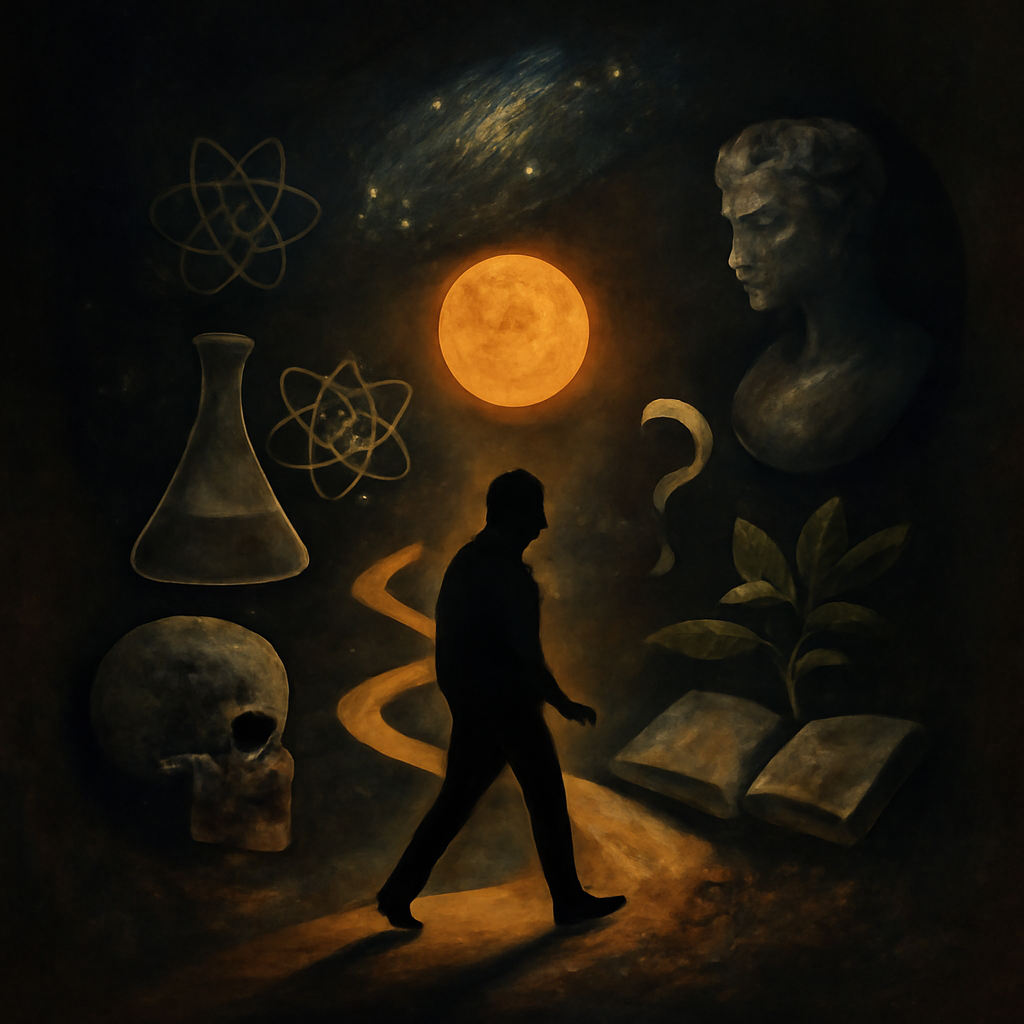
The Purpose of Life: A Journey Through Science, Philosophy, and Human Experience
What is the purpose of life? This question has echoed through the ages, asked by philosophers, scientists, and everyday people alike. It touches the deepest parts of our existence and has no single answer. Across cultures and centuries, answers have ranged from divine mission to evolutionary survival, from personal happiness to the pursuit of knowledge. Each perspective offers a unique lens, revealing that the purpose of life might be as much about the journey as the destination.
Science offers one view: life is a product of evolution, surviving and thriving through reproduction and adaptation. But this biological explanation only sketches the outlines. Human consciousness adds layers of meaning—our desires, dreams, and reflections invite us to consider purpose beyond mere survival. Philosophers have woven rich tapestries of thought, exploring ethics, happiness, and fulfillment as potential goals. Meanwhile, religions offer stories that connect life’s purpose to something greater than ourselves, inspiring millions to live with hope and direction.
In the end, the purpose of life might be a mosaic—a blend of biology, personal meaning, and cultural belief. It’s a question that invites us all to look inward and outward, to explore what makes our own existence meaningful. This knowledge page journeys through these perspectives, uncovering the many faces of life’s purpose and encouraging you to find your own answer in the grand story of existence.
“Life’s purpose is not a single answer but a mosaic of biology, personal meaning, culture, and choice.”
Reflect
If your life’s purpose is a story you tell yourself, how might you rewrite it tomorrow?
2 sources·Established confidence·Investigated 16 Jul 2026(1 month ago)·Investigation may be outdated
Your next question, in
Visual Trail
See The Purpose of Life: A Journey Through Science, Philosophy, and Human Experience
A guided visual explanation assembled from QE artwork and sourced documentary images.
01 / 05
QE visual interpretation
Frame 01
The Purpose of Life: A Journey Through Science, Philosophy, and Human Experience
The purpose of life blends biology, personal meaning, and culture, inviting each of us to find our own path.
Image provenance and limitation
Source: AI-generated visual interpretation
Creator: Question Everything
Limitation: This image explains or evokes the subject. It is not documentary evidence and should not be used to verify a factual claim.
Evidence
What do we know?
Verified claims with confidence scoring and cited sources.
Generated without source retrieval. QE did not fetch sources for this investigation, so no citation here was checked against a retrieved set. Claims reflect the model’s training data. 3 of 5 findings carry no openable link at all.
3 of 5 findings need extra caution. Finding 2, Finding 3, Finding 5 rest on weaker sourcing than the other findings.
Living footnotes
Claims remain in the reading flow. Select a citation number to inspect the source behind it.
01
ObservationalSupported
From a biological standpoint, the purpose of life is to survive and reproduce.
Biologists explain that life on Earth emerged through evolution by natural selection. Organisms that survive and reproduce pass on their genes, shaping species over generations. This drive to continue genetic lineage is seen as the fundamental purpose of all living beings. It explains behaviors like seeking food, avoiding danger, and mating. Survival and reproduction are the core mechanisms that have allowed life to flourish for billions of years.
02
HistoricalNot confirmed
Philosophers have long debated that the purpose of life involves seeking happiness and meaning.
Since ancient times, thinkers like Aristotle proposed that human purpose is to achieve eudaimonia—a flourishing life filled with virtue and well-being. Modern philosophy continues this exploration, discussing happiness, fulfillment, and moral good as central goals. This view moves beyond survival, emphasizing conscious reflection and values. It suggests that life’s purpose can be shaped by personal choices and cultural norms, rather than fixed biological imperatives.
03
HistoricalNot confirmed
Religious traditions often teach that life’s purpose is connected to serving or understanding a higher power.
Many religions propose that life is a gift or test from a divine source, and fulfilling its purpose means aligning with spiritual principles. For example, Christianity centers on living according to God’s will, leading to eternal life. Hinduism speaks of dharma—duty or righteousness—as life’s guiding purpose. These beliefs provide frameworks for meaning that transcend the material world, offering hope, community, and moral guidance.
04
StatisticalSupported
Psychological research shows that finding personal meaning improves mental health and well-being.
Studies in psychology reveal that individuals who perceive their lives as meaningful experience greater resilience, happiness, and lower rates of depression. Meaning can come from relationships, goals, and values. This shows that beyond abstract ideas, the purpose of life has practical effects on how we feel and function day to day. It highlights the human capacity to create purpose, even in difficult circumstances.
05
ObservationalNot confirmed
Existential philosophy argues that life’s purpose is not predetermined but must be created by each individual.
Existentialists like Jean-Paul Sartre and Albert Camus suggest that life has no inherent meaning. Instead, humans must confront this emptiness and forge their own purpose through choices and actions. This perspective emphasizes freedom, responsibility, and authenticity. It challenges people to live deliberately and accept life’s absurdities while finding personal significance.
The complete record below preserves every citation, confidence input and recorded limitation.
Read the full evidence record5 findings · citations · limitations
Evidence review5 findings2 openable sources
01
Finding 1 of 5Observational
0/1 verified
From a biological standpoint, the purpose of life is to survive and reproduce.
Biologists explain that life on Earth emerged through evolution by natural selection. Organisms that survive and reproduce pass on their genes, shaping species over generations. This drive to continue genetic lineage is seen as the fundamental purpose of all living beings. It explains behaviors like seeking food, avoiding danger, and mating. Survival and reproduction are the core mechanisms that have allowed life to flourish for billions of years.
Supportedmodel score 95%
One source, not peer-reviewed. Thinner than the score suggests.
REPORTING
›View sources and limits— 1 citation, limits
Supporting passage
Biologists explain that life on Earth emerged through evolution by natural selection. Organisms that survive and reproduce pass on their genes, shaping species over generations. This drive to continue genetic lineage is seen as the fundamental purpose of all living beings. It explains behaviors like seeking food, avoiding danger, and mating. Survival and reproduction are the core mechanisms that have allowed life to flourish for billions of years.
Generated without source retrieval — citations here were not verified against a retrieved set.
1 of 2 citations failed verification and are not shown.
Rests on a single source. No independent corroboration.
No peer-reviewed source among the citations.
The generator scored this 95%, which would read as “Established”. Its citations reach only “Supported”, so that is what is shown.
02
Finding 2 of 5HistoricalNeeds caution
0/0 verified
Philosophers have long debated that the purpose of life involves seeking happiness and meaning.
Since ancient times, thinkers like Aristotle proposed that human purpose is to achieve eudaimonia—a flourishing life filled with virtue and well-being. Modern philosophy continues this exploration, discussing happiness, fulfillment, and moral good as central goals. This view moves beyond survival, emphasizing conscious reflection and values. It suggests that life’s purpose can be shaped by personal choices and cultural norms, rather than fixed biological imperatives.
Not confirmedmodel score 90%
Written from the model's own knowledge. No source was retrieved or checked.
UNVERIFIED — NO RETRIEVAL
›View sources and limits— limits
Supporting passage
Since ancient times, thinkers like Aristotle proposed that human purpose is to achieve eudaimonia—a flourishing life filled with virtue and well-being. Modern philosophy continues this exploration, discussing happiness, fulfillment, and moral good as central goals. This view moves beyond survival, emphasizing conscious reflection and values. It suggests that life’s purpose can be shaped by personal choices and cultural norms, rather than fixed biological imperatives.
Citations (0 of 2 survived verification)
Nothing openable. No sources were retrieved for this investigation, so none were checked.
What limits this
This investigation was generated without source retrieval. The model named a source but gave no link, and no verification step ran against it.
The claim reflects the model's training data, not a checked citation.
The generator scored this 90%, which would read as “Established”. Its citations reach only “Unresolved”, so that is what is shown.
03
Finding 3 of 5HistoricalNeeds caution
0/0 verified
Religious traditions often teach that life’s purpose is connected to serving or understanding a higher power.
Many religions propose that life is a gift or test from a divine source, and fulfilling its purpose means aligning with spiritual principles. For example, Christianity centers on living according to God’s will, leading to eternal life. Hinduism speaks of dharma—duty or righteousness—as life’s guiding purpose. These beliefs provide frameworks for meaning that transcend the material world, offering hope, community, and moral guidance.
Not confirmedmodel score 85%
Written from the model's own knowledge. No source was retrieved or checked.
UNVERIFIED — NO RETRIEVAL
›View sources and limits— limits
Supporting passage
Many religions propose that life is a gift or test from a divine source, and fulfilling its purpose means aligning with spiritual principles. For example, Christianity centers on living according to God’s will, leading to eternal life. Hinduism speaks of dharma—duty or righteousness—as life’s guiding purpose. These beliefs provide frameworks for meaning that transcend the material world, offering hope, community, and moral guidance.
Citations (0 of 2 survived verification)
Nothing openable. No sources were retrieved for this investigation, so none were checked.
What limits this
This investigation was generated without source retrieval. The model named a source but gave no link, and no verification step ran against it.
The claim reflects the model's training data, not a checked citation.
The generator scored this 85%, which would read as “Established”. Its citations reach only “Unresolved”, so that is what is shown.
04
Finding 4 of 5Statistical
0/1 verified
Psychological research shows that finding personal meaning improves mental health and well-being.
Studies in psychology reveal that individuals who perceive their lives as meaningful experience greater resilience, happiness, and lower rates of depression. Meaning can come from relationships, goals, and values. This shows that beyond abstract ideas, the purpose of life has practical effects on how we feel and function day to day. It highlights the human capacity to create purpose, even in difficult circumstances.
Supportedmodel score 90%
A single peer-reviewed source. No independent corroboration.
PRIMARY STUDY
›View sources and limits— 1 citation, limits
Supporting passage
Studies in psychology reveal that individuals who perceive their lives as meaningful experience greater resilience, happiness, and lower rates of depression. Meaning can come from relationships, goals, and values. This shows that beyond abstract ideas, the purpose of life has practical effects on how we feel and function day to day. It highlights the human capacity to create purpose, even in difficult circumstances.
Generated without source retrieval — citations here were not verified against a retrieved set.
1 of 2 citations failed verification and are not shown.
Rests on a single source. No independent corroboration.
The generator scored this 90%, which would read as “Established”. Its citations reach only “Supported”, so that is what is shown.
05
Finding 5 of 5ObservationalNeeds caution
0/0 verified
Existential philosophy argues that life’s purpose is not predetermined but must be created by each individual.
Existentialists like Jean-Paul Sartre and Albert Camus suggest that life has no inherent meaning. Instead, humans must confront this emptiness and forge their own purpose through choices and actions. This perspective emphasizes freedom, responsibility, and authenticity. It challenges people to live deliberately and accept life’s absurdities while finding personal significance.
Not confirmedmodel score 90%
Written from the model's own knowledge. No source was retrieved or checked.
UNVERIFIED — NO RETRIEVAL
›View sources and limits— limits
Supporting passage
Existentialists like Jean-Paul Sartre and Albert Camus suggest that life has no inherent meaning. Instead, humans must confront this emptiness and forge their own purpose through choices and actions. This perspective emphasizes freedom, responsibility, and authenticity. It challenges people to live deliberately and accept life’s absurdities while finding personal significance.
Citations (0 of 2 survived verification)
Nothing openable. No sources were retrieved for this investigation, so none were checked.
What limits this
This investigation was generated without source retrieval. The model named a source but gave no link, and no verification step ran against it.
The claim reflects the model's training data, not a checked citation.
The generator scored this 90%, which would read as “Established”. Its citations reach only “Unresolved”, so that is what is shown.
Interactive Exploration
Touch, drag, and discover
These visualizations respond to your curiosity. Interact to go deeper.
timeline
Historical Views on the Purpose of Life
Loading timeline…
relationship map
Connecting Perspectives on Life’s Purpose
Mapping relationships…
Drag nodes to rearrange — tap for details
statistics card
Impact of Meaning on Mental Health
75%
Increased resilience
People reporting strong life meaning show 75% higher resilience to stress
30%
Reduction in depression
Meaningful life reduces depression symptoms by about 30%
50%
Greater life satisfaction
Meaning is linked to a 50% higher score in life satisfaction surveys
spectrum
Spectrum of Life Purpose Perspectives
Biological PurposeSpiritual/Existential Purpose
10%
Evolutionary Biology
40%
Philosophical Ethics
70%
Religious Teachings
90%
Existentialism
Visual Gallery
Images & artifacts
Historical images, diagrams, and visual knowledge from Wikimedia Commons.
Perspectives
How is this interpreted?
Enter a viewpoint. Notice what it reveals, what it leaves out, and whether it changes the question for you.
The EmpiricistScientific viewpointLive tension
From a scientific viewpoint, life’s purpose is rooted in biology. Life exists because of natural processes like evolution and natural selection. The goal is simple: survive long enough to reproduce and pass on genes. This view strips away human emotions and meaning, focusing on observable facts. It explains much about our behaviors and instincts but leaves out why humans seek deeper meaning beyond survival.
What this lens notices
01Evolution favors traits that enhance survival and reproduction.
02All living organisms share this basic drive.
03Scientific methods provide evidence through observation and experimentation.
Application
Why does this matter to you?
Personal reflections and applications for your life.
Thought experimentSelf-Reflection
What activities or relationships give your life meaning?
Why it changes the question
Recognizing what makes your life meaningful can boost well-being and guide your choices. It helps you focus on what truly matters to you.
Try this
Write down moments when you felt deeply fulfilled or happy. Reflect on common themes.
Media
QE Smart Glass
Curated media selected for this investigation.
QE Glass
YOUTUBE
What Makes a Good Life? Lessons from the Longest Study on Happiness | Robert Waldinger | TED
TED
What keeps us happy and healthy as we go through life? If you think it's fame and money, you're not alone – but, according to ...
QE Glass
YOUTUBE
Stoicism as a philosophy for an ordinary life | Massimo Pigliucci | TEDxAthens
TEDx Talks
How to change your life for the better by practicing ancient Greco-Roman philosophy as a way of life. Massimo Pigliucci has a ...
QE Glass
YOUTUBE
Find Your Life's Purpose Instantly With 3 Powerful Questions | Tyler Cerny | TEDxJCU
TEDx Talks
NY Times did a study that showed that only 25% actually know their life's purpose. People are wandering through life unsure ...
QE Glass
YOUTUBE
Socrates - The Man Who Knew Too Much Documentary
The People Profiles
Hello everyone! If you enjoyed the video, please help feed the algorithm by liking and commenting. This is very important as the ...
QE Glass
YOUTUBE
Does the Universe have a Purpose? ~ Consciousness Documentary
metaRising
Does the Universe have a Purpose? This documentary explores the possibility that conscious life is an inevitable feature of ...
QE Glass
YOUTUBE
The Biggest Ideas in Philosophy
Aperture
Follow Aperture on Spotify and take these thoughts with you anywhere: https://bit.ly/aperturepod Shop: https://bit.ly/ApertureMerch ...
QE Glass
YOUTUBE
What is the Meaning of Life? - Kurzgesagt
Kurzgesagt – In a Nutshell
A beautifully animated video breaking down different perspectives on life’s purpose.
QE Glass
PODCAST
Radiolab: The Good Show
Radiolab
Explores human ideas about meaning and what makes life worth living.
QE Glass
YOUTUBE
Existentialism in 6 Minutes - TED-Ed
TED-Ed
A clear introduction to existentialism and its take on life’s purpose.
QE Glass
PODCAST
Science Vs: What is Meaning?
Science Vs
Examines scientific studies on meaning and mental health.
Keep Going
Where this leads
Questions this investigation opens up — and what QE has already looked into.
No AI help here — no suggestions, no autocomplete, nothing finishing your sentences. That is deliberate. Working out what you think is effortful, and the effort is the part that changes you: reasoning is trained like a muscle, and a muscle that is always carried gets weaker. Let something else do the thinking and you keep the answer but lose the capacity to have reached it.
Write your current position.
Not what the page says. What you think, having read it.0 words · Nothing written yet.
Sign in to leave a mark. Your draft is saved here in the meantime.