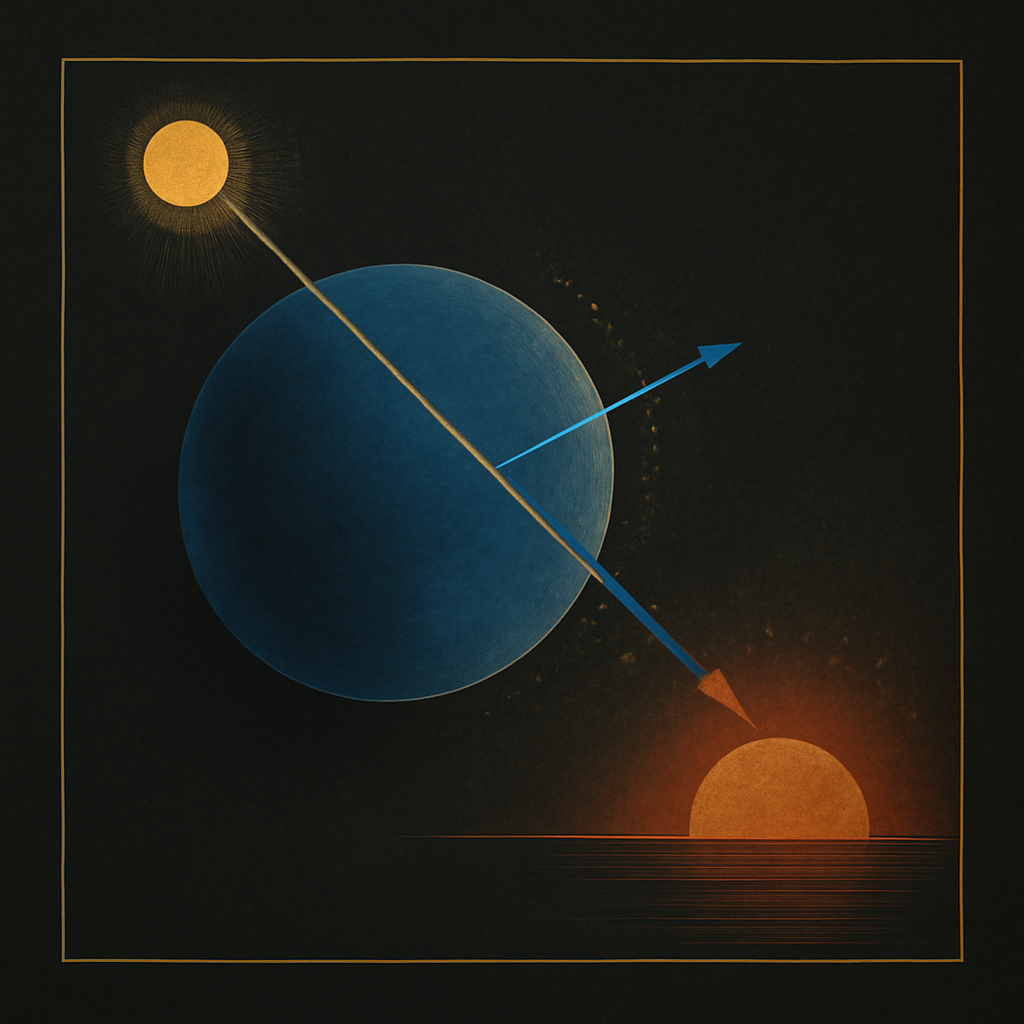
Have you ever looked up on a clear day and wondered why the sky is such a bright blue? Or watched a sunset and been amazed by the fiery reds and oranges? It turns out this colorful show is all about how sunlight interacts with the air around us. Sunlight is made up of many colors, like a rainbow. When it hits the tiny molecules in Earth's atmosphere, the blue light gets scattered all around more than other colors. This scattered blue light is what makes the sky look blue most of the time.
But at sunset, the story changes. The sun sits low in the sky, and its light has to pass through a much thicker layer of air. This longer journey means the blue light is scattered away even more, leaving the reds and oranges to shine through. That's why sunsets paint the sky in warm colors. Dust and pollution can make these colors even brighter and more dramatic. So, the sky’s colors come from sunlight being scattered differently depending on the time of day and the path light takes through our atmosphere.
“The blue sky and red sunsets are both from the same sunlight scattered differently, depending on how far the light travels through the atmosphere.”
Reflect
If the Earth’s atmosphere were thicker or thinner, how different would our sky’s colors be? Could another planet have skies of entirely different colors?
Research·3 sources·Well-Established confidence·Investigated 19 Jul 2026(2 months ago)·Grounded; verification trace not recorded·Investigation may be outdated
Your next question, in
Visual Trail
See Why Is the Sky Blue but Sunsets Are Red?
A guided visual explanation assembled from QE artwork and sourced documentary images.
01 / 02
QE visual interpretation
Frame 01
Why Is the Sky Blue but Sunsets Are Red?
The sky looks blue because blue light scatters more in the air, but at sunset, longer paths scatter blue away, leaving red and orange colors.
Image provenance and limitation
Source: AI-generated visual interpretation
Creator: Question Everything
Limitation: This image explains or evokes the subject. It is not documentary evidence and should not be used to verify a factual claim.
Evidence
What do we know?
Verified claims with confidence scoring and cited sources.
Living footnotes
Claims remain in the reading flow. Select a citation number to inspect the source behind it.
01
AcademicSupported
The sky appears blue because blue light is scattered more than other colors by the tiny gas molecules in the atmosphere.
Sunlight contains all colors, but when it enters Earth's atmosphere, it hits tiny air molecules that scatter light. Blue light waves are shorter and scatter more easily than longer wavelengths like red. This scattering sends blue light in all directions, filling the sky with blue during the day. Even though violet light scatters too, our eyes are more sensitive to blue and there's less violet in sunlight, so we see a blue sky instead of purple.
02
AcademicSupported
Sunsets look red because the sunlight travels through more atmosphere, scattering away blue light and leaving the longer red wavelengths.
When the sun is near the horizon at sunrise or sunset, its light passes through a thicker slice of atmosphere. The shorter blue and violet wavelengths get scattered out of the direct path to your eyes, so they don't reach you as much. This leaves the longer red, orange, and yellow light to come straight through. That's why sunsets glow with warm colors. Dust and pollution in the air can make these colors even more intense by scattering blue light further.
03
AcademicSupported
The same scattering process causes both the blue daytime sky and the red sunsets; the difference is the angle and distance sunlight travels through the atmosphere.
The scattering of sunlight by air molecules is called Rayleigh scattering. During the day, when the sun is high, sunlight comes straight through and blue light scatters around, coloring the sky blue. At sunset, the sunlight hits the atmosphere at a low angle and travels a longer path. This means blue light scatters so much it doesn’t reach your eyes directly, while red light, which scatters less, dominates the view. So the colors depend on how much atmosphere the sunlight passes through.
The complete record below preserves every citation, confidence input and recorded limitation.
Read the full evidence record3 findings · citations · limitations
Evidence review3 findings3 openable sources
01
Finding 1 of 3Academic
1
0/1 verified
The sky appears blue because blue light is scattered more than other colors by the tiny gas molecules in the atmosphere.
Sunlight contains all colors, but when it enters Earth's atmosphere, it hits tiny air molecules that scatter light. Blue light waves are shorter and scatter more easily than longer wavelengths like red. This scattering sends blue light in all directions, filling the sky with blue during the day. Even though violet light scatters too, our eyes are more sensitive to blue and there's less violet in sunlight, so we see a blue sky instead of purple.
Supportedmodel score 98%
One source, not peer-reviewed. Thinner than the score suggests.
REFERENCE
›View sources and limits— 1 citation, limits
Supporting passage
Sunlight contains all colors, but when it enters Earth's atmosphere, it hits tiny air molecules that scatter light. Blue light waves are shorter and scatter more easily than longer wavelengths like red. This scattering sends blue light in all directions, filling the sky with blue during the day. Even though violet light scatters too, our eyes are more sensitive to blue and there's less violet in sunlight, so we see a blue sky instead of purple.
Rests on a single source. No independent corroboration.
No peer-reviewed source among the citations.
The generator scored this 98%, which would read as “Established”. Its citations reach only “Supported”, so that is what is shown.
02
Finding 2 of 3Academic
1
0/1 verified
Sunsets look red because the sunlight travels through more atmosphere, scattering away blue light and leaving the longer red wavelengths.
When the sun is near the horizon at sunrise or sunset, its light passes through a thicker slice of atmosphere. The shorter blue and violet wavelengths get scattered out of the direct path to your eyes, so they don't reach you as much. This leaves the longer red, orange, and yellow light to come straight through. That's why sunsets glow with warm colors. Dust and pollution in the air can make these colors even more intense by scattering blue light further.
Supportedmodel score 97%
One source, not peer-reviewed. Thinner than the score suggests.
REFERENCE
›View sources and limits— 1 citation, limits
Supporting passage
When the sun is near the horizon at sunrise or sunset, its light passes through a thicker slice of atmosphere. The shorter blue and violet wavelengths get scattered out of the direct path to your eyes, so they don't reach you as much. This leaves the longer red, orange, and yellow light to come straight through. That's why sunsets glow with warm colors. Dust and pollution in the air can make these colors even more intense by scattering blue light further.
Rests on a single source. No independent corroboration.
No peer-reviewed source among the citations.
The generator scored this 97%, which would read as “Established”. Its citations reach only “Supported”, so that is what is shown.
03
Finding 3 of 3Academic
1
0/1 verified
The same scattering process causes both the blue daytime sky and the red sunsets; the difference is the angle and distance sunlight travels through the atmosphere.
The scattering of sunlight by air molecules is called Rayleigh scattering. During the day, when the sun is high, sunlight comes straight through and blue light scatters around, coloring the sky blue. At sunset, the sunlight hits the atmosphere at a low angle and travels a longer path. This means blue light scatters so much it doesn’t reach your eyes directly, while red light, which scatters less, dominates the view. So the colors depend on how much atmosphere the sunlight passes through.
Supportedmodel score 95%
One source, not peer-reviewed. Thinner than the score suggests.
REFERENCE
›View sources and limits— 1 citation, limits
Supporting passage
The scattering of sunlight by air molecules is called Rayleigh scattering. During the day, when the sun is high, sunlight comes straight through and blue light scatters around, coloring the sky blue. At sunset, the sunlight hits the atmosphere at a low angle and travels a longer path. This means blue light scatters so much it doesn’t reach your eyes directly, while red light, which scatters less, dominates the view. So the colors depend on how much atmosphere the sunlight passes through.
Rests on a single source. No independent corroboration.
No peer-reviewed source among the citations.
The generator scored this 95%, which would read as “Established”. Its citations reach only “Supported”, so that is what is shown.
Interactive Exploration
Touch, drag, and discover
These visualizations respond to your curiosity. Interact to go deeper.
process flow
How Sunlight Creates Blue Skies and Red Sunsets
Sunlight enters atmosphere
Blue light scatters in all directions
You see a blue sky during the day
Sun moves toward horizon at sunset
Blue light scatters away from your line of sight
Red and orange light reaches your eyes
statistics card
Light Scattering in Earth's Atmosphere
4
Rayleigh scattering depends on wavelength to the power of
Shorter wavelengths (blue) scatter about 4 times more strongly than longer (red)
100+
Thickness of atmosphere sunlight passes through at sunset (compared to noon)
Sunlight travels about 100 times more atmosphere at sunset than when the sun is overhead
1
Dominant color of daytime sky
Blue light scattered most by air molecules
Red/Orange
Dominant colors at sunset
Blue light scattered out, leaving reds and oranges
spectrum
Visible Light Spectrum and Scattering
Long Wavelengths (Red)Short Wavelengths (Blue/Violet)
10%
Red Light
30%
Yellow Light
60%
Green Light
90%
Blue Light
100%
Violet Light
Perspectives
How is this interpreted?
Enter a viewpoint. Notice what it reveals, what it leaves out, and whether it changes the question for you.
The EmpiricistScientific viewpointEstablished lens
From a scientific point of view, the colors of the sky are explained by the physics of light scattering. The atmosphere is full of tiny particles and gases that interact with sunlight. The key is that blue light waves are shorter and scatter more than red light waves. This is why the sky is blue during the day. When the sun sets, the sunlight’s path through the atmosphere is longer, so most of the blue light is scattered away, leaving red and orange hues. Scientists can predict exactly how the sun’s position affects these colors using atmospheric physics.
What this lens notices
01Rayleigh scattering explains why shorter wavelengths scatter more.
02The sun’s position changes the path length through the atmosphere.
03Pollution and dust can enhance sunset colors by scattering more blue light.
Application
Why does this matter to you?
Personal reflections and applications for your life.
Thought experimentSelf-Reflection
Have you ever noticed how the colors of the sky affect your mood?
Why it changes the question
Colors in nature, like the blue sky or red sunsets, can influence how we feel. Taking a moment to watch the changing sky can help you feel calm or inspired.
Try this
Next time you see a sunset, pause and observe the colors carefully. Think about how they make you feel.
Media
QE Smart Glass
Curated media selected for this investigation.
QE Glass
YOUTUBE
Why Is the Sky Blue?
NASA Space Place
Why is the sky blue and not purple, green or orange? It's all because of how the Sun's light reaches Earth! Comprehension ...
QE Glass
YOUTUBE
Why the Sky ISN'T Blue
Veritasium
I actually have many, many more questions and answers so if you want to see them, like this video and let me know in the ...
QE Glass
PODCAST
Radiolab Episode: Colors of Nature
Radiolab
An engaging podcast episode exploring natural colors, including why skies are blue and sunsets red.
Keep Going
Where this leads
Questions this investigation opens up — and what QE has already looked into.
No AI help here — no suggestions, no autocomplete, nothing finishing your sentences. That is deliberate. Working out what you think is effortful, and the effort is the part that changes you: reasoning is trained like a muscle, and a muscle that is always carried gets weaker. Let something else do the thinking and you keep the answer but lose the capacity to have reached it.
Write your current position.
Not what the page says. What you think, having read it.0 words · Nothing written yet.
Sign in to leave a mark. Your draft is saved here in the meantime.