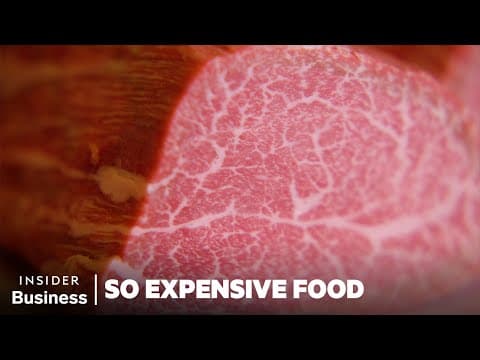
Have you ever had a steak that literally melts on your tongue like butter? That is Wagyu. The name simply means "Japanese cow." What makes this beef so special is its white flecks of fat. Instead of having a thick strip of fat just on the outside, Wagyu has fat woven right through the red meat. It looks like a beautiful, snowy spiderweb. Chefs call this "marbling." Because this unique fat melts at a very low temperature, it softens the moment it hits your warm mouth.
Getting meat this tender is an art form. Farmers in Japan raise these cows like royalty. They live in quiet, stress-free environments, drink clean water, and eat high-quality grain. Some farmers even brush their cows with stiff brushes to keep their muscles relaxed. This peaceful lifestyle, combined with special genes, creates the most expensive and delicious beef on Earth.
Verified claims with confidence scoring and cited sources.
1 of 4 findings need extra caution. Finding 2 rests on weaker sourcing than the other findings.
Living footnotes
Claims remain in the reading flow. Select a citation number to inspect the source behind it.
01
HistoricalSupported
Modern Wagyu cattle come from crossing old Japanese working breeds with Western cattle.
Long ago, Japanese cattle were bred to work hard on farms, which gave them incredible physical stamina. In 1868, Japan began to embrace Western foods, including beef. Farmers crossed these tough, native Japanese cows with cattle from Europe and Great Britain. This special mix created the unique breeds we call Wagyu today, which are famous for carrying fat inside the muscle rather than just on the outside.
02
ObservationalMixed evidence
Real Wagyu comes from four specific breeds, but one breed makes up nearly all of it.
Wagyu is not just one type of cow. It actually refers to four distinct Japanese breeds: Japanese Black, Japanese Brown, Japanese Polled, and Japanese Shorthorn. However, the Japanese Black is the true superstar of the meat world. It makes up over 90% of all Wagyu raised in Japan. This specific breed is the one that produces the super-rich, highly marbled beef that people around the world dream of eating.
03
ObservationalSupported
Wagyu fat is woven directly inside the muscle instead of sitting on the outer edge.
When you look at regular steak, the fat usually sits in a thick strip along the side. Wagyu is completely different. Its fat is called "intramuscular fat," which looks like a beautiful white web woven right through the red meat. Because this special fat melts at a much lower temperature than normal beef fat, it bastes the steak from the inside out as it cooks. This creates an incredibly juicy, melt-in-your-mouth texture.
04
HistoricalSupported
Japan tracks every single Wagyu cow's life history using a unique ten-digit number.
To prevent fraud and ensure safety, Japan uses an incredibly strict tracking system. Every single Wagyu cow is assigned its own unique ten-digit identification number. This system records the exact date the animal was born, where it lived, and its family tree. This means when you buy authentic Japanese Wagyu, you can trace the meat back to the exact farm and verify its purebred family history.
The complete record below preserves every citation, confidence input and recorded limitation.
Read the full evidence record4 findings · citations · limitations
Evidence review4 findings6 openable sources
01
Finding 1 of 4Historical
2022
1 dated source
Modern Wagyu cattle come from crossing old Japanese working breeds with Western cattle.
Long ago, Japanese cattle were bred to work hard on farms, which gave them incredible physical stamina. In 1868, Japan began to embrace Western foods, including beef. Farmers crossed these tough, native Japanese cows with cattle from Europe and Great Britain. This special mix created the unique breeds we call Wagyu today, which are famous for carrying fat inside the muscle rather than just on the outside.
Supportedmodel score 82%
2 sources agree, none peer-reviewed.
REFERENCE ×2
›View sources and limits— 2 citations, limits
Supporting passage
Long ago, Japanese cattle were bred to work hard on farms, which gave them incredible physical stamina. In 1868, Japan began to embrace Western foods, including beef. Farmers crossed these tough, native Japanese cows with cattle from Europe and Great Britain. This special mix created the unique breeds we call Wagyu today, which are famous for carrying fat inside the muscle rather than just on the outside.
QE used this source because its retrieved passage directly addresses the claim.
“Today’s Wagyu cattle are the product of crossing this native Japanese breed with a majority of imported black breeds from Great Britain, Korea, and Europe. The modern genetic process began in 1868 after Japan’s historic Meiji Restoration; a period that saw the country abandon its feudal system, replacing it with a cen…”
This passage was checked against the claim.
Retrieved 10/09/2026
REFERENCEWagyu - Wikipedia, en.wikipedia.orgverifiedWhy QE used this
QE used this source because its retrieved passage directly addresses the claim. It appeared in 2 complementary searches.
“birthplace and rearing history are checked through the traceability system. [...] In modern Japanese breed and meat classifications, Wagyu usually means four breeds: the Japanese Black, Japanese Brown, Japanese Polled, and Japanese Shorthorn.: 8 Beginning in the late nineteenth century, these breeds developed from reg…”
This passage was checked against the claim.
Retrieved 10/09/2026
What limits this
No peer-reviewed source among the citations.
02
Finding 2 of 4ObservationalNeeds caution
1/1 verified
Real Wagyu comes from four specific breeds, but one breed makes up nearly all of it.
Wagyu is not just one type of cow. It actually refers to four distinct Japanese breeds: Japanese Black, Japanese Brown, Japanese Polled, and Japanese Shorthorn. However, the Japanese Black is the true superstar of the meat world. It makes up over 90% of all Wagyu raised in Japan. This specific breed is the one that produces the super-rich, highly marbled beef that people around the world dream of eating.
Mixed evidencemodel score 55%
Verification was mixed across 1 source.
REFERENCE
›View sources and limits— 1 citation, limits
Supporting passage
Wagyu is not just one type of cow. It actually refers to four distinct Japanese breeds: Japanese Black, Japanese Brown, Japanese Polled, and Japanese Shorthorn. However, the Japanese Black is the true superstar of the meat world. It makes up over 90% of all Wagyu raised in Japan. This specific breed is the one that produces the super-rich, highly marbled beef that people around the world dream of eating.
Citations (1 of 2 survived verification)
REFERENCEWagyu - Wikipedia, en.wikipedia.orgverifiedWhy QE used this
QE used this source because its retrieved passage directly addresses the claim. It appeared in 2 complementary searches.
“Under guidelines issued by the Ministry of Agriculture, Forestry and Fisheries, the designation Wagyu is recommended only for beef from cattle documented as one of the four breeds or specified crosses between them and confirmed as having been born and raised in Japan. Breed identity is established through breed-regist…”
This passage was checked against the claim.
Retrieved 10/09/2026
What limits this
1 of 2 citations failed verification and are not shown.
Rests on a single source. No independent corroboration.
No peer-reviewed source among the citations.
Verification was mixed — some citations supported the claim and some did not.
03
Finding 3 of 4Observational
2/2 verified
Wagyu fat is woven directly inside the muscle instead of sitting on the outer edge.
When you look at regular steak, the fat usually sits in a thick strip along the side. Wagyu is completely different. Its fat is called "intramuscular fat," which looks like a beautiful white web woven right through the red meat. Because this special fat melts at a much lower temperature than normal beef fat, it bastes the steak from the inside out as it cooks. This creates an incredibly juicy, melt-in-your-mouth texture.
Supportedmodel score 82%
2 sources agree, none peer-reviewed.
REFERENCE ×2
›View sources and limits— 2 citations, limits
Supporting passage
When you look at regular steak, the fat usually sits in a thick strip along the side. Wagyu is completely different. Its fat is called "intramuscular fat," which looks like a beautiful white web woven right through the red meat. Because this special fat melts at a much lower temperature than normal beef fat, it bastes the steak from the inside out as it cooks. This creates an incredibly juicy, melt-in-your-mouth texture.
QE used this source because its retrieved passage directly addresses the claim. It appeared in 2 complementary searches.
“This intricate marbling refers to the fine, interwoven streaks of intramuscular fat distributed throughout the meat. Unlike the surface fat seen in other types of beef, wagyu’s marbling is deeply ingrained within the muscle, giving the beef a different appearance. This fat is responsible for wagyu’s melt-in-your-mouth…”
QE used this source because its retrieved passage directly addresses the claim.
“What is American Wagyu Beef? Snake River Farms American Wagyu is the result of crossbreeding 100% Japanese Wagyu cattle with high quality American breeds. The combination produces beef with extraordinary marbling (or intramuscular fat) and the robust beef flavor of traditional American beef. The result is beef with a…”
This passage was checked against the claim.
Retrieved 10/09/2026
What limits this
No peer-reviewed source among the citations.
04
Finding 4 of 4Historical
1/1 verified
Japan tracks every single Wagyu cow's life history using a unique ten-digit number.
To prevent fraud and ensure safety, Japan uses an incredibly strict tracking system. Every single Wagyu cow is assigned its own unique ten-digit identification number. This system records the exact date the animal was born, where it lived, and its family tree. This means when you buy authentic Japanese Wagyu, you can trace the meat back to the exact farm and verify its purebred family history.
Supportedmodel score 70%
One source, not peer-reviewed. Thinner than the score suggests.
REFERENCE
›View sources and limits— 1 citation, limits
Supporting passage
To prevent fraud and ensure safety, Japan uses an incredibly strict tracking system. Every single Wagyu cow is assigned its own unique ten-digit identification number. This system records the exact date the animal was born, where it lived, and its family tree. This means when you buy authentic Japanese Wagyu, you can trace the meat back to the exact farm and verify its purebred family history.
Citations
REFERENCEWagyu - Wikipedia, en.wikipedia.orgverifiedWhy QE used this
QE used this source because its retrieved passage directly addresses the claim. It appeared in 2 complementary searches.
“After bovine spongiform encephalopathy (BSE) was first confirmed in Japan in 2001, the Beef Traceability Law was enacted in 2003. The system assigns each animal a ten-digit identification number and records its birth and movements; it applies to all cattle in Japan, not only Wagyu. This system is also used to verify t…”
This passage was checked against the claim.
Retrieved 10/09/2026
What limits this
Rests on a single source. No independent corroboration.
No peer-reviewed source among the citations.
The reference archive
Sources & Further Reading
Continue exploring the research, reporting and reference material available on this subject.
These were found while researching this question but are not used as evidence for any claim above.
These visualizations respond to your curiosity. Interact to go deeper.
comparison table
Wagyu vs. Standard Beef
Wagyu Beef
Standard Beef
Fat Distribution
Woven inside the muscle (marbling)
Mostly sits on the outer edges
Fat Melting Point
Lower than human body temperature
Higher than human body temperature
Primary Breed Origin
Four specific Japanese breeds
Various Western breeds like Angus
Historical Use
Bred for physical farm work
Bred primarily for meat production
Tap any row to highlight and compare
statistics card
Wagyu by the Numbers
90%
Japanese Black Breed
The percentage of Japanese Wagyu that comes from the highly marbled Japanese Black breed.
10
Digits in ID Number
The length of the unique tracking code assigned to every Wagyu cow in Japan to prove its origin.
1868
The Turning Point
The year of the Meiji Restoration, when Japan began crossbreeding native cows with Western cattle.
Perspectives
How is this interpreted?
Enter a viewpoint. Notice what it reveals, what it leaves out, and whether it changes the question for you.
The EmpiricistScientific viewpointEstablished lens
From a scientific view, Wagyu fat is surprisingly different from normal beef fat. It contains a much higher amount of monounsaturated fatty acids, which are the same "healthy fats" found in olive oil. These fats melt at a lower temperature, which is why the meat feels so silky on your tongue. While it is still rich beef, its unique chemical makeup makes it a more bioavailable source of high-quality protein and healthy fats than standard cattle breeds.
What this lens notices
01Higher levels of monounsaturated fatty acids
02Melting point is lower than human body temperature
03Easier to digest and absorb protein
Application
Why does this matter to you?
Personal reflections and applications for your life.
Thought experimentPractical
How should you cook a highly marbled steak at home?
Why it changes the question
Because Wagyu fat melts at such a low temperature, cooking it like a regular steak will ruin it. You need to cook it quickly in a hot pan without adding extra oil, letting its own fat baste the meat.
Try this
Try cooking a small slice of Wagyu in a dry, hot cast-iron skillet for just a minute on each side, then let it rest before tasting.
Media
QE Smart Glass
Curated media selected for this investigation.
QE Glass
YOUTUBE
The Science of A5 Wagyu: Why Japanese Beef is a Biological Masterpiece
AI preserved Japan
Wagyu is not just a steak. It is a 100-year-old project of artificial evolution. Imagine a meat so delicate it transitions from solid to ...
QE Glass
YOUTUBE
The history, science and taste of Wagyu beef
Adam Ragusea
Thanks to Crowd Cow for sponsoring this video! Get $15 off your first order and an extra 5% off everything if you become a ...
QE Glass
YOUTUBE
Vegan Wagyu beef? Scientists in Japan 3D-print it
Reuters
Wagyu beef could soon have a vegan alternative thanks to scientists at Japan's Osaka University #News #Reuters #Japan ...
QE Glass
YOUTUBE
Scientists Are Developing a Way to Lab Grow Wagyu Steak to Save the Planet
Amaze Lab
Scientists say this 3D printed meat could be on your plate within the next 5 years.
QE Glass
YOUTUBE
Wagyu 101: Why This Beef Is Built Different (Literally)
The Meat Dudes
What actually makes Wagyu beef different from the steak you're used to? Spoiler: it's not hype — it's genetics, biology, and some ...
QE Glass
YOUTUBE
Benefits of assisted reproduction in beef herds - Wagyu
CattlePlan
Dr. Joanne Connolly from Impact Veterinary Services (Koumala, Queensland) discusses the benefits of assisted reproduction in ...
QE Glass
YOUTUBE
Scientists in Japan create 3D-printed Wagyu beef
South China Morning Post
Subscribe to our YouTube channel for free here: https://sc.mp/subscribe-youtube Researchers at Osaka University are trying to ...
QE Glass
YOUTUBE
Why Wagyu Beef Is So Expensive | So Expensive
Business Insider
Wagyu beef is the most prized beef in the world. A single cow can be sold for up to $30000. Part of the reason why it's so ...
QE Glass
PODCAST
The Truth About Wagyu Beef
The Dave Chang Show
An engaging conversation about the history, grading, and culinary experience of eating authentic Wagyu.
Keep Going
Where this leads
Questions this investigation opens up — and what QE has already looked into.
No AI help here — no suggestions, no autocomplete, nothing finishing your sentences. That is deliberate. Working out what you think is effortful, and the effort is the part that changes you: reasoning is trained like a muscle, and a muscle that is always carried gets weaker. Let something else do the thinking and you keep the answer but lose the capacity to have reached it.
Write your current position.
Not what the page says. What you think, having read it.0 words · Nothing written yet.
Sign in to leave a mark. Your draft is saved here in the meantime.