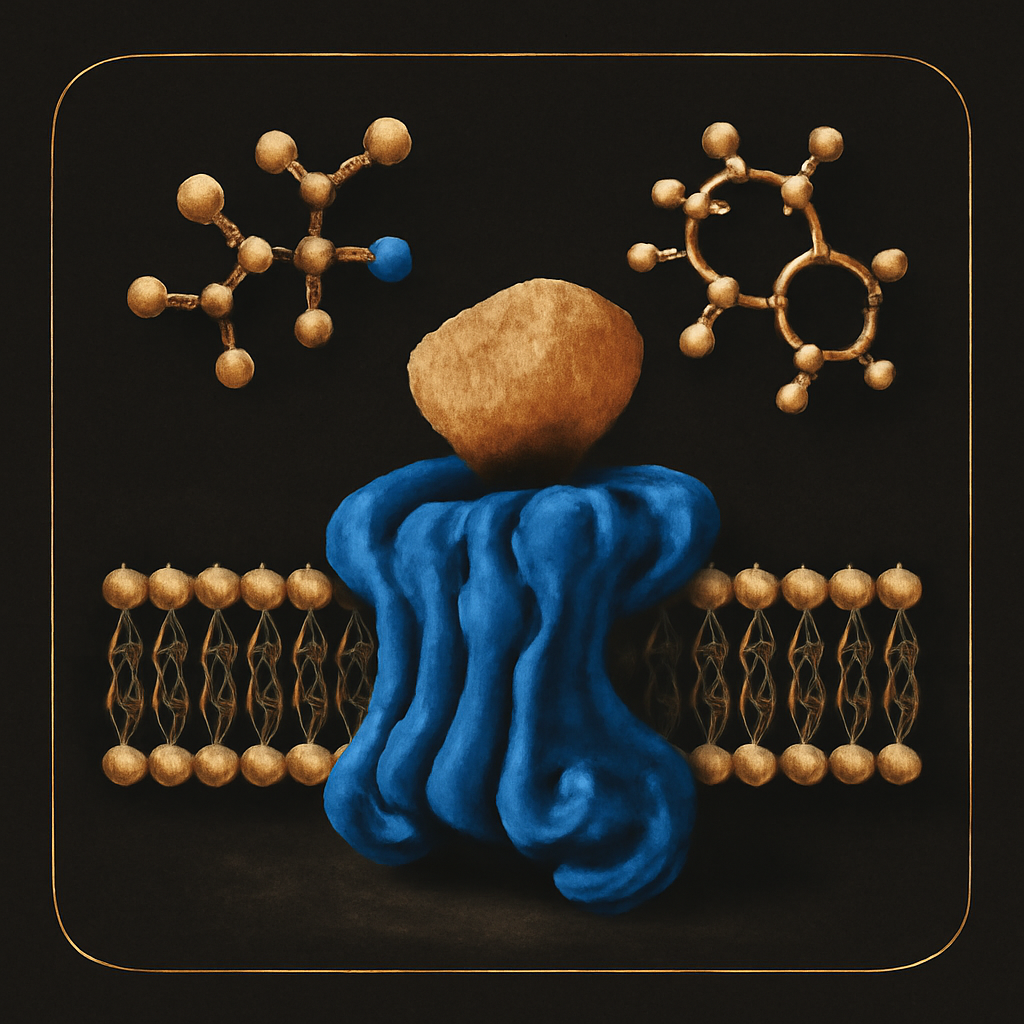
The Molecular Magic of Sweetness: How T1R3 Taste Receptors Detect Sugar
Sweetness is a sensation we often take for granted, yet it begins with an intricate molecular dance on our tongues. The T1R3 protein, part of a receptor duo with T1R2, acts as a finely tuned sensor for sweet compounds. These receptors belong to a family called G protein-coupled receptors, nestled in the membranes of taste cells. When sweet molecules like glucose or artificial sweeteners bind to the T1R3-T1R2 complex, they trigger a chain reaction inside the cell, converting chemical signals into electrical ones that the brain interprets as sweet.
At the molecular level, the T1R3 receptor changes shape upon binding to a sweet molecule. This shape-shift activates associated proteins inside the taste cell, amplifying the signal. It's a remarkable example of how nature translates tiny chemical interactions into a rich sensory experience. This process not only influences our food choices but also plays a role in survival, guiding us toward energy-rich nutrients.
✨
Wonder Moment
“The T1R3 receptor detects sweetness by changing shape when sugar molecules bind, unlocking a cascade of signals that tell your brain 'this is sweet.'”
Reflect
If sweetness is just a shape change in a protein, how might our cravings be influenced by tiny shifts in molecular dance?
2 sources·Established confidence·Investigated 13 Aug 2026(13 days ago)·Source-verified·May need refresh
Your next question, in
Visual Trail
See The Molecular Magic of Sweetness: How T1R3 Taste Receptors Detect Sugar
A guided visual explanation assembled from QE artwork and sourced documentary images.
01 / 02
QE visual interpretation
Frame 01
The Molecular Magic of Sweetness: How T1R3 Taste Receptors Detect Sugar
T1R3 receptors detect sweetness by binding sweet molecules and triggering signals that alert the brain.
Image provenance and limitation
Source: AI-generated visual interpretation
Creator: Question Everything
Limitation: This image explains or evokes the subject. It is not documentary evidence and should not be used to verify a factual claim.
Evidence
What do we know?
Verified claims with confidence scoring and cited sources.
1 of 3 findings need extra caution. Finding 1 rests on weaker sourcing than the other findings.
Living footnotes
Claims remain in the reading flow. Select a citation number to inspect the source behind it.
01
AcademicNot confirmed
The sweet taste receptor is a heterodimer composed of T1R2 and T1R3 subunits that together detect sugars and sweeteners.
Sweetness perception relies on the T1R2 and T1R3 proteins pairing up to form a receptor. This duo binds various sweet molecules, from natural sugars like glucose to artificial sweeteners. Alone, T1R3 cannot signal sweetness effectively, but combined with T1R2, it creates the key gateway for sweet taste detection on the tongue.
02
AcademicSupported
Sugars bind primarily to the extracellular 'Venus flytrap' domain of both T1R2 and T1R3, triggering a conformational change that activates the receptor.
The receptor's Venus flytrap domain acts like a clamshell that snaps shut upon sugar binding. This closure rearranges the receptor’s shape, especially in the transmembrane regions, which then activates internal signaling inside the taste cell. This molecular triggering initiates the electrical signals sent to the brain, producing the sensation of sweetness.
03
ExperimentalSupported
The transmembrane domain of T1R3 contains specific amino acid residues essential for responding to certain sweeteners like cyclamate.
Research shows that the T1R3 subunit’s transmembrane part has key amino acids that determine whether it can detect artificial sweeteners such as cyclamate. Mutations in these residues can abolish the receptor’s ability to respond, highlighting this domain’s critical role in sweet taste recognition beyond the extracellular binding sites.
The complete record below preserves every citation, confidence input and recorded limitation.
Read the full evidence record3 findings · citations · limitations
Evidence review3 findings2 openable sources
01
Finding 1 of 3AcademicNeeds caution
0
0/0 verified
The sweet taste receptor is a heterodimer composed of T1R2 and T1R3 subunits that together detect sugars and sweeteners.
Sweetness perception relies on the T1R2 and T1R3 proteins pairing up to form a receptor. This duo binds various sweet molecules, from natural sugars like glucose to artificial sweeteners. Alone, T1R3 cannot signal sweetness effectively, but combined with T1R2, it creates the key gateway for sweet taste detection on the tongue.
Not confirmedmodel score 30%
Scored as if sourced, but every citation failed verification.
NO SURVIVING CITATION
›View sources and limits— limits
Supporting passage
Sweetness perception relies on the T1R2 and T1R3 proteins pairing up to form a receptor. This duo binds various sweet molecules, from natural sugars like glucose to artificial sweeteners. Alone, T1R3 cannot signal sweetness effectively, but combined with T1R2, it creates the key gateway for sweet taste detection on the tongue.
Citations (0 of 1 survived verification)
Nothing openable. Every citation was removed by provenance validation.
What limits this
All 1 citation on this claim failed verification and were removed. Nothing openable supports it.
02
Finding 2 of 3Academic
1
0/1 verified
Sugars bind primarily to the extracellular 'Venus flytrap' domain of both T1R2 and T1R3, triggering a conformational change that activates the receptor.
The receptor's Venus flytrap domain acts like a clamshell that snaps shut upon sugar binding. This closure rearranges the receptor’s shape, especially in the transmembrane regions, which then activates internal signaling inside the taste cell. This molecular triggering initiates the electrical signals sent to the brain, producing the sensation of sweetness.
Supportedmodel score 92%
One source, not peer-reviewed. Thinner than the score suggests.
REFERENCE
›View sources and limits— 1 citation, limits
Supporting passage
The receptor's Venus flytrap domain acts like a clamshell that snaps shut upon sugar binding. This closure rearranges the receptor’s shape, especially in the transmembrane regions, which then activates internal signaling inside the taste cell. This molecular triggering initiates the electrical signals sent to the brain, producing the sensation of sweetness.
Rests on a single source. No independent corroboration.
No peer-reviewed source among the citations.
The generator scored this 92%, which would read as “Established”. Its citations reach only “Supported”, so that is what is shown.
03
Finding 3 of 3Experimental
1
0/1 verified
The transmembrane domain of T1R3 contains specific amino acid residues essential for responding to certain sweeteners like cyclamate.
Research shows that the T1R3 subunit’s transmembrane part has key amino acids that determine whether it can detect artificial sweeteners such as cyclamate. Mutations in these residues can abolish the receptor’s ability to respond, highlighting this domain’s critical role in sweet taste recognition beyond the extracellular binding sites.
Supportedmodel score 90%
A single peer-reviewed source. No independent corroboration.
PRIMARY STUDY
›View sources and limits— 1 citation, limits
Supporting passage
Research shows that the T1R3 subunit’s transmembrane part has key amino acids that determine whether it can detect artificial sweeteners such as cyclamate. Mutations in these residues can abolish the receptor’s ability to respond, highlighting this domain’s critical role in sweet taste recognition beyond the extracellular binding sites.
Rests on a single source. No independent corroboration.
The generator scored this 90%, which would read as “Established”. Its citations reach only “Supported”, so that is what is shown.
Interactive Exploration
Touch, drag, and discover
These visualizations respond to your curiosity. Interact to go deeper.
process flow
How T1R3 Detects Sweetness: A Molecular Signal Cascade
Sugar Molecule Binds
Receptor Changes Shape
Signal Transduction
Neural Signal Sent
statistics card
Key Facts About T1R3 Sweet Receptor
2001
Year T1R3 Gene Was Identified
Marking a major advance in understanding sweet taste.
2
Subunits Forming the Sweet Receptor
T1R2 and T1R3 combine to detect sweetness.
6
Amino Acid Residues in T1R3 Transmembrane Domain Critical for Cyclamate Response
Highlighting the specificity of sweetener binding.
Perspectives
How is this interpreted?
Enter a viewpoint. Notice what it reveals, what it leaves out, and whether it changes the question for you.
The EmpiricistScientific viewpointLive tension
From a molecular biology standpoint, T1R3 is a sophisticated sensor finely tuned to detect a wide range of sweet molecules through structural shifts. This flexibility explains how one receptor can recognize both natural sugars and synthetic sweeteners, making it a remarkable example of evolutionary adaptation that balances sensitivity and specificity in taste detection.
What this lens notices
01T1R3 partners with T1R2 to form a functional receptor.
02The Venus flytrap domain binds diverse sweeteners.
03Transmembrane domain mutations alter sweetener response.
Application
Why does this matter to you?
Personal reflections and applications for your life.
Thought experimentSelf-Reflection
How might understanding the molecular basis of sweetness change your view on sugar cravings?
Why it changes the question
Knowing that sweetness detection comes from specific protein interactions can help you realize cravings are biochemical signals, not just habits or willpower. This insight can empower you to make mindful choices about sugar consumption.
Try this
Try noting moments when you crave sweets and reflect on whether it's your body signaling a need or just a learned response.
Media
QE Smart Glass
Curated media selected for this investigation.
QE Glass
YOUTUBE
What are Taste Receptors? How Does it Work? Animation
No AI help here — no suggestions, no autocomplete, nothing finishing your sentences. That is deliberate. Working out what you think is effortful, and the effort is the part that changes you: reasoning is trained like a muscle, and a muscle that is always carried gets weaker. Let something else do the thinking and you keep the answer but lose the capacity to have reached it.
Write your current position.
Not what the page says. What you think, having read it.0 words · Nothing written yet.
Sign in to leave a mark. Your draft is saved here in the meantime.