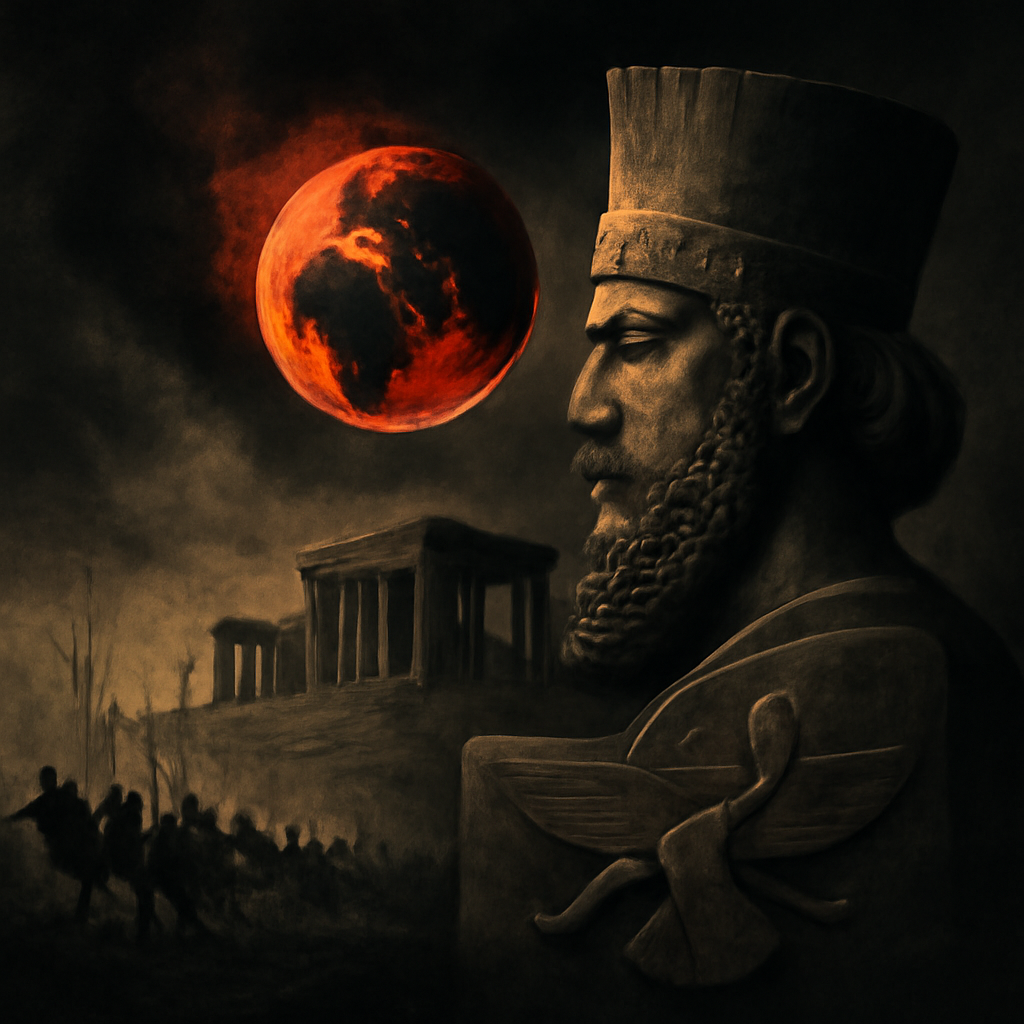
The Achaemenid Empire: The Ancient Superpower That Shaped the World
The Achaemenid Empire was one of the largest and most powerful empires of the ancient world. It started around 550 BCE when Cyrus the Great united many small kingdoms in what is now Iran. This empire stretched from the edges of Greece to the Indus Valley, covering parts of three continents: Asia, Africa, and Europe. It was a melting pot of cultures, languages, and religions, all under one vast government.
What made the Achaemenid Empire important was its approach to ruling such a huge and diverse area. Instead of forcing everyone to be the same, it let different peoples keep their own customs and laws, while still making sure they paid taxes and kept peace. The empire built impressive roads and postal systems to connect its lands and helped spread ideas, goods, and technology. Its influence can still be seen today in how governments manage multicultural societies and long-distance communication.
“The Achaemenid Empire was the first to rule a huge, diverse land by respecting local cultures and building systems that connected people across thousands of miles.”
Reflect
If an empire built on respect and communication worked thousands of years ago, how can we apply those lessons to today’s global challenges?
1 source·Established confidence·Investigated 16 Jul 2026(1 month ago)·Investigation may be outdated
Your next question, in
Visual Trail
See The Achaemenid Empire: The Ancient Superpower That Shaped the World
A guided visual explanation assembled from QE artwork and sourced documentary images.
01 / 05
QE visual interpretation
Frame 01
The Achaemenid Empire: The Ancient Superpower That Shaped the World
The Achaemenid Empire was a huge ancient empire known for uniting many cultures and building early systems of government and communication.
Image provenance and limitation
Source: AI-generated visual interpretation
Creator: Question Everything
Limitation: This image explains or evokes the subject. It is not documentary evidence and should not be used to verify a factual claim.
Evidence
What do we know?
Verified claims with confidence scoring and cited sources.
Generated without source retrieval. QE did not fetch sources for this investigation, so no citation here was checked against a retrieved set. Claims reflect the model’s training data. 4 of 5 findings carry no openable link at all.
4 of 5 findings need extra caution. Finding 1, Finding 2, Finding 3, Finding 5 rest on weaker sourcing than the other findings.
Living footnotes
Claims remain in the reading flow. Select a citation number to inspect the source behind it.
01
HistoricalNot confirmed
The Achaemenid Empire was founded by Cyrus the Great around 550 BCE.
Cyrus the Great defeated the Median Empire and began uniting various tribes and kingdoms in the region of modern-day Iran. He created a powerful empire through military skill and diplomacy. His leadership set the foundation for one of the largest empires in history, lasting roughly two centuries.
02
HistoricalNot confirmed
The empire stretched from the Balkans and Egypt in the west to the Indus Valley in the east.
At its peak, the Achaemenid Empire covered an enormous area, roughly 5.5 million square kilometers. This made it the largest empire the world had seen at the time. It included parts of modern countries like Turkey, Iraq, Egypt, Pakistan, and Greece, connecting diverse cultures and peoples under one administration.
03
HistoricalNot confirmed
The Achaemenid rulers allowed conquered peoples to keep their own customs and religions.
Unlike many empires that forced their culture on conquered lands, the Achaemenid kings practiced tolerance. They respected local traditions and religions, which helped keep peace and loyalty. For example, Cyrus the Great famously allowed the Jewish people to return to Jerusalem and rebuild their temple, a story recorded even in the Bible.
04
HistoricalSupported
The empire built an extensive road system and a postal service to connect its vast territories.
The Royal Road was a famous highway that allowed messengers to travel quickly across the empire. This road stretched about 2,500 kilometers, roughly the distance from New York City to Miami. Coupled with a system of mounted couriers, it enabled efficient communication and trade, helping unify the empire.
05
HistoricalNot confirmed
The Achaemenid Empire influenced later governments and cultures, including the Greeks and Romans.
The administrative techniques, cultural tolerance, and infrastructure of the Achaemenids inspired later empires. Greek historians like Herodotus wrote about Persia’s power and organization. The empire showed that ruling a vast, diverse land could be done through respect, communication, and efficient governance—ideas that shaped later civilizations.
The complete record below preserves every citation, confidence input and recorded limitation.
Read the full evidence record5 findings · citations · limitations
Evidence review5 findings1 openable sources
01
Finding 1 of 5HistoricalNeeds caution
0/0 verified
The Achaemenid Empire was founded by Cyrus the Great around 550 BCE.
Cyrus the Great defeated the Median Empire and began uniting various tribes and kingdoms in the region of modern-day Iran. He created a powerful empire through military skill and diplomacy. His leadership set the foundation for one of the largest empires in history, lasting roughly two centuries.
Not confirmedmodel score 98%
Written from the model's own knowledge. No source was retrieved or checked.
UNVERIFIED — NO RETRIEVAL
›View sources and limits— limits
Supporting passage
Cyrus the Great defeated the Median Empire and began uniting various tribes and kingdoms in the region of modern-day Iran. He created a powerful empire through military skill and diplomacy. His leadership set the foundation for one of the largest empires in history, lasting roughly two centuries.
Citations (0 of 1 survived verification)
Nothing openable. No sources were retrieved for this investigation, so none were checked.
What limits this
This investigation was generated without source retrieval. The model named a source but gave no link, and no verification step ran against it.
The claim reflects the model's training data, not a checked citation.
The generator scored this 98%, which would read as “Established”. Its citations reach only “Unresolved”, so that is what is shown.
02
Finding 2 of 5HistoricalNeeds caution
0/0 verified
The empire stretched from the Balkans and Egypt in the west to the Indus Valley in the east.
At its peak, the Achaemenid Empire covered an enormous area, roughly 5.5 million square kilometers. This made it the largest empire the world had seen at the time. It included parts of modern countries like Turkey, Iraq, Egypt, Pakistan, and Greece, connecting diverse cultures and peoples under one administration.
Not confirmedmodel score 96%
Written from the model's own knowledge. No source was retrieved or checked.
UNVERIFIED — NO RETRIEVAL
›View sources and limits— limits
Supporting passage
At its peak, the Achaemenid Empire covered an enormous area, roughly 5.5 million square kilometers. This made it the largest empire the world had seen at the time. It included parts of modern countries like Turkey, Iraq, Egypt, Pakistan, and Greece, connecting diverse cultures and peoples under one administration.
Citations (0 of 1 survived verification)
Nothing openable. No sources were retrieved for this investigation, so none were checked.
What limits this
This investigation was generated without source retrieval. The model named a source but gave no link, and no verification step ran against it.
The claim reflects the model's training data, not a checked citation.
The generator scored this 96%, which would read as “Established”. Its citations reach only “Unresolved”, so that is what is shown.
03
Finding 3 of 5HistoricalNeeds caution
0/0 verified
The Achaemenid rulers allowed conquered peoples to keep their own customs and religions.
Unlike many empires that forced their culture on conquered lands, the Achaemenid kings practiced tolerance. They respected local traditions and religions, which helped keep peace and loyalty. For example, Cyrus the Great famously allowed the Jewish people to return to Jerusalem and rebuild their temple, a story recorded even in the Bible.
Not confirmedmodel score 95%
Written from the model's own knowledge. No source was retrieved or checked.
UNVERIFIED — NO RETRIEVAL
›View sources and limits— limits
Supporting passage
Unlike many empires that forced their culture on conquered lands, the Achaemenid kings practiced tolerance. They respected local traditions and religions, which helped keep peace and loyalty. For example, Cyrus the Great famously allowed the Jewish people to return to Jerusalem and rebuild their temple, a story recorded even in the Bible.
Citations (0 of 1 survived verification)
Nothing openable. No sources were retrieved for this investigation, so none were checked.
What limits this
This investigation was generated without source retrieval. The model named a source but gave no link, and no verification step ran against it.
The claim reflects the model's training data, not a checked citation.
The generator scored this 95%, which would read as “Established”. Its citations reach only “Unresolved”, so that is what is shown.
04
Finding 4 of 5Historical
2012
1 dated source
The empire built an extensive road system and a postal service to connect its vast territories.
The Royal Road was a famous highway that allowed messengers to travel quickly across the empire. This road stretched about 2,500 kilometers, roughly the distance from New York City to Miami. Coupled with a system of mounted couriers, it enabled efficient communication and trade, helping unify the empire.
Supportedmodel score 94%
One source, not peer-reviewed. Thinner than the score suggests.
REPORTING
›View sources and limits— 1 citation, limits
Supporting passage
The Royal Road was a famous highway that allowed messengers to travel quickly across the empire. This road stretched about 2,500 kilometers, roughly the distance from New York City to Miami. Coupled with a system of mounted couriers, it enabled efficient communication and trade, helping unify the empire.
Generated without source retrieval — citations here were not verified against a retrieved set.
Rests on a single source. No independent corroboration.
No peer-reviewed source among the citations.
The generator scored this 94%, which would read as “Established”. Its citations reach only “Supported”, so that is what is shown.
05
Finding 5 of 5HistoricalNeeds caution
0/0 verified
The Achaemenid Empire influenced later governments and cultures, including the Greeks and Romans.
The administrative techniques, cultural tolerance, and infrastructure of the Achaemenids inspired later empires. Greek historians like Herodotus wrote about Persia’s power and organization. The empire showed that ruling a vast, diverse land could be done through respect, communication, and efficient governance—ideas that shaped later civilizations.
Not confirmedmodel score 93%
Written from the model's own knowledge. No source was retrieved or checked.
UNVERIFIED — NO RETRIEVAL
›View sources and limits— limits
Supporting passage
The administrative techniques, cultural tolerance, and infrastructure of the Achaemenids inspired later empires. Greek historians like Herodotus wrote about Persia’s power and organization. The empire showed that ruling a vast, diverse land could be done through respect, communication, and efficient governance—ideas that shaped later civilizations.
Citations (0 of 1 survived verification)
Nothing openable. No sources were retrieved for this investigation, so none were checked.
What limits this
This investigation was generated without source retrieval. The model named a source but gave no link, and no verification step ran against it.
The claim reflects the model's training data, not a checked citation.
The generator scored this 93%, which would read as “Established”. Its citations reach only “Unresolved”, so that is what is shown.
Interactive Exploration
Touch, drag, and discover
These visualizations respond to your curiosity. Interact to go deeper.
timeline
Key Events in the Achaemenid Empire
Loading timeline…
relationship map
The Achaemenid Empire and Its Connections
Mapping relationships…
Drag nodes to rearrange — tap for details
statistics card
Facts About the Achaemenid Empire
5.5 million km²
Empire size at peak
One of the largest empires in ancient history
2,500 km
Length of the Royal Road
Distance roughly from New York City to Miami
200 years
Approximate duration of the empire
From Cyrus’s rise to Alexander's conquest
20+
Languages spoken in the empire
Showing its cultural diversity
process flow
How the Achaemenid Empire Managed Its Vast Lands
Conquer and incorporate
Respect local customs
Organize administration
Build infrastructure
Collect taxes and maintain order
Visual Gallery
Images & artifacts
Historical images, diagrams, and visual knowledge from Wikimedia Commons.
Perspectives
How is this interpreted?
Enter a viewpoint. Notice what it reveals, what it leaves out, and whether it changes the question for you.
The EmpiricistScientific viewpointLive tension
From an archaeological and historical point of view, the Achaemenid Empire is a crucial subject of study because it marks a turning point in empire-building. It shows how large-scale governance and multicultural management can work. Excavations of palaces, roads, and inscriptions reveal a complex society that balanced central control with local freedom.
What this lens notices
01Archaeological finds show advanced engineering like qanat water systems.
02Inscriptions in multiple languages reveal respect for diversity.
03The empire’s size required new ways to organize power and resources.
Application
Why does this matter to you?
Personal reflections and applications for your life.
Thought experimentSelf-Reflection
How do you think respect for cultural differences helps in today's global world?
Why it changes the question
The Achaemenid Empire shows us that respecting different cultures can help keep peace and cooperation over large areas. Today, with so much connection worldwide, this lesson is still important for communities and countries to get along.
Try this
Try learning about a culture different from your own and think about what you can appreciate or understand better.
Media
QE Smart Glass
Curated media selected for this investigation.
QE Glass
YOUTUBE
The Persians & Greeks: Crash Course World History #5
CrashCourse
In which John compares and contrasts Greek civilization and the Persian Empire. Of course, we're glad that Greek civilization ...
QE Glass
YOUTUBE
The ENTIRE History of Iran: From Persian Empire to Islamic Theocracy
Empires Revisited
Our Get the Recent Update: https://youtu.be/x21eEm6IGKs Iran's story stretches back thousands of years — from the mighty ...
QE Glass
YOUTUBE
The Entire History of the Persian Achaemenid Empire (550-330 BC) / Ancient History Documentary
History Time
Get MagellanTV here: https://try.magellantv.com/historytime & get an exclusive offer extended to our viewers: an extra month ...
QE Glass
YOUTUBE
The Persian Empire Explained in 9 Minutes
Captivating History
Join the Captivating History Book Club: https://bit.ly/3TMmpU2 Get a FREE mythology bundle ebook covering Greek, Norse, and ...
QE Glass
YOUTUBE
The ENTIRE History of The Persian Empire | Documentary
Beginning To Now
The Complete History of The Persian Empire | A Beginning To Now Production Persia, now called Iran, is a fascinating country.
QE Glass
YOUTUBE
The ENTIRE Story of the Persian Empire – Full Detailed Documentary
Ancestors Civilization
Step into the remarkable journey of one of history's greatest civilizations with this in-depth documentary: The Entire Story of the ...
QE Glass
YOUTUBE
The ENTIRE History of The Persian Empire | Documentary
Beginning To Now
The Complete History of The Persian Empire | A Beginning To Now Production Persia, now called Iran, is a fascinating country.
QE Glass
YOUTUBE
Cyrus the Great: Founder of the Persian Empire and Architect of History
History Beginning
QE Glass
PODCAST
Radiolab: Empire and Tolerance
Radiolab
An engaging podcast episode discussing how ancient empires dealt with diversity.
QE Glass
YOUTUBE
Why Did the Royal Road Become the Lifeline of the Persian Empire? #History
History Explained TV
Discover how the Royal Road transformed the Achaemenid Empire into one of the most durable states of the ancient world.
Connected context
Connected entities
The people, places, concepts, and events that matter here.
Keep Going
Where this leads
Questions this investigation opens up — and what QE has already looked into.
No AI help here — no suggestions, no autocomplete, nothing finishing your sentences. That is deliberate. Working out what you think is effortful, and the effort is the part that changes you: reasoning is trained like a muscle, and a muscle that is always carried gets weaker. Let something else do the thinking and you keep the answer but lose the capacity to have reached it.
Write your current position.
Not what the page says. What you think, having read it.0 words · Nothing written yet.
Sign in to leave a mark. Your draft is saved here in the meantime.