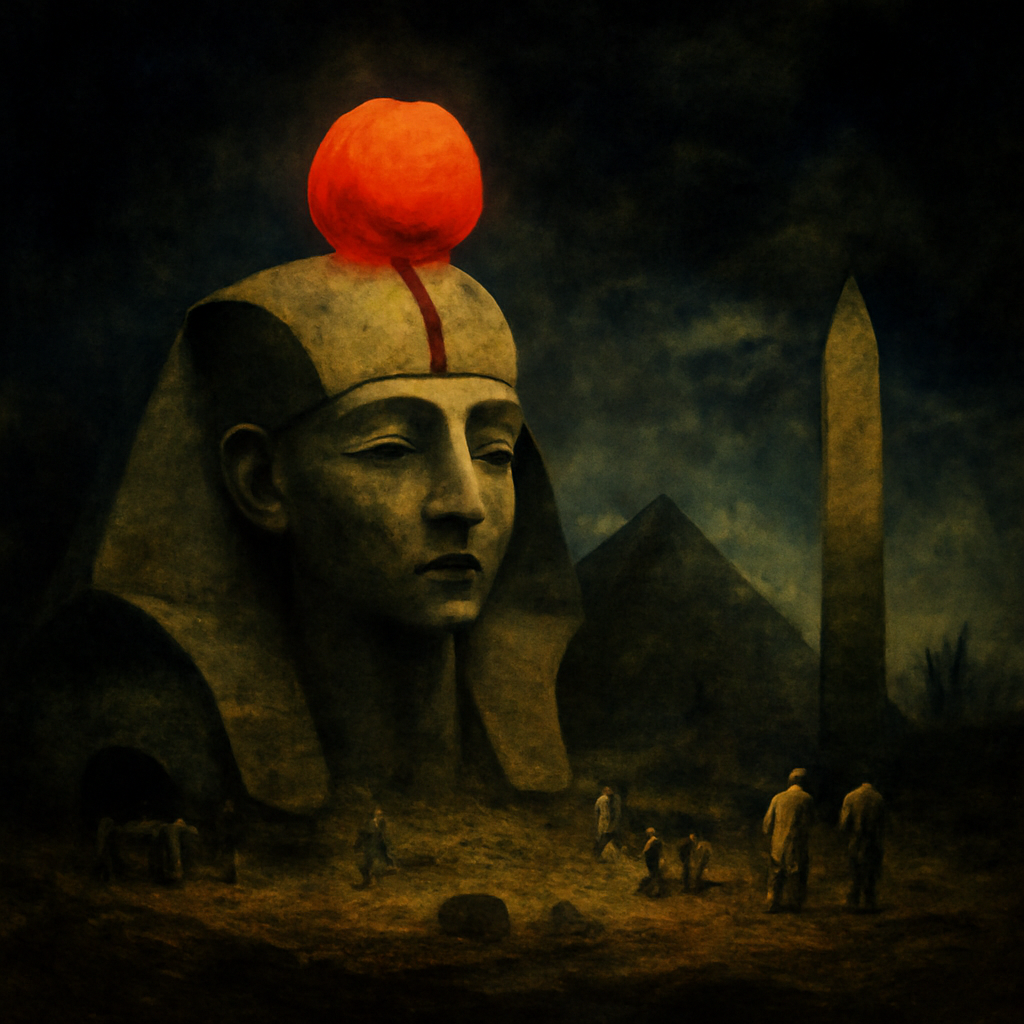
Ancient Egypt is often imagined as a land dominated by towering pyramids, grand temples, and the mysterious rituals of pharaohs. But the true story of this civilization is far richer and more vibrant. For thousands of years, Egypt was a bustling society filled with farmers, artisans, merchants, priests, and families who lived along the life-giving Nile River. They loved color, music, and celebration, and their daily lives blended practical work with deep religious belief.
Life in ancient Egypt was centered around the Nile, whose annual floods nourished the soil and made farming possible. Egyptians ate well and took pride in cleanliness, with daily bathing common to all. Women enjoyed rights that were remarkable for the ancient world—they could own property, run businesses, and initiate divorce. Their society was hierarchical but also organized around family and community. Beyond the elite tombs and royal courts, ordinary Egyptians raised children, played games, and created art that still fascinates us today.
Religion was woven into every moment, not as a shadow of death but as a celebration of life and the promise of an afterlife that mirrored earthly joys. Egyptians believed in thousands of gods and used spells, magic, and dreams to navigate their world. This was a culture that balanced the sacred with the everyday, crafting one of history’s most enduring and dynamic civilizations.
“Ancient Egyptians lived vibrant, colorful lives with rights for women and daily joys that rival our own.”
Reflect
If we look beyond monuments and royalty, what everyday stories from history might change how we see ourselves today?
Research·1 source·Developing confidence·Investigated 19 Jul 2026(2 months ago)·Grounded; verification trace not recorded·Investigation may be outdated
Your next question, in
Visual Trail
See Ancient Egypt: More Than Pyramids and Pharaohs
A guided visual explanation assembled from QE artwork and sourced documentary images.
01 / 05
QE visual interpretation
Frame 01
Ancient Egypt: More Than Pyramids and Pharaohs
Ancient Egypt was a vibrant, colorful society centered on the Nile, with rich daily life, deep faith, and remarkable rights for women.
Image provenance and limitation
Source: AI-generated visual interpretation
Creator: Question Everything
Limitation: This image explains or evokes the subject. It is not documentary evidence and should not be used to verify a factual claim.
Evidence
What do we know?
Verified claims with confidence scoring and cited sources.
3 of 4 findings need extra caution. Finding 1, Finding 3, Finding 4 rest on weaker sourcing than the other findings.
Living footnotes
Claims remain in the reading flow. Select a citation number to inspect the source behind it.
01
HistoricalNot confirmed
Ancient Egyptians bathed daily and valued cleanliness highly.
Unlike many ancient cultures, Egyptians placed great importance on hygiene. People from all social classes bathed regularly—rich individuals used scented soaps and soaking tubs, while the less wealthy bathed in the Nile itself. This daily ritual was not just about cleanliness but also connected to their beliefs about purity and health.
02
HistoricalSupported
Women in ancient Egypt had legal rights nearly equal to men, including property ownership and divorce initiation.
Ancient Egyptian women could own land, run businesses, and initiate divorce, which was exceptional in the ancient world. Their legal status allowed them considerable independence and influence in society, a freedom that would not be common elsewhere until millennia later.
03
HistoricalNot confirmed
The ancient Egyptians believed in over 2,000 gods, with religion deeply integrated into daily life.
Religion was not a distant, abstract idea but part of everyday life. Egyptians worshipped thousands of deities who governed all aspects of the world. They used spells, magic, and interpreted dreams to communicate with the divine, seeking protection and guidance. Life and death were linked in a continuous journey, with the afterlife seen as an ideal continuation of earthly existence.
04
HistoricalNot confirmed
Ancient Egyptians enjoyed leisure activities including music, dance, board games, and hunting.
Beyond daily work, Egyptians engaged in many forms of entertainment. They played board games like Senet, enjoyed music and dance, and participated in hunting and fishing. These activities were not only leisure but also social and cultural expressions, reflecting a society that valued joy and community.
The complete record below preserves every citation, confidence input and recorded limitation.
Read the full evidence record4 findings · citations · limitations
Evidence review4 findings1 openable sources
01
Finding 1 of 4HistoricalNeeds caution
0/0 verified
Ancient Egyptians bathed daily and valued cleanliness highly.
Unlike many ancient cultures, Egyptians placed great importance on hygiene. People from all social classes bathed regularly—rich individuals used scented soaps and soaking tubs, while the less wealthy bathed in the Nile itself. This daily ritual was not just about cleanliness but also connected to their beliefs about purity and health.
Not confirmedmodel score 30%
Scored as if sourced, but every citation failed verification.
NO SURVIVING CITATION
›View sources and limits— limits
Supporting passage
Unlike many ancient cultures, Egyptians placed great importance on hygiene. People from all social classes bathed regularly—rich individuals used scented soaps and soaking tubs, while the less wealthy bathed in the Nile itself. This daily ritual was not just about cleanliness but also connected to their beliefs about purity and health.
Citations (0 of 1 survived verification)
Nothing openable. Every citation was removed by provenance validation.
What limits this
All 1 citation on this claim failed verification and were removed. Nothing openable supports it.
02
Finding 2 of 4Historical
0/1 verified
Women in ancient Egypt had legal rights nearly equal to men, including property ownership and divorce initiation.
Ancient Egyptian women could own land, run businesses, and initiate divorce, which was exceptional in the ancient world. Their legal status allowed them considerable independence and influence in society, a freedom that would not be common elsewhere until millennia later.
Supportedmodel score 95%
One source, not peer-reviewed. Thinner than the score suggests.
REFERENCE
›View sources and limits— 1 citation, limits
Supporting passage
Ancient Egyptian women could own land, run businesses, and initiate divorce, which was exceptional in the ancient world. Their legal status allowed them considerable independence and influence in society, a freedom that would not be common elsewhere until millennia later.
Rests on a single source. No independent corroboration.
No peer-reviewed source among the citations.
The generator scored this 95%, which would read as “Established”. Its citations reach only “Supported”, so that is what is shown.
03
Finding 3 of 4HistoricalNeeds caution
0/0 verified
The ancient Egyptians believed in over 2,000 gods, with religion deeply integrated into daily life.
Religion was not a distant, abstract idea but part of everyday life. Egyptians worshipped thousands of deities who governed all aspects of the world. They used spells, magic, and interpreted dreams to communicate with the divine, seeking protection and guidance. Life and death were linked in a continuous journey, with the afterlife seen as an ideal continuation of earthly existence.
Not confirmedmodel score 30%
Scored as if sourced, but every citation failed verification.
NO SURVIVING CITATION
›View sources and limits— limits
Supporting passage
Religion was not a distant, abstract idea but part of everyday life. Egyptians worshipped thousands of deities who governed all aspects of the world. They used spells, magic, and interpreted dreams to communicate with the divine, seeking protection and guidance. Life and death were linked in a continuous journey, with the afterlife seen as an ideal continuation of earthly existence.
Citations (0 of 1 survived verification)
Nothing openable. Every citation was removed by provenance validation.
What limits this
All 1 citation on this claim failed verification and were removed. Nothing openable supports it.
04
Finding 4 of 4HistoricalNeeds caution
0/0 verified
Ancient Egyptians enjoyed leisure activities including music, dance, board games, and hunting.
Beyond daily work, Egyptians engaged in many forms of entertainment. They played board games like Senet, enjoyed music and dance, and participated in hunting and fishing. These activities were not only leisure but also social and cultural expressions, reflecting a society that valued joy and community.
Not confirmedmodel score 30%
Scored as if sourced, but every citation failed verification.
NO SURVIVING CITATION
›View sources and limits— limits
Supporting passage
Beyond daily work, Egyptians engaged in many forms of entertainment. They played board games like Senet, enjoyed music and dance, and participated in hunting and fishing. These activities were not only leisure but also social and cultural expressions, reflecting a society that valued joy and community.
Citations (0 of 1 survived verification)
Nothing openable. Every citation was removed by provenance validation.
What limits this
All 1 citation on this claim failed verification and were removed. Nothing openable supports it.
Interactive Exploration
Touch, drag, and discover
These visualizations respond to your curiosity. Interact to go deeper.
timeline
Key Periods in Ancient Egyptian History
Loading timeline…
relationship map
Daily Life Connections in Ancient Egypt
Mapping relationships…
Drag nodes to rearrange — tap for details
statistics card
Facts About Ancient Egyptian Society
2,000+
Number of gods worshipped
Shows religious complexity
365
Days in Egyptian solar calendar
Early advanced astronomy
1.6 km
Length of mummy bandages when unwrapped
Demonstrates elaborate burial customs
700+
Number of hieroglyphic symbols
Complex writing system
spectrum
Social Rights Spectrum in Ancient Civilizations
Low Women's RightsHigh Women's Rights
85%
Ancient Egypt
30%
Ancient Greece
50%
Ancient Rome
Visual Gallery
Images & artifacts
Historical images, diagrams, and visual knowledge from Wikimedia Commons.
Perspectives
How is this interpreted?
Enter a viewpoint. Notice what it reveals, what it leaves out, and whether it changes the question for you.
The EmpiricistScientific viewpointLive tension
From an archaeological and genetic perspective, ancient Egypt was a complex society with extensive cultural and biological connections across Africa and Eurasia. Excavations reveal urban development, social stratification, and sophisticated craftsmanship, while DNA studies show a diverse population. This complexity challenges simplistic views of Egypt as an isolated or static civilization.
What this lens notices
01Urban features developed early and evolved over millennia.
02Artifacts show advanced skills in art, architecture, and technology.
03Genetic studies confirm a mixed, dynamic population.
Application
Why does this matter to you?
Personal reflections and applications for your life.
Thought experimentSelf-Reflection
How does understanding the daily lives of ancient people change your view of history?
Why it changes the question
Seeing ancient Egyptians as real people with families, joys, and struggles makes their world more relatable and human. It reminds us that history is not just about rulers and monuments but about everyday lives that shaped civilizations.
Try this
Try imagining a day in your life as if you lived 4,000 years ago in a completely different culture. What routines and values might be similar or different?
Media
QE Smart Glass
Curated media selected for this investigation.
QE Glass
YOUTUBE
Ancient Egypt’s Lost Secrets: Tutankhamun, Pyramids & Ramses | MEGA Episode | National Geographic
National Geographic
Explore ancient Egypt's greatest mysteries in this Lost Treasures of Egypt Season 2 MEGA Episode from National Geographic.
QE Glass
YOUTUBE
Egypt's Ancient Empire | Egypt From Above (Full Episode) The Nile River
National Geographic
A spectacular aerial journey across Egypt reveals how the Nile River was the key to the ancients' empire and why it is still ...
QE Glass
YOUTUBE
Discover the Secrets of Ancient Egypt | Engineering an Empire | Full Episode | History
HISTORY
Twenty-five hundred years before the reign of Julius Caesar, the ancient Egyptians were deftly harnessing the power of ...
QE Glass
YOUTUBE
The ENTIRE History of Egypt | Ancient Civilizations Documentary
Beginning To Now
The Complete History of Egypt | A Beginning To Now Production “Egypt is the gift of the Nile”, that's what Herodotus, the father of ...
QE Glass
YOUTUBE
The Entire History Of Ancient Egyptian Civilization With Joann Fletcher
Odyssey - Ancient History Documentaries
Egypt is home to one of the world's earliest civilizations, with its earliest settlements in northern Africa dating to 17000 BC. Ancient ...
QE Glass
YOUTUBE
The Entire History of Ancient Egypt | Full Docuseries
hazards and catastrophes
Ancient Egypt, one of history's most powerful empires, emerges on the banks of the Nile 5000 years ago, and you can experience ...
QE Glass
YOUTUBE
The Ordinary Life Of Ancient Egyptians | Life And Death In The Valley Of The Kings | All Out History
All Out History - Premium History Documentaries
Pharaohs, the sphynx and the pyramids. These are all iconic images of Ancient Egypt, but what about normal people? What were ...
QE Glass
YOUTUBE
How Ancient Egypt Looks Like -Stunning Daily Life |Historical Documentary
Learning Pod
Step back in time and experience a day in the life of ancient Egypt! Discover how the Egyptians lived, worked, and thrived in this ...
QE Glass
PODCAST
Radiolab: Ancient Egypt Stories
Radiolab
Engaging storytelling exploring myths and facts about ancient Egyptian civilization.
Connected context
Connected entities
The people, places, concepts, and events that matter here.
Keep Going
Where this leads
Questions this investigation opens up — and what QE has already looked into.
No AI help here — no suggestions, no autocomplete, nothing finishing your sentences. That is deliberate. Working out what you think is effortful, and the effort is the part that changes you: reasoning is trained like a muscle, and a muscle that is always carried gets weaker. Let something else do the thinking and you keep the answer but lose the capacity to have reached it.
Write your current position.
Not what the page says. What you think, having read it.0 words · Nothing written yet.
Sign in to leave a mark. Your draft is saved here in the meantime.