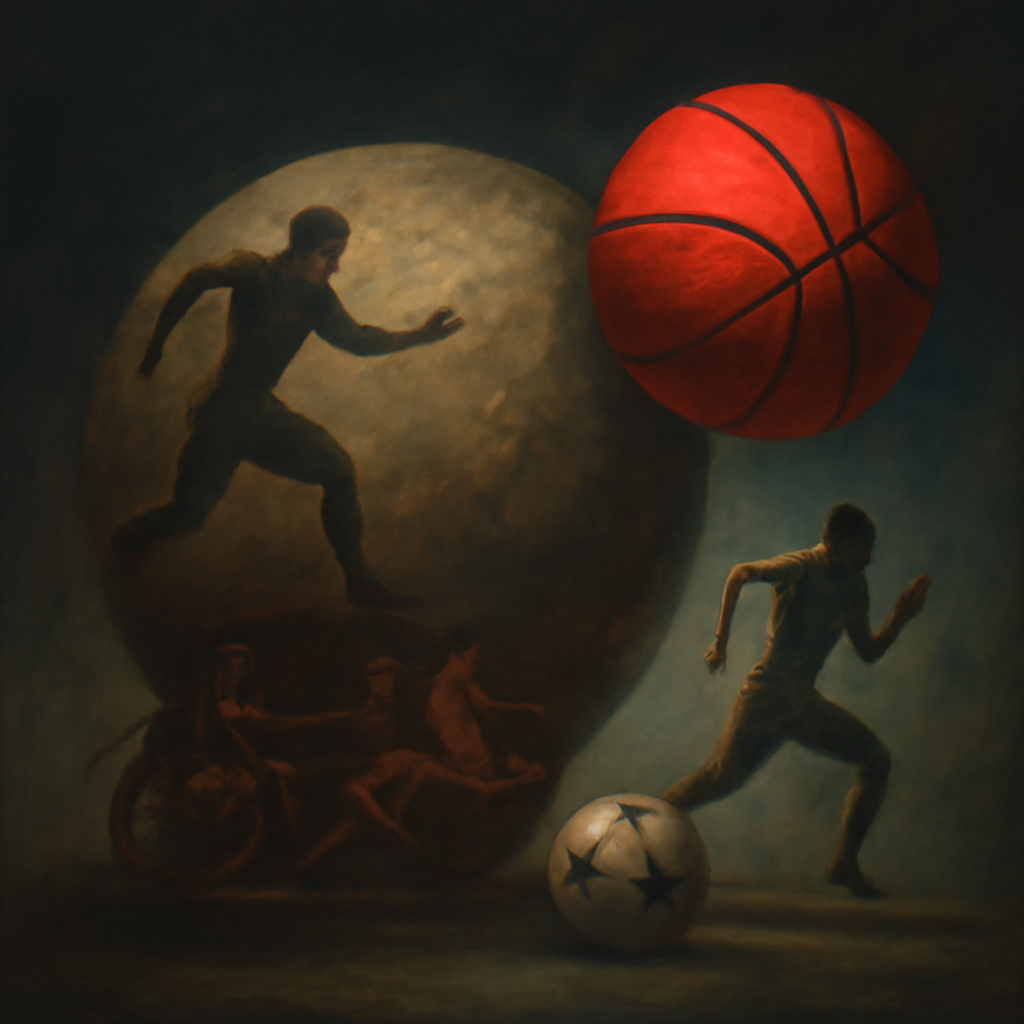
The Origin of Sports: From Ancient Games to Modern Play
Sports have been a part of human life for thousands of years, stretching back to ancient civilizations where physical contests often prepared people for hunting or battle. The earliest sports were simple and practical, like running races, throwing spears, and wrestling. These activities helped people stay fit and ready for survival challenges. Over time, these practical contests evolved into organized sports with rules and competitions, becoming a way for communities to come together, celebrate, and show skill.
Ancient Greece is famous for shaping the sports world by hosting the first Olympics around 776 BCE. These games featured events like foot races, wrestling, and javelin throwing, mixing athletic skill with religious celebration. Meanwhile, other ancient cultures, like Egypt, China, Persia, and Native American tribes, also developed their own sports, many linked to military training or social events. As civilizations grew, so did the variety of sports, eventually leading to the wide range we enjoy today, from soccer to baseball to basketball.
“Sports started as practical ways to survive and fight, but evolved into global celebrations of skill and spirit.”
Reflect
If sports began as life-or-death training, how do modern games reflect what we value most about ourselves today?
Research·2 sources·Well-Established confidence·Investigated 19 Jul 2026(2 months ago)·Grounded; verification trace not recorded·Investigation may be outdated
Your next question, in
Visual Trail
See The Origin of Sports: From Ancient Games to Modern Play
A guided visual explanation assembled from QE artwork and sourced documentary images.
01 / 05
QE visual interpretation
Frame 01
The Origin of Sports: From Ancient Games to Modern Play
Sports began thousands of years ago as practical contests for hunting and battle, later becoming organized games like the ancient Olympics.
Image provenance and limitation
Source: AI-generated visual interpretation
Creator: Question Everything
Limitation: This image explains or evokes the subject. It is not documentary evidence and should not be used to verify a factual claim.
Evidence
What do we know?
Verified claims with confidence scoring and cited sources.
Living footnotes
Claims remain in the reading flow. Select a citation number to inspect the source behind it.
01
HistoricalSupported
The first recorded Olympic Games were held in ancient Greece in 776 BCE.
These early Olympic Games included events such as foot races, wrestling, jumping, and throwing the javelin and discus. They were not only athletic competitions but also religious festivals honoring the Greek god Zeus. The games brought together athletes from various city-states and became a symbol of unity and competition. This organized form of sport was one of the earliest examples of formal rules and events.
02
HistoricalSupported
Many ancient sports originated as training for hunting and warfare.
Before organized sports, early humans practiced physical contests like running, throwing, and fighting to prepare for survival tasks such as hunting animals or defending against enemies. These contests tested skills like speed, strength, and accuracy, which were crucial for survival. Over time, these practical activities became more formalized as sports for entertainment and social bonding.
03
HistoricalSupported
Sports like polo, wrestling, and martial arts have roots in ancient Persia and other early civilizations.
Ancient Persia developed traditional sports such as polo, which was originally a training game for cavalry, and Zoorkhaneh, a type of martial art. Similarly, Egyptian pharaohs engaged in sports like javelin throwing and wrestling. These sports often combined physical skill with cultural and military importance, showing how diverse early sports were across different societies.
The complete record below preserves every citation, confidence input and recorded limitation.
Read the full evidence record3 findings · citations · limitations
Evidence review3 findings3 openable sources
01
Finding 1 of 3Historical
2024
1 dated source
The first recorded Olympic Games were held in ancient Greece in 776 BCE.
These early Olympic Games included events such as foot races, wrestling, jumping, and throwing the javelin and discus. They were not only athletic competitions but also religious festivals honoring the Greek god Zeus. The games brought together athletes from various city-states and became a symbol of unity and competition. This organized form of sport was one of the earliest examples of formal rules and events.
Supportedmodel score 100%
One source, not peer-reviewed. Thinner than the score suggests.
REFERENCE
›View sources and limits— 1 citation, limits
Supporting passage
These early Olympic Games included events such as foot races, wrestling, jumping, and throwing the javelin and discus. They were not only athletic competitions but also religious festivals honoring the Greek god Zeus. The games brought together athletes from various city-states and became a symbol of unity and competition. This organized form of sport was one of the earliest examples of formal rules and events.
1 of 2 citations failed verification and are not shown.
Rests on a single source. No independent corroboration.
No peer-reviewed source among the citations.
The generator scored this 100%, which would read as “Established”. Its citations reach only “Supported”, so that is what is shown.
02
Finding 2 of 3Historical
2024
1 dated source
Many ancient sports originated as training for hunting and warfare.
Before organized sports, early humans practiced physical contests like running, throwing, and fighting to prepare for survival tasks such as hunting animals or defending against enemies. These contests tested skills like speed, strength, and accuracy, which were crucial for survival. Over time, these practical activities became more formalized as sports for entertainment and social bonding.
Supportedmodel score 95%
One source, not peer-reviewed. Thinner than the score suggests.
REFERENCE
›View sources and limits— 1 citation, limits
Supporting passage
Before organized sports, early humans practiced physical contests like running, throwing, and fighting to prepare for survival tasks such as hunting animals or defending against enemies. These contests tested skills like speed, strength, and accuracy, which were crucial for survival. Over time, these practical activities became more formalized as sports for entertainment and social bonding.
1 of 2 citations failed verification and are not shown.
Rests on a single source. No independent corroboration.
No peer-reviewed source among the citations.
The generator scored this 95%, which would read as “Established”. Its citations reach only “Supported”, so that is what is shown.
03
Finding 3 of 3Historical
0/1 verified
Sports like polo, wrestling, and martial arts have roots in ancient Persia and other early civilizations.
Ancient Persia developed traditional sports such as polo, which was originally a training game for cavalry, and Zoorkhaneh, a type of martial art. Similarly, Egyptian pharaohs engaged in sports like javelin throwing and wrestling. These sports often combined physical skill with cultural and military importance, showing how diverse early sports were across different societies.
Supportedmodel score 90%
One source, not peer-reviewed. Thinner than the score suggests.
REFERENCE
›View sources and limits— 1 citation, limits
Supporting passage
Ancient Persia developed traditional sports such as polo, which was originally a training game for cavalry, and Zoorkhaneh, a type of martial art. Similarly, Egyptian pharaohs engaged in sports like javelin throwing and wrestling. These sports often combined physical skill with cultural and military importance, showing how diverse early sports were across different societies.
1 of 2 citations failed verification and are not shown.
Rests on a single source. No independent corroboration.
No peer-reviewed source among the citations.
The generator scored this 90%, which would read as “Established”. Its citations reach only “Supported”, so that is what is shown.
Interactive Exploration
Touch, drag, and discover
These visualizations respond to your curiosity. Interact to go deeper.
timeline
Key Moments in the Origin of Sports
Loading timeline…
relationship map
How Ancient Cultures Influenced Sports
Mapping relationships…
Drag nodes to rearrange — tap for details
comparison table
Ancient Sports and Their Purposes
Sport
Primary Purpose
Running, Throwing, Wrestling
Survival skills training
Hunting and warfare preparation
Olympic Games
Religious festival
Athletic competition
Polo (Persia)
Military cavalry training
Sport
Mesoamerican Ballgame
Ceremonial, social bonding
Competition
Medieval Tournaments
Combat training
Entertainment
Tap any row to highlight and compare
statistics card
Sports Through the Ages: Key Facts
776 BCE
First Olympic Games
Marks the beginning of organized sports.
2000 BCE
Earliest Chinese sports evidence
Shows ancient global interest in physical activity.
3000+ years
Age of Mesoamerican Ballgame
One of the oldest known ball sports.
Visual Gallery
Images & artifacts
Historical images, diagrams, and visual knowledge from Wikimedia Commons.
Perspectives
How is this interpreted?
Enter a viewpoint. Notice what it reveals, what it leaves out, and whether it changes the question for you.
The HistorianHistorical viewpointEstablished lens
Historically, sports have been closely tied to the needs and values of the societies that created them. In ancient times, they served practical purposes like preparing for battle or hunting. As societies became more organized, sports evolved into public events that fostered community identity and pride. The Olympic Games are a prime example of how sports became both religious and social events, blending competition with celebration.
What this lens notices
01Early sports tested survival skills.
02Ancient Olympics combined athletics with religion.
03Sports helped build social bonds and identity.
Application
Why does this matter to you?
Personal reflections and applications for your life.
Thought experimentSelf-Reflection
Think about a sport or game you enjoy. How does it connect to skills like teamwork, strategy, or physical fitness?
Why it changes the question
Understanding the origins of sports can help you see how they develop skills beyond just physical exercise. Many sports teach important life lessons like cooperation, discipline, and resilience.
Try this
Try playing a new sport or game that challenges you to work with others or improve a specific skill.
Media
QE Smart Glass
Curated media selected for this investigation.
QE Glass
YOUTUBE
The ancient origins of the Olympics - Armand D'Angour
TED-Ed
How did the Olympics become the greatest show of sporting excellence on Earth? Dig into the history and evolution of the global ...
QE Glass
YOUTUBE
A Brief History of Sport
The Royal Institution
In the first film of the Engineering Sport series, Professor Steve Haake investigates how technological and scientific advancements ...
QE Glass
YOUTUBE
Top 10 ORIGIN STORIES of Famous SPORTS
TopTenz
Whether people play, or just watch, sports are a big part of many people's lives. Besides just being entertainment, sports are also ...
QE Glass
YOUTUBE
A Visual History of Sports
The Atlantic
The first recorded sport in history was spear throwing, which arose in 70000 BC out of a need for ancient hunters to practice their ...
QE Glass
YOUTUBE
"The Origin of Sports: From Ancient Rituals to Modern Games | History of Sports Explained"
Ace Ed
Discover the origin and evolution of sports — from prehistoric rituals and cave paintings to the Ancient Olympics in Greece and the ...
QE Glass
YOUTUBE
The History of Sports: From Ancient Times to the Present Day
The History Speaks (Books Reader)
The History of Sports Sports have been a part of human culture for centuries, and they have evolved over time in response to ...
QE Glass
YOUTUBE
The Ancient Olympic Games - History Documentary
History Channel
A detailed look at the origins and events of the first Olympic Games in ancient Greece.
QE Glass
YOUTUBE
The Origins of Sports: From Ancient Times to Today
CrashCourse
An engaging overview of how sports began in different cultures and evolved over time.
QE Glass
PODCAST
The History of Sports and Their Role in Society
Radiolab
Explores how sports have shaped human culture and why we love competition.
Keep Going
Where this leads
Questions this investigation opens up — and what QE has already looked into.
No AI help here — no suggestions, no autocomplete, nothing finishing your sentences. That is deliberate. Working out what you think is effortful, and the effort is the part that changes you: reasoning is trained like a muscle, and a muscle that is always carried gets weaker. Let something else do the thinking and you keep the answer but lose the capacity to have reached it.
Write your current position.
Not what the page says. What you think, having read it.0 words · Nothing written yet.
Sign in to leave a mark. Your draft is saved here in the meantime.