The Mystery of the Tartarian Empire: Myth and History Intertwined
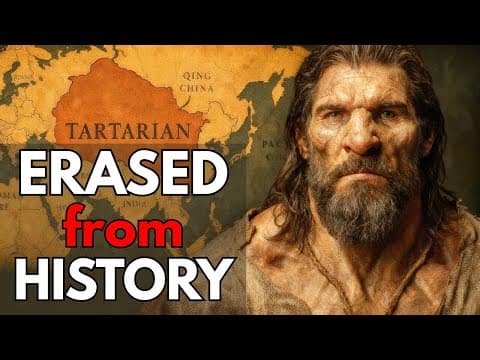
The Tartarian Empire is a topic that straddles the line between history and conspiracy theory. Historically, 'Tartary' was a vast term used by Europeans from the Middle Ages into the 19th century to describe the unknown regions of Central and Northern Asia, inhabited by various Turkic and Mongolic peoples. It wasn’t a single empire but rather a patchwork of diverse cultures and tribes under various rulers, often misunderstood or oversimplified by outsiders.
In recent years, the idea of a lost global Tartarian Empire has captured imaginations online, fueled by claims of hidden advanced civilizations and mysterious architecture. These theories suggest a forgotten superpower erased from official history. However, historians and experts agree there is no credible evidence supporting these claims. Instead, the story reveals much about how history can be shaped by perspective and the human desire for grand mysteries.
See The Mystery of the Tartarian Empire: Myth and History Intertwined
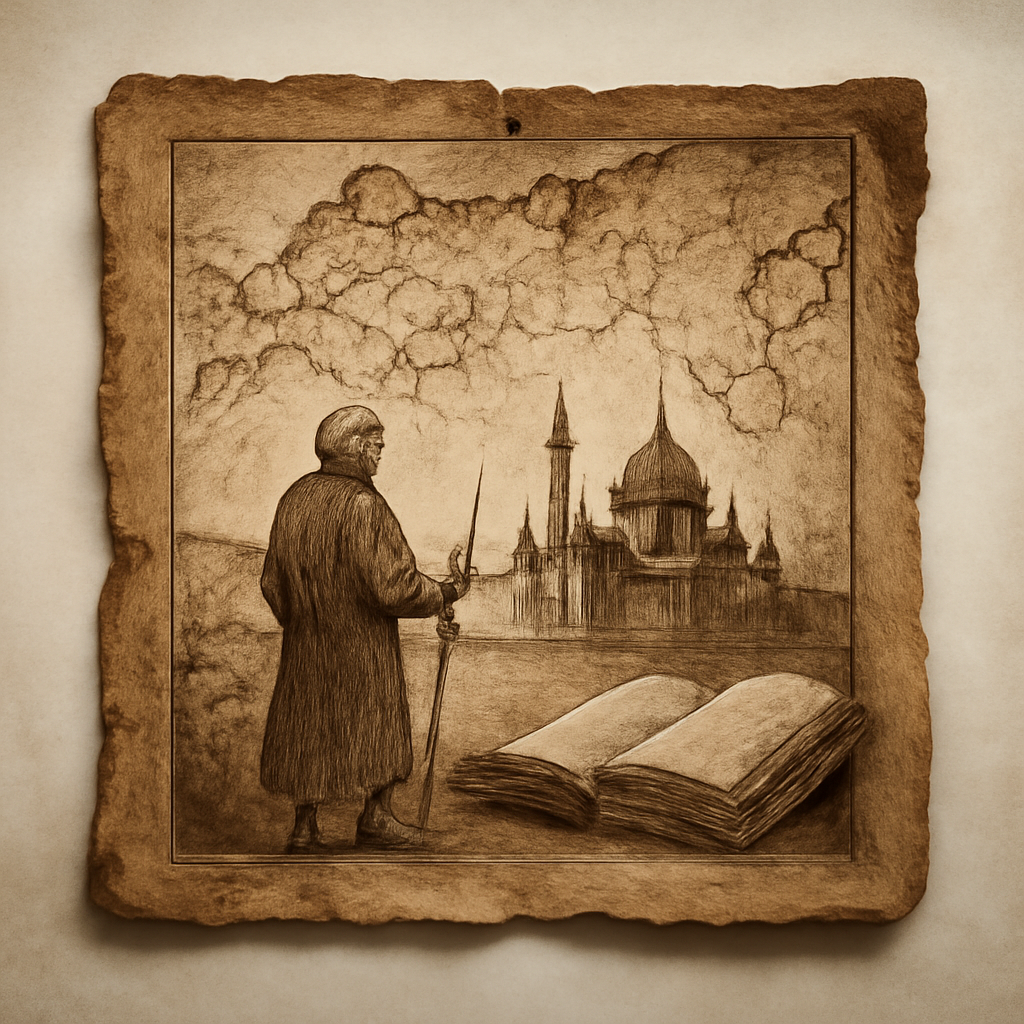
A guided visual explanation assembled from QE artwork and sourced documentary images.
01 / 05
QE visual interpretation
Frame 01
The Mystery of the Tartarian Empire: Myth and History Intertwined
The Tartarian Empire is a misunderstood term for vast Asian lands, not a lost global superpower.
Image provenance and limitation
Source: AI-generated visual interpretation
Creator: Question Everything
Limitation: This image explains or evokes the subject. It is not documentary evidence and should not be used to verify a factual claim.
Evidence
What do we know?
Verified claims with confidence scoring and cited sources.
1 of 4 findings need extra caution. Finding 3 rests on weaker sourcing than the other findings.
Living footnotes
Claims remain in the reading flow. Select a citation number to inspect the source behind it.
01
HistoricalSupported
Tartary was a broad European cartographic term for vast, poorly understood regions of Central Asia and Siberia, not a unified empire.
Historical maps from the Middle Ages through the 19th century labeled a massive expanse of Asia as 'Tartary,' reflecting limited European knowledge rather than political reality. This area encompassed diverse peoples and territories without centralized control, often divided into Chinese Tartary, Muscovite Tartary, and independent regions. The label was a geographic placeholder rather than a state designation.
02
HistoricalWell supported
The modern 'Tartarian Empire' conspiracy theory emerged in the 2010s as an internet-driven reinterpretation of old maps and architectural styles.
This theory claims a technologically advanced global empire named Tartaria once existed and was erased from history. It draws on misread cartographic labels, stylistic similarities in 19th-century architecture, and imagined cataclysms like mud floods. However, these claims lack documentary, archaeological, or primary-source support and contradict well-established historiography.
03
HistoricalMixed evidence
Architectural historians have documented that buildings cited as 'Tartarian' were constructed using known styles and have detailed construction histories.
Conspiracy theories often point to ornate 19th-century buildings or World's Fair structures as evidence of Tartaria's advanced technology. In reality, these buildings align with established architectural movements like Beaux-Arts and Neoclassical styles. Their creation is well-documented through archives and construction records, disproving claims of mysterious origins or erased histories.
04
AcademicSupported
The Tartarian Empire conspiracy theory provides a sense of belonging and identity for some online communities amid social and historical uncertainty.
Research shows that communities devoted to Tartaria use the narrative to bond over shared skepticism of history and institutions. This myth offers simple explanations for complex social changes, including urban redevelopment and architectural shifts, fulfilling psychological needs for coherence and meaning in a rapidly changing world.
The complete record below preserves every citation, confidence input and recorded limitation.
Read the full evidence record4 findings · citations · limitations
Evidence review4 findings6 openable sources
01
Finding 1 of 4Historical
2/2 verified
Tartary was a broad European cartographic term for vast, poorly understood regions of Central Asia and Siberia, not a unified empire.
Historical maps from the Middle Ages through the 19th century labeled a massive expanse of Asia as 'Tartary,' reflecting limited European knowledge rather than political reality. This area encompassed diverse peoples and territories without centralized control, often divided into Chinese Tartary, Muscovite Tartary, and independent regions. The label was a geographic placeholder rather than a state designation.
Supportedmodel score 82%
2 sources agree, none peer-reviewed.
REFERENCE ×2
›View sources and limits— 2 citations, limits
Supporting passage
Historical maps from the Middle Ages through the 19th century labeled a massive expanse of Asia as 'Tartary,' reflecting limited European knowledge rather than political reality. This area encompassed diverse peoples and territories without centralized control, often divided into Chinese Tartary, Muscovite Tartary, and independent regions. The label was a geographic placeholder rather than a state designation.
QE used this source because its retrieved passage directly addresses the claim.
“Geography and history [edit] . [...] By the mid-19th century, the use of Tartary as a term for Siberia and Central Asia had waned. However, it lent the title to Peter Fleming "Peter Fleming (writer)")'s 1936 book News from Tartary, which detailed his travels in Central Asia. ## Tartaria conspiracy theory [edit] Main a…”
QE used this source because its retrieved passage directly addresses the claim.
“Muscovite or Russian Tartary defined lands falling under Russian authority. Independent Tartary was applied loosely to Central Asian regions beyond direct Russian or Chinese control. Great Tartary often served as a catch-all for the poorly mapped northern interior of Asia.”
This passage was checked against the claim.
Retrieved 07/09/2026
What limits this
No peer-reviewed source among the citations.
02
Finding 2 of 4Historical
2025
1 dated source
The modern 'Tartarian Empire' conspiracy theory emerged in the 2010s as an internet-driven reinterpretation of old maps and architectural styles.
This theory claims a technologically advanced global empire named Tartaria once existed and was erased from history. It draws on misread cartographic labels, stylistic similarities in 19th-century architecture, and imagined cataclysms like mud floods. However, these claims lack documentary, archaeological, or primary-source support and contradict well-established historiography.
Well supportedmodel score 90%
2 sources agree, 1 peer-reviewed.
PRIMARY STUDYREFERENCE
›View sources and limits— 2 citations, limits
Supporting passage
This theory claims a technologically advanced global empire named Tartaria once existed and was erased from history. It draws on misread cartographic labels, stylistic similarities in 19th-century architecture, and imagined cataclysms like mud floods. However, these claims lack documentary, archaeological, or primary-source support and contradict well-established historiography.
QE used this research source for direct evidence relevant to the claim.
“ABSTRACT: This article investigates the workings of a conspiritual community focused on the "Tartarian Empire," which members see as a lost, utopian realm erased from memory by a conspiracy. They claim that it was home to a highly spiritual, peaceful society based on the use of free energy. To study the dynamics of th…”
This passage was checked against the claim.
Retrieved 07/09/2026
REFERENCETartarian Empire, grokipedia.comverifiedWhy QE used this
QE used this source because its retrieved passage directly addresses the claim.
“ompresses timelines and rejects conventional dating, the modern Tartarian narrative gained traction in the 2010s via online forums, YouTube, and social media, blending misread old maps, architectural anomalies, and anti-establishment skepticism.[1][2] Lacking primary artifacts, inscriptions, or corroborated records, t…”
This passage was checked against the claim.
Retrieved 07/09/2026
What limits this
Nothing further is recorded. QE stores no methodology field, so absence here is not a clean bill of health.
03
Finding 3 of 4HistoricalNeeds caution
2024
1 dated source
Architectural historians have documented that buildings cited as 'Tartarian' were constructed using known styles and have detailed construction histories.
Conspiracy theories often point to ornate 19th-century buildings or World's Fair structures as evidence of Tartaria's advanced technology. In reality, these buildings align with established architectural movements like Beaux-Arts and Neoclassical styles. Their creation is well-documented through archives and construction records, disproving claims of mysterious origins or erased histories.
Mixed evidencemodel score 55%
Verification was mixed across 1 source.
REFERENCE
›View sources and limits— 1 citation, limits
Supporting passage
Conspiracy theories often point to ornate 19th-century buildings or World's Fair structures as evidence of Tartaria's advanced technology. In reality, these buildings align with established architectural movements like Beaux-Arts and Neoclassical styles. Their creation is well-documented through archives and construction records, disproving claims of mysterious origins or erased histories.
QE used this source because its retrieved passage directly addresses the claim.
“How online aesthetics turned architecture into “proof” and why experts disagree**. Architectural historians and archivists counter that these images reflect known styles—Beaux-Arts, Neoclassical, colonial municipal architecture—and documented construction records, not traces of erased technology . By late 2024 and int…”
This passage was checked against the claim.
Retrieved 07/09/2026
What limits this
1 of 2 citations failed verification and are not shown.
Rests on a single source. No independent corroboration.
No peer-reviewed source among the citations.
Verification was mixed — some citations supported the claim and some did not.
04
Finding 4 of 4Academic
1
1/1 verified
The Tartarian Empire conspiracy theory provides a sense of belonging and identity for some online communities amid social and historical uncertainty.
Research shows that communities devoted to Tartaria use the narrative to bond over shared skepticism of history and institutions. This myth offers simple explanations for complex social changes, including urban redevelopment and architectural shifts, fulfilling psychological needs for coherence and meaning in a rapidly changing world.
Supportedmodel score 88%
A single peer-reviewed source. No independent corroboration.
PRIMARY STUDY
›View sources and limits— 1 citation, limits
Supporting passage
Research shows that communities devoted to Tartaria use the narrative to bond over shared skepticism of history and institutions. This myth offers simple explanations for complex social changes, including urban redevelopment and architectural shifts, fulfilling psychological needs for coherence and meaning in a rapidly changing world.
QE used this research source for direct evidence relevant to the claim.
“ABSTRACT: This article investigates the workings of a conspiritual community focused on the "Tartarian Empire," which members see as a lost, utopian realm erased from memory by a conspiracy. They claim that it was home to a highly spiritual, peaceful society based on the use of free energy. To study the dynamics of th…”
This passage was checked against the claim.
Retrieved 07/09/2026
What limits this
Rests on a single source. No independent corroboration.
The generator scored this 88%, which would read as “Established”. Its citations reach only “Supported”, so that is what is shown.
The reference archive
Sources & Further Reading
Continue exploring the research, reporting and reference material available on this subject.
These were found while researching this question but are not used as evidence for any claim above.
These visualizations respond to your curiosity. Interact to go deeper.
timeline
Key Moments in the History of 'Tartary' as a Concept
Loading timeline…
relationship map
Connections Around the Tartarian Empire Myth
Mapping relationships…
Drag nodes to rearrange — tap for details
Visual Gallery
Images & artifacts
Historical images, diagrams, and visual knowledge from Wikimedia Commons.
Contested
This one is genuinely argued over
Both cases are put as strongly as their own supporters would put them, from evidence rather than from who holds the view. Read them and decide for yourself.
The case that it's true
Supporters argue that the vast labeling of 'Tartary' on old maps suggests a lost empire erased from records. They point to architectural wonders worldwide that they believe show advanced technology and argue that historical mud floods and wars were used to hide this civilization. This narrative appeals as it explains the gaps and mysteries in historical records and satisfies a yearning for hidden truths.
What this rests on
Wide geographic labeling as 'Tartary' implies political unity.
Unusual architectural features suggest unknown technologies.
Historical disasters could cover up evidence.
The case against
Historians and scholars clarify that 'Tartary' was a vague term for poorly mapped regions, not a political entity. Architectural styles cited are well documented in historical records and align with known movements. No archaeological or primary evidence supports the existence of a lost advanced empire. The theory stems from misinterpretations and internet-driven conspiracies rather than credible historical research.
What this rests on
'Tartary' was a geographic label, not a state.
Buildings have clear documented histories.
No credible artifacts or records support the theory.
What both sides accept
Both sides agree that the term 'Tartary' appears on historical maps referring to large parts of Asia and that many 19th-century buildings are impressive and stylistically unique. They also acknowledge that gaps in public historical knowledge and rapid urban change create fertile ground for alternative narratives. The core dispute lies not in the existence of the term or architecture but in the interpretation of their significance.
Documented, and not in dispute
'Tartary' was a cartographic term used by Europeans.
19th-century architecture is distinct and impressive.
Social uncertainty fuels alternative historical narratives.
Application
Why does this matter to you?
Personal reflections and applications for your life.
Thought experimentSelf-Reflection
What drives your curiosity about lost civilizations or hidden histories?
Why it changes the question
Understanding your motivations can help distinguish between genuine historical inquiry and entertaining myths that fill emotional or social needs.
Try this
Reflect on what draws you to these stories and research credible sources to deepen your knowledge.
Media
QE Smart Glass
Curated media selected for this investigation.
QE Glass
YOUTUBE
The Tartarian Empire at Its Peak — What They Really Took From Us
History Perspective
We've cross-referenced declassified 17th-century cartography with modern geological surveys to reconstruct the true borders of a ...
QE Glass
YOUTUBE
The Great Tartarian Empire - ROBERT SEPEHR
Robert Sepehr
Tartary is a vast expanse in the northern parts of Asia, bounded by Siberia on the north and west: this is called Great Tartary.
QE Glass
YOUTUBE
The Tartarian Empire: The Advanced Civilization Erased From History
Secret Origins
The Tartarian Empire: The Advanced Civilization Erased From History For centuries, maps from around the world labeled a vast ...
QE Glass
YOUTUBE
The Tartarian Empire: Ancient Civilization More Advanced Than Anything We Can Imagine
Incredible Stories
Beneath the surface of our cities and within the margins of forgotten maps lies a mystery that refuses to fade. The so-called ...
QE Glass
YOUTUBE
The Tartarian Empire (Full Theory Explained)
The Observation Lounge
DISCLAIMER: This video is a work of fiction, speculation, and storytelling for entertainment and thought-provoking purposes only.
QE Glass
YOUTUBE
Tartaria: The Lost Empire That History Wants to Forget | Documentary for Sleep
Nomadic Historian
Tartaria: The Lost Empire That History Wants to Forget | Documentary for Sleep Tartaria – a vast, mysterious empire that has ...
QE Glass
YOUTUBE
The Truth About Tartaria: Debunking the Tartarian Empire Myth with History & Maps
The Worldview
Debunking Tartaria: Part One – History and Maps dives deep into the myths and misinformation surrounding the so-called ...
QE Glass
PODCAST
Conspiracy Theories: The Colossal Reach of the Tartarian Empire
ShortForm Podcast
An engaging discussion on how the Tartarian Empire myth spread and why it captivates audiences.
Connected context
Connected entities
The people, places, concepts, and events that matter here.
Keep Going
Where this leads
Questions this investigation opens up — and what QE has already looked into.
No AI help here — no suggestions, no autocomplete, nothing finishing your sentences. That is deliberate. Working out what you think is effortful, and the effort is the part that changes you: reasoning is trained like a muscle, and a muscle that is always carried gets weaker. Let something else do the thinking and you keep the answer but lose the capacity to have reached it.
Write your current position.
Not what the page says. What you think, having read it.0 words · Nothing written yet.
Sign in to leave a mark. Your draft is saved here in the meantime.