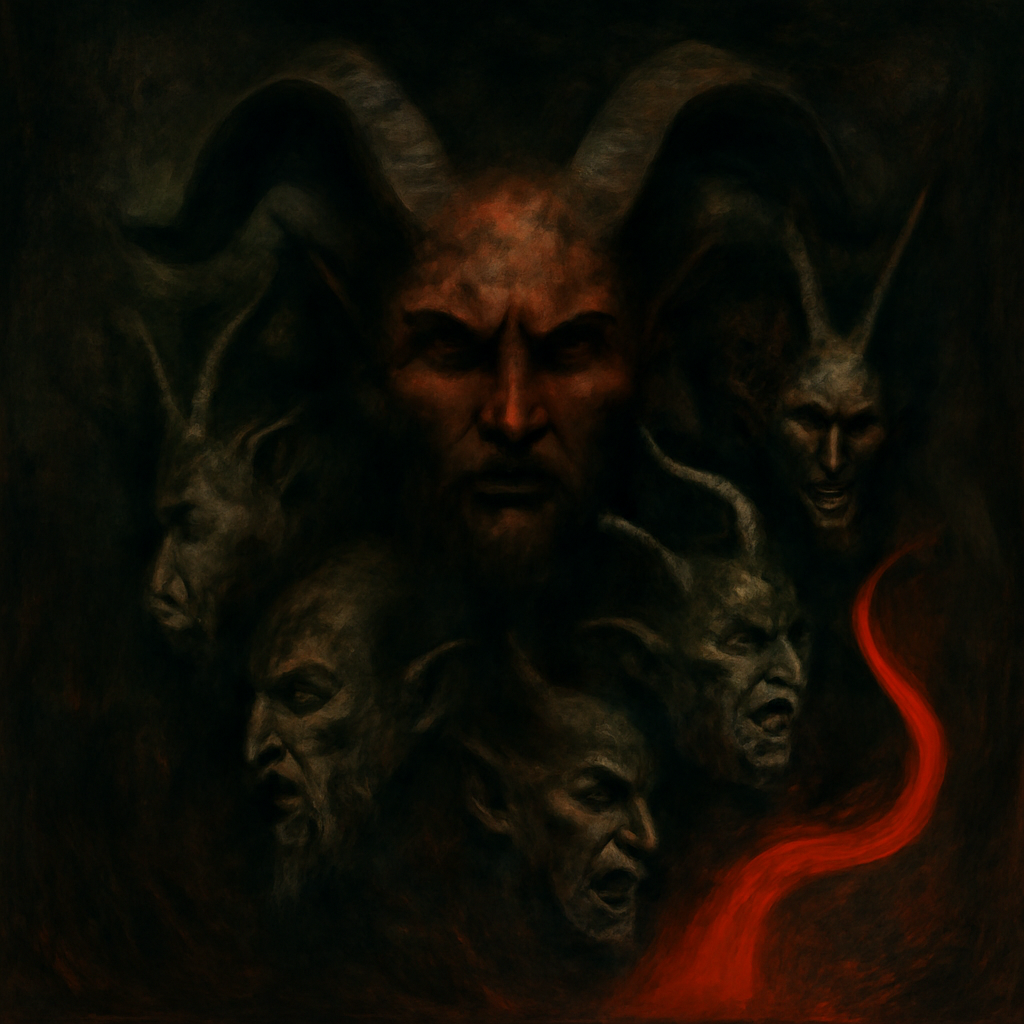
Satan is one of the most fascinating and complex figures in human history, weaving through religious texts, cultural stories, and philosophical debates. Originating from the Hebrew word meaning 'adversary' or 'accuser,' Satan first appeared in the Hebrew Bible not as an embodiment of evil, but as a heavenly prosecutor testing the faith of humans under God's authority. Over centuries, this figure transformed dramatically, evolving into the prince of darkness and the ultimate opponent of God in Christian, Jewish, and Islamic thought.
From a celestial prosecutor in ancient Judaism to the rebellious fallen angel in Christian tradition, and even as a symbol of liberty and rebellion in some modern interpretations, Satan's story is as diverse as it is enduring. Artistic depictions have added horns, tails, and pitchforks, drawing from pagan gods and medieval imagination. Yet, beyond the myths and images, Satan's role challenges us to think deeply about good, evil, free will, and the nature of temptation. This knowledge page explores these shifting portrayals, their origins, and what they reveal about humanity's struggle with morality and faith.
“Satan began not as a demon or devil, but as a divine prosecutor testing human faith under God's command.”
Reflect
If the ultimate adversary started as a servant of divine justice, what does that say about the nature of good and evil in our own lives?
Research·3 sources·Established confidence·Investigated 19 Jul 2026(2 months ago)·Grounded; verification trace not recorded·Investigation may be outdated
Your next question, in
Visual Trail
See Satan: The Ancient Adversary and His Many Faces
A guided visual explanation assembled from QE artwork and sourced documentary images.
01 / 05
QE visual interpretation
Frame 01
Satan: The Ancient Adversary and His Many Faces
Satan began as a heavenly accuser and evolved into a symbol of evil, rebellion, and temptation across religions and cultures.
Image provenance and limitation
Source: AI-generated visual interpretation
Creator: Question Everything
Limitation: This image explains or evokes the subject. It is not documentary evidence and should not be used to verify a factual claim.
Evidence
What do we know?
Verified claims with confidence scoring and cited sources.
2 of 5 findings need extra caution. Finding 3, Finding 5 rest on weaker sourcing than the other findings.
Living footnotes
Claims remain in the reading flow. Select a citation number to inspect the source behind it.
01
HistoricalSupported
The Hebrew term 'satan' originally meant 'accuser' or 'adversary' and referred to a heavenly prosecutor under God's authority.
In the Hebrew Bible, particularly in the Book of Job and Zechariah, the term 'satan' is used to describe a role rather than a personal name. This figure acts like a divine prosecutor who challenges the faithfulness of humans, operating within the limits God sets. The satan tests loyalty but does not act independently from God. This early portrayal contrasts sharply with later views of Satan as a rebellious evil being.
02
HistoricalSupported
Christian tradition generally views Satan as a fallen angel who rebelled against God and was expelled from heaven.
In Christian theology, Satan is often seen as a once-exalted angel who became proud and sought to equal God. His rebellion led to his expulsion from heaven along with other angels who followed him. This narrative is supported by interpretations of scriptures such as Isaiah 14 and Ezekiel 28, and by New Testament references like Luke 10:18. Over time, Satan became the embodiment of evil, the tempter, and adversary of God's followers.
03
HistoricalNot confirmed
Artistic images of Satan with horns, cloven hooves, and a tail are a blend of traits borrowed from various pagan deities.
The popular image of Satan with goat-like features and a pitchfork combines elements from pagan gods such as Pan and Bes. These features were incorporated during the Middle Ages to symbolize the devil and distinguish him visually from other figures. This iconography helped shape Western cultural perceptions of evil and the devil, influencing literature, art, and folklore.
04
HistoricalSupported
Satan’s role as the tempter and deceiver is central in Christian scripture, including the temptation of Jesus and the fall of Adam and Eve.
In the New Testament, Satan tempts Jesus in the wilderness, offering him worldly power in exchange for worship. Similarly, in the Book of Genesis, the serpent—often identified with Satan—tempts Eve to eat the forbidden fruit, leading to humanity’s fall. These stories emphasize Satan’s function as the adversary who challenges humans’ obedience and faithfulness to God.
05
ObservationalNot confirmed
In some modern interpretations, such as LaVeyan Satanism, Satan is seen not as a supernatural evil but as a symbol of individual liberty and personal virtues.
Not all views of Satan are rooted in religious evil. LaVeyan Satanism, for example, uses Satan as a symbol to represent human qualities like freedom, self-expression, and skepticism of authority. This secular reinterpretation strips away the supernatural elements and focuses on Satan as an archetype for rebellion and personal empowerment.
The complete record below preserves every citation, confidence input and recorded limitation.
Read the full evidence record5 findings · citations · limitations
Evidence review5 findings4 openable sources
01
Finding 1 of 5Historical
0/1 verified
The Hebrew term 'satan' originally meant 'accuser' or 'adversary' and referred to a heavenly prosecutor under God's authority.
In the Hebrew Bible, particularly in the Book of Job and Zechariah, the term 'satan' is used to describe a role rather than a personal name. This figure acts like a divine prosecutor who challenges the faithfulness of humans, operating within the limits God sets. The satan tests loyalty but does not act independently from God. This early portrayal contrasts sharply with later views of Satan as a rebellious evil being.
Supportedmodel score 98%
One source, not peer-reviewed. Thinner than the score suggests.
REFERENCE
›View sources and limits— 1 citation, limits
Supporting passage
In the Hebrew Bible, particularly in the Book of Job and Zechariah, the term 'satan' is used to describe a role rather than a personal name. This figure acts like a divine prosecutor who challenges the faithfulness of humans, operating within the limits God sets. The satan tests loyalty but does not act independently from God. This early portrayal contrasts sharply with later views of Satan as a rebellious evil being.
1 of 2 citations failed verification and are not shown.
Rests on a single source. No independent corroboration.
No peer-reviewed source among the citations.
The generator scored this 98%, which would read as “Established”. Its citations reach only “Supported”, so that is what is shown.
02
Finding 2 of 5Historical
0/2 verified
Christian tradition generally views Satan as a fallen angel who rebelled against God and was expelled from heaven.
In Christian theology, Satan is often seen as a once-exalted angel who became proud and sought to equal God. His rebellion led to his expulsion from heaven along with other angels who followed him. This narrative is supported by interpretations of scriptures such as Isaiah 14 and Ezekiel 28, and by New Testament references like Luke 10:18. Over time, Satan became the embodiment of evil, the tempter, and adversary of God's followers.
Supportedmodel score 96%
2 sources agree, none peer-reviewed.
REFERENCE ×2
›View sources and limits— 2 citations, limits
Supporting passage
In Christian theology, Satan is often seen as a once-exalted angel who became proud and sought to equal God. His rebellion led to his expulsion from heaven along with other angels who followed him. This narrative is supported by interpretations of scriptures such as Isaiah 14 and Ezekiel 28, and by New Testament references like Luke 10:18. Over time, Satan became the embodiment of evil, the tempter, and adversary of God's followers.
The generator scored this 96%, which would read as “Established”. Its citations reach only “Supported”, so that is what is shown.
03
Finding 3 of 5HistoricalNeeds caution
0/0 verified
Artistic images of Satan with horns, cloven hooves, and a tail are a blend of traits borrowed from various pagan deities.
The popular image of Satan with goat-like features and a pitchfork combines elements from pagan gods such as Pan and Bes. These features were incorporated during the Middle Ages to symbolize the devil and distinguish him visually from other figures. This iconography helped shape Western cultural perceptions of evil and the devil, influencing literature, art, and folklore.
Not confirmedmodel score 30%
Scored as if sourced, but every citation failed verification.
NO SURVIVING CITATION
›View sources and limits— limits
Supporting passage
The popular image of Satan with goat-like features and a pitchfork combines elements from pagan gods such as Pan and Bes. These features were incorporated during the Middle Ages to symbolize the devil and distinguish him visually from other figures. This iconography helped shape Western cultural perceptions of evil and the devil, influencing literature, art, and folklore.
Citations (0 of 1 survived verification)
Nothing openable. Every citation was removed by provenance validation.
What limits this
All 1 citation on this claim failed verification and were removed. Nothing openable supports it.
04
Finding 4 of 5Historical
0/1 verified
Satan’s role as the tempter and deceiver is central in Christian scripture, including the temptation of Jesus and the fall of Adam and Eve.
In the New Testament, Satan tempts Jesus in the wilderness, offering him worldly power in exchange for worship. Similarly, in the Book of Genesis, the serpent—often identified with Satan—tempts Eve to eat the forbidden fruit, leading to humanity’s fall. These stories emphasize Satan’s function as the adversary who challenges humans’ obedience and faithfulness to God.
Supportedmodel score 95%
One source, not peer-reviewed. Thinner than the score suggests.
REFERENCE
›View sources and limits— 1 citation, limits
Supporting passage
In the New Testament, Satan tempts Jesus in the wilderness, offering him worldly power in exchange for worship. Similarly, in the Book of Genesis, the serpent—often identified with Satan—tempts Eve to eat the forbidden fruit, leading to humanity’s fall. These stories emphasize Satan’s function as the adversary who challenges humans’ obedience and faithfulness to God.
1 of 2 citations failed verification and are not shown.
Rests on a single source. No independent corroboration.
No peer-reviewed source among the citations.
The generator scored this 95%, which would read as “Established”. Its citations reach only “Supported”, so that is what is shown.
05
Finding 5 of 5ObservationalNeeds caution
0/0 verified
In some modern interpretations, such as LaVeyan Satanism, Satan is seen not as a supernatural evil but as a symbol of individual liberty and personal virtues.
Not all views of Satan are rooted in religious evil. LaVeyan Satanism, for example, uses Satan as a symbol to represent human qualities like freedom, self-expression, and skepticism of authority. This secular reinterpretation strips away the supernatural elements and focuses on Satan as an archetype for rebellion and personal empowerment.
Not confirmedmodel score 30%
Scored as if sourced, but every citation failed verification.
NO SURVIVING CITATION
›View sources and limits— limits
Supporting passage
Not all views of Satan are rooted in religious evil. LaVeyan Satanism, for example, uses Satan as a symbol to represent human qualities like freedom, self-expression, and skepticism of authority. This secular reinterpretation strips away the supernatural elements and focuses on Satan as an archetype for rebellion and personal empowerment.
Citations (0 of 1 survived verification)
Nothing openable. Every citation was removed by provenance validation.
What limits this
All 1 citation on this claim failed verification and were removed. Nothing openable supports it.
Interactive Exploration
Touch, drag, and discover
These visualizations respond to your curiosity. Interact to go deeper.
timeline
The Evolution of Satan Through History
Loading timeline…
relationship map
Key Concepts Connected to Satan
Mapping relationships…
Drag nodes to rearrange — tap for details
comparison table
Satan Across Abrahamic Religions
Judaism
Christianity
Islam
Role
Heavenly accuser testing humans under God
Fallen angel, tempter, prince of evil
Rebellious jinn (Iblis), tempter of humans
Nature
Divine agent within God's authority
Opposing force to God, embodiment of evil
Created being who refused to bow to Adam
Key Scriptural References
Book of Job, Zechariah
Isaiah 14, Ezekiel 28, New Testament
Qur'an chapters on Iblis and Shaytan
Tap any row to highlight and compare
statistics card
Satan in Textual Mentions and Cultural Impact
33
Mentions of 'Satan' in the New Testament
Indicates Satan's significant role in Christian scripture
8+
Major religious traditions referencing Satan or similar figures
Shows widespread cultural and religious presence
Thousands
Years of evolving Satan imagery and stories
Demonstrates the long historical development
Visual Gallery
Images & artifacts
Historical images, diagrams, and visual knowledge from Wikimedia Commons.
Perspectives
How is this interpreted?
Enter a viewpoint. Notice what it reveals, what it leaves out, and whether it changes the question for you.
The HistorianHistorical viewpointLive tension
Historically, Satan began as a role within the divine court—a prosecutor testing the faith of humans under God's command. Over centuries, this role shifted dramatically into a symbol of cosmic evil and rebellion. This evolution reflects changing religious beliefs, cultural influences, and societal fears. Understanding Satan’s transformation helps us trace how ancient peoples made sense of suffering, temptation, and moral failure.
What this lens notices
01The Hebrew Bible portrays Satan as a divine agent rather than an independent evil force.
02Intertestamental and early Christian writings introduced dualistic views influenced by other cultures.
03Medieval Christian art and literature cemented Satan as the ultimate villain opposing God.
Application
Why does this matter to you?
Personal reflections and applications for your life.
Thought experimentSelf-Reflection
What does the figure of Satan reveal about your own views on good and evil?
Why it changes the question
Satan symbolizes the challenge of moral choice and the presence of temptation. Reflecting on this can help you understand your personal struggles with temptation, pride, and obedience. It invites you to explore how you define right and wrong in your life.
Try this
Write about a time when you faced a difficult moral decision and how you responded.
Media
QE Smart Glass
Curated media selected for this investigation.
QE Glass
YOUTUBE
A brief history of the devil - Brian A. Pavlac
TED-Ed
Download a free audiobook version of "Devil in the White City" and support TED-Ed's nonprofit mission: ...
QE Glass
YOUTUBE
Lucifer Is NOT Satan: Stop Confusing Them
Mythology Explained
Most people today believe that 'Lucifer' and 'Satan' are one and the same- with both names representing the complete and total ...
QE Glass
YOUTUBE
The UnXplained: PROOF the Devil is Real?! | History
HISTORY
Is there proof that the devil is actually real? See more in this compilation from The UnXplained. Watch your favorite episodes of ...
QE Glass
YOUTUBE
The Entire Biblical Story told from Satan's Perspective
Bible Animations
The Satan Theory FULL MOVIE is now out!! Join Bible Animations as a Member for additional perks!
QE Glass
YOUTUBE
Satan: The Lord of all Demons - Angels and Demons - See U in History
See U in History / Mythology
Satan: The Lord of all Demons - Angels and Demons #Mythology #SeeUinHistory #History.
QE Glass
YOUTUBE
The Origins of Satan
ReligionForBreakfast
For NordVPN's birthday, every purchase of a 2-year plan will get you 1 additional month free AND a surprise gift.
QE Glass
YOUTUBE
Who is Satan? - CrashCourse World Mythology
CrashCourse
A concise video explaining Satan's role in Christian theology and mythology.
QE Glass
PODCAST
Satan: The Adversary - A Mythology Podcast Episode
Myths and Legends
A storytelling podcast episode focusing on Satan’s myths and cultural significance.
Connected context
Connected entities
The people, places, concepts, and events that matter here.
Keep Going
Where this leads
Questions this investigation opens up — and what QE has already looked into.
No AI help here — no suggestions, no autocomplete, nothing finishing your sentences. That is deliberate. Working out what you think is effortful, and the effort is the part that changes you: reasoning is trained like a muscle, and a muscle that is always carried gets weaker. Let something else do the thinking and you keep the answer but lose the capacity to have reached it.
Write your current position.
Not what the page says. What you think, having read it.0 words · Nothing written yet.
Sign in to leave a mark. Your draft is saved here in the meantime.