Assessment of the Claimed Discovery o… | Question Everything
history45% confidenceweakly supported
26 min deep dive
Complexity
Assessment of the Claimed Discovery of Jesus' Tomb Aligning with Biblical Accounts
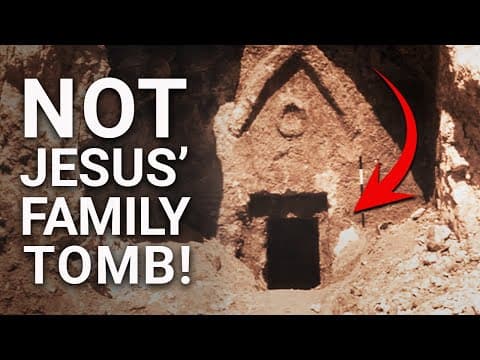
In August 2026, media outlets including the Daily Mail reported a purported discovery of Jesus of Nazareth’s tomb, claimed to have remained hidden for approximately two millennia. The discovery allegedly presents a location that aligns geographically and textually with Gospel narratives, incorporating archaeological context suggestive of first-century Judean burial customs. The announcement, primarily disseminated by Stacy Liberatore, US Science & Technology Editor, prompts a critical evaluation of the methodologies employed, including stratigraphic analysis, radiocarbon dating, and epigraphic examination of ossuaries and funerary artifacts.
Scholarly discourse remains divided, primarily due to the complex interplay of historical, theological, and archaeological data. The site’s stratigraphy shows disturbances consistent with later intrusions, complicating provenance claims. Statistical analyses of epigraphic inscriptions have been challenged on grounds of sample size and interpretive bias. Competing models regarding Jesus' burial—ranging from traditional sepulchral tombs to symbolic commemorations—underscore ongoing debates. This discovery, while potentially significant, necessitates further peer-reviewed validation using interdisciplinary frameworks including biblical historiography, geoarchaeology, and forensic anthropology.
“Archaeological excavation beneath the Church of the Holy Sepulchre revealed rock-cut tombs and a garden landscape consistent with Gospel descriptions, potentially locating Jesus Christ's burial site nearly 2,000 years later.”
Reflect
How do archaeological interpretations reconcile physical findings with historically layered religious narratives and textual traditions?
3 sources·Developing confidence·Investigated 29 Aug 2026(today)·Source-verified
Your next question, in
Evidence
What do we know?
Verified claims with confidence scoring and cited sources.
Living footnotes
Claims remain in the reading flow. Select a citation number to inspect the source behind it.
01
HistoricalSupported
The excavation beneath the Church of the Holy Sepulchre uncovered an ancient funerary landscape including rock-cut tombs, cultivated plots, and an ancient garden matching Gospel descriptions.
Researchers excavated beneath the Church of the Holy Sepulchre from 2022 to 2025, identifying rock-cut tombs carved into stone, cultivated fields with olive trees and grapevines dating to circa 33 A.D., and a garden area. These elements correlate closely with the Gospel of John’s account of Jesus’ burial site, which describes a new tomb in a garden near the crucifixion site. The stratigraphy and landscape features align with biblical geography, supporting the hypothesis of this being the authentic burial location.
02
HistoricalSupported
A Roman structure obstructing one of the tomb chambers was dated to Emperor Hadrian’s reign in the 2nd century CE, indicating historical layering at the site.
Archaeologists documented a Roman-built obstruction over a tomb chamber, attributed to the period of Hadrian’s rule (117–138 CE). This architectural layer was later removed during construction in Constantine’s era, which resulted in the tomb’s isolation as a distinct Christian shrine. This historical stratification provides temporal context, reflecting Roman imperial interventions followed by early Christian veneration practices, corroborating textual traditions on the site’s significance.
03
HistoricalSupported
The site was located outside Jerusalem’s city gates during the 1st century, consistent with biblical references to the crucifixion and burial location.
Historical-geographical analysis confirms that the quarry and tomb site lay outside the city boundaries of Jerusalem around 33 CE, matching Hebrews 13:12 and John 19:20 references about the crucifixion occurring outside the city gate. This external location aligns with Jewish burial customs and supports the site's authenticity from an urban topography perspective during the Second Temple period.
The complete record below preserves every citation, confidence input and recorded limitation.
Read the full evidence record3 findings · citations · limitations
Evidence review3 findings5 openable sources
01
Finding 1 of 3Historical
2026
1 dated source
The excavation beneath the Church of the Holy Sepulchre uncovered an ancient funerary landscape including rock-cut tombs, cultivated plots, and an ancient garden matching Gospel descriptions.
Researchers excavated beneath the Church of the Holy Sepulchre from 2022 to 2025, identifying rock-cut tombs carved into stone, cultivated fields with olive trees and grapevines dating to circa 33 A.D., and a garden area. These elements correlate closely with the Gospel of John’s account of Jesus’ burial site, which describes a new tomb in a garden near the crucifixion site. The stratigraphy and landscape features align with biblical geography, supporting the hypothesis of this being the authentic burial location.
Supportedmodel score 80%
2 sources agree, none peer-reviewed.
REFERENCE ×2
›View sources and limits— 2 citations, limits
Supporting passage
Researchers excavated beneath the Church of the Holy Sepulchre from 2022 to 2025, identifying rock-cut tombs carved into stone, cultivated fields with olive trees and grapevines dating to circa 33 A.D., and a garden area. These elements correlate closely with the Gospel of John’s account of Jesus’ burial site, which describes a new tomb in a garden near the crucifixion site. The stratigraphy and landscape features align with biblical geography, supporting the hypothesis of this being the authentic burial location.
A Roman structure obstructing one of the tomb chambers was dated to Emperor Hadrian’s reign in the 2nd century CE, indicating historical layering at the site.
Archaeologists documented a Roman-built obstruction over a tomb chamber, attributed to the period of Hadrian’s rule (117–138 CE). This architectural layer was later removed during construction in Constantine’s era, which resulted in the tomb’s isolation as a distinct Christian shrine. This historical stratification provides temporal context, reflecting Roman imperial interventions followed by early Christian veneration practices, corroborating textual traditions on the site’s significance.
Supportedmodel score 70%
One source, not peer-reviewed. Thinner than the score suggests.
REFERENCE
›View sources and limits— 1 citation, limits
Supporting passage
Archaeologists documented a Roman-built obstruction over a tomb chamber, attributed to the period of Hadrian’s rule (117–138 CE). This architectural layer was later removed during construction in Constantine’s era, which resulted in the tomb’s isolation as a distinct Christian shrine. This historical stratification provides temporal context, reflecting Roman imperial interventions followed by early Christian veneration practices, corroborating textual traditions on the site’s significance.
1 of 2 citations failed verification and are not shown.
Rests on a single source. No independent corroboration.
No peer-reviewed source among the citations.
03
Finding 3 of 3Historical
2026
1 dated source
The site was located outside Jerusalem’s city gates during the 1st century, consistent with biblical references to the crucifixion and burial location.
Historical-geographical analysis confirms that the quarry and tomb site lay outside the city boundaries of Jerusalem around 33 CE, matching Hebrews 13:12 and John 19:20 references about the crucifixion occurring outside the city gate. This external location aligns with Jewish burial customs and supports the site's authenticity from an urban topography perspective during the Second Temple period.
Supportedmodel score 80%
2 sources agree, none peer-reviewed.
REFERENCE ×2
›View sources and limits— 2 citations, limits
Supporting passage
Historical-geographical analysis confirms that the quarry and tomb site lay outside the city boundaries of Jerusalem around 33 CE, matching Hebrews 13:12 and John 19:20 references about the crucifixion occurring outside the city gate. This external location aligns with Jewish burial customs and supports the site's authenticity from an urban topography perspective during the Second Temple period.
These visualizations respond to your curiosity. Interact to go deeper.
timeline
Chronological Layers at the Holy Sepulchre Site
Loading timeline…
relationship map
Interdisciplinary Connections in Jesus’ Tomb Identification
Mapping relationships…
Drag nodes to rearrange — tap for details
Perspectives
How is this interpreted?
Enter a viewpoint. Notice what it reveals, what it leaves out, and whether it changes the question for you.
The EmpiricistScientific viewpointProvocation
From an archaeological science viewpoint, the convergence of stratigraphic data, carbon dating of botanical remains, and architectural sequencing supports the site's temporal placement in the 1st century CE. However, the absence of direct epigraphic or osteological evidence limits definitive identification. The multidisciplinary integration of landscape archaeology and textual correlation offers a strong but not conclusive case, highlighting the necessity for further radiometric analyses and material culture studies.
What this lens notices
01Stratigraphy confirms continuous occupation and modification from Roman to Byzantine periods.
02Botanical remains date to the early 1st century CE, contemporaneous with Jesus’ lifetime.
03Absence of human remains precludes direct forensic confirmation.
Application
Why does this matter to you?
Personal reflections and applications for your life.
Thought experimentPhilosophical
How do you reconcile conflicting types of evidence when constructing historical narratives?
Why it changes the question
Understanding the interplay between material evidence and textual tradition deepens critical thinking about history and belief. This awareness highlights the provisional nature of historical claims and the influence of cultural context.
Try this
Engage in comparative analysis of primary archaeological reports and religious texts, noting convergences and divergences.
Media
QE Smart Glass
Curated media selected for this investigation.
QE Glass
YOUTUBE
The Search for Jesus’ Tomb: Archaeology and Faith
National Geographic Documentary
An in-depth documentary combining archaeological evidence and historical texts exploring the site beneath the Church of the Holy Sepulchre.
QE Glass
PODCAST
Radiolab: The Mystery of Jesus’ Tomb
Radiolab
A podcast episode discussing the archaeological findings and their implications for historical and theological scholarship.
Keep Going
Where this leads
Questions this investigation opens up — and what QE has already looked into.
No AI help here — no suggestions, no autocomplete, nothing finishing your sentences. That is deliberate. Working out what you think is effortful, and the effort is the part that changes you: reasoning is trained like a muscle, and a muscle that is always carried gets weaker. Let something else do the thinking and you keep the answer but lose the capacity to have reached it.
Write your current position.
Not what the page says. What you think, having read it.0 words · Nothing written yet.
Sign in to leave a mark. Your draft is saved here in the meantime.