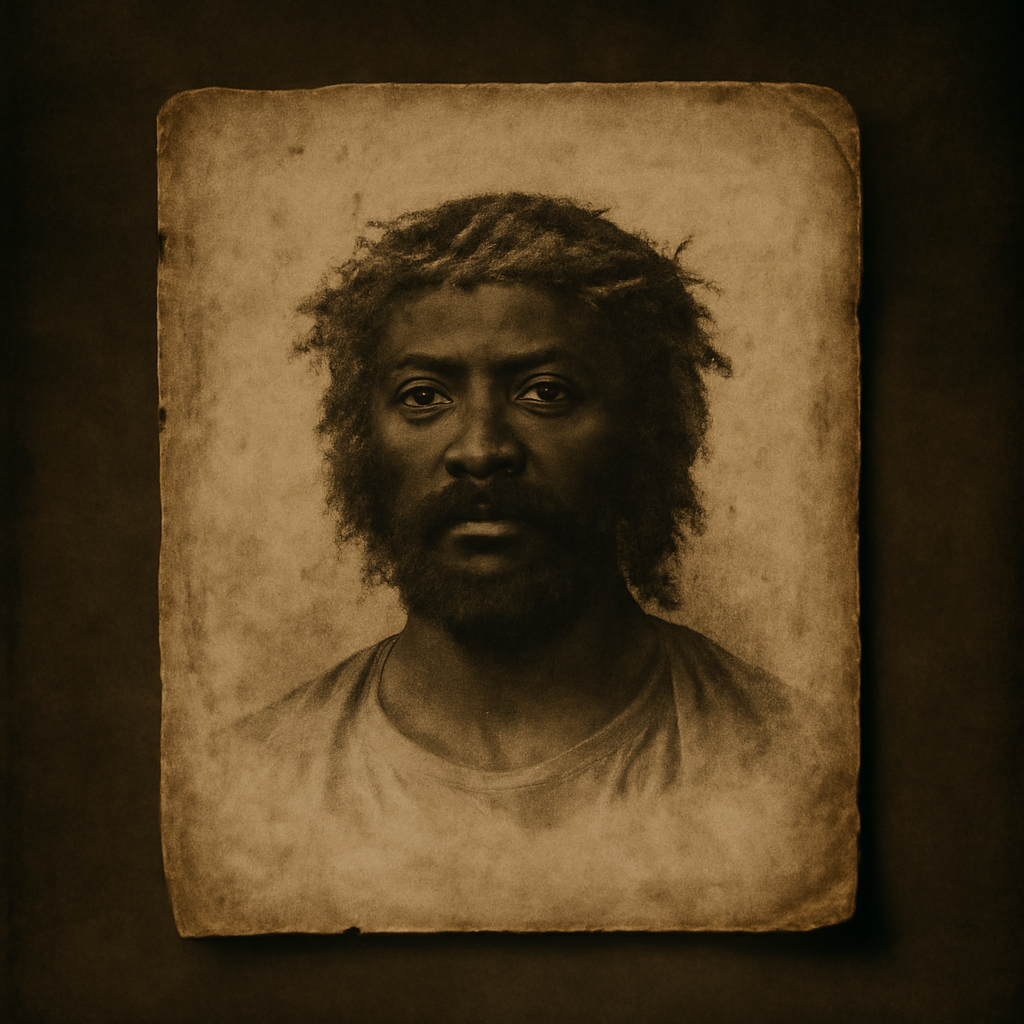
Evidence
What do we know?
Verified claims with confidence scoring and cited sources.
The historical Jesus was a brown-skinned, Middle Eastern Jew with dark curly hair and brown eyes.
Historical and archaeological evidence indicates that first-century Judeans typically possessed olive-brown skin, dark brown or black hair, and brown eyes. Historian Joan Taylor's research suggests Jesus likely had short, curly hair and a trimmed beard, standing around five-foot-five. The image of a fair-skinned, blue-eyed man is a much later European artistic invention. It completely lacks historical support. In reality, Jesus looked like other rural Jewish laborers of his region.
In the nineteenth and twentieth centuries, some European scholars and propagandists actively stripped Jesus of his Jewish identity to promote anti-Semitic ideologies.
This process reached an extreme in Nazi Germany, where the regime popularized a racially 'Aryan' Jesus. Propagandists depicted him as a blond, blue-eyed warrior who opposed Judaism. Organizations like the Institute for the Study and Eradication of Jewish Influence on German Church Life even published a de-Judaized New Testament. This deliberate rewriting of history shows how easily religious figures are co-opted to justify racial supremacy and violence.
The 'Black Christ' movement uses blackness as a theological symbol of solidarity with the oppressed rather than a literal genetic claim.
While some groups like the Black Hebrew Israelites argue Jesus was ethnically Black, others use his blackness symbolically. Martin Luther King Jr. championed this view, identifying Jesus' struggle against Roman authorities with the civil rights struggle of African Americans. Here, blackness represents a theological alignment with the marginalized. It reframes Jesus as a savior who intimately understands the pain of the oppressed.
Go deeper
Another way to see this
“Forensic anthropologists emphasize that modern racial categories like 'black' or 'white' did not exist in the ancient Mediterranean. Instead, researchers use...”
You might be wrong about this
The cultural view challenges this
“From a cultural standpoint, representing Jesus as Black or brown is a powerful act of decolonization. For centuries, ...”
Interactive Exploration
Touch, drag, and discover
These visualizations respond to your curiosity. Interact to go deeper.
Comparing the Historical Jesus with Later Cultural Representations
| Historical Evidence | European Tradition | Black Christ Movement | |
|---|---|---|---|
| Skin Tone | Olive-brown, typical of Middle Eastern Jews | Fair, pale white skin | Symbolic black or dark brown skin |
| Hair and Eyes | Curly black hair, brown eyes | Long flowing brown hair, blue eyes | Woolly black hair, dark eyes |
| Primary Purpose | Survival in first-century Judea | Cultural integration and imperial power | Solidarity with the oppressed and decolonization |
Tap any row to highlight and compare
The Spectrum of Representation in Sacred Art
Forensic Reconstruction
Byzantine Iconography
Renaissance Whitewashing
Liberation Theology Icons
Visual Gallery
Images & artifacts
Historical images, diagrams, and visual knowledge from Wikimedia Commons.
Perspectives
How is this interpreted?
Diverse viewpoints across worldviews and disciplines.
Scientific View
Forensic anthropologists emphasize that modern racial categories like 'black' or 'white' did not exist in the ancient Mediterranean. Instead, researchers use skeletal remains, climate data, and historical art to reconstruct a realistic profile. Using a first-century Judean skull, scientists created a model of a man with broad features, dark olive skin, and short, tightly curled hair. This scientific consensus rejects both Eurocentric whitewashing and Afrocentric claims of a Sub-Saharan African heritage.
Key Arguments
- Modern racial categories are socially constructed and historically inaccurate for antiquity
- Forensic reconstructions rely on physical skull structures from first-century Judea
- Climatic and geographic realities dictate a dark-olive, sun-exposed skin tone
Go deeper
Deep Dive Media
Explore further
Curated videos and media on QE Smart Glass.
Think about this
“How do your own mental images of historical or sacred figures reflect your cultural background?”
The key insight
“The historical Jesus was neither white nor black in the modern sense, but a brown-skinned, Middle Eastern Jew whose actual appearance was largely erased to serve the cultural and political agendas of later empires.”
Founder's Note
One thing my grandmother first taught me and still reminds me of till this day is that — “Knowledge Is Power” — and those words stayed with me ever since. I believe they sparked this creation.
To understand anything, you must Question Everything.
Darren
Founder of QE