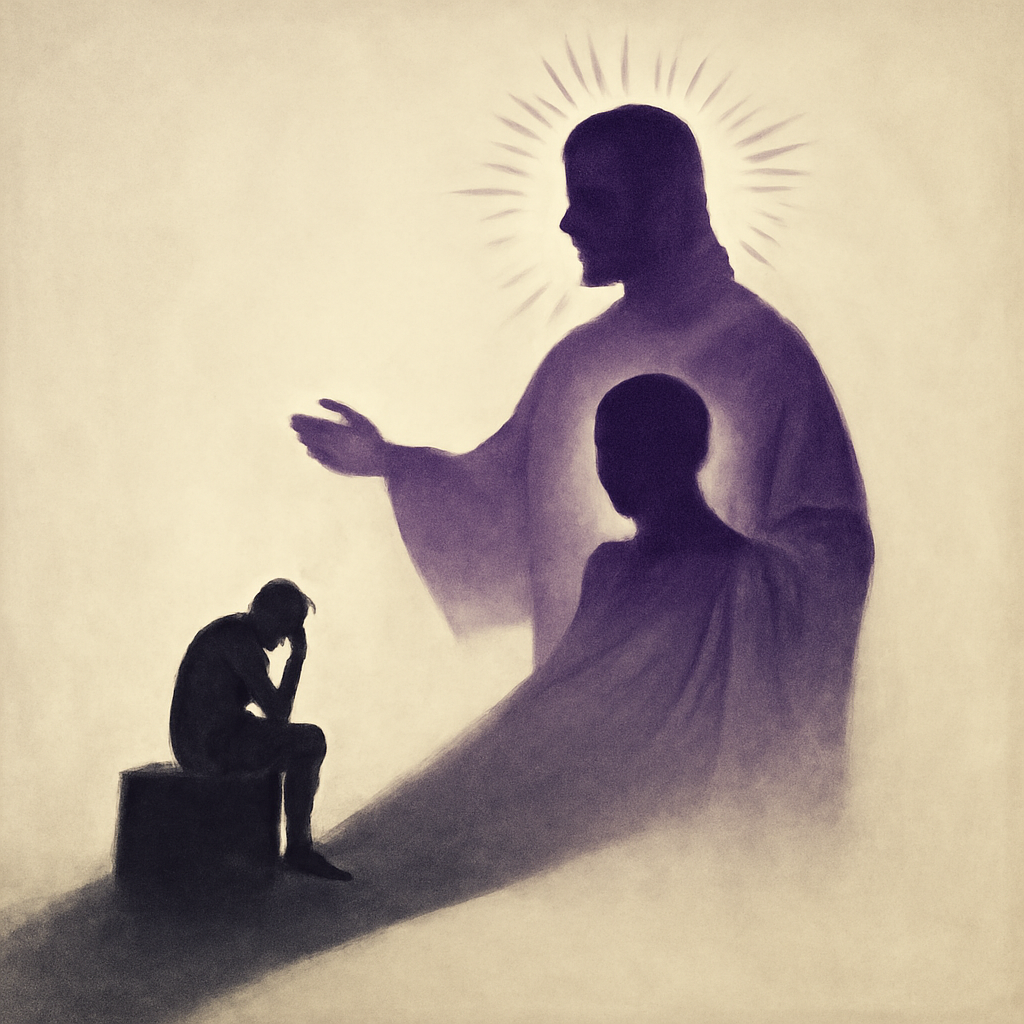
Exploring the Question: Is Jesus God in Human Form?
The question of whether Jesus is God in human form lies at the heart of Christian belief and has fascinated theologians and believers for centuries. According to mainstream Christian doctrine, particularly within Catholicism, Orthodoxy, and many Protestant traditions, Jesus is indeed both fully divine and fully human. This belief is known as the doctrine of the Incarnation, which states that God took on human flesh in the person of Jesus Christ. This union of divinity and humanity is seen as a unique mystery central to salvation and understanding God’s relationship with the world.
However, perspectives vary among different religious groups and scholars. Some view Jesus solely as a prophet or an enlightened human, while others interpret his divinity metaphorically rather than literally. The question blends theology, history, and faith, inviting us to reflect on the nature of divinity and the profound impact of Jesus’s life and teachings on billions across history.
See Exploring the Question: Is Jesus God in Human Form?
A guided visual explanation assembled from QE artwork and sourced documentary images.
01 / 04
QE visual interpretation
Frame 01
Exploring the Question: Is Jesus God in Human Form?
Christianity teaches Jesus is both God and human, a unique union called the Incarnation.
Image provenance and limitation
Source: AI-generated visual interpretation
Creator: Question Everything
Limitation: This image explains or evokes the subject. It is not documentary evidence and should not be used to verify a factual claim.
Evidence
What do we know?
Verified claims with confidence scoring and cited sources.
2 of 3 findings need extra caution. Finding 2, Finding 3 rest on weaker sourcing than the other findings.
Living footnotes
Claims remain in the reading flow. Select a citation number to inspect the source behind it.
01
AcademicWell supported
Christian doctrine holds that Jesus Christ is both fully divine and fully human simultaneously.
The Christian belief of the Incarnation states that Jesus is the Son of God who took on a human nature without losing his divinity. This union is not partial but full; Jesus is truly God and truly man. This concept is central to orthodox Christianity and distinguishes Jesus from other historical figures or spiritual teachers, affirming his unique nature as both God and man in one person.
02
HistoricalMixed evidence
Jesus claimed divinity through his words and actions, according to the New Testament.
The Gospels record Jesus making statements that equate himself with God, such as claiming he existed before Abraham and that he and the Father are one. He also demonstrated divine authority through miracles, forgiving sins, and resurrection. These acts and claims form the biblical foundation for understanding Jesus as God incarnate, a belief supported by early Christian leaders and theologians.
03
AcademicMixed evidence
Jesus’ humanity is essential for his role in redemption, including being born under the law and shedding blood for sin.
Christian doctrine emphasizes that Jesus had to be fully human to fulfill the law and offer a perfect sacrifice for sin. Being born of a woman and living under the law made him capable of redeeming humanity. Moreover, his shedding of human blood was necessary for the remission of sins, a requirement established in the Old Testament and fulfilled in his crucifixion, underscoring the critical importance of his true humanity.
The complete record below preserves every citation, confidence input and recorded limitation.
Read the full evidence record3 findings · citations · limitations
Evidence review3 findings4 openable sources
01
Finding 1 of 3Academic
2
2/2 verified
Christian doctrine holds that Jesus Christ is both fully divine and fully human simultaneously.
The Christian belief of the Incarnation states that Jesus is the Son of God who took on a human nature without losing his divinity. This union is not partial but full; Jesus is truly God and truly man. This concept is central to orthodox Christianity and distinguishes Jesus from other historical figures or spiritual teachers, affirming his unique nature as both God and man in one person.
Well supportedmodel score 90%
2 sources agree, 2 peer-reviewed.
PRIMARY STUDY ×2
›View sources and limits— 2 citations, limits
Supporting passage
The Christian belief of the Incarnation states that Jesus is the Son of God who took on a human nature without losing his divinity. This union is not partial but full; Jesus is truly God and truly man. This concept is central to orthodox Christianity and distinguishes Jesus from other historical figures or spiritual teachers, affirming his unique nature as both God and man in one person.
QE used this research source for direct evidence relevant to the claim.
“According to the Christian doctrine of the Incarnation, the Son of God is truly but only contingently a human being.But is it also the case that Christ's individual human nature is only contingently united to a divine person?The affirmative answer to this question, explicitly espoused by Duns Scotus and William of Ock…”
QE used this research source for direct evidence relevant to the claim.
“I will argue in this chapter that a priori we would expect God to respond to our suffering and wrongdoing by himself living a human life. God would live a human life by one divine person becoming human (that is, ‘becoming incarnate ‘).”
This passage was checked against the claim.
Retrieved 24/09/2026
What limits this
Nothing further is recorded. QE stores no methodology field, so absence here is not a clean bill of health.
02
Finding 2 of 3HistoricalNeeds caution
1/1 verified
Jesus claimed divinity through his words and actions, according to the New Testament.
The Gospels record Jesus making statements that equate himself with God, such as claiming he existed before Abraham and that he and the Father are one. He also demonstrated divine authority through miracles, forgiving sins, and resurrection. These acts and claims form the biblical foundation for understanding Jesus as God incarnate, a belief supported by early Christian leaders and theologians.
Mixed evidencemodel score 55%
Verification was mixed across 1 source.
REFERENCE
›View sources and limits— 1 citation, limits
Supporting passage
The Gospels record Jesus making statements that equate himself with God, such as claiming he existed before Abraham and that he and the Father are one. He also demonstrated divine authority through miracles, forgiving sins, and resurrection. These acts and claims form the biblical foundation for understanding Jesus as God incarnate, a belief supported by early Christian leaders and theologians.
QE used this source because its retrieved passage directly addresses the claim.
“The New Testament equates Jesus to the creator of the universe (John 1:3), and in John 16:15, He says, “All that belongs to the Father is mine.” But where’s the proof? Claiming to be something, as Jesus claimed to be God, doesn’t make it true. Where’s the evidence that He is God? Jesus’ identity isn’t based solely on…”
This passage was checked against the claim.
Retrieved 24/09/2026
What limits this
1 of 2 citations failed verification and are not shown.
Rests on a single source. No independent corroboration.
No peer-reviewed source among the citations.
Verification was mixed — some citations supported the claim and some did not.
03
Finding 3 of 3AcademicNeeds caution
1
1/1 verified
Jesus’ humanity is essential for his role in redemption, including being born under the law and shedding blood for sin.
Christian doctrine emphasizes that Jesus had to be fully human to fulfill the law and offer a perfect sacrifice for sin. Being born of a woman and living under the law made him capable of redeeming humanity. Moreover, his shedding of human blood was necessary for the remission of sins, a requirement established in the Old Testament and fulfilled in his crucifixion, underscoring the critical importance of his true humanity.
Mixed evidencemodel score 55%
Verification was mixed across 1 source.
REFERENCE
›View sources and limits— 1 citation, limits
Supporting passage
Christian doctrine emphasizes that Jesus had to be fully human to fulfill the law and offer a perfect sacrifice for sin. Being born of a woman and living under the law made him capable of redeeming humanity. Moreover, his shedding of human blood was necessary for the remission of sins, a requirement established in the Old Testament and fulfilled in his crucifixion, underscoring the critical importance of his true humanity.
QE used this source because its retrieved passage directly addresses the claim.
“Jesus accomplished our redemption on the cross, exchanging our sin for His perfect righteousness (2 Corinthians 5:21). Another reason Jesus had to be fully human is that God established the necessity of the shedding of blood for the remission of sins (Leviticus 17:11; Hebrews 9:22). The blood of animals, although acce…”
This passage was checked against the claim.
Retrieved 24/09/2026
What limits this
1 of 2 citations failed verification and are not shown.
Rests on a single source. No independent corroboration.
No peer-reviewed source among the citations.
Verification was mixed — some citations supported the claim and some did not.
The reference archive
Sources & Further Reading
Continue exploring the research, reporting and reference material available on this subject.
These were found while researching this question but are not used as evidence for any claim above.
These visualizations respond to your curiosity. Interact to go deeper.
timeline
Key Events in Christian Understanding of Jesus’ Nature
Loading timeline…
relationship map
Relationship Between Jesus’ Divinity and Humanity
Mapping relationships…
Drag nodes to rearrange — tap for details
Visual Gallery
Images & artifacts
Historical images, diagrams, and visual knowledge from Wikimedia Commons.
Contested
This one is genuinely argued over
Both cases are put as strongly as their own supporters would put them, from evidence rather than from who holds the view. Read them and decide for yourself.
The case that it's true
The strongest case for Jesus being God in human form rests on the biblical testimony and theological tradition that affirm his dual nature. His own claims to divinity, fulfilled prophecy, miracles, resurrection, and the transformative impact on history support this belief. The Incarnation doctrine explains how the divine and human coexist fully in one person, making Jesus the unique God-man who bridges heaven and earth.
What this rests on
Biblical statements where Jesus claims divinity
Miracles and resurrection validating divine authority
Historical and theological consistency in Christian tradition
The case against
Skeptics argue that the claims about Jesus’ divinity are theological constructs rather than historical facts, pointing out that miraculous accounts and divine claims are not verifiable by empirical standards. They suggest Jesus was a remarkable human teacher or prophet but reject the notion of him being God incarnate, emphasizing natural explanations and historical-critical approaches to scripture.
Alternative interpretations of Jesus’ identity as a human teacher
What both sides accept
Both believers and skeptics agree that Jesus was an extraordinarily influential figure who profoundly shaped religious thought and human history. It is accepted that he lived as a human being with a distinct personality and teachings. The disagreement centers on interpreting his nature and claims of divinity, with shared recognition of Jesus’ central role in Christian faith and culture.
Documented, and not in dispute
Jesus’ historical existence and impact
His role as a human teacher and moral example
Centrality of Jesus in Christian religious identity
Application
Why does this matter to you?
Personal reflections and applications for your life.
Thought experimentSelf-Reflection
How does the idea of a divine being living a human life influence your view of suffering and empathy?
Why it changes the question
Considering Jesus as both God and human invites reflection on how divine empathy might reshape our understanding of pain and human experience. It challenges us to see suffering not as distant but as intimately known by the divine.
Try this
Try to identify moments in your life where empathy has transformed your perspective on hardship.
Media
QE Smart Glass
Curated media selected for this investigation.
QE Glass
YOUTUBE
Anselm & the Argument for God: Crash Course Philosophy #9
CrashCourse
Today we are introducing a new area of philosophy – philosophy of religion. We are starting this unit off with Anselm's argument ...
QE Glass
YOUTUBE
Anselm & the Argument for God: Crash Course Philosophy #9
CrashCourse
Today we are introducing a new area of philosophy – philosophy of religion. We are starting this unit off with Anselm's argument ...
QE Glass
YOUTUBE
All of Jesus Christ's Philosophy to SLEEP to | Philosophy for Sleep
The Sleepy Philosopher
Who was the historical Jesus? What was the radical, world-changing philosophy behind his parables and sermons? How did a ...
QE Glass
YOUTUBE
3 Minute Theology 1.6: How could Jesus be fully God and fully human?
Three Minute Theology
How could Jesus be fully God and fully human?
QE Glass
YOUTUBE
The Trinity Explained (Without Pretending It’s Simple)
BibleProject
The God portrayed in the Bible isn't easy to understand, but what if we could better understand what it is that we can't understand?
QE Glass
YOUTUBE
The Trinity Explained (Without Pretending It’s Simple)
BibleProject
The God portrayed in the Bible isn't easy to understand, but what if we could better understand what it is that we can't understand?
QE Glass
YOUTUBE
Who Did Jesus Think He Was?
drcraigvideos
For More Information: https://www.reasonablefaith.org/jesusclaims Reasonable Faith features the work of philosopher and ...
QE Glass
YOUTUBE
The Philosophy of Jesus Christ
Bygone Philosophy
Two thousand years ago, a wandering carpenter from a backwater province completely inverted the human understanding of ...
QE Glass
YOUTUBE
Jesus Can't Be A God & Human⁉️🫣 Shaykh Uthman Vs Anthony Rogers, David Wood, Sam Shamoun💥 #shorts
Unfiltered Shorts
Jesus Can't Be A God & Human⁉️ Shaykh Uthman Vs Anthony Rogers, David Wood, Sam Shamoun #shorts In this ...
QE Glass
YOUTUBE
Why does God choose to incarnate in human form?
Ananda Sangha Worldwide
QE Glass
YOUTUBE
Jesus Christ: True God and True Man (Aquinas 101)
The Thomistic Institute
Keep the Aquinas 101 cameras rolling! Donate $5 today: https://go.thomisticinstitute.org/donate-youtube-a101 ⭐ The new ...
QE Glass
YOUTUBE
3 Minute Theology 1.5: What is the Incarnation?
Three Minute Theology
What is the Incarnation?
QE Glass
PODCAST
Radiolab Presents: The Meaning of Jesus
Radiolab
A thoughtful podcast exploring the historical and spiritual perspectives on Jesus as God in human form.
Keep Going
Where this leads
Questions this investigation opens up — and what QE has already looked into.
No AI help here — no suggestions, no autocomplete, nothing finishing your sentences. That is deliberate. Working out what you think is effortful, and the effort is the part that changes you: reasoning is trained like a muscle, and a muscle that is always carried gets weaker. Let something else do the thinking and you keep the answer but lose the capacity to have reached it.
Write your current position.
Not what the page says. What you think, having read it.0 words · Nothing written yet.
Sign in to leave a mark. Your draft is saved here in the meantime.