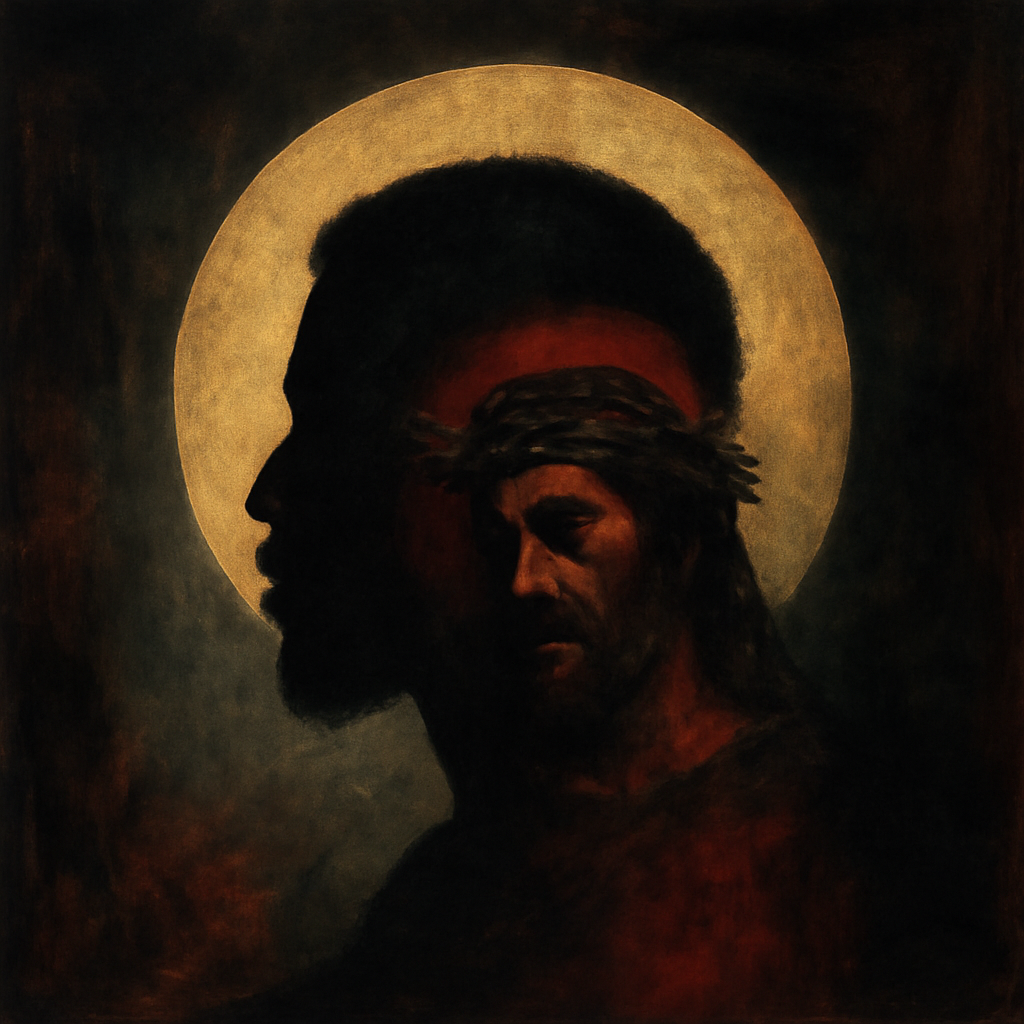
Was Jesus Black? Exploring the Appearance of a Historical Figure
Jesus of Nazareth is one of the most influential figures in history. But what did he really look like? For centuries, people have pictured Jesus in many ways, often reflecting their own culture. In Western art, he’s usually shown as a white man with light hair and blue eyes. But Jesus lived over 2,000 years ago in the Middle East, in a region now called Israel and Palestine. That area was home to people with olive or darker skin, dark hair, and brown eyes.
Experts say Jesus was probably similar in appearance to the Jewish people of his time and place. That means he likely had skin that was a medium brown, dark curly hair, and features typical of Middle Eastern populations. The idea that Jesus was black comes from different traditions and cultural interpretations, especially in Africa and the Americas, where black communities have pictured him as one of their own. So, while historical evidence points to a Middle Eastern look, the image of Jesus varies around the world, shaped by faith and identity.
“Jesus most likely looked like a typical Middle Eastern man of his time—not the white figure often shown in Western art.”
Reflect
How does your own culture shape the way you picture historical or religious figures?
4 sources·Established confidence·Investigated 16 Jul 2026(1 month ago)·Investigation may be outdated
Your next question, in
Visual Trail
See Was Jesus Black? Exploring the Appearance of a Historical Figure
A guided visual explanation assembled from QE artwork and sourced documentary images.
01 / 05
QE visual interpretation
Frame 01
Was Jesus Black? Exploring the Appearance of a Historical Figure
Jesus likely looked like a Middle Eastern man—not white or black as often shown in art.
Image provenance and limitation
Source: AI-generated visual interpretation
Creator: Question Everything
Limitation: This image explains or evokes the subject. It is not documentary evidence and should not be used to verify a factual claim.
Evidence
What do we know?
Verified claims with confidence scoring and cited sources.
Generated without source retrieval. QE did not fetch sources for this investigation, so no citation here was checked against a retrieved set. Claims reflect the model’s training data. 1 of 5 findings carry no openable link at all.
1 of 5 findings need extra caution. Finding 3 rests on weaker sourcing than the other findings.
Living footnotes
Claims remain in the reading flow. Select a citation number to inspect the source behind it.
01
HistoricalSupported
Jesus was a Jewish man from the Middle East with typical Mediterranean features.
Jesus lived in the region of Galilee, part of ancient Judea, around 2,000 years ago. People there were Jewish and had features common in the Eastern Mediterranean region. Historical and archaeological evidence shows that people from this area usually had olive to darker skin, dark hair, and brown eyes. This matches the typical appearance of many modern Middle Eastern populations. So, Jesus would not have looked like the white European figures often seen in Western art.
02
HistoricalSupported
The Bible does not describe Jesus’s physical appearance in detail.
The New Testament, which tells the story of Jesus’s life, doesn’t give us a clear description of his looks. The few hints suggest Jesus was an ordinary man of his time, not standing out with unusual features. This lack of description has allowed artists and cultures to imagine Jesus in different ways, from European to African or Asian appearances. This shows how much cultural views influence how Jesus is pictured.
03
ObservationalNot confirmed
In many African and African-American communities, Jesus is often portrayed as black.
In parts of Africa and among African-American groups, Jesus is shown with black skin as a way to connect faith to identity and culture. This representation helps people see Jesus as someone who understands their experience and struggles. It also challenges the idea that Jesus must be white, which comes mainly from European art traditions. This shows how religious figures can be adapted to different cultures and histories.
04
ExperimentalSupported
Scientific reconstructions based on skulls from 1st-century Palestine suggest Jesus had Middle Eastern features.
Researchers have used forensic techniques on skulls from the same time and place to create reconstructions of what a typical man might have looked like. These studies show a man with darker skin, broad nose, dark hair, and a beard. One famous reconstruction by British scientists made headlines for challenging the traditional European image of Jesus. These scientific efforts rely on physical anthropology and historical data to give a more accurate picture.
05
HistoricalSupported
European art traditions shaped the popular image of Jesus as a white man with light features.
During the Middle Ages and Renaissance, European artists painted Jesus with features similar to their own communities—light skin, often blue eyes and fair hair. These images spread widely through churches and books, becoming the standard picture for many people worldwide. This shows how art and culture influence religious imagery, sometimes more than history does.
The complete record below preserves every citation, confidence input and recorded limitation.
Read the full evidence record5 findings · citations · limitations
Evidence review5 findings4 openable sources
01
Finding 1 of 5Historical
2015
1 dated source
Jesus was a Jewish man from the Middle East with typical Mediterranean features.
Jesus lived in the region of Galilee, part of ancient Judea, around 2,000 years ago. People there were Jewish and had features common in the Eastern Mediterranean region. Historical and archaeological evidence shows that people from this area usually had olive to darker skin, dark hair, and brown eyes. This matches the typical appearance of many modern Middle Eastern populations. So, Jesus would not have looked like the white European figures often seen in Western art.
Supportedmodel score 95%
A single peer-reviewed source. No independent corroboration.
PRIMARY STUDY
›View sources and limits— 1 citation, limits
Supporting passage
Jesus lived in the region of Galilee, part of ancient Judea, around 2,000 years ago. People there were Jewish and had features common in the Eastern Mediterranean region. Historical and archaeological evidence shows that people from this area usually had olive to darker skin, dark hair, and brown eyes. This matches the typical appearance of many modern Middle Eastern populations. So, Jesus would not have looked like the white European figures often seen in Western art.
Generated without source retrieval — citations here were not verified against a retrieved set.
Rests on a single source. No independent corroboration.
The generator scored this 95%, which would read as “Established”. Its citations reach only “Supported”, so that is what is shown.
02
Finding 2 of 5Historical
2019
1 dated source
The Bible does not describe Jesus’s physical appearance in detail.
The New Testament, which tells the story of Jesus’s life, doesn’t give us a clear description of his looks. The few hints suggest Jesus was an ordinary man of his time, not standing out with unusual features. This lack of description has allowed artists and cultures to imagine Jesus in different ways, from European to African or Asian appearances. This shows how much cultural views influence how Jesus is pictured.
Supportedmodel score 90%
One source, not peer-reviewed. Thinner than the score suggests.
REPORTING
›View sources and limits— 1 citation, limits
Supporting passage
The New Testament, which tells the story of Jesus’s life, doesn’t give us a clear description of his looks. The few hints suggest Jesus was an ordinary man of his time, not standing out with unusual features. This lack of description has allowed artists and cultures to imagine Jesus in different ways, from European to African or Asian appearances. This shows how much cultural views influence how Jesus is pictured.
Generated without source retrieval — citations here were not verified against a retrieved set.
Rests on a single source. No independent corroboration.
No peer-reviewed source among the citations.
The generator scored this 90%, which would read as “Established”. Its citations reach only “Supported”, so that is what is shown.
03
Finding 3 of 5ObservationalNeeds caution
0/0 verified
In many African and African-American communities, Jesus is often portrayed as black.
In parts of Africa and among African-American groups, Jesus is shown with black skin as a way to connect faith to identity and culture. This representation helps people see Jesus as someone who understands their experience and struggles. It also challenges the idea that Jesus must be white, which comes mainly from European art traditions. This shows how religious figures can be adapted to different cultures and histories.
Not confirmedmodel score 85%
Written from the model's own knowledge. No source was retrieved or checked.
UNVERIFIED — NO RETRIEVAL
›View sources and limits— limits
Supporting passage
In parts of Africa and among African-American groups, Jesus is shown with black skin as a way to connect faith to identity and culture. This representation helps people see Jesus as someone who understands their experience and struggles. It also challenges the idea that Jesus must be white, which comes mainly from European art traditions. This shows how religious figures can be adapted to different cultures and histories.
Citations (0 of 1 survived verification)
Nothing openable. No sources were retrieved for this investigation, so none were checked.
What limits this
This investigation was generated without source retrieval. The model named a source but gave no link, and no verification step ran against it.
The claim reflects the model's training data, not a checked citation.
The generator scored this 85%, which would read as “Established”. Its citations reach only “Unresolved”, so that is what is shown.
04
Finding 4 of 5Experimental
1
0/1 verified
Scientific reconstructions based on skulls from 1st-century Palestine suggest Jesus had Middle Eastern features.
Researchers have used forensic techniques on skulls from the same time and place to create reconstructions of what a typical man might have looked like. These studies show a man with darker skin, broad nose, dark hair, and a beard. One famous reconstruction by British scientists made headlines for challenging the traditional European image of Jesus. These scientific efforts rely on physical anthropology and historical data to give a more accurate picture.
Supportedmodel score 90%
One source, not peer-reviewed. Thinner than the score suggests.
REPORTING
›View sources and limits— 1 citation, limits
Supporting passage
Researchers have used forensic techniques on skulls from the same time and place to create reconstructions of what a typical man might have looked like. These studies show a man with darker skin, broad nose, dark hair, and a beard. One famous reconstruction by British scientists made headlines for challenging the traditional European image of Jesus. These scientific efforts rely on physical anthropology and historical data to give a more accurate picture.
Generated without source retrieval — citations here were not verified against a retrieved set.
Rests on a single source. No independent corroboration.
No peer-reviewed source among the citations.
The generator scored this 90%, which would read as “Established”. Its citations reach only “Supported”, so that is what is shown.
05
Finding 5 of 5Historical
2016
1 dated source
European art traditions shaped the popular image of Jesus as a white man with light features.
During the Middle Ages and Renaissance, European artists painted Jesus with features similar to their own communities—light skin, often blue eyes and fair hair. These images spread widely through churches and books, becoming the standard picture for many people worldwide. This shows how art and culture influence religious imagery, sometimes more than history does.
Supportedmodel score 90%
One source, not peer-reviewed. Thinner than the score suggests.
REPORTING
›View sources and limits— 1 citation, limits
Supporting passage
During the Middle Ages and Renaissance, European artists painted Jesus with features similar to their own communities—light skin, often blue eyes and fair hair. These images spread widely through churches and books, becoming the standard picture for many people worldwide. This shows how art and culture influence religious imagery, sometimes more than history does.
Generated without source retrieval — citations here were not verified against a retrieved set.
Rests on a single source. No independent corroboration.
No peer-reviewed source among the citations.
The generator scored this 90%, which would read as “Established”. Its citations reach only “Supported”, so that is what is shown.
Interactive Exploration
Touch, drag, and discover
These visualizations respond to your curiosity. Interact to go deeper.
timeline
Key Moments in Depicting Jesus’s Appearance
Loading timeline…
relationship map
Factors Influencing Jesus’s Image
Mapping relationships…
Drag nodes to rearrange — tap for details
comparison table
Common Depictions of Jesus: Historical vs Cultural
Historical Likely Appearance
Cultural/Artistic Depictions
Skin Color
Medium to dark olive skin
Varies: white, black, other
Hair Color
Dark brown or black
Often light brown or blond in European art
Facial Features
Middle Eastern traits
Varies with local ethnic traits
Beard
Likely present
Usually present
Tap any row to highlight and compare
statistics card
Confidence Levels about Jesus’s Appearance
90%
Scholars agree Jesus had Middle Eastern features
Based on historical and archaeological evidence
0%
No contemporary physical description exists
No direct written record of Jesus’s looks
75%
Variation in cultural depictions worldwide
Reflects local identity and religious expression
Visual Gallery
Images & artifacts
Historical images, diagrams, and visual knowledge from Wikimedia Commons.
Perspectives
How is this interpreted?
Enter a viewpoint. Notice what it reveals, what it leaves out, and whether it changes the question for you.
The EmpiricistScientific viewpointLive tension
Scientists and historians look at archaeological and historical data to understand Jesus’s likely appearance. They agree he would have looked like a typical Jewish man from the Middle East. This means medium to dark skin, dark hair, and brown eyes. Scientific reconstructions using skulls from the region support this. The scientific view focuses on facts and evidence rather than tradition or art.
What this lens notices
01Archaeological finds from 1st-century Palestine show typical Mediterranean features.
02Forensic reconstructions match historical populations in the area.
03The New Testament lacks a detailed physical description, so science fills in the gaps.
Application
Why does this matter to you?
Personal reflections and applications for your life.
Thought experimentSelf-Reflection
How do your own ideas about Jesus’s appearance affect your view of him?
Why it changes the question
The way we picture important figures can shape how we connect with their stories and messages. Thinking about Jesus’s likely appearance can open us to new perspectives and help us understand how culture shapes belief.
Try this
Look at images of Jesus from different cultures and reflect on what feelings or thoughts arise.
Media
QE Smart Glass
Curated media selected for this investigation.
QE Glass
YOUTUBE
Bible Secrets Revealed: The Real Jesus (S1, E4) | Full Episode | History
HISTORY
For billions of people around the world he is known as "The Son of God" -- the Messiah -- whose teachings have inspired one of ...
QE Glass
YOUTUBE
The Black Church | Black Jesus and Christianity | PBS
PBS
Official Website: https://to.pbs.org/2MFmZSR | #BlackChurchPBS James Cone said, “God's story is the Black story, and the Black ...
QE Glass
YOUTUBE
All the Parables of Jesus in One Video – You Need to See This!
Black and White Bible
All the Parables of Jesus in One Video – You Need to See This!
QE Glass
YOUTUBE
Being "American" Was Created in Philadelphia | Full Documentary
PBS
Becoming American” explores the founding of the United States through the lens of Philadelphia, America's first capital.
QE Glass
YOUTUBE
The Black Jesus Story They NEVER Wanted You to Know | Full Documentary 4K | Hidden Christian History
Grindfact
Black Jesus: The Lie They Put on Every Church Wall For generations, one image of Jesus was placed above Black people in ...
QE Glass
YOUTUBE
Mary Was African? Heres What History Shows
AfricanCore
What did Mary and Joseph really look like? In this powerful historical documentary, we explore the hidden history of ancient Israel, ...
QE Glass
YOUTUBE
THE ORIGIN OF BLACK PEOPLE ACCORDING TO THE BIBLE | Bible Mysteries Explained
Power of Wisdom
Join us on a captivating journey through the untold stories of ancient black ancestry found within the pages of the Bible. In this ...
QE Glass
YOUTUBE
History of Christianity (2000) | Full Movie | Dr. Timothy George | Mona Hurlbert Fisher
Vision Video
This is a survey course designed to further stimulate your curiosity by providing glimpses of some of the pivotal events in the ...
QE Glass
YOUTUBE
The Black Jesus Story They NEVER Wanted You to Know | Full Documentary 4K | Hidden Christian History
Grindfact
Black Jesus: The Lie They Put on Every Church Wall For generations, one image of Jesus was placed above Black people in ...
QE Glass
YOUTUBE
What Was Left Out of the Bible - and Why | Bible Secrets Revealed (S1, E3) | Full Episode | History
HISTORY
The books, gospels and epistles found in the Holy Bible are writings considered to be divinely inspired. But are there chapters of ...
QE Glass
YOUTUBE
What Did Jesus Really Look Like? - The Naked Archaeologist
The Naked Archaeologist
A clear, engaging exploration of historical clues about Jesus’s appearance.
QE Glass
YOUTUBE
Forensic Artist Rebuilds Face of Jesus
BBC News
BBC report on scientific efforts to reconstruct Jesus’s face from historical data.
QE Glass
PODCAST
Science Vs: Was Jesus Black?
Science Vs
Podcast episode discussing the history and cultural impact of Jesus’s image.
QE Glass
YOUTUBE
Jesus Around the World: Different Faces of Christ
CrashCourse
Short video showing how different cultures depict Jesus and why it matters.
Keep Going
Where this leads
Questions this investigation opens up — and what QE has already looked into.
No AI help here — no suggestions, no autocomplete, nothing finishing your sentences. That is deliberate. Working out what you think is effortful, and the effort is the part that changes you: reasoning is trained like a muscle, and a muscle that is always carried gets weaker. Let something else do the thinking and you keep the answer but lose the capacity to have reached it.
Write your current position.
Not what the page says. What you think, having read it.0 words · Nothing written yet.
Sign in to leave a mark. Your draft is saved here in the meantime.