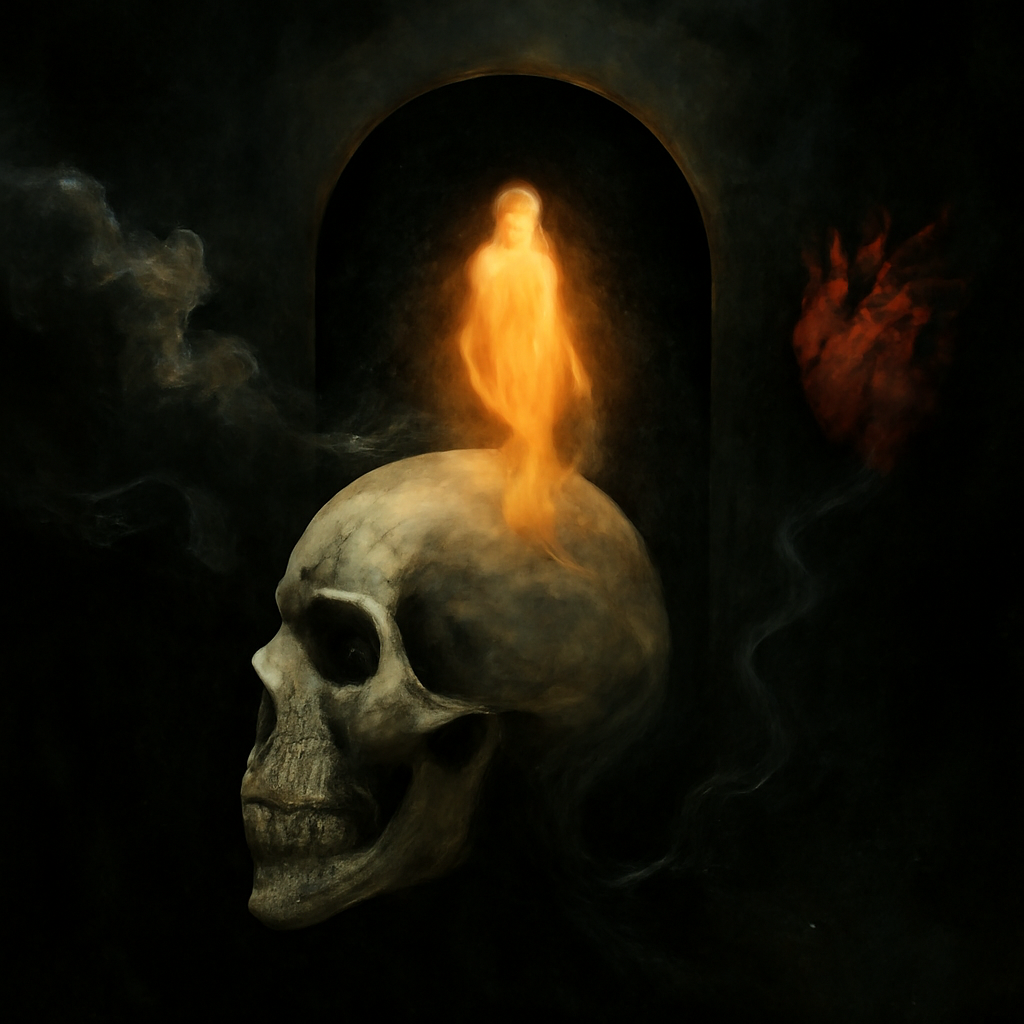
Death is one of life’s biggest mysteries. When someone dies, their body stops working — the heart no longer beats, the brain stops thinking, and the body cools down. But what exactly happens right after death, and what follows? Science explains the physical changes clearly, while different cultures and religions offer many ideas about what might happen to the spirit or consciousness.
After death, the body goes through several stages, starting with stiffness called rigor mortis, then breaking down through a process called decomposition. Meanwhile, people have wondered for centuries if there is something beyond death — a soul, an afterlife, or just nothing at all. Some scientists say consciousness ends when the brain stops, but others point to near-death experiences that hint at something more. This topic blends science, belief, and mystery in a way that has fascinated humans forever.
“Right after death, the body starts breaking down within minutes, but the question of what happens to our 'self' remains a mystery.”
Reflect
If consciousness depends on the brain, and the brain stops soon after death, how do we explain stories of people who say they 'left their bodies' or saw strange visions near death?
Research·2 sources·Developing confidence·Investigated 19 Jul 2026(2 months ago)·Grounded; verification trace not recorded·Investigation may be outdated
Your next question, in
Visual Trail
See What Really Happens When We Die?
A guided visual explanation assembled from QE artwork and sourced documentary images.
01 / 05
QE visual interpretation
Frame 01
What Really Happens When We Die?
When we die, our body stops working and breaks down, but what happens to our mind or soul is still a mystery.
Image provenance and limitation
Source: AI-generated visual interpretation
Creator: Question Everything
Limitation: This image explains or evokes the subject. It is not documentary evidence and should not be used to verify a factual claim.
Evidence
What do we know?
Verified claims with confidence scoring and cited sources.
2 of 4 findings need extra caution. Finding 1, Finding 3 rest on weaker sourcing than the other findings.
Living footnotes
Claims remain in the reading flow. Select a citation number to inspect the source behind it.
01
ObservationalNot confirmed
When a person dies, their heart stops beating, breathing stops, and the brain ceases to function.
Death is marked by the end of vital body functions. The heart no longer pumps blood, cutting off oxygen to the brain and other organs. As a result, the brain stops working fully. This means there is no more thought, movement, or awareness. The body begins to shut down and can no longer support life.
02
ObservationalSupported
After death, the body cools down, becomes stiff, and then begins to decompose over time.
Immediately after death, the body starts to lose heat until it matches the temperature of its surroundings. Within a few hours, rigor mortis sets in — the muscles stiffen because energy for movement is gone. After a day or two, the stiffness fades, and the body starts breaking down as cells die and bacteria begin decomposition. This process can take weeks or months depending on the environment.
03
ObservationalNot confirmed
Most scientists believe that consciousness ends when the brain stops working at death.
Consciousness — our thoughts, memories, and awareness — depends on brain activity. When the brain ceases to function, these mental processes also stop. While some people report near-death experiences, scientific evidence shows that brain activity ends soon after death, meaning consciousness likely ends too. However, this is still a topic of debate and mystery.
04
ObservationalSupported
Many religions teach that after death, the soul or spirit is judged and goes to an afterlife like heaven, hell, or reincarnation.
Different faiths have varied beliefs about what happens after death. For example, Christianity often teaches that souls face judgment and then go to heaven or hell. In Islam, souls are questioned and then sent to paradise or punishment. Hinduism and Buddhism believe in reincarnation — the soul is reborn into a new body. These beliefs offer comfort and meaning about death and what may lie beyond physical life.
The complete record below preserves every citation, confidence input and recorded limitation.
Read the full evidence record4 findings · citations · limitations
Evidence review4 findings2 openable sources
01
Finding 1 of 4ObservationalNeeds caution
0/0 verified
When a person dies, their heart stops beating, breathing stops, and the brain ceases to function.
Death is marked by the end of vital body functions. The heart no longer pumps blood, cutting off oxygen to the brain and other organs. As a result, the brain stops working fully. This means there is no more thought, movement, or awareness. The body begins to shut down and can no longer support life.
Not confirmedmodel score 30%
Scored as if sourced, but every citation failed verification.
NO SURVIVING CITATION
›View sources and limits— limits
Supporting passage
Death is marked by the end of vital body functions. The heart no longer pumps blood, cutting off oxygen to the brain and other organs. As a result, the brain stops working fully. This means there is no more thought, movement, or awareness. The body begins to shut down and can no longer support life.
Citations (0 of 1 survived verification)
Nothing openable. Every citation was removed by provenance validation.
What limits this
All 1 citation on this claim failed verification and were removed. Nothing openable supports it.
02
Finding 2 of 4Observational
0/1 verified
After death, the body cools down, becomes stiff, and then begins to decompose over time.
Immediately after death, the body starts to lose heat until it matches the temperature of its surroundings. Within a few hours, rigor mortis sets in — the muscles stiffen because energy for movement is gone. After a day or two, the stiffness fades, and the body starts breaking down as cells die and bacteria begin decomposition. This process can take weeks or months depending on the environment.
Supportedmodel score 100%
One source, not peer-reviewed. Thinner than the score suggests.
REFERENCE
›View sources and limits— 1 citation, limits
Supporting passage
Immediately after death, the body starts to lose heat until it matches the temperature of its surroundings. Within a few hours, rigor mortis sets in — the muscles stiffen because energy for movement is gone. After a day or two, the stiffness fades, and the body starts breaking down as cells die and bacteria begin decomposition. This process can take weeks or months depending on the environment.
1 of 2 citations failed verification and are not shown.
Rests on a single source. No independent corroboration.
No peer-reviewed source among the citations.
The generator scored this 100%, which would read as “Established”. Its citations reach only “Supported”, so that is what is shown.
03
Finding 3 of 4ObservationalNeeds caution
0/0 verified
Most scientists believe that consciousness ends when the brain stops working at death.
Consciousness — our thoughts, memories, and awareness — depends on brain activity. When the brain ceases to function, these mental processes also stop. While some people report near-death experiences, scientific evidence shows that brain activity ends soon after death, meaning consciousness likely ends too. However, this is still a topic of debate and mystery.
Not confirmedmodel score 30%
Scored as if sourced, but every citation failed verification.
NO SURVIVING CITATION
›View sources and limits— limits
Supporting passage
Consciousness — our thoughts, memories, and awareness — depends on brain activity. When the brain ceases to function, these mental processes also stop. While some people report near-death experiences, scientific evidence shows that brain activity ends soon after death, meaning consciousness likely ends too. However, this is still a topic of debate and mystery.
Citations (0 of 2 survived verification)
Nothing openable. Every citation was removed by provenance validation.
What limits this
All 2 citations on this claim failed verification and were removed. Nothing openable supports it.
04
Finding 4 of 4Observational
0/1 verified
Many religions teach that after death, the soul or spirit is judged and goes to an afterlife like heaven, hell, or reincarnation.
Different faiths have varied beliefs about what happens after death. For example, Christianity often teaches that souls face judgment and then go to heaven or hell. In Islam, souls are questioned and then sent to paradise or punishment. Hinduism and Buddhism believe in reincarnation — the soul is reborn into a new body. These beliefs offer comfort and meaning about death and what may lie beyond physical life.
Supportedmodel score 80%
One source, not peer-reviewed. Thinner than the score suggests.
REFERENCE
›View sources and limits— 1 citation, limits
Supporting passage
Different faiths have varied beliefs about what happens after death. For example, Christianity often teaches that souls face judgment and then go to heaven or hell. In Islam, souls are questioned and then sent to paradise or punishment. Hinduism and Buddhism believe in reincarnation — the soul is reborn into a new body. These beliefs offer comfort and meaning about death and what may lie beyond physical life.
1 of 2 citations failed verification and are not shown.
Rests on a single source. No independent corroboration.
No peer-reviewed source among the citations.
Interactive Exploration
Touch, drag, and discover
These visualizations respond to your curiosity. Interact to go deeper.
process flow
Physical Changes After Death
Heart and Brain Stop
Body Cools (Algor Mortis)
Rigor Mortis Sets In
Rigor Mortis Fades
Decomposition Begins
quadrant
Views on What Happens After Death
Y Axis ↑
High Y, Low X
—
High Y, High X
—
Low Y, Low X
—
Low Y, High X
—
X Axis →
Tap quadrants to focus
statistics card
Death and Consciousness Facts
Within minutes
Brain activity ends after death
Consciousness depends on brain function.
2 to 6 hours
Rigor mortis onset
Muscles stiffen after death.
36 hours
Rigor mortis fades
Stiffness disappears as body breaks down.
Weeks to months
Decomposition duration
Body returns to organic materials.
Visual Gallery
Images & artifacts
Historical images, diagrams, and visual knowledge from Wikimedia Commons.
Perspectives
How is this interpreted?
Enter a viewpoint. Notice what it reveals, what it leaves out, and whether it changes the question for you.
The EmpiricistScientific viewpointLive tension
Science focuses on the physical facts of death. It shows us that life ends when the heart and brain stop working. The body then cools, stiffens, and breaks down. Consciousness, which depends on the brain, ceases. While some people have near-death experiences, these are seen as brain effects rather than proof of an afterlife. Science respects the mystery but relies on what can be measured and tested.
What this lens notices
01Brain activity stops soon after death, ending consciousness.
02Physical changes after death follow predictable biological processes.
03Near-death experiences can be explained by brain chemistry.
Application
Why does this matter to you?
Personal reflections and applications for your life.
Thought experimentSelf-Reflection
How does thinking about death change your view of life?
Why it changes the question
Reflecting on death can make us appreciate the time we have and motivate us to live more fully. It helps us face fears and find meaning in everyday moments.
Try this
Spend a few minutes writing about what matters most to you and how knowing life ends influences your choices.
Media
QE Smart Glass
Curated media selected for this investigation.
QE Glass
YOUTUBE
What really matters at the end of life | BJ Miller | TED
TED
Visit http://TED.com to get our entire library of TED Talks, transcripts, translations, personalized talk recommendations and more.
QE Glass
YOUTUBE
What happens to our bodies after we die? - Farnaz Khatibi Jafari
TED-Ed
Trace the evolution of how humanity has treated bodies and burials throughout history, and grapple with the question: will we ever ...
QE Glass
YOUTUBE
Why do our bodies age? - Monica Menesini
TED-Ed
View full lesson: http://ed.ted.com/lessons/why-do-our-bodies-age-monica-menesini Human bodies aren't built for extreme aging: ...
QE Glass
YOUTUBE
Your Body Killed Cancer 5 Minutes Ago
Kurzgesagt – In a Nutshell
Sources & further reading: https://sites.google.com/view/sources-cancervsimmune/ This video was partially financed by Gates ...
QE Glass
YOUTUBE
The Ebola Virus Explained — How Your Body Fights For Survival
Kurzgesagt – In a Nutshell
What does the Ebola virus actually do in your body? Why is it so dangerous and why does it kill so many people? We take a look ...
QE Glass
YOUTUBE
This Is What Happens to Your Brain on Opioids | Short Film Showcase
National Geographic
Driven by opioid addiction, drug overdose is now the leading cause of accidental death in the United States. ➡ Subscribe: ...
QE Glass
YOUTUBE
What is depression? - Helen M. Farrell
TED-Ed
View full lesson: http://ed.ted.com/lessons/what-is-depression-helen-m-farrell Depression is the leading cause of disability in the ...
QE Glass
YOUTUBE
What happens during a stroke? - Vaibhav Goswami
TED-Ed
Check out our Patreon page: https://www.patreon.com/teded View full lesson: ...
QE Glass
YOUTUBE
This Is What Happens to Your Brain on Opioids | Short Film Showcase
National Geographic
Driven by opioid addiction, drug overdose is now the leading cause of accidental death in the United States. ➡ Subscribe: ...
QE Glass
YOUTUBE
What Happens When You Die? - Kurzgesagt
Kurzgesagt – In a Nutshell
A clear, animated explanation of the science and philosophy around death.
QE Glass
YOUTUBE
Near Death Experiences Explained
Veritasium
Explores scientific views on what happens in the brain during near-death experiences.
QE Glass
PODCAST
Radiolab: Death and the Afterlife
Radiolab
A storytelling podcast that dives into death, dying, and what might come next.
Keep Going
Where this leads
Questions this investigation opens up — and what QE has already looked into.
No AI help here — no suggestions, no autocomplete, nothing finishing your sentences. That is deliberate. Working out what you think is effortful, and the effort is the part that changes you: reasoning is trained like a muscle, and a muscle that is always carried gets weaker. Let something else do the thinking and you keep the answer but lose the capacity to have reached it.
Write your current position.
Not what the page says. What you think, having read it.0 words · Nothing written yet.
Sign in to leave a mark. Your draft is saved here in the meantime.