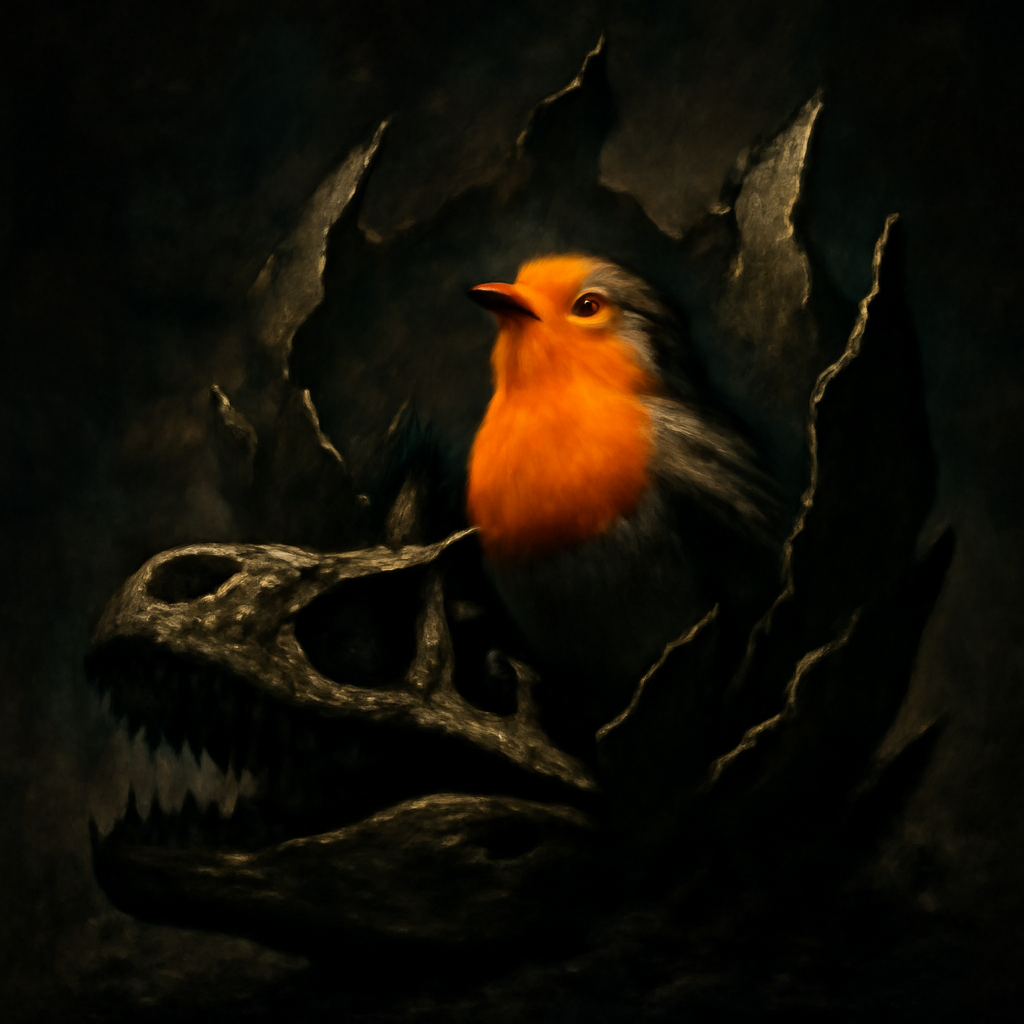
The Dinosaur That Survived: How Birds Became Earth’s Living Dinosaurs
Sixty-six million years ago, a catastrophic event wiped out approximately 75% of all species on Earth, including the mighty non-avian dinosaurs. This mass extinction, triggered by a massive asteroid impact and volcanic activity, reshaped life on our planet forever. But not all dinosaurs vanished. A remarkable group survived and thrived, transforming into the birds we see today. These feathered descendants are the living link to a time when giants roamed the Earth.
While the towering Tyrannosaurus rex and the long-necked sauropods disappeared, the ancestors of modern birds, small feathered theropods, escaped extinction. Their survival was likely due to their small size, ability to fly or glide, and adaptable diets. Over millions of years, these survivors evolved into a dazzling array of bird species, from the hummingbird to the eagle. In a way, dinosaurs never truly left us—they live among us, perched on branches, soaring in the sky, and even in our backyards.
“The birds you see every day are the only dinosaurs that survived the mass extinction 66 million years ago.”
Reflect
What if every creature around you carries a hidden story of survival stretching back to the age of dinosaurs?
5 sources·Established confidence·Investigated 17 Jul 2026(1 month ago)·Investigation may be outdated
Your next question, in
Visual Trail
See The Dinosaur That Survived: How Birds Became Earth’s Living Dinosaurs
A guided visual explanation assembled from QE artwork and sourced documentary images.
01 / 02
QE visual interpretation
Frame 01
The Dinosaur That Survived: How Birds Became Earth’s Living Dinosaurs
Birds are the only dinosaurs that survived the mass extinction 66 million years ago.
Image provenance and limitation
Source: AI-generated visual interpretation
Creator: Question Everything
Limitation: This image explains or evokes the subject. It is not documentary evidence and should not be used to verify a factual claim.
Evidence
What do we know?
Verified claims with confidence scoring and cited sources.
Generated without source retrieval. QE did not fetch sources for this investigation, so no citation here was checked against a retrieved set. Claims reflect the model’s training data.
Living footnotes
Claims remain in the reading flow. Select a citation number to inspect the source behind it.
01
AcademicSupported
Birds are direct descendants of small theropod dinosaurs.
Fossil evidence and genetic studies confirm that birds evolved from a group of small, feathered theropod dinosaurs during the Late Jurassic and Early Cretaceous periods. Key fossils like Archaeopteryx show a mix of dinosaur and bird features, including feathers, wishbones, and three-fingered hands. Modern birds share many skeletal and molecular traits with these theropods, solidifying their place as living dinosaurs.
02
HistoricalSupported
Non-avian dinosaurs went extinct at the Cretaceous-Paleogene (K-Pg) boundary, but avian dinosaurs survived.
The mass extinction event at the K-Pg boundary, about 66 million years ago, caused the extinction of all non-avian dinosaurs. However, fossil records show that certain bird lineages persisted beyond this boundary and diversified in the Paleogene period. This indicates that birds, the avian dinosaurs, were the sole dinosaur group to survive and continue evolving.
03
ExperimentalSupported
Small body size and flight ability helped some dinosaurs survive the mass extinction.
Research suggests that smaller animals with the ability to fly or glide had better chances of surviving the harsh conditions following the asteroid impact. These traits allowed early birds to find shelter, escape predators, and exploit new food sources, unlike their larger, ground-bound relatives. This ecological flexibility was crucial in enduring the extinction event.
04
ObservationalSupported
Fossils of early birds from after the extinction show rapid diversification.
Fossil discoveries from shortly after the extinction event show a rapid increase in the diversity of bird species. This burst of evolution, sometimes called the 'avian radiation,' allowed birds to fill ecological niches left vacant by extinct animals. It explains the vast variety of bird species present today, from ground dwellers to skilled flyers.
05
AcademicSupported
Molecular studies support the dinosaurian origin of birds.
Genetic sequencing and molecular clock analyses align with fossil data, indicating that birds share a common ancestor with theropod dinosaurs. These studies estimate the timing of bird origins and confirm their place within the dinosaur family tree. This molecular evidence strengthens the case that birds are living dinosaurs.
The complete record below preserves every citation, confidence input and recorded limitation.
Read the full evidence record5 findings · citations · limitations
Evidence review5 findings5 openable sources
01
Finding 1 of 5Academic
1
0/1 verified
Birds are direct descendants of small theropod dinosaurs.
Fossil evidence and genetic studies confirm that birds evolved from a group of small, feathered theropod dinosaurs during the Late Jurassic and Early Cretaceous periods. Key fossils like Archaeopteryx show a mix of dinosaur and bird features, including feathers, wishbones, and three-fingered hands. Modern birds share many skeletal and molecular traits with these theropods, solidifying their place as living dinosaurs.
Supportedmodel score 99%
A single peer-reviewed source. No independent corroboration.
PRIMARY STUDY
›View sources and limits— 1 citation, limits
Supporting passage
Fossil evidence and genetic studies confirm that birds evolved from a group of small, feathered theropod dinosaurs during the Late Jurassic and Early Cretaceous periods. Key fossils like Archaeopteryx show a mix of dinosaur and bird features, including feathers, wishbones, and three-fingered hands. Modern birds share many skeletal and molecular traits with these theropods, solidifying their place as living dinosaurs.
Generated without source retrieval — citations here were not verified against a retrieved set.
Rests on a single source. No independent corroboration.
The generator scored this 99%, which would read as “Established”. Its citations reach only “Supported”, so that is what is shown.
02
Finding 2 of 5Historical
2013
1 dated source
Non-avian dinosaurs went extinct at the Cretaceous-Paleogene (K-Pg) boundary, but avian dinosaurs survived.
The mass extinction event at the K-Pg boundary, about 66 million years ago, caused the extinction of all non-avian dinosaurs. However, fossil records show that certain bird lineages persisted beyond this boundary and diversified in the Paleogene period. This indicates that birds, the avian dinosaurs, were the sole dinosaur group to survive and continue evolving.
Supportedmodel score 98%
A single peer-reviewed source. No independent corroboration.
PRIMARY STUDY
›View sources and limits— 1 citation, limits
Supporting passage
The mass extinction event at the K-Pg boundary, about 66 million years ago, caused the extinction of all non-avian dinosaurs. However, fossil records show that certain bird lineages persisted beyond this boundary and diversified in the Paleogene period. This indicates that birds, the avian dinosaurs, were the sole dinosaur group to survive and continue evolving.
Generated without source retrieval — citations here were not verified against a retrieved set.
Rests on a single source. No independent corroboration.
The generator scored this 98%, which would read as “Established”. Its citations reach only “Supported”, so that is what is shown.
03
Finding 3 of 5Experimental
1
0/1 verified
Small body size and flight ability helped some dinosaurs survive the mass extinction.
Research suggests that smaller animals with the ability to fly or glide had better chances of surviving the harsh conditions following the asteroid impact. These traits allowed early birds to find shelter, escape predators, and exploit new food sources, unlike their larger, ground-bound relatives. This ecological flexibility was crucial in enduring the extinction event.
Supportedmodel score 95%
A single peer-reviewed source. No independent corroboration.
PRIMARY STUDY
›View sources and limits— 1 citation, limits
Supporting passage
Research suggests that smaller animals with the ability to fly or glide had better chances of surviving the harsh conditions following the asteroid impact. These traits allowed early birds to find shelter, escape predators, and exploit new food sources, unlike their larger, ground-bound relatives. This ecological flexibility was crucial in enduring the extinction event.
Generated without source retrieval — citations here were not verified against a retrieved set.
Rests on a single source. No independent corroboration.
The generator scored this 95%, which would read as “Established”. Its citations reach only “Supported”, so that is what is shown.
04
Finding 4 of 5Observational
0/1 verified
Fossils of early birds from after the extinction show rapid diversification.
Fossil discoveries from shortly after the extinction event show a rapid increase in the diversity of bird species. This burst of evolution, sometimes called the 'avian radiation,' allowed birds to fill ecological niches left vacant by extinct animals. It explains the vast variety of bird species present today, from ground dwellers to skilled flyers.
Supportedmodel score 96%
A single peer-reviewed source. No independent corroboration.
PRIMARY STUDY
›View sources and limits— 1 citation, limits
Supporting passage
Fossil discoveries from shortly after the extinction event show a rapid increase in the diversity of bird species. This burst of evolution, sometimes called the 'avian radiation,' allowed birds to fill ecological niches left vacant by extinct animals. It explains the vast variety of bird species present today, from ground dwellers to skilled flyers.
Generated without source retrieval — citations here were not verified against a retrieved set.
Rests on a single source. No independent corroboration.
The generator scored this 96%, which would read as “Established”. Its citations reach only “Supported”, so that is what is shown.
05
Finding 5 of 5Academic
1
0/1 verified
Molecular studies support the dinosaurian origin of birds.
Genetic sequencing and molecular clock analyses align with fossil data, indicating that birds share a common ancestor with theropod dinosaurs. These studies estimate the timing of bird origins and confirm their place within the dinosaur family tree. This molecular evidence strengthens the case that birds are living dinosaurs.
Supportedmodel score 97%
A single peer-reviewed source. No independent corroboration.
PRIMARY STUDY
›View sources and limits— 1 citation, limits
Supporting passage
Genetic sequencing and molecular clock analyses align with fossil data, indicating that birds share a common ancestor with theropod dinosaurs. These studies estimate the timing of bird origins and confirm their place within the dinosaur family tree. This molecular evidence strengthens the case that birds are living dinosaurs.
Generated without source retrieval — citations here were not verified against a retrieved set.
Rests on a single source. No independent corroboration.
The generator scored this 97%, which would read as “Established”. Its citations reach only “Supported”, so that is what is shown.
Interactive Exploration
Touch, drag, and discover
These visualizations respond to your curiosity. Interact to go deeper.
timeline
Key Events in Dinosaur and Bird Evolution
Loading timeline…
relationship map
Relationship Between Dinosaurs and Birds
Mapping relationships…
Drag nodes to rearrange — tap for details
process flow
How Birds Survived the Mass Extinction
Asteroid impact causes environmental collapse
Non-avian dinosaurs go extinct
Small, feathered theropods survive
Rapid bird diversification
statistics card
Dinosaur Survival and Bird Diversity Stats
75%
Species lost in K-Pg extinction
Including all non-avian dinosaurs.
~10,000
Number of modern bird species
Birds are the most diverse group of terrestrial vertebrates.
66 million years ago
Time since mass extinction
Birds have thrived ever since.
spectrum
Survival Traits of Dinosaurs during the Extinction Event
Low Survival AdvantageHigh Survival Advantage
10%
Large size
90%
Flight capability
85%
Small body size
30%
Aquatic lifestyle
Perspectives
How is this interpreted?
Enter a viewpoint. Notice what it reveals, what it leaves out, and whether it changes the question for you.
The EmpiricistScientific viewpointEstablished lens
From a scientific standpoint, the survival of birds is a fascinating example of how evolution favors adaptability. Their small size, feathers, and ability to fly gave them a huge edge in a world devastated by the asteroid impact. This endurance reshaped ecosystems and allowed birds to become one of the dominant vertebrate groups today.
What this lens notices
01Fossil evidence of transitional species between dinosaurs and birds.
02Genetic data confirming evolutionary links.
03Ecological advantages of flight and small size during extinction.
Application
Why does this matter to you?
Personal reflections and applications for your life.
Thought experimentSelf-Reflection
How does knowing that birds are living dinosaurs change your view of the natural world?
Why it changes the question
Understanding that birds are dinosaurs connects you directly to Earth's deep history. It shows how life adapts and endures through massive changes, reminding us of our own place in the story of life.
Try this
Next time you see a bird, pause and imagine its ancient ancestors roaming prehistoric landscapes.
Media
QE Smart Glass
Curated media selected for this investigation.
QE Glass
YOUTUBE
The Day the Dinosaurs Died – Minute by Minute
Kurzgesagt – In a Nutshell
DISCOVER ANCIENT WORLDS Peek into the past and learn about dinosaurs and other amazing creatures: ...
QE Glass
YOUTUBE
How The Dinosaurs Actually Died
Kurzgesagt – In a Nutshell
Get 50% off your first crate of a monthly subscription with KiwiCo at https://www.kiwico.com/kurzgesagt with code KURZGESAGT.
QE Glass
YOUTUBE
Dinosaurs' Extinction: A Warning for Humanity? | Full Special | History
HISTORY
Clues to human extinction are discovered in the Dinosaur's apocalypse. See more in this special, "First Apocalypse." #HISTORY ...
QE Glass
YOUTUBE
Surviving Earth's 5 Mass Extinctions: A Prehistoric Journey | SLICE WILD | FULL DOC
SLICE Wild
The Earth has faced five mass extinctions, each wiping out most life forms but allowing a few species to survive and create new ...
QE Glass
YOUTUBE
The Entire Dinosaur Extinction Explained (Minute by Minute)
Wild Horizons
The Entire Dinosaur Extinction Explained (Minute by Minute) It's a perfectly normal Tuesday morning 66 million years ago.
QE Glass
YOUTUBE
All 5 Mass Extinctions Explained — And How Life Survived
The Snoozy Scientist
What Happened During All Earth's Mass Extinctions — And How Life Survived Welcome to The Snoozy Scientist, where science ...
QE Glass
YOUTUBE
The Real Dinosaurs Among Us: How Birds Survived the Extinction
PBS Eons
This episode explores the link between birds and dinosaurs and how they survived the mass extinction.
QE Glass
YOUTUBE
Archaeopteryx and the Origin of Birds
Smithsonian Channel
A detailed look at the iconic fossil that bridges dinosaurs and birds.
QE Glass
PODCAST
Radiolab: Dinosaurs and the Dawn of Birds
Radiolab
A captivating story about the extinction event and the survival of birds.
QE Glass
YOUTUBE
How Flight Evolved in Birds | Kurzgesagt
Kurzgesagt – In a Nutshell
Explains the evolutionary steps that allowed birds to develop flight.
Keep Going
Where this leads
Questions this investigation opens up — and what QE has already looked into.
No AI help here — no suggestions, no autocomplete, nothing finishing your sentences. That is deliberate. Working out what you think is effortful, and the effort is the part that changes you: reasoning is trained like a muscle, and a muscle that is always carried gets weaker. Let something else do the thinking and you keep the answer but lose the capacity to have reached it.
Write your current position.
Not what the page says. What you think, having read it.0 words · Nothing written yet.
Sign in to leave a mark. Your draft is saved here in the meantime.