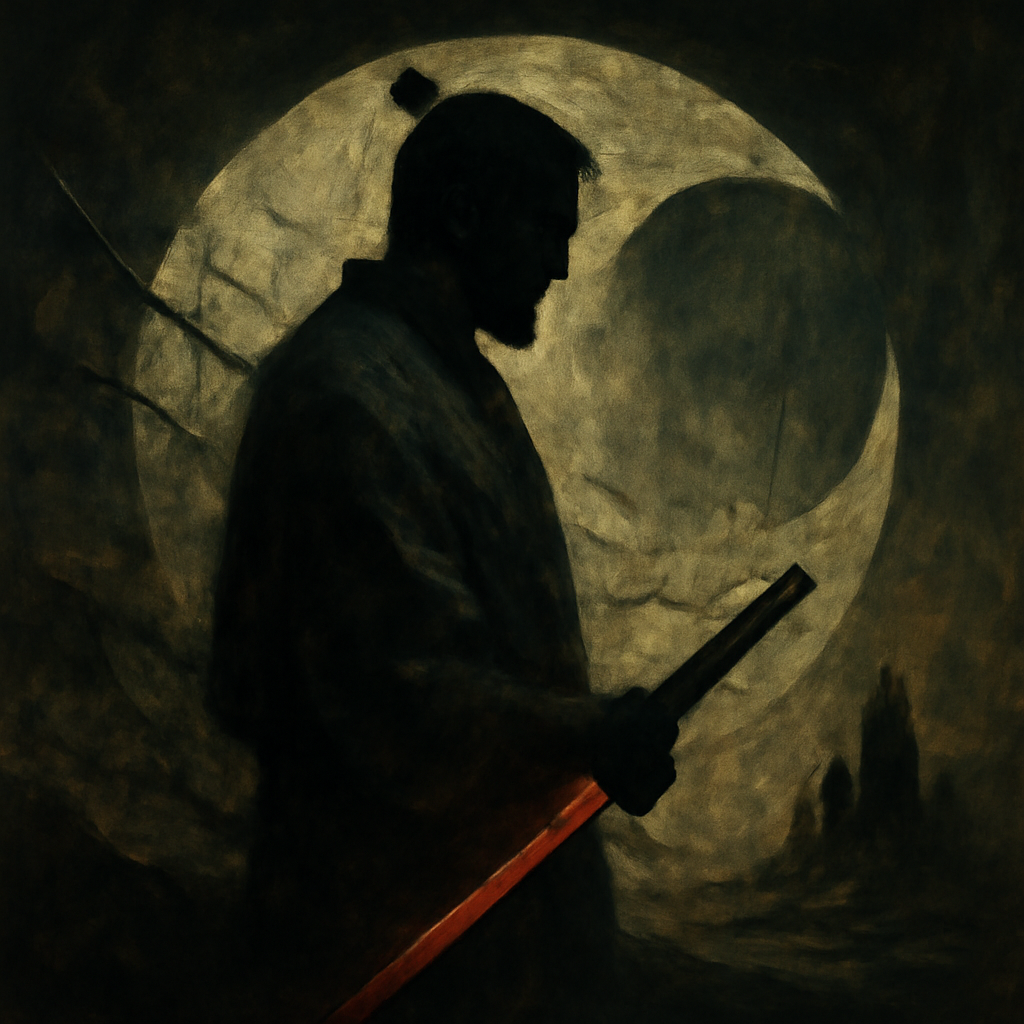
Samurai Jack: The Timeless Quest of a Silent Warrior
Samurai Jack is more than just a cartoon. It is a bold blend of ancient samurai tradition and futuristic fantasy, crafted with visionary ambition by Genndy Tartakovsky. Premiering in 2001, the series follows a young Japanese samurai prince, known only as Jack, who is thrust into a dystopian future ruled by the evil shape-shifting demon Aku. Armed with a magical katana, Jack embarks on a relentless quest to return to his own time and undo the devastation caused by Aku's tyranny.
What sets Samurai Jack apart is its unique storytelling style. The show often embraces silence, letting actions and visuals tell the story, a rarity in mainstream children's animation. Its striking, angular art style and cinematic fight sequences create an immersive experience that feels both timeless and fresh. Across five seasons, the series weaves a tale of honor, perseverance, and hope, captivating audiences of all ages and inspiring countless works in popular culture.
“Samurai Jack’s real name is never spoken, symbolizing a universal hero beyond identity or time.”
Reflect
If a hero’s true name is silence, what does that say about the power of actions over words in our own lives?
Research·4 sources·Well-Established confidence·Investigated 20 Jul 2026(1 month ago)·Grounded; verification trace not recorded·Investigation may be outdated
Your next question, in
Visual Trail
See Samurai Jack: The Timeless Quest of a Silent Warrior
A guided visual explanation assembled from QE artwork and sourced documentary images.
01 / 02
QE visual interpretation
Frame 01
Samurai Jack: The Timeless Quest of a Silent Warrior
Samurai Jack is a visionary animated series about a samurai prince's epic quest to defeat evil and return to his own time.
Image provenance and limitation
Source: AI-generated visual interpretation
Creator: Question Everything
Limitation: This image explains or evokes the subject. It is not documentary evidence and should not be used to verify a factual claim.
Evidence
What do we know?
Verified claims with confidence scoring and cited sources.
Living footnotes
Claims remain in the reading flow. Select a citation number to inspect the source behind it.
01
HistoricalSupported
Samurai Jack is an American animated television series created by Genndy Tartakovsky that aired from 2001 to 2017.
Samurai Jack premiered on Cartoon Network in 2001, created by Genndy Tartakovsky, who also created Dexter's Laboratory. The series originally ran for four seasons until 2004 and was revived for a final fifth season in 2017 on Adult Swim. Tartakovsky directed every episode, infusing the series with his distinctive style and narrative sensibility. This long span allowed the story to develop a deep mythology and a lasting fan base.
02
HistoricalSupported
The protagonist, Samurai Jack, is a nameless Japanese prince wielding a magical katana capable of cutting through anything.
Jack's real name is never revealed in the series, emphasizing a universal hero archetype. His katana is a mystical weapon, the only blade capable of harming the evil Aku. This sword symbolizes Jack's connection to his heritage and his mission. It is both a tool for justice and a reminder of the legacy he carries. The show blends historical samurai elements with fantasy to create a unique hero who is silent but powerful.
03
HistoricalWell supported
The series is known for its distinctive visual style, featuring sharp, angular animation and extensive use of silence and minimal dialogue.
Samurai Jack breaks many traditional animation rules by often using long sequences without dialogue, relying on visuals and sound design to tell the story. The animation style is bold and angular, enhancing the dramatic tension and giving the show a timeless, almost cinematic quality. This approach made it stand out from other cartoons of its era and contributed to its critical acclaim and cult status.
04
HistoricalSupported
The story follows Jack's quest to return to the past and defeat Aku, a shape-shifting demon who has taken over his kingdom.
At the heart of the series is the conflict between Jack and Aku. After Jack's father is overthrown by Aku, the young samurai is sent forward in time to a bleak future where Aku rules supreme. Jack's journey is a classic hero’s quest filled with battles, allies, and challenges. His mission is not just personal revenge but to restore peace and order to his world, making his struggle both epic and deeply human.
The complete record below preserves every citation, confidence input and recorded limitation.
Read the full evidence record4 findings · citations · limitations
Evidence review4 findings6 openable sources
01
Finding 1 of 4Historical
2023
1 dated source
Samurai Jack is an American animated television series created by Genndy Tartakovsky that aired from 2001 to 2017.
Samurai Jack premiered on Cartoon Network in 2001, created by Genndy Tartakovsky, who also created Dexter's Laboratory. The series originally ran for four seasons until 2004 and was revived for a final fifth season in 2017 on Adult Swim. Tartakovsky directed every episode, infusing the series with his distinctive style and narrative sensibility. This long span allowed the story to develop a deep mythology and a lasting fan base.
Supportedmodel score 98%
A single peer-reviewed source. No independent corroboration.
PRIMARY STUDY
›View sources and limits— 1 citation, limits
Supporting passage
Samurai Jack premiered on Cartoon Network in 2001, created by Genndy Tartakovsky, who also created Dexter's Laboratory. The series originally ran for four seasons until 2004 and was revived for a final fifth season in 2017 on Adult Swim. Tartakovsky directed every episode, infusing the series with his distinctive style and narrative sensibility. This long span allowed the story to develop a deep mythology and a lasting fan base.
1 of 2 citations failed verification and are not shown.
Rests on a single source. No independent corroboration.
The generator scored this 98%, which would read as “Established”. Its citations reach only “Supported”, so that is what is shown.
02
Finding 2 of 4Historical
0/2 verified
The protagonist, Samurai Jack, is a nameless Japanese prince wielding a magical katana capable of cutting through anything.
Jack's real name is never revealed in the series, emphasizing a universal hero archetype. His katana is a mystical weapon, the only blade capable of harming the evil Aku. This sword symbolizes Jack's connection to his heritage and his mission. It is both a tool for justice and a reminder of the legacy he carries. The show blends historical samurai elements with fantasy to create a unique hero who is silent but powerful.
Supportedmodel score 97%
2 sources agree, none peer-reviewed.
REFERENCE ×2
›View sources and limits— 2 citations, limits
Supporting passage
Jack's real name is never revealed in the series, emphasizing a universal hero archetype. His katana is a mystical weapon, the only blade capable of harming the evil Aku. This sword symbolizes Jack's connection to his heritage and his mission. It is both a tool for justice and a reminder of the legacy he carries. The show blends historical samurai elements with fantasy to create a unique hero who is silent but powerful.
The generator scored this 97%, which would read as “Established”. Its citations reach only “Supported”, so that is what is shown.
03
Finding 3 of 4Historical
2023
1 dated source
The series is known for its distinctive visual style, featuring sharp, angular animation and extensive use of silence and minimal dialogue.
Samurai Jack breaks many traditional animation rules by often using long sequences without dialogue, relying on visuals and sound design to tell the story. The animation style is bold and angular, enhancing the dramatic tension and giving the show a timeless, almost cinematic quality. This approach made it stand out from other cartoons of its era and contributed to its critical acclaim and cult status.
Well supportedmodel score 95%
2 sources agree, 1 peer-reviewed.
PRIMARY STUDYREFERENCE
›View sources and limits— 2 citations, limits
Supporting passage
Samurai Jack breaks many traditional animation rules by often using long sequences without dialogue, relying on visuals and sound design to tell the story. The animation style is bold and angular, enhancing the dramatic tension and giving the show a timeless, almost cinematic quality. This approach made it stand out from other cartoons of its era and contributed to its critical acclaim and cult status.
Nothing further is recorded. QE stores no methodology field, so absence here is not a clean bill of health.
04
Finding 4 of 4Historical
0/1 verified
The story follows Jack's quest to return to the past and defeat Aku, a shape-shifting demon who has taken over his kingdom.
At the heart of the series is the conflict between Jack and Aku. After Jack's father is overthrown by Aku, the young samurai is sent forward in time to a bleak future where Aku rules supreme. Jack's journey is a classic hero’s quest filled with battles, allies, and challenges. His mission is not just personal revenge but to restore peace and order to his world, making his struggle both epic and deeply human.
Supportedmodel score 96%
One source, not peer-reviewed. Thinner than the score suggests.
REFERENCE
›View sources and limits— 1 citation, limits
Supporting passage
At the heart of the series is the conflict between Jack and Aku. After Jack's father is overthrown by Aku, the young samurai is sent forward in time to a bleak future where Aku rules supreme. Jack's journey is a classic hero’s quest filled with battles, allies, and challenges. His mission is not just personal revenge but to restore peace and order to his world, making his struggle both epic and deeply human.
1 of 2 citations failed verification and are not shown.
Rests on a single source. No independent corroboration.
No peer-reviewed source among the citations.
The generator scored this 96%, which would read as “Established”. Its citations reach only “Supported”, so that is what is shown.
Interactive Exploration
Touch, drag, and discover
These visualizations respond to your curiosity. Interact to go deeper.
timeline
Samurai Jack Series Timeline
Loading timeline…
relationship map
Core Concepts in Samurai Jack
Mapping relationships…
Drag nodes to rearrange — tap for details
statistics card
Samurai Jack Series Facts
5
Total Seasons
Including the revival season on Adult Swim
53
Total Episodes
Across all seasons from 2001 to 2017
2001-2017
Original and Revival Air Dates
Span of the series' broadcast history
Phil LaMarr
Voice Actor for Jack
Known for bringing the silent hero to life
Perspectives
How is this interpreted?
Enter a viewpoint. Notice what it reveals, what it leaves out, and whether it changes the question for you.
The EmpiricistScientific viewpointEstablished lens
From an animation science perspective, Samurai Jack’s use of silence and minimal dialogue is a fascinating study in visual storytelling. The brain processes visual and auditory cues differently, and the show’s deliberate pacing allows viewers to engage more deeply with the imagery and sound design. This enhances emotional resonance and cognitive involvement, making the experience more immersive. The angular art style also plays with perception, creating stark contrasts that heighten tension and focus attention.
What this lens notices
01Visual storytelling engages the brain’s pattern recognition systems more actively.
02Minimal dialogue encourages viewers to interpret scenes personally.
03Angular art style enhances emotional impact through stark contrasts.
Application
Why does this matter to you?
Personal reflections and applications for your life.
Thought experimentSelf-Reflection
What does Samurai Jack’s silent determination teach you about facing your own challenges?
Why it changes the question
Jack rarely speaks, yet his actions speak volumes. His perseverance without complaint suggests that sometimes strength is shown not through words but through steady, committed effort. Reflecting on this can inspire patience and quiet resilience in your own life.
Try this
Try a day of mindful silence, focusing on your actions more than your words.
Media
QE Smart Glass
Curated media selected for this investigation.
QE Glass
YOUTUBE
What is The "SAMURAI JACK" Art Style?
LP Lucas
As a child, I watched a lot of cartoons, but there is one that I credit as the reason I became an artist. Samurai Jack. I watched on ...
QE Glass
YOUTUBE
How Samurai Jack Mastered The Art of “Nothing”
Nerdstalgic
Samurai Jack mastered visual storytelling throughout every episode all the way through season 5. The best Samurai Jack ...
QE Glass
YOUTUBE
Samurai Jack Original Artwork
Joe-Astro
QE Glass
YOUTUBE
Samurai Jack Painting Demo 3
Scott Wills
QE Glass
YOUTUBE
The Subtle Worldbuilding of Samurai Jack
Santi Barrios
Samurai Jack was a show where you could see all kinds of stories, with all kinds of characters, from robots, to aliens and spirits.
QE Glass
YOUTUBE
Samurai Jack in Goodfellas. Animatic
cartoonoholic
Original audio from Talkin' Toons with Rob Paulsen: https://www.youtube.com/watch?v=HEBUrczzJJs Samurai Jack is one of my ...
QE Glass
YOUTUBE
Samurai Jack - Season 5 Trailer
IGN
Jack is back at last! Get a look at what to expect when the series finally returns on Saturday, March 11th on Adult Swim. Why We're ...
QE Glass
YOUTUBE
Samurai Jack: The Best of The Scotsman
Tsuladan Gaming
With the upcoming return of Samurai Jack I have found myself watching through the old series, and thought it would be fitting to ...
QE Glass
PODCAST
Creator Interview: Genndy Tartakovsky on Samurai Jack
Animation Masters Podcast
Insightful discussion with the creator about the making and vision of Samurai Jack.
Keep Going
Where this leads
Questions this investigation opens up — and what QE has already looked into.
No AI help here — no suggestions, no autocomplete, nothing finishing your sentences. That is deliberate. Working out what you think is effortful, and the effort is the part that changes you: reasoning is trained like a muscle, and a muscle that is always carried gets weaker. Let something else do the thinking and you keep the answer but lose the capacity to have reached it.
Write your current position.
Not what the page says. What you think, having read it.0 words · Nothing written yet.
Sign in to leave a mark. Your draft is saved here in the meantime.