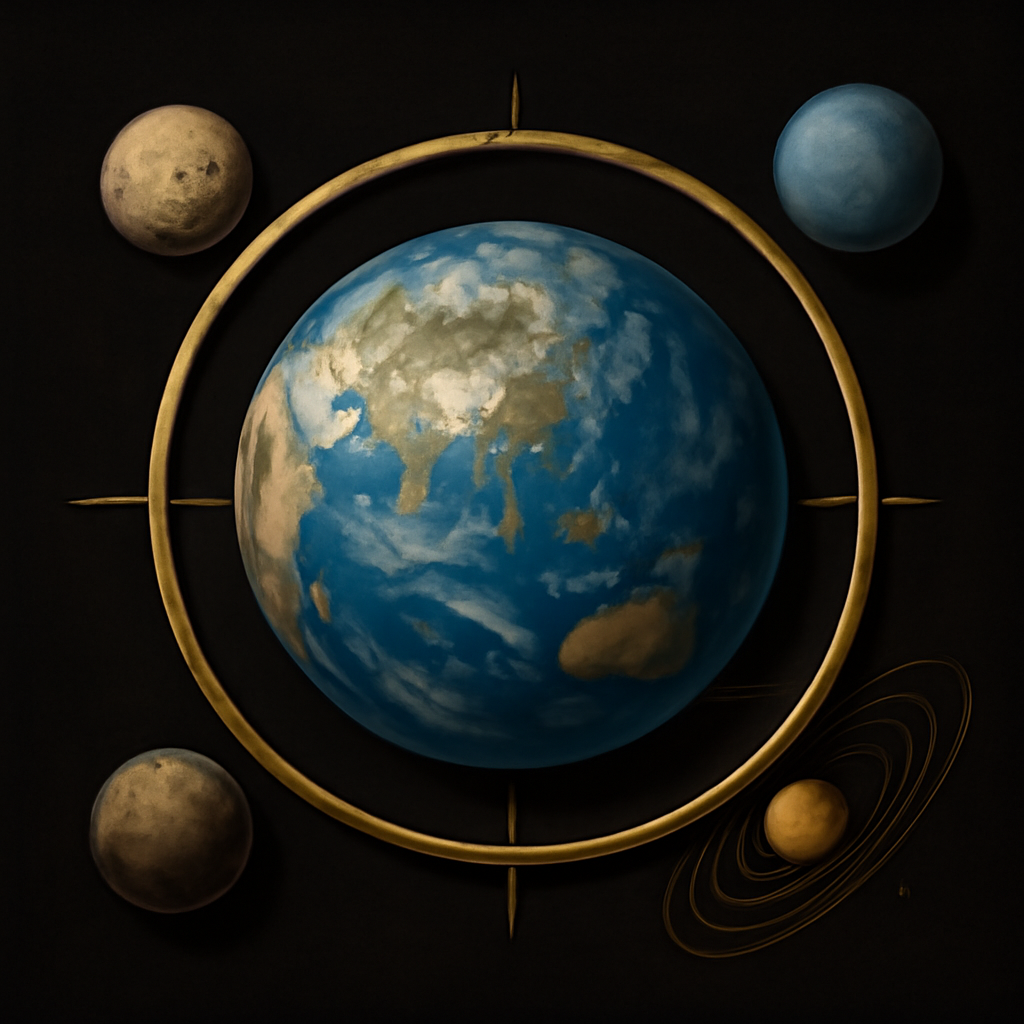
The Cosmic Census: Is Earth Alone in the Universe?
For millennia, humanity has gazed at the stars and pondered a profound question: are we alone? This isn't just a philosophical musing; it's a scientific frontier. The sheer scale of the cosmos, with its trillions of stars and an even greater number of planets, suggests that the conditions for life might not be unique to Earth. Scientists now actively search for biosignatures in distant atmospheres, listen for signals from advanced civilizations, and explore our own solar system for microbial life.
The quest to answer this question drives astrobiology, astronomy, and planetary science. From the hardy extremophiles thriving in Earth's harshest environments, hinting at life's resilience, to the discovery of thousands of exoplanets, many orbiting in their stars' habitable zones, the evidence for potential life beyond Earth continues to mount. Yet, despite these advances, direct proof remains elusive, fueling both optimism and the perplexing silence known as the Fermi Paradox.
✨
Wonder Moment
“The search for life beyond Earth is less about finding little green men and more about understanding the fundamental nature of life itself and our unique place in the universe.”
Reflect
If we were to discover microbial life on another planet, how might that change our philosophical understanding of what it means to be alive, and would it diminish or enhance humanity's significance?
9 sources·Established confidence·Investigated 3 Jul 2026(1 month ago)·Investigation may be outdated
Your next question, in
Visual Trail
See The Cosmic Census: Is Earth Alone in the Universe?
A guided visual explanation assembled from QE artwork and sourced documentary images.
01 / 02
QE visual interpretation
Frame 01
The Cosmic Census: Is Earth Alone in the Universe?
The vastness of the universe and recent scientific discoveries compel us to ask: is life thriving on other planets, or are we truly alone?
Image provenance and limitation
Source: AI-generated visual interpretation
Creator: Question Everything
Limitation: This image explains or evokes the subject. It is not documentary evidence and should not be used to verify a factual claim.
Evidence
What do we know?
Verified claims with confidence scoring and cited sources.
Generated without source retrieval. QE did not fetch sources for this investigation, so no citation here was checked against a retrieved set. Claims reflect the model’s training data.
Living footnotes
Claims remain in the reading flow. Select a citation number to inspect the source behind it.
01
StatisticalSupported
The universe contains an immense number of stars and planets, significantly increasing the statistical probability of life developing elsewhere.
Astronomical observations estimate there are hundreds of billions of galaxies, each containing hundreds of billions of stars. Recent data from missions like Kepler suggest that most stars host planets, and a significant fraction of these are rocky planets within their star's habitable zone, where liquid water could exist.
02
ObservationalSupported
Life on Earth demonstrates remarkable adaptability, with extremophiles thriving in conditions previously thought uninhabitable, suggesting life might persist in diverse extraterrestrial environments.
Scientists have discovered microorganisms (extremophiles) on Earth that can survive and flourish in extreme conditions: superheated hydrothermal vents, highly acidic pools, deep underground, and even in radiation-rich environments. This expands the range of potential habitats for life beyond Earth, including subsurface oceans on icy moons or within the atmospheres of gas giants.
03
ObservationalSupported
Thousands of exoplanets have been discovered, many orbiting within their stars' 'habitable zones,' where temperatures could allow for liquid water.
Space telescopes like Kepler and TESS have confirmed over 5,000 exoplanets, with thousands more candidates. A significant number of these are rocky planets found in the 'Goldilocks zone'—the range of orbits where a planet is neither too hot nor too cold for liquid water, a key ingredient for life as we know it, to exist on its surface.
04
ObservationalSupported
While the conditions for life may be widespread, there is currently no direct, confirmed evidence of extraterrestrial life, intelligent or otherwise.
Despite decades of searching through projects like SETI (Search for Extraterrestrial Intelligence) and extensive robotic exploration of Mars and other solar system bodies, no definitive biosignatures, alien artifacts, or direct observations of living organisms beyond Earth have been made. This absence of evidence is a central component of the Fermi Paradox.
05
ObservationalSupported
The discovery of complex organic molecules in space and on other celestial bodies suggests that the building blocks of life are common.
Astronomers have detected amino acids, nucleobases, and other complex organic compounds in meteorites, comets, and interstellar clouds. These molecules are essential for the formation of proteins and DNA. This widespread presence supports the idea that the chemical precursors to life are not unique to Earth.
The complete record below preserves every citation, confidence input and recorded limitation.
Read the full evidence record5 findings · citations · limitations
Evidence review5 findings10 openable sources
01
Finding 1 of 5Statistical
0/2 verified
The universe contains an immense number of stars and planets, significantly increasing the statistical probability of life developing elsewhere.
Astronomical observations estimate there are hundreds of billions of galaxies, each containing hundreds of billions of stars. Recent data from missions like Kepler suggest that most stars host planets, and a significant fraction of these are rocky planets within their star's habitable zone, where liquid water could exist.
Supportedmodel score 95%
2 sources agree, none peer-reviewed.
REFERENCE ×2
›View sources and limits— 2 citations, limits
Supporting passage
Astronomical observations estimate there are hundreds of billions of galaxies, each containing hundreds of billions of stars. Recent data from missions like Kepler suggest that most stars host planets, and a significant fraction of these are rocky planets within their star's habitable zone, where liquid water could exist.
Generated without source retrieval — citations here were not verified against a retrieved set.
No peer-reviewed source among the citations.
The generator scored this 95%, which would read as “Established”. Its citations reach only “Supported”, so that is what is shown.
02
Finding 2 of 5Observational
0/2 verified
Life on Earth demonstrates remarkable adaptability, with extremophiles thriving in conditions previously thought uninhabitable, suggesting life might persist in diverse extraterrestrial environments.
Scientists have discovered microorganisms (extremophiles) on Earth that can survive and flourish in extreme conditions: superheated hydrothermal vents, highly acidic pools, deep underground, and even in radiation-rich environments. This expands the range of potential habitats for life beyond Earth, including subsurface oceans on icy moons or within the atmospheres of gas giants.
Supportedmodel score 90%
2 sources agree, 1 peer-reviewed.
REPORTINGPRIMARY STUDY
›View sources and limits— 2 citations, limits
Supporting passage
Scientists have discovered microorganisms (extremophiles) on Earth that can survive and flourish in extreme conditions: superheated hydrothermal vents, highly acidic pools, deep underground, and even in radiation-rich environments. This expands the range of potential habitats for life beyond Earth, including subsurface oceans on icy moons or within the atmospheres of gas giants.
Generated without source retrieval — citations here were not verified against a retrieved set.
The generator scored this 90%, which would read as “Established”. Its citations reach only “Supported”, so that is what is shown.
03
Finding 3 of 5Observational
0/2 verified
Thousands of exoplanets have been discovered, many orbiting within their stars' 'habitable zones,' where temperatures could allow for liquid water.
Space telescopes like Kepler and TESS have confirmed over 5,000 exoplanets, with thousands more candidates. A significant number of these are rocky planets found in the 'Goldilocks zone'—the range of orbits where a planet is neither too hot nor too cold for liquid water, a key ingredient for life as we know it, to exist on its surface.
Supportedmodel score 95%
2 sources agree, 1 peer-reviewed.
REFERENCEPRIMARY STUDY
›View sources and limits— 2 citations, limits
Supporting passage
Space telescopes like Kepler and TESS have confirmed over 5,000 exoplanets, with thousands more candidates. A significant number of these are rocky planets found in the 'Goldilocks zone'—the range of orbits where a planet is neither too hot nor too cold for liquid water, a key ingredient for life as we know it, to exist on its surface.
Generated without source retrieval — citations here were not verified against a retrieved set.
The generator scored this 95%, which would read as “Established”. Its citations reach only “Supported”, so that is what is shown.
04
Finding 4 of 5Observational
0/2 verified
While the conditions for life may be widespread, there is currently no direct, confirmed evidence of extraterrestrial life, intelligent or otherwise.
Despite decades of searching through projects like SETI (Search for Extraterrestrial Intelligence) and extensive robotic exploration of Mars and other solar system bodies, no definitive biosignatures, alien artifacts, or direct observations of living organisms beyond Earth have been made. This absence of evidence is a central component of the Fermi Paradox.
Supportedmodel score 80%
2 sources agree, none peer-reviewed.
REFERENCE ×2
›View sources and limits— 2 citations, limits
Supporting passage
Despite decades of searching through projects like SETI (Search for Extraterrestrial Intelligence) and extensive robotic exploration of Mars and other solar system bodies, no definitive biosignatures, alien artifacts, or direct observations of living organisms beyond Earth have been made. This absence of evidence is a central component of the Fermi Paradox.
Generated without source retrieval — citations here were not verified against a retrieved set.
No peer-reviewed source among the citations.
05
Finding 5 of 5Observational
0/2 verified
The discovery of complex organic molecules in space and on other celestial bodies suggests that the building blocks of life are common.
Astronomers have detected amino acids, nucleobases, and other complex organic compounds in meteorites, comets, and interstellar clouds. These molecules are essential for the formation of proteins and DNA. This widespread presence supports the idea that the chemical precursors to life are not unique to Earth.
Supportedmodel score 90%
2 sources agree, 1 peer-reviewed.
PRIMARY STUDYREPORTING
›View sources and limits— 2 citations, limits
Supporting passage
Astronomers have detected amino acids, nucleobases, and other complex organic compounds in meteorites, comets, and interstellar clouds. These molecules are essential for the formation of proteins and DNA. This widespread presence supports the idea that the chemical precursors to life are not unique to Earth.
Generated without source retrieval — citations here were not verified against a retrieved set.
The generator scored this 90%, which would read as “Established”. Its citations reach only “Supported”, so that is what is shown.
Perspectives
How is this interpreted?
Enter a viewpoint. Notice what it reveals, what it leaves out, and whether it changes the question for you.
The QuestionerOptimistic (Life is Common) viewpointLive tension
Given the sheer number of stars and planets, many of which are in habitable zones, it's statistically improbable that Earth is the only planet harboring life. The universe is ancient, allowing ample time for life to evolve in countless locations. Panspermia, the idea that life might travel between planets, also suggests life could be widespread.
What this lens notices
01Vast number of potentially habitable exoplanets.
02Life's resilience on Earth (extremophiles).
03Widespread presence of organic molecules in space.
Application
Why does this matter to you?
Personal reflections and applications for your life.
Thought experimentResearch Funding & Policy
How does the question of extraterrestrial life influence scientific funding priorities?
Why it changes the question
The profound implications of discovering alien life drive significant investment in space exploration, astrobiology research, and telescope development. Governments and private organizations allocate billions to missions designed to search for biosignatures, explore potentially habitable moons, and listen for radio signals.
Try this
Advocate for continued funding of space science and astrobiology initiatives, highlighting their potential for paradigm-shifting discoveries and technological advancements.
Media
QE Smart Glass
Curated media selected for this investigation.
QE Glass
YOUTUBE
Is There Life On Other Planets? | Universe | Earth Science
BBC Earth Science
When William J Borucki joined NASA Ames in the 60s, we only knew about the planets in our solar system. Now, we're aware of ...
QE Glass
YOUTUBE
Eight Wonders Of Our Solar System | The Planets | BBC Earth Science
BBC Earth Science
Discover the most memorable events in the history of our solar system. Travel to the surface of these dynamic worlds to witness ...
QE Glass
YOUTUBE
The Most Horrifying Planets In The Universe | Space Documentary 2024
Disclosed
Imagine worlds where rain is made of glass shards, endless darkness covers the sky, or surfaces bubble with molten lava.
QE Glass
YOUTUBE
The Most Relaxing Facts About Planets to Fall Asleep To
Sleepy Science Channel
Support the channel → https://buymeacoffee.com/sleepysciencechannel Fall asleep while exploring one hundred mesmerizing ...
QE Glass
YOUTUBE
Everything You Want to Know About Planets | How the Universe Works | Science Channel
Science Channel
From the moon's violent origins to how to build a planet, we take a deep dive into our solar system and the planets within it.
QE Glass
YOUTUBE
The Full 2 Hour Journey Through Every Planet in Our Solar System — Explained Deeply
The Drowsy Astronaut
The Complete 2 Hour Journey Through Every Planet in Our Solar System Relax, unwind, and drift through the cosmos in this ...
Keep Going
Where this leads
Questions this investigation opens up — and what QE has already looked into.
No AI help here — no suggestions, no autocomplete, nothing finishing your sentences. That is deliberate. Working out what you think is effortful, and the effort is the part that changes you: reasoning is trained like a muscle, and a muscle that is always carried gets weaker. Let something else do the thinking and you keep the answer but lose the capacity to have reached it.
Write your current position.
Not what the page says. What you think, having read it.0 words · Nothing written yet.
Sign in to leave a mark. Your draft is saved here in the meantime.