Unpacking the Myth of Yakub and the Origins of Race
Have you ever heard a story so strange it makes you pause? The idea of 'Yakub' as the creator of the 'white race' is one such story. It's a central belief in a specific religious group in America, the Nation of Islam. This belief suggests that a brilliant, dark-skinned scientist named Yakub, living thousands of years ago, intentionally bred a new race of people over centuries through a genetic experiment.
This isn't a story found in mainstream history books or backed by scientific research. Instead, it's a unique narrative that emerged within a particular cultural and religious context, offering its followers an explanation for racial differences and the historical treatment of Black people. While it might sound like science fiction to some, it holds deep significance for those who believe it, shaping their understanding of history, identity, and spirituality. But what does science say about human origins, and how do we understand such powerful, alternative explanations?
✨
Wonder Moment
“Every human alive today shares common ancestors who lived in Africa, meaning 'race' is a very recent human idea, not a deep biological fact.”
Reflect
If our differences are so shallow and recent in our long history, what does that mean for the stories we tell ourselves about who 'we' are, and who 'they' are?
1 source·Established confidence·Investigated 29 Jun 2026(1 month ago)·Investigation may be outdated
Your next question, in
Visual Trail
See Unpacking the Myth of Yakub and the Origins of Race
A guided visual explanation assembled from QE artwork and sourced documentary images.
01 / 02
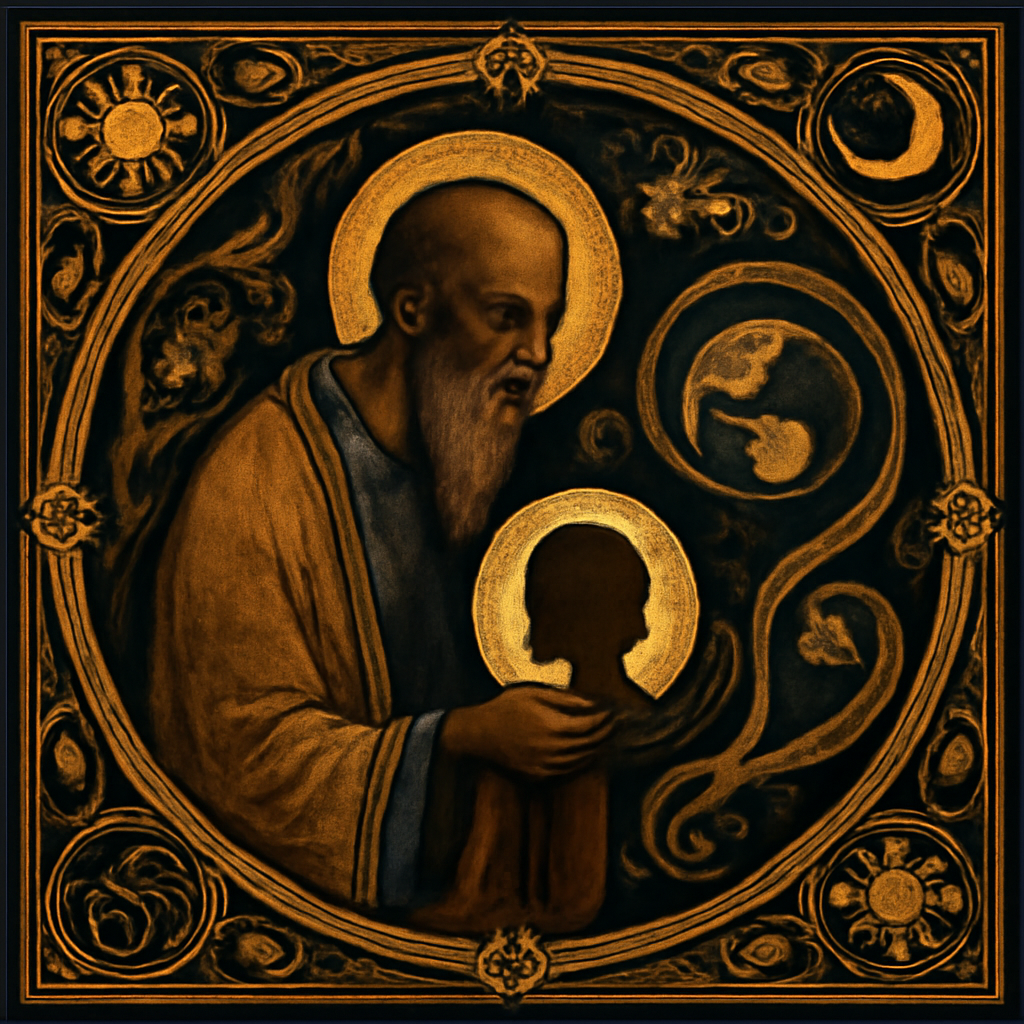
QE visual interpretation
Frame 01
Unpacking the Myth of Yakub and the Origins of Race
The idea of Yakub creating the 'white race' is a unique belief within the Nation of Islam, not a scientific or historical fact.
Image provenance and limitation
Source: AI-generated visual interpretation
Creator: Question Everything
Limitation: This image explains or evokes the subject. It is not documentary evidence and should not be used to verify a factual claim.
Evidence
What do we know?
Verified claims with confidence scoring and cited sources.
Generated without source retrieval. QE did not fetch sources for this investigation, so no citation here was checked against a retrieved set. Claims reflect the model’s training data. 2 of 3 findings carry no openable link at all.
2 of 3 findings need extra caution. Finding 1, Finding 3 rest on weaker sourcing than the other findings.
Living footnotes
Claims remain in the reading flow. Select a citation number to inspect the source behind it.
01
HistoricalNot confirmed
The story of Yakub creating the 'white race' is a theological belief specific to the Nation of Islam, not a scientific or historically accepted account of human origins.
In the teachings of the Nation of Islam, especially as taught by Wallace Fard Muhammad and Elijah Muhammad, Yakub is described as a Black scientist who lived about 6,600 years ago on the island of Patmos. According to this doctrine, Yakub used selective breeding to create a new race of people with lighter skin, whom he intended to rule the world for a period of time. This narrative is a foundational part of their cosmology and understanding of racial history.
It's important to understand that this is a specific religious doctrine, not a claim supported by archaeology, genetics, or any mainstream historical or scientific field. It serves as an allegorical explanation for racial differences and power dynamics within the Nation of Islam's worldview.
02
ObservationalSupported
Modern genetic science clearly demonstrates that all human beings share common ancestors and that racial categories are social constructs, not distinct biological lineages originating from a single 'creator' figure.
Genetic studies, which look at our DNA, show that all humans alive today share a common ancestry that traces back to Africa. Scientists have found overwhelming evidence that modern humans evolved in Africa and then migrated around the world, slowly developing genetic variations that lead to differences in traits like skin color, hair texture, and facial features. These changes happened gradually over tens of thousands of years due to natural selection and genetic drift, not through intentional selective breeding by one individual.
There is no genetic marker or scientific evidence that points to a single 'white' ancestor like Yakub, or any sudden creation of racial groups. Instead, humanity is a deeply interconnected web of genetic diversity. The concept of 'race' as distinct biological groups is not supported by genetics; rather, it's a way societies have categorized people, often with harmful consequences.
03
HistoricalNot confirmed
The 'Yakub' narrative emerged within a specific historical context of racial oppression and the search for identity and empowerment among Black Americans.
The Nation of Islam began in the early 20th century, a time of severe racial segregation and discrimination in the United States. Many Black Americans faced extreme prejudice, violence, and limited opportunities. In this environment, the Nation of Islam offered a powerful counter-narrative to the idea of Black inferiority that was pushed by the dominant white society.
Stories like the Yakub myth provided a sense of dignity, a history that explained their suffering, and a vision for future empowerment. It reframed the existing power structure, suggesting that the current situation was a temporary deviation from a divine plan, and that Black people were the original, superior race. Understanding this historical backdrop helps explain why such a narrative could resonate deeply with a community seeking meaning and justice.
The complete record below preserves every citation, confidence input and recorded limitation.
Read the full evidence record3 findings · citations · limitations
Evidence review3 findings1 openable sources
01
Finding 1 of 3HistoricalNeeds caution
0/0 verified
The story of Yakub creating the 'white race' is a theological belief specific to the Nation of Islam, not a scientific or historically accepted account of human origins.
In the teachings of the Nation of Islam, especially as taught by Wallace Fard Muhammad and Elijah Muhammad, Yakub is described as a Black scientist who lived about 6,600 years ago on the island of Patmos. According to this doctrine, Yakub used selective breeding to create a new race of people with lighter skin, whom he intended to rule the world for a period of time. This narrative is a foundational part of their cosmology and understanding of racial history.
It's important to understand that this is a specific religious doctrine, not a claim supported by archaeology, genetics, or any mainstream historical or scientific field. It serves as an allegorical explanation for racial differences and power dynamics within the Nation of Islam's worldview.
Not confirmedmodel score 100%
Written from the model's own knowledge. No source was retrieved or checked.
UNVERIFIED — NO RETRIEVAL
›View sources and limits— limits
Supporting passage
In the teachings of the Nation of Islam, especially as taught by Wallace Fard Muhammad and Elijah Muhammad, Yakub is described as a Black scientist who lived about 6,600 years ago on the island of Patmos. According to this doctrine, Yakub used selective breeding to create a new race of people with lighter skin, whom he intended to rule the world for a period of time. This narrative is a foundational part of their cosmology and understanding of racial history.
It's important to understand that this is a specific religious doctrine, not a claim supported by archaeology, genetics, or any mainstream historical or scientific field. It serves as an allegorical explanation for racial differences and power dynamics within the Nation of Islam's worldview.
Citations (0 of 2 survived verification)
Nothing openable. No sources were retrieved for this investigation, so none were checked.
What limits this
This investigation was generated without source retrieval. The model named a source but gave no link, and no verification step ran against it.
The claim reflects the model's training data, not a checked citation.
The generator scored this 100%, which would read as “Established”. Its citations reach only “Unresolved”, so that is what is shown.
02
Finding 2 of 3Observational
0/1 verified
Modern genetic science clearly demonstrates that all human beings share common ancestors and that racial categories are social constructs, not distinct biological lineages originating from a single 'creator' figure.
Genetic studies, which look at our DNA, show that all humans alive today share a common ancestry that traces back to Africa. Scientists have found overwhelming evidence that modern humans evolved in Africa and then migrated around the world, slowly developing genetic variations that lead to differences in traits like skin color, hair texture, and facial features. These changes happened gradually over tens of thousands of years due to natural selection and genetic drift, not through intentional selective breeding by one individual.
There is no genetic marker or scientific evidence that points to a single 'white' ancestor like Yakub, or any sudden creation of racial groups. Instead, humanity is a deeply interconnected web of genetic diversity. The concept of 'race' as distinct biological groups is not supported by genetics; rather, it's a way societies have categorized people, often with harmful consequences.
Supportedmodel score 100%
One source, not peer-reviewed. Thinner than the score suggests.
REPORTING
›View sources and limits— 1 citation, limits
Supporting passage
Genetic studies, which look at our DNA, show that all humans alive today share a common ancestry that traces back to Africa. Scientists have found overwhelming evidence that modern humans evolved in Africa and then migrated around the world, slowly developing genetic variations that lead to differences in traits like skin color, hair texture, and facial features. These changes happened gradually over tens of thousands of years due to natural selection and genetic drift, not through intentional selective breeding by one individual.
There is no genetic marker or scientific evidence that points to a single 'white' ancestor like Yakub, or any sudden creation of racial groups. Instead, humanity is a deeply interconnected web of genetic diversity. The concept of 'race' as distinct biological groups is not supported by genetics; rather, it's a way societies have categorized people, often with harmful consequences.
Generated without source retrieval — citations here were not verified against a retrieved set.
1 of 2 citations failed verification and are not shown.
Rests on a single source. No independent corroboration.
No peer-reviewed source among the citations.
The generator scored this 100%, which would read as “Established”. Its citations reach only “Supported”, so that is what is shown.
03
Finding 3 of 3HistoricalNeeds caution
0/0 verified
The 'Yakub' narrative emerged within a specific historical context of racial oppression and the search for identity and empowerment among Black Americans.
The Nation of Islam began in the early 20th century, a time of severe racial segregation and discrimination in the United States. Many Black Americans faced extreme prejudice, violence, and limited opportunities. In this environment, the Nation of Islam offered a powerful counter-narrative to the idea of Black inferiority that was pushed by the dominant white society.
Stories like the Yakub myth provided a sense of dignity, a history that explained their suffering, and a vision for future empowerment. It reframed the existing power structure, suggesting that the current situation was a temporary deviation from a divine plan, and that Black people were the original, superior race. Understanding this historical backdrop helps explain why such a narrative could resonate deeply with a community seeking meaning and justice.
Not confirmedmodel score 90%
Written from the model's own knowledge. No source was retrieved or checked.
UNVERIFIED — NO RETRIEVAL
›View sources and limits— limits
Supporting passage
The Nation of Islam began in the early 20th century, a time of severe racial segregation and discrimination in the United States. Many Black Americans faced extreme prejudice, violence, and limited opportunities. In this environment, the Nation of Islam offered a powerful counter-narrative to the idea of Black inferiority that was pushed by the dominant white society.
Stories like the Yakub myth provided a sense of dignity, a history that explained their suffering, and a vision for future empowerment. It reframed the existing power structure, suggesting that the current situation was a temporary deviation from a divine plan, and that Black people were the original, superior race. Understanding this historical backdrop helps explain why such a narrative could resonate deeply with a community seeking meaning and justice.
Citations (0 of 2 survived verification)
Nothing openable. No sources were retrieved for this investigation, so none were checked.
What limits this
This investigation was generated without source retrieval. The model named a source but gave no link, and no verification step ran against it.
The claim reflects the model's training data, not a checked citation.
The generator scored this 90%, which would read as “Established”. Its citations reach only “Unresolved”, so that is what is shown.
Interactive Exploration
Touch, drag, and discover
These visualizations respond to your curiosity. Interact to go deeper.
comparison table
Yakub Narrative vs. Scientific Consensus on Human Origins
Yakub Narrative (Nation of Islam)
Scientific Consensus (Genetics/Anthropology)
Origin of Races
One scientist (Yakub) selectively bred a new 'white race' over centuries.
Gradual genetic variations over tens of thousands of years due to migration, natural selection, and adaptation.
Timeline
Approx. 6,600 years ago.
Modern humans originated in Africa over 300,000 years ago; diversification over many millennia since.
Evidence Basis
Religious doctrine, sacred texts, teachings of specific leaders.
DNA analysis, fossil records, archaeological findings, comparative anthropology.
Concept of 'Race'
Distinct, biologically created categories with specific origins and purposes.
A social construct; genetic differences are continuous, not discrete categories.
Despite outward differences, the vast majority of our genetic code is identical, highlighting our shared ancestry.
85%
Genetic variation within a single 'race'
More genetic variation exists within groups commonly called 'races' than between them, challenging the idea of distinct biological races.
Perspectives
How is this interpreted?
Enter a viewpoint. Notice what it reveals, what it leaves out, and whether it changes the question for you.
The EmpiricistScientific viewpointEstablished lens
From a scientific viewpoint, the idea of Yakub creating an entire race is a myth. Genetics and anthropology, the study of human cultures and origins, tell us a very different story. All humans, regardless of skin color, share over 99.9% of their DNA. Genetic differences that lead to varying appearances, like skin tone, are minor adaptations that developed slowly over thousands of years as early humans moved to different parts of the world. For example, lighter skin evolved in regions with less sunlight to help bodies produce enough Vitamin D. These changes were gradual and natural, not the result of one scientist's experiment.
Scientific research consistently shows a single origin for humanity in Africa, with subsequent migrations and diversification. There's no genetic evidence of a 'pure' white or black race, let alone one created artificially. Race, in scientific terms, is largely seen as a social concept, not a biological one that defines distinct groups with clear boundaries.
What this lens notices
01Human genetic diversity supports a single African origin.
02Skin color is a gradual adaptation, not a sudden creation.
03No genetic evidence for 'race' as distinct biological categories.
Application
Why does this matter to you?
Personal reflections and applications for your life.
Thought experimentSelf-Reflection
How do the stories we believe about our origins, whether scientific or mythical, shape our understanding of ourselves and others?
Why it changes the question
Every culture and individual has stories that explain 'where we come from' – whether it's family history, religious texts, or scientific theories. These stories aren't just facts; they're frameworks that give meaning to our lives, influence our values, and determine how we see other groups of people. Reflecting on your own foundational stories can reveal biases or strengths you didn't realize you had.
Try this
Think about a core belief you hold about your own identity or origins. Trace it back: Is it from family? School? Religion? Media? Consider how it makes you feel about yourself and your place in the world.
Media
QE Smart Glass
Curated media selected for this investigation.
QE Glass
YOUTUBE
Yakub The Scientist
Stoic Stick
A video about Yakub the Scientist and the Nation of Islam Kofi link: https://ko-fi.com/stoicstick Yakub The Scientist Transcript: Of ...
QE Glass
YOUTUBE
The Story and Real History of YAKUB
Owen Kung
Demon, Demiurge, Big Headed Scientist. Owen Kung videos are funded by wasteful government spending INSTAGRAM ...
QE Glass
YOUTUBE
Jacob and Esau l God's Story
Crossroads Kids' Club
Jacob and Esau are twins who didn't get along. Even though they made mistakes, they're both a part of God's Story. You can read ...
QE Glass
YOUTUBE
Who Is Satan in Islam? | Iblis Explained
ReligionForBreakfast
Watch my interview with Dr. Ali Olomi on Nebula!
QE Glass
YOUTUBE
Malcolm X | "God Is Black" | Netflix
Still Watching Netflix
Denzel Washington (Malcolm X) and Albert Hall (Baines) star in Spike Lee's Academy Award-nominated 1992 film Malcolm X.
QE Glass
YOUTUBE
Neil deGrasse Tyson on God
CBS Sunday Morning
In this web exclusive, correspondent Martha Teichner asks the acclaimed astrophysicist, as he examines the universe, whether he ...
QE Glass
YOUTUBE
The Origin of Humans – The Journey of Humanity
Kurzgesagt – In a Nutshell
A beautifully animated overview of human evolution and migration out of Africa, illustrating the scientific understanding of our origins.
QE Glass
PODCAST
A 'Different' Kind of Race Question
NPR Code Switch
Explores how concepts of race are viewed and understood differently in various cultures and contexts, including the Nation of Islam, offering nuance.
QE Glass
YOUTUBE
Why Did We Lose Our Fur? | The Surprising Story of Human Evolution
BAKU
Why do humans have so little body hair compared to other mammals? Millions of years ago, our ancestors looked very different.
Keep Going
Where this leads
Questions this investigation opens up — and what QE has already looked into.
No AI help here — no suggestions, no autocomplete, nothing finishing your sentences. That is deliberate. Working out what you think is effortful, and the effort is the part that changes you: reasoning is trained like a muscle, and a muscle that is always carried gets weaker. Let something else do the thinking and you keep the answer but lose the capacity to have reached it.
Write your current position.
Not what the page says. What you think, having read it.0 words · Nothing written yet.
Sign in to leave a mark. Your draft is saved here in the meantime.