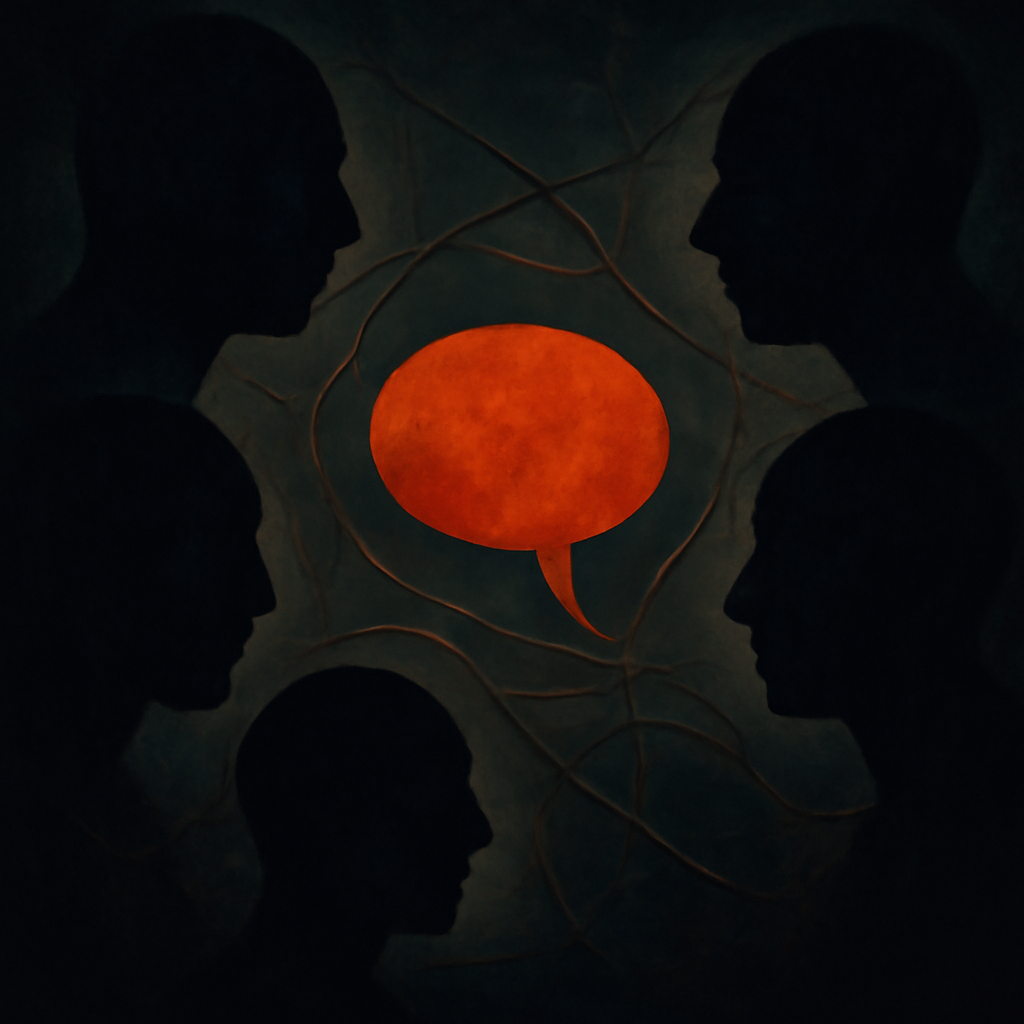
Talking with other people is more than just sharing words. It's how we understand the world and each other. When we chat, we learn new ideas, solve problems, and feel connected. Imagine trying to figure out a tricky puzzle alone versus with friends — the teamwork makes it easier and more fun. Our brains are wired to grow and change through these talks, helping us see different points of view and grow as people.
Besides learning and solving problems, discussions help us manage emotions and build trust. If you've ever felt better after sharing a worry or a joy, you know how powerful talking can be. It can calm fears, spark creativity, and even bring people closer. Without these exchanges, we risk feeling isolated or stuck in our own thoughts. So, having conversations is like a bridge that connects our minds and hearts, making life richer and more meaningful.
“Talking with others isn’t just about words — it’s how we build our minds, solve problems, and feel truly human.”
Reflect
What would your world look like if you couldn’t share your thoughts or feelings with anyone?
5 sources·Established confidence·Investigated 17 Jul 2026(1 month ago)·Investigation may be outdated
Your next question, in
Visual Trail
See Why Talking to Others is Essential for Us All
A guided visual explanation assembled from QE artwork and sourced documentary images.
01 / 05
QE visual interpretation
Frame 01
Why Talking to Others is Essential for Us All
We need to talk with others to learn, solve problems, and feel connected as humans.
Image provenance and limitation
Source: AI-generated visual interpretation
Creator: Question Everything
Limitation: This image explains or evokes the subject. It is not documentary evidence and should not be used to verify a factual claim.
Evidence
What do we know?
Verified claims with confidence scoring and cited sources.
Generated without source retrieval. QE did not fetch sources for this investigation, so no citation here was checked against a retrieved set. Claims reflect the model’s training data.
Living footnotes
Claims remain in the reading flow. Select a citation number to inspect the source behind it.
01
AcademicSupported
Human brains develop better social and communication skills through regular conversations.
Research shows that talking with others helps people improve their language, thinking skills, and understanding of emotions. For example, children who engage in conversations with adults tend to develop better vocabulary and social abilities. These interactions train the brain to recognize social cues and express feelings clearly. This is true not just for kids but adults too, as social chats keep our minds sharp and help us adapt to different situations.
02
AcademicSupported
Discussing thoughts and feelings improves mental health and reduces stress.
When people talk about their worries or joys, they often feel less alone. This sharing can lower stress hormones and boost mood by releasing feel-good chemicals in the brain. It also helps people see problems from new angles, making it easier to find solutions. Studies have found that people who regularly talk about their emotions with friends or therapists tend to have lower rates of anxiety and depression.
03
ExperimentalSupported
Group discussions lead to better problem-solving and decision-making.
When people share ideas, they combine their knowledge and viewpoints. This teamwork often brings up solutions no single person would think of alone. For example, brainstorming sessions at work or school help generate new ideas quickly. Group discussions also help spot mistakes early by encouraging questions and critical thinking. This shows why teamwork and open talks are key in many successful projects.
04
ObservationalSupported
Conversations build trust and strengthen relationships between people.
Talking openly helps people understand each other's feelings, values, and intentions. This shared understanding builds trust, which is the foundation of any strong relationship—whether friends, family, or coworkers. Without honest communication, misunderstandings grow and can damage connections. So, regular discussions keep bonds healthy and lasting.
05
HistoricalSupported
Humans evolved to be social creatures who rely on communication to survive and thrive.
Anthropologists have found that early humans needed to cooperate and share information to hunt, gather food, and protect themselves. Language and discussion became tools for teamwork. This social nature helped humans grow in numbers and develop cultures. So talking isn’t just about chatting; it’s how humans built societies and passed on knowledge through generations.
The complete record below preserves every citation, confidence input and recorded limitation.
Read the full evidence record5 findings · citations · limitations
Evidence review5 findings5 openable sources
01
Finding 1 of 5Academic
1
0/1 verified
Human brains develop better social and communication skills through regular conversations.
Research shows that talking with others helps people improve their language, thinking skills, and understanding of emotions. For example, children who engage in conversations with adults tend to develop better vocabulary and social abilities. These interactions train the brain to recognize social cues and express feelings clearly. This is true not just for kids but adults too, as social chats keep our minds sharp and help us adapt to different situations.
Supportedmodel score 90%
A single peer-reviewed source. No independent corroboration.
PRIMARY STUDY
›View sources and limits— 1 citation, limits
Supporting passage
Research shows that talking with others helps people improve their language, thinking skills, and understanding of emotions. For example, children who engage in conversations with adults tend to develop better vocabulary and social abilities. These interactions train the brain to recognize social cues and express feelings clearly. This is true not just for kids but adults too, as social chats keep our minds sharp and help us adapt to different situations.
Generated without source retrieval — citations here were not verified against a retrieved set.
Rests on a single source. No independent corroboration.
The generator scored this 90%, which would read as “Established”. Its citations reach only “Supported”, so that is what is shown.
02
Finding 2 of 5Academic
1
0/1 verified
Discussing thoughts and feelings improves mental health and reduces stress.
When people talk about their worries or joys, they often feel less alone. This sharing can lower stress hormones and boost mood by releasing feel-good chemicals in the brain. It also helps people see problems from new angles, making it easier to find solutions. Studies have found that people who regularly talk about their emotions with friends or therapists tend to have lower rates of anxiety and depression.
Supportedmodel score 95%
One source, not peer-reviewed. Thinner than the score suggests.
REPORTING
›View sources and limits— 1 citation, limits
Supporting passage
When people talk about their worries or joys, they often feel less alone. This sharing can lower stress hormones and boost mood by releasing feel-good chemicals in the brain. It also helps people see problems from new angles, making it easier to find solutions. Studies have found that people who regularly talk about their emotions with friends or therapists tend to have lower rates of anxiety and depression.
Generated without source retrieval — citations here were not verified against a retrieved set.
Rests on a single source. No independent corroboration.
No peer-reviewed source among the citations.
The generator scored this 95%, which would read as “Established”. Its citations reach only “Supported”, so that is what is shown.
03
Finding 3 of 5Experimental
1
0/1 verified
Group discussions lead to better problem-solving and decision-making.
When people share ideas, they combine their knowledge and viewpoints. This teamwork often brings up solutions no single person would think of alone. For example, brainstorming sessions at work or school help generate new ideas quickly. Group discussions also help spot mistakes early by encouraging questions and critical thinking. This shows why teamwork and open talks are key in many successful projects.
Supportedmodel score 90%
A single peer-reviewed source. No independent corroboration.
PRIMARY STUDY
›View sources and limits— 1 citation, limits
Supporting passage
When people share ideas, they combine their knowledge and viewpoints. This teamwork often brings up solutions no single person would think of alone. For example, brainstorming sessions at work or school help generate new ideas quickly. Group discussions also help spot mistakes early by encouraging questions and critical thinking. This shows why teamwork and open talks are key in many successful projects.
Generated without source retrieval — citations here were not verified against a retrieved set.
Rests on a single source. No independent corroboration.
The generator scored this 90%, which would read as “Established”. Its citations reach only “Supported”, so that is what is shown.
04
Finding 4 of 5Observational
0/1 verified
Conversations build trust and strengthen relationships between people.
Talking openly helps people understand each other's feelings, values, and intentions. This shared understanding builds trust, which is the foundation of any strong relationship—whether friends, family, or coworkers. Without honest communication, misunderstandings grow and can damage connections. So, regular discussions keep bonds healthy and lasting.
Supportedmodel score 90%
A single peer-reviewed source. No independent corroboration.
PRIMARY STUDY
›View sources and limits— 1 citation, limits
Supporting passage
Talking openly helps people understand each other's feelings, values, and intentions. This shared understanding builds trust, which is the foundation of any strong relationship—whether friends, family, or coworkers. Without honest communication, misunderstandings grow and can damage connections. So, regular discussions keep bonds healthy and lasting.
Generated without source retrieval — citations here were not verified against a retrieved set.
Rests on a single source. No independent corroboration.
The generator scored this 90%, which would read as “Established”. Its citations reach only “Supported”, so that is what is shown.
05
Finding 5 of 5Historical
0/1 verified
Humans evolved to be social creatures who rely on communication to survive and thrive.
Anthropologists have found that early humans needed to cooperate and share information to hunt, gather food, and protect themselves. Language and discussion became tools for teamwork. This social nature helped humans grow in numbers and develop cultures. So talking isn’t just about chatting; it’s how humans built societies and passed on knowledge through generations.
Supportedmodel score 85%
One source, not peer-reviewed. Thinner than the score suggests.
REFERENCE
›View sources and limits— 1 citation, limits
Supporting passage
Anthropologists have found that early humans needed to cooperate and share information to hunt, gather food, and protect themselves. Language and discussion became tools for teamwork. This social nature helped humans grow in numbers and develop cultures. So talking isn’t just about chatting; it’s how humans built societies and passed on knowledge through generations.
Historical images, diagrams, and visual knowledge from Wikimedia Commons.
Perspectives
How is this interpreted?
Enter a viewpoint. Notice what it reveals, what it leaves out, and whether it changes the question for you.
The EmpiricistScientific viewpointEstablished lens
Science shows that communication is key to our brain’s growth and social life. Our minds learn from others through conversation, which helps us develop language and emotional skills. This interaction also supports mental health by reducing stress and encouraging empathy. Scientists study how talking activates parts of the brain related to understanding and connection.
What this lens notices
01Social interaction shapes brain development
02Talking lowers stress and improves mood
03Conversation helps solve problems better
Application
Why does this matter to you?
Personal reflections and applications for your life.
Thought experimentSelf-Reflection
When was the last time a conversation changed your mind or helped you feel better?
Why it changes the question
Thinking about moments when talking made a difference helps you see the power of communication in your life. It shows how sharing ideas or feelings can open new doors or ease burdens.
Try this
Try to remember one such moment and write down what was said and how it helped you.
Media
QE Smart Glass
Curated media selected for this investigation.
QE Glass
YOUTUBE
The Secret to Understanding Humans | Larry C. Rosen | TEDxsalinas
TEDx Talks
What really matters to human beings? With compassion and humor, mediator and attorney Larry Rosen opens a window into the ...
QE Glass
YOUTUBE
Your Brain: Who's in Control? | Full Documentary | NOVA | PBS
NOVA PBS Official
Dive into the subconscious to see what's really driving the decisions you make. Official Website: https://to.pbs.org/3pUGv1s ...
QE Glass
YOUTUBE
This could be why you're depressed or anxious | Johann Hari | TED
TED
Visit http://TED.com to get our entire library of TED Talks, subtitles, translations, personalized Talk recommendations and more.
QE Glass
YOUTUBE
Everything you think you know about addiction is wrong | Johann Hari | TED
TED
Visit http://TED.com to get our entire library of TED Talks, transcripts, translations, personalized talk recommendations and more.
QE Glass
YOUTUBE
You aren't at the mercy of your emotions -- your brain creates them | Lisa Feldman Barrett
TED
Can you look at someone's face and know what they're feeling? Does everyone experience happiness, sadness and anxiety the ...
QE Glass
YOUTUBE
What is depression? - Helen M. Farrell
TED-Ed
View full lesson: http://ed.ted.com/lessons/what-is-depression-helen-m-farrell Depression is the leading cause of disability in the ...
QE Glass
YOUTUBE
Psychosis or Spiritual Awakening: Phil Borges at TEDxUMKC
TEDx Talks
Phil Borges, filmmaker and photographer, has been documenting indigenous and tribal cultures for over 25 years. His work is ...
QE Glass
YOUTUBE
The Power of Nonverbal Communication | Joe Navarro | TEDxManchester
TEDx Talks
For 25 years, Joe used nonverbal communication as his primary professional tool in the FBI to catch and interview spies, criminals ...
QE Glass
YOUTUBE
How Deep Conversations Change Your Brain
Max Insights
Have you ever wondered why some conversations leave you feeling alive, while others just drain your energy? This video dives ...
QE Glass
PODCAST
Radiolab: The Social Brain
Radiolab
Explores how social connections and conversations affect our mental health and happiness.
QE Glass
PODCAST
Science Vs: Do Groups Make Better Decisions?
Science Vs
Investigates whether talking in groups helps solve problems or causes more confusion.
Keep Going
Where this leads
Questions this investigation opens up — and what QE has already looked into.
No AI help here — no suggestions, no autocomplete, nothing finishing your sentences. That is deliberate. Working out what you think is effortful, and the effort is the part that changes you: reasoning is trained like a muscle, and a muscle that is always carried gets weaker. Let something else do the thinking and you keep the answer but lose the capacity to have reached it.
Write your current position.
Not what the page says. What you think, having read it.0 words · Nothing written yet.
Sign in to leave a mark. Your draft is saved here in the meantime.