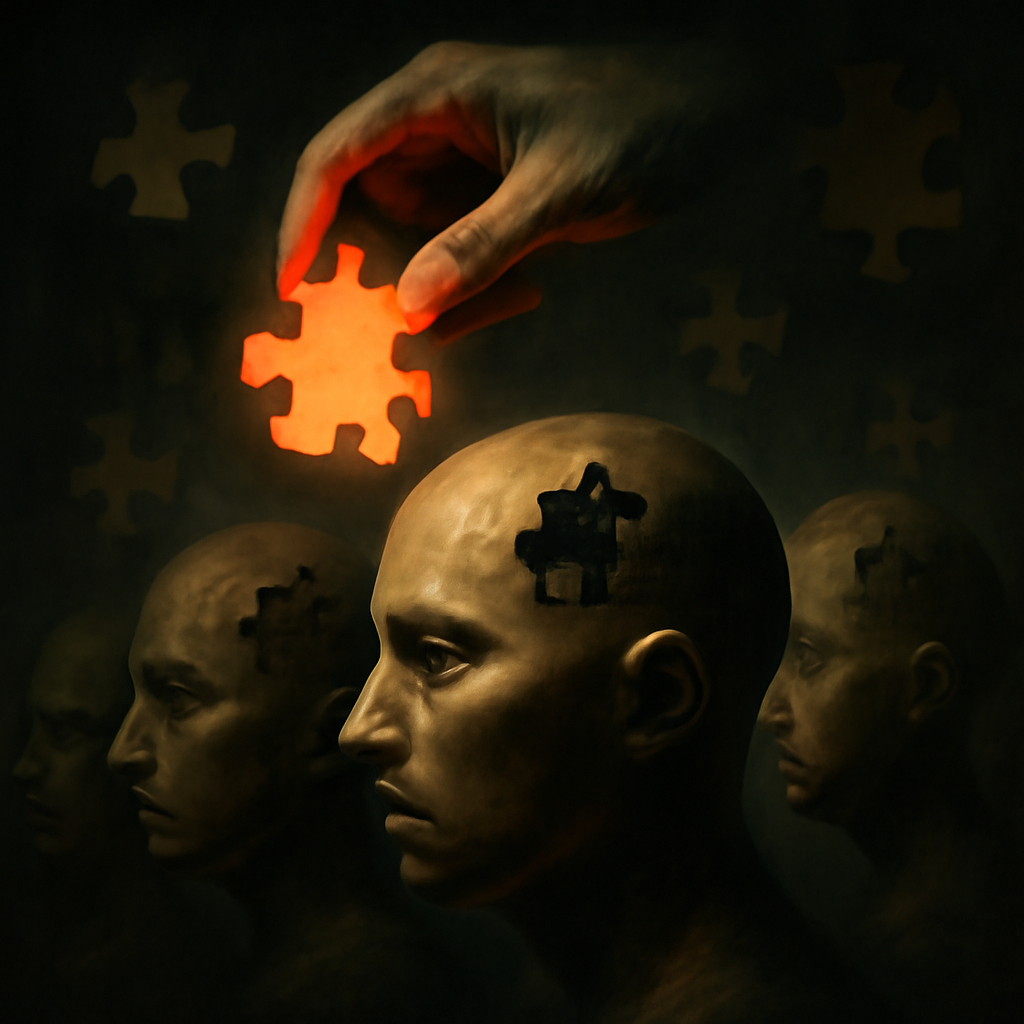
The Mandela Effect: When Many People Share the Same False Memory
The Mandela Effect is a strange but real phenomenon where lots of people remember something the same way — but it turns out their memory is wrong. The name comes from Nelson Mandela, the famous South African leader. Many people wrongly thought he died in prison in the 1980s. In reality, Mandela was freed and went on to become president before dying in 2013. This shared wrong memory made people wonder why so many could remember the same thing incorrectly.
Since then, many other examples have popped up. For instance, many people remember the children’s book series as 'Berenstein Bears' instead of the correct 'Berenstain Bears.' Others recall the Monopoly man wearing a monocle, which he never did. Even movie quotes, like Darth Vader saying “Luke, I am your father,” are misremembered; the real line is “No, I am your father.” These mix-ups show how tricky human memory can be, especially when groups of people all get the same detail wrong together.
“The Mandela Effect shows that large groups of people can all remember the same thing wrong — and feel sure about it.”
Reflect
If so many people can share a false memory, how much can we really trust what we think we know about the past?
Research·3 sources·Well-Established confidence·Investigated 19 Jul 2026(2 months ago)·Grounded; verification trace not recorded·Investigation may be outdated
Your next question, in
Visual Trail
See The Mandela Effect: When Many People Share the Same False Memory
A guided visual explanation assembled from QE artwork and sourced documentary images.
01 / 05
QE visual interpretation
Frame 01
The Mandela Effect: When Many People Share the Same False Memory
The Mandela Effect happens when many people remember the same event or detail wrong, like thinking Nelson Mandela died in prison.
Image provenance and limitation
Source: AI-generated visual interpretation
Creator: Question Everything
Limitation: This image explains or evokes the subject. It is not documentary evidence and should not be used to verify a factual claim.
Evidence
What do we know?
Verified claims with confidence scoring and cited sources.
Living footnotes
Claims remain in the reading flow. Select a citation number to inspect the source behind it.
01
HistoricalSupported
The Mandela Effect is named after Nelson Mandela because many people wrongly remember him dying in prison in the 1980s.
The term was coined after people shared a false memory of Nelson Mandela's death in prison, although he was released in 1990 and became South Africa's president. This collective false memory was surprising and led to the naming of the phenomenon. It shows how even famous events can be misremembered by many people at once.
02
ObservationalSupported
Many people misquote famous movie lines, like Darth Vader’s line, due to the Mandela Effect.
A well-known example is the line from Star Wars often remembered as “Luke, I am your father.” The actual line is “No, I am your father.” This shows how memory can change details, especially in popular culture, and these errors can spread widely among groups of people.
03
ObservationalSupported
The Mandela Effect is an example of collective false memory, where many people remember the same wrong detail.
Collective false memory means a group of people share the same false or incorrect memory about an event or fact. This is different from just forgetting or mixing up details personally. The Mandela Effect shows how our brains can create false memories and how these can be shared across many people.
The complete record below preserves every citation, confidence input and recorded limitation.
Read the full evidence record3 findings · citations · limitations
Evidence review3 findings3 openable sources
01
Finding 1 of 3Historical
0/1 verified
The Mandela Effect is named after Nelson Mandela because many people wrongly remember him dying in prison in the 1980s.
The term was coined after people shared a false memory of Nelson Mandela's death in prison, although he was released in 1990 and became South Africa's president. This collective false memory was surprising and led to the naming of the phenomenon. It shows how even famous events can be misremembered by many people at once.
Supportedmodel score 98%
One source, not peer-reviewed. Thinner than the score suggests.
REFERENCE
›View sources and limits— 1 citation, limits
Supporting passage
The term was coined after people shared a false memory of Nelson Mandela's death in prison, although he was released in 1990 and became South Africa's president. This collective false memory was surprising and led to the naming of the phenomenon. It shows how even famous events can be misremembered by many people at once.
Rests on a single source. No independent corroboration.
No peer-reviewed source among the citations.
The generator scored this 98%, which would read as “Established”. Its citations reach only “Supported”, so that is what is shown.
02
Finding 2 of 3Observational
0/1 verified
Many people misquote famous movie lines, like Darth Vader’s line, due to the Mandela Effect.
A well-known example is the line from Star Wars often remembered as “Luke, I am your father.” The actual line is “No, I am your father.” This shows how memory can change details, especially in popular culture, and these errors can spread widely among groups of people.
Supportedmodel score 95%
One source, not peer-reviewed. Thinner than the score suggests.
REFERENCE
›View sources and limits— 1 citation, limits
Supporting passage
A well-known example is the line from Star Wars often remembered as “Luke, I am your father.” The actual line is “No, I am your father.” This shows how memory can change details, especially in popular culture, and these errors can spread widely among groups of people.
Rests on a single source. No independent corroboration.
No peer-reviewed source among the citations.
The generator scored this 95%, which would read as “Established”. Its citations reach only “Supported”, so that is what is shown.
03
Finding 3 of 3Observational
0/1 verified
The Mandela Effect is an example of collective false memory, where many people remember the same wrong detail.
Collective false memory means a group of people share the same false or incorrect memory about an event or fact. This is different from just forgetting or mixing up details personally. The Mandela Effect shows how our brains can create false memories and how these can be shared across many people.
Supportedmodel score 96%
One source, not peer-reviewed. Thinner than the score suggests.
REFERENCE
›View sources and limits— 1 citation, limits
Supporting passage
Collective false memory means a group of people share the same false or incorrect memory about an event or fact. This is different from just forgetting or mixing up details personally. The Mandela Effect shows how our brains can create false memories and how these can be shared across many people.
Rests on a single source. No independent corroboration.
No peer-reviewed source among the citations.
The generator scored this 96%, which would read as “Established”. Its citations reach only “Supported”, so that is what is shown.
Interactive Exploration
Touch, drag, and discover
These visualizations respond to your curiosity. Interact to go deeper.
timeline
Key Moments in the Mandela Effect Story
Loading timeline…
statistics card
Memory Errors Are Common
76%
Adults who made at least one memory error in a test
Shows how common memory mistakes are in everyday life.
2010
Year term 'Mandela Effect' was popularized
Marks the start of public interest in collective false memories.
relationship map
How the Mandela Effect Connects to Memory and Culture
Mapping relationships…
Drag nodes to rearrange — tap for details
Visual Gallery
Images & artifacts
Historical images, diagrams, and visual knowledge from Wikimedia Commons.
Perspectives
How is this interpreted?
Enter a viewpoint. Notice what it reveals, what it leaves out, and whether it changes the question for you.
The EmpiricistScientific viewpointLive tension
Scientists see the Mandela Effect as a type of false memory. Our brains don't store perfect copies of events. Instead, memories are rebuilt every time we recall them. This rebuilding can introduce errors. When many people talk and share memories, these mistakes can spread and become common. The internet and social media make this sharing faster, spreading false memories widely.
What this lens notices
01Memory is reconstructive and prone to errors.
02Social sharing of memories spreads common false details.
03Internet amplifies and fixes these errors in public mind.
Application
Why does this matter to you?
Personal reflections and applications for your life.
Thought experimentSelf-Reflection
Have you ever been absolutely sure about a memory, only to find out it was wrong?
Why it changes the question
Thinking about your own memories can help you understand how memory works. Everyone makes mistakes remembering things, and that's normal. This awareness can make you more open to questioning your memories and learning new facts.
Try this
Try recalling a childhood event and then check facts or photos to see how accurate your memory is.
Media
QE Smart Glass
Curated media selected for this investigation.
QE Glass
YOUTUBE
What Is The Mandela Effect? | Psychology, Theories, & Examples
MindfulThinks
Why do we all remember things that never happened? In this video, we explore the psychology behind the Mandela Effect.
No AI help here — no suggestions, no autocomplete, nothing finishing your sentences. That is deliberate. Working out what you think is effortful, and the effort is the part that changes you: reasoning is trained like a muscle, and a muscle that is always carried gets weaker. Let something else do the thinking and you keep the answer but lose the capacity to have reached it.
Write your current position.
Not what the page says. What you think, having read it.0 words · Nothing written yet.
Sign in to leave a mark. Your draft is saved here in the meantime.