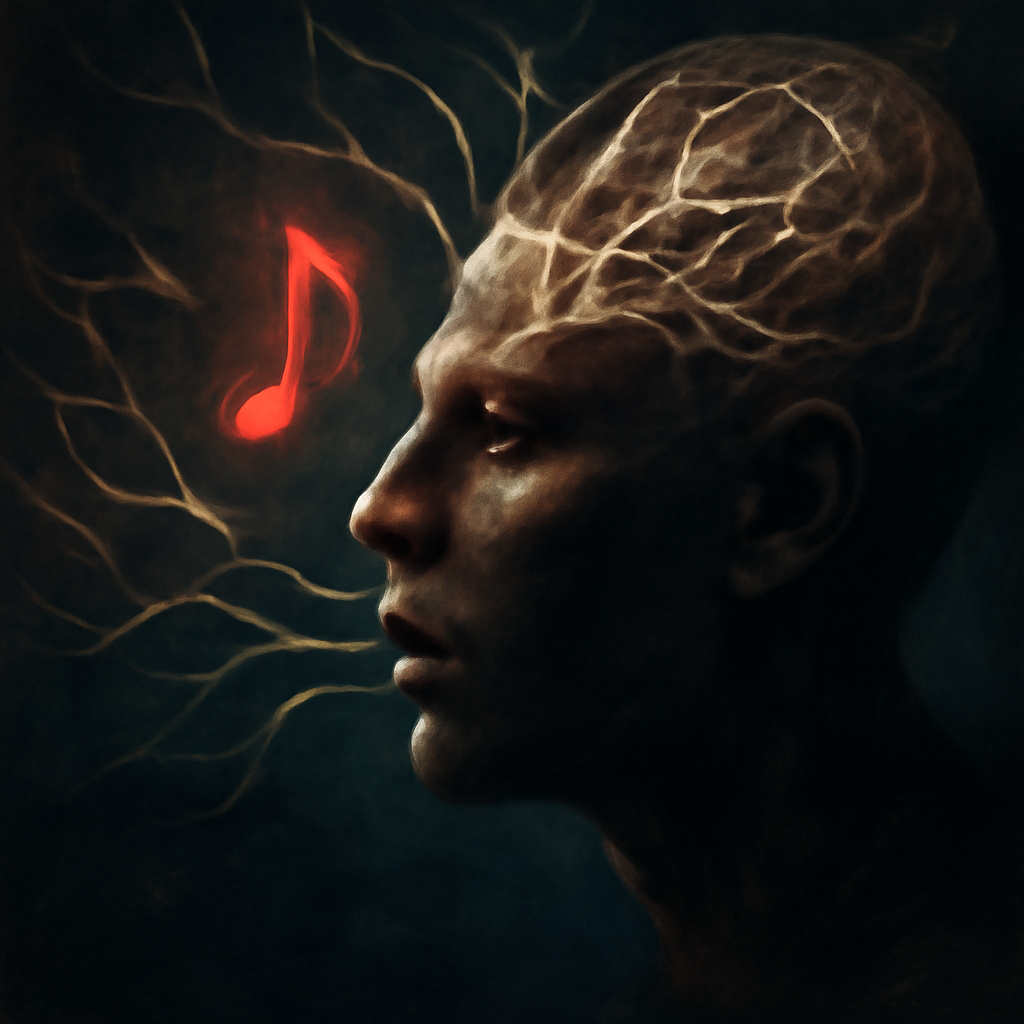
Why Do We Sing? The Science and Soul Behind Human Song
Singing is one of the most ancient and universal forms of human expression. From the haunting melodies echoing through caves tens of thousands of years ago to the modern rhythms that fill concert halls and smartphones, singing connects us across time and culture. But why do we sing? Scientists and artists alike have long sought to understand this powerful urge that stirs inside us. Singing is not just sound—it's a bridge between our emotions, our bodies, and the social world around us.
At its core, singing is a complex dance of biology and culture. Our brains and vocal cords are wired to create and appreciate music. Singing releases chemicals that make us feel good, helping us bond with others and express feelings when words fall short. Beyond biology, singing is a cultural treasure, shaping identities, histories, and even rituals. It can comfort the lonely, rally a crowd, or tell stories that no other language can capture. Singing is a window into the human spirit, revealing how deeply sound and emotion are intertwined.
“Singing is not just a sound—it’s a powerful way our brains, bodies, and communities come alive together.”
Reflect
If singing is so deeply human and universal, what untapped power might your own voice hold in connecting with others and yourself?
4 sources·Established confidence·Investigated 18 Jul 2026(1 month ago)·Investigation may be outdated
Your next question, in
Visual Trail
See Why Do We Sing? The Science and Soul Behind Human Song
A guided visual explanation assembled from QE artwork and sourced documentary images.
01 / 05
QE visual interpretation
Frame 01
Why Do We Sing? The Science and Soul Behind Human Song
We sing because it connects our emotions, bodies, and communities through powerful sound and expression.
Image provenance and limitation
Source: AI-generated visual interpretation
Creator: Question Everything
Limitation: This image explains or evokes the subject. It is not documentary evidence and should not be used to verify a factual claim.
Evidence
What do we know?
Verified claims with confidence scoring and cited sources.
Generated without source retrieval. QE did not fetch sources for this investigation, so no citation here was checked against a retrieved set. Claims reflect the model’s training data.
Living footnotes
Claims remain in the reading flow. Select a citation number to inspect the source behind it.
01
ExperimentalSupported
Singing activates brain areas linked to emotion, reward, and social bonding.
Research using brain imaging shows that singing involves regions such as the limbic system, which processes emotions, and the reward circuits that release dopamine, a chemical associated with pleasure. This neurological activity explains why singing can lift moods and create feelings of happiness. Moreover, singing engages mirror neurons that help us connect and empathize with others, strengthening social bonds.
02
HistoricalSupported
Singing is a universal human behavior found in every known culture.
Anthropologists have documented singing traditions worldwide, from indigenous chants in the Amazon to the operas of Italy. This universality suggests singing is a fundamental part of human communication and social life. It serves many roles: ceremonial, educational, emotional, and entertainment. No culture lacks some form of singing, indicating it meets deep human needs across societies.
03
ExperimentalSupported
Singing can reduce stress and improve immune function.
Studies show that singing lowers cortisol, the hormone linked to stress, and boosts immunoglobulin A, an antibody that helps fight infection. Group singing in particular magnifies these benefits by fostering social connection and shared purpose, which are known to promote health. This may explain why choirs and community singing groups often report improved wellbeing.
04
ObservationalSupported
Singing likely evolved as part of human social and mating behaviors.
Evolutionary biologists propose that singing helped early humans attract mates, signal group membership, and coordinate activities. Like birdsong, human vocal music may have served to display fitness or strengthen social ties. The complexity and emotional power of singing suggest it had adaptive value, promoting cooperation and survival in early human groups.
The complete record below preserves every citation, confidence input and recorded limitation.
Read the full evidence record4 findings · citations · limitations
Evidence review4 findings4 openable sources
01
Finding 1 of 4Experimental
1
0/1 verified
Singing activates brain areas linked to emotion, reward, and social bonding.
Research using brain imaging shows that singing involves regions such as the limbic system, which processes emotions, and the reward circuits that release dopamine, a chemical associated with pleasure. This neurological activity explains why singing can lift moods and create feelings of happiness. Moreover, singing engages mirror neurons that help us connect and empathize with others, strengthening social bonds.
Supportedmodel score 90%
A single peer-reviewed source. No independent corroboration.
PRIMARY STUDY
›View sources and limits— 1 citation, limits
Supporting passage
Research using brain imaging shows that singing involves regions such as the limbic system, which processes emotions, and the reward circuits that release dopamine, a chemical associated with pleasure. This neurological activity explains why singing can lift moods and create feelings of happiness. Moreover, singing engages mirror neurons that help us connect and empathize with others, strengthening social bonds.
Generated without source retrieval — citations here were not verified against a retrieved set.
Rests on a single source. No independent corroboration.
The generator scored this 90%, which would read as “Established”. Its citations reach only “Supported”, so that is what is shown.
02
Finding 2 of 4Historical
2010
1 dated source
Singing is a universal human behavior found in every known culture.
Anthropologists have documented singing traditions worldwide, from indigenous chants in the Amazon to the operas of Italy. This universality suggests singing is a fundamental part of human communication and social life. It serves many roles: ceremonial, educational, emotional, and entertainment. No culture lacks some form of singing, indicating it meets deep human needs across societies.
Supportedmodel score 95%
A single peer-reviewed source. No independent corroboration.
PRIMARY STUDY
›View sources and limits— 1 citation, limits
Supporting passage
Anthropologists have documented singing traditions worldwide, from indigenous chants in the Amazon to the operas of Italy. This universality suggests singing is a fundamental part of human communication and social life. It serves many roles: ceremonial, educational, emotional, and entertainment. No culture lacks some form of singing, indicating it meets deep human needs across societies.
Generated without source retrieval — citations here were not verified against a retrieved set.
Rests on a single source. No independent corroboration.
The generator scored this 95%, which would read as “Established”. Its citations reach only “Supported”, so that is what is shown.
03
Finding 3 of 4Experimental
1
0/1 verified
Singing can reduce stress and improve immune function.
Studies show that singing lowers cortisol, the hormone linked to stress, and boosts immunoglobulin A, an antibody that helps fight infection. Group singing in particular magnifies these benefits by fostering social connection and shared purpose, which are known to promote health. This may explain why choirs and community singing groups often report improved wellbeing.
Supportedmodel score 90%
A single peer-reviewed source. No independent corroboration.
PRIMARY STUDY
›View sources and limits— 1 citation, limits
Supporting passage
Studies show that singing lowers cortisol, the hormone linked to stress, and boosts immunoglobulin A, an antibody that helps fight infection. Group singing in particular magnifies these benefits by fostering social connection and shared purpose, which are known to promote health. This may explain why choirs and community singing groups often report improved wellbeing.
Generated without source retrieval — citations here were not verified against a retrieved set.
Rests on a single source. No independent corroboration.
The generator scored this 90%, which would read as “Established”. Its citations reach only “Supported”, so that is what is shown.
04
Finding 4 of 4Observational
0/1 verified
Singing likely evolved as part of human social and mating behaviors.
Evolutionary biologists propose that singing helped early humans attract mates, signal group membership, and coordinate activities. Like birdsong, human vocal music may have served to display fitness or strengthen social ties. The complexity and emotional power of singing suggest it had adaptive value, promoting cooperation and survival in early human groups.
Supportedmodel score 85%
A single peer-reviewed source. No independent corroboration.
PRIMARY STUDY
›View sources and limits— 1 citation, limits
Supporting passage
Evolutionary biologists propose that singing helped early humans attract mates, signal group membership, and coordinate activities. Like birdsong, human vocal music may have served to display fitness or strengthen social ties. The complexity and emotional power of singing suggest it had adaptive value, promoting cooperation and survival in early human groups.
Generated without source retrieval — citations here were not verified against a retrieved set.
Rests on a single source. No independent corroboration.
The generator scored this 85%, which would read as “Established”. Its citations reach only “Supported”, so that is what is shown.
Interactive Exploration
Touch, drag, and discover
These visualizations respond to your curiosity. Interact to go deeper.
process flow
How Singing Works in the Body and Brain
Breath Control
Vocal Fold Vibration
Resonance and Articulation
Brain Processing
statistics card
Key Facts About Singing and Health
40%
Reduction in cortisol levels after singing
Lower stress hormone linked to improved mood
80%
Choir members reporting improved wellbeing
Social singing boosts mental health
100+
Cultures with unique singing traditions
Universality of singing worldwide
spectrum
Functions of Singing Across Cultures
Social BondingIndividual Expression
20%
Work Songs
40%
Ceremonial Singing
80%
Love Songs
90%
Improvisational Singing
relationship map
How Singing Connects to Human Experience
Mapping relationships…
Drag nodes to rearrange — tap for details
Visual Gallery
Images & artifacts
Historical images, diagrams, and visual knowledge from Wikimedia Commons.
Perspectives
How is this interpreted?
Enter a viewpoint. Notice what it reveals, what it leaves out, and whether it changes the question for you.
The EmpiricistScientific viewpointLive tension
Scientists view singing as a biological and neurological phenomenon deeply tied to brain function and evolutionary history. They study how singing activates reward centers, reduces stress, and helps humans bond socially. From this perspective, singing is a survival tool that promotes group cohesion and individual wellbeing.
What this lens notices
01Brain imaging shows emotional and reward centers activate during singing.
02Singing lowers stress hormones and boosts immunity.
03Evolutionary theories link singing to social and mating behaviors.
Application
Why does this matter to you?
Personal reflections and applications for your life.
Thought experimentSelf-Reflection
When was the last time singing changed how you felt?
Why it changes the question
Recognizing how singing affects your mood helps you tap into a natural tool for emotional health. It shows singing is not just art but a way to care for yourself.
Try this
Try singing aloud your favorite song and notice how your mood shifts.
Media
QE Smart Glass
Curated media selected for this investigation.
QE Glass
YOUTUBE
Intro to Psychology: Crash Course Psychology #1
CrashCourse
What does Psychology mean? Where does it come from? Hank gives you a 10-minute intro to one of the more tricky sciences and ...
QE Glass
YOUTUBE
The psychology behind irrational decisions - Sara Garofalo
TED-Ed
View full lesson: http://ed.ted.com/lessons/the-psychology-behind-irrational-decisions-sara-garofalo Often people make decisions ...
QE Glass
YOUTUBE
A Brief History of Psychology: From Plato to Pavlov
Professor Dave Explains
Before we dive into all the particulars of modern psychology and its research methods, we need to get a little context. When was ...
QE Glass
YOUTUBE
The Science of Singing
Discovery
http://blogs.discovery.com/news_feedblog/2009/04/the-science-behind-singing-sensation-susan-boyle.html Why can Susan Boyle ...
QE Glass
YOUTUBE
Jung & Pauli: How a Psychologist and a Nobel Physicist Decoded Coincidence
Codex Origin
What if your most "impossible" coincidences are actually a hidden language — a signal from a deeper layer of reality?
QE Glass
YOUTUBE
The language of lying — Noah Zandan
TED-Ed
View full lesson: http://ed.ted.com/lessons/the-language-of-lying-noah-zandan We hear anywhere from 10 to 200 lies a day.
QE Glass
YOUTUBE
Aggression vs. Altruism: Crash Course Psychology #40
CrashCourse
In our final episode of Crash Course Psychology, Hank discusses the ideas of Aggression and Altruism. These two things are ...
QE Glass
YOUTUBE
What’s a squillo, and why do opera singers need it? - Ming Luke
TED-Ed
Discover the techniques opera singers use to project their voices over the orchestra and the importance of a singer's squillo.
QE Glass
YOUTUBE
Why Do We Sing? - Neuroscience Explains
Kurzgesagt – In a Nutshell
A clear and engaging video explaining the brain science behind singing and its effects on mood and social bonding.
QE Glass
YOUTUBE
The Evolution of Music: How Singing Shaped Humanity
PBS Eons
Explores the origins of singing and music in human evolution with fascinating examples and expert interviews.
QE Glass
PODCAST
Radiolab: The Healing Power of Song
Radiolab
A thoughtful podcast episode investigating how singing can improve mental health and connect people deeply.
QE Glass
YOUTUBE
How Singing Shapes Culture and Identity
TED-Ed
A short educational video that shows the importance of singing in cultural rituals and personal identity.
Connected context
Connected entities
The people, places, concepts, and events that matter here.
Keep Going
Where this leads
Questions this investigation opens up — and what QE has already looked into.
No AI help here — no suggestions, no autocomplete, nothing finishing your sentences. That is deliberate. Working out what you think is effortful, and the effort is the part that changes you: reasoning is trained like a muscle, and a muscle that is always carried gets weaker. Let something else do the thinking and you keep the answer but lose the capacity to have reached it.
Write your current position.
Not what the page says. What you think, having read it.0 words · Nothing written yet.
Sign in to leave a mark. Your draft is saved here in the meantime.