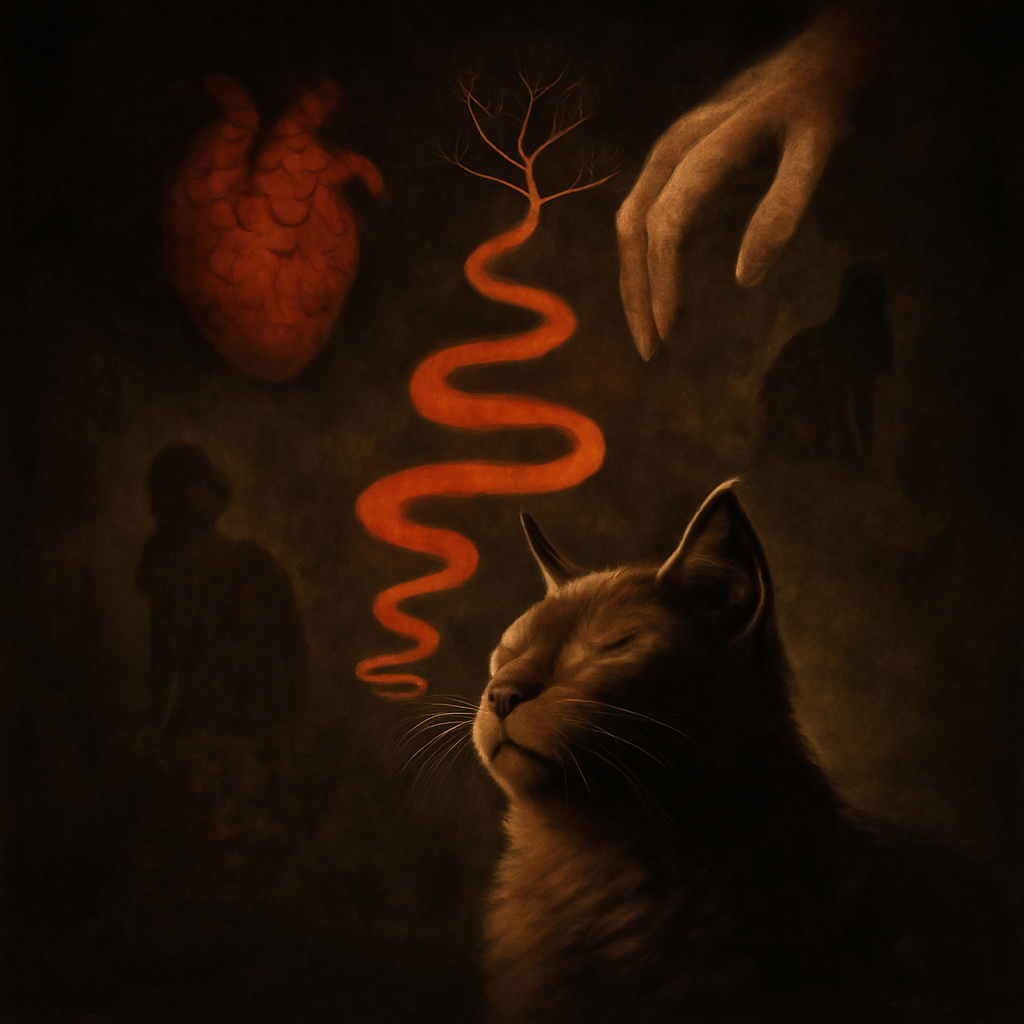
Why Cats Purr: The Surprising Meanings Behind Their Famous Rumble
Cats purr for many reasons, and it’s not just because they’re happy. That gentle rumbling sound you hear when a cat curls up on your lap is a kind of furry language. Kittens purr to let their mothers know they’re okay, and adult cats use purring to show comfort, ask for attention, or even to soothe themselves when they’re scared or hurt. Purring is like a cat’s secret superpower that helps them connect, heal, and feel safe.
Scientists have discovered that purring isn’t just one simple sound. Cats can change their purrs depending on what they want to say. For example, a cat might use a special purr that sounds a bit like a baby crying to get you to feed them. Also, the vibrations from purring might help cats heal faster when they’re injured. So, a cat’s purr is a mix of communication, comfort, and even healing wrapped into one unique sound.
“Cats can purr not only when they're happy but also to comfort themselves when scared or in pain, making purring a secret healing tool.”
Reflect
If cats use purring to heal and communicate, what other quiet, unnoticed behaviors might animals use to cope or connect with us?
Research·2 sources·Established confidence·Investigated 19 Jul 2026(2 months ago)·Grounded; verification trace not recorded·Investigation may be outdated
Your next question, in
Visual Trail
See Why Cats Purr: The Surprising Meanings Behind Their Famous Rumble
A guided visual explanation assembled from QE artwork and sourced documentary images.
01 / 05
QE visual interpretation
Frame 01
Why Cats Purr: The Surprising Meanings Behind Their Famous Rumble
Cats purr to show happiness, ask for help, soothe pain, and bond with others.
Image provenance and limitation
Source: AI-generated visual interpretation
Creator: Question Everything
Limitation: This image explains or evokes the subject. It is not documentary evidence and should not be used to verify a factual claim.
Evidence
What do we know?
Verified claims with confidence scoring and cited sources.
2 of 5 findings need extra caution. Finding 2, Finding 4 rest on weaker sourcing than the other findings.
Living footnotes
Claims remain in the reading flow. Select a citation number to inspect the source behind it.
01
AcademicSupported
Cats purr as a way to communicate contentment and comfort.
When a cat is relaxed and happy, such as lying on your lap or being petted, it often purrs to show it feels safe and comfortable. This purring usually comes with relaxed body language like soft eyes and a calm tail. It’s their way of saying they are content and enjoying the moment.
02
AcademicNot confirmed
Cats also purr to soothe themselves when they are stressed, anxious, or in pain.
Purring is not always a sign of happiness. Cats often purr during stressful situations, like visiting the vet, or when they are hurt. The vibrations from purring might release natural painkillers in their body and help them calm down. It’s like a built-in way for cats to comfort themselves when things are tough.
03
AcademicSupported
Kittens purr to communicate with their mother and siblings from just a few days old.
Baby cats start purring very early to tell their mom they are okay and to help her find them. This early purring builds a bond between the mother and her kittens and helps the little ones feel safe while they are blind and deaf.
04
AcademicNot confirmed
Cats can use a special type of purr to get attention, especially to ask for food.
Some cats have learned to add a high-pitched sound to their purr that sounds a bit like a baby crying. This makes humans respond faster, often by giving food or attention. This clever trick shows how cats use their purr as a way to communicate specific needs.
05
AcademicSupported
The vibrations from purring may help cats heal by encouraging bone growth and reducing pain.
The frequency of a cat’s purr falls in a range that can promote healing. Scientists found that these vibrations might help bones grow stronger and speed up recovery from injuries. So, when cats purr while resting, they might be giving their bodies a healing boost.
The complete record below preserves every citation, confidence input and recorded limitation.
Read the full evidence record5 findings · citations · limitations
Evidence review5 findings3 openable sources
01
Finding 1 of 5Academic
1
0/1 verified
Cats purr as a way to communicate contentment and comfort.
When a cat is relaxed and happy, such as lying on your lap or being petted, it often purrs to show it feels safe and comfortable. This purring usually comes with relaxed body language like soft eyes and a calm tail. It’s their way of saying they are content and enjoying the moment.
Supportedmodel score 95%
One source, not peer-reviewed. Thinner than the score suggests.
REFERENCE
›View sources and limits— 1 citation, limits
Supporting passage
When a cat is relaxed and happy, such as lying on your lap or being petted, it often purrs to show it feels safe and comfortable. This purring usually comes with relaxed body language like soft eyes and a calm tail. It’s their way of saying they are content and enjoying the moment.
Rests on a single source. No independent corroboration.
No peer-reviewed source among the citations.
The generator scored this 95%, which would read as “Established”. Its citations reach only “Supported”, so that is what is shown.
02
Finding 2 of 5AcademicNeeds caution
0
0/0 verified
Cats also purr to soothe themselves when they are stressed, anxious, or in pain.
Purring is not always a sign of happiness. Cats often purr during stressful situations, like visiting the vet, or when they are hurt. The vibrations from purring might release natural painkillers in their body and help them calm down. It’s like a built-in way for cats to comfort themselves when things are tough.
Not confirmedmodel score 30%
Scored as if sourced, but every citation failed verification.
NO SURVIVING CITATION
›View sources and limits— limits
Supporting passage
Purring is not always a sign of happiness. Cats often purr during stressful situations, like visiting the vet, or when they are hurt. The vibrations from purring might release natural painkillers in their body and help them calm down. It’s like a built-in way for cats to comfort themselves when things are tough.
Citations (0 of 1 survived verification)
Nothing openable. Every citation was removed by provenance validation.
What limits this
All 1 citation on this claim failed verification and were removed. Nothing openable supports it.
03
Finding 3 of 5Academic
1
0/1 verified
Kittens purr to communicate with their mother and siblings from just a few days old.
Baby cats start purring very early to tell their mom they are okay and to help her find them. This early purring builds a bond between the mother and her kittens and helps the little ones feel safe while they are blind and deaf.
Supportedmodel score 90%
One source, not peer-reviewed. Thinner than the score suggests.
REFERENCE
›View sources and limits— 1 citation, limits
Supporting passage
Baby cats start purring very early to tell their mom they are okay and to help her find them. This early purring builds a bond between the mother and her kittens and helps the little ones feel safe while they are blind and deaf.
Rests on a single source. No independent corroboration.
No peer-reviewed source among the citations.
The generator scored this 90%, which would read as “Established”. Its citations reach only “Supported”, so that is what is shown.
04
Finding 4 of 5AcademicNeeds caution
0
0/0 verified
Cats can use a special type of purr to get attention, especially to ask for food.
Some cats have learned to add a high-pitched sound to their purr that sounds a bit like a baby crying. This makes humans respond faster, often by giving food or attention. This clever trick shows how cats use their purr as a way to communicate specific needs.
Not confirmedmodel score 30%
Scored as if sourced, but every citation failed verification.
NO SURVIVING CITATION
›View sources and limits— limits
Supporting passage
Some cats have learned to add a high-pitched sound to their purr that sounds a bit like a baby crying. This makes humans respond faster, often by giving food or attention. This clever trick shows how cats use their purr as a way to communicate specific needs.
Citations (0 of 1 survived verification)
Nothing openable. Every citation was removed by provenance validation.
What limits this
All 1 citation on this claim failed verification and were removed. Nothing openable supports it.
05
Finding 5 of 5Academic
1
0/1 verified
The vibrations from purring may help cats heal by encouraging bone growth and reducing pain.
The frequency of a cat’s purr falls in a range that can promote healing. Scientists found that these vibrations might help bones grow stronger and speed up recovery from injuries. So, when cats purr while resting, they might be giving their bodies a healing boost.
Supportedmodel score 85%
One source, not peer-reviewed. Thinner than the score suggests.
REFERENCE
›View sources and limits— 1 citation, limits
Supporting passage
The frequency of a cat’s purr falls in a range that can promote healing. Scientists found that these vibrations might help bones grow stronger and speed up recovery from injuries. So, when cats purr while resting, they might be giving their bodies a healing boost.
Rests on a single source. No independent corroboration.
No peer-reviewed source among the citations.
The generator scored this 85%, which would read as “Established”. Its citations reach only “Supported”, so that is what is shown.
Interactive Exploration
Touch, drag, and discover
These visualizations respond to your curiosity. Interact to go deeper.
process flow
How Cats Produce a Purr
Brain Sends Signal
Laryngeal Muscles Twitch
Air Vibrates Vocal Cords
Purring Sound is Made
statistics card
Purr Facts in Numbers
25-150 Hz
Frequency range of cat purring
Purr vibrations fall in this range, which may help healing.
30-40 ms
Interval between sound bursts
Purr bursts happen every 30 to 40 milliseconds during breathing.
Few days old
Age kittens start purring
Kittens purr very early to communicate with their mother.
comparison table
Different Reasons Cats Purr
What it Means
Body Language Clues
Contentment
Cat feels happy and relaxed
Soft eyes, relaxed ears, stretched out body
Stress or Pain
Cat is anxious or hurting
Tense body, hiding, or unusual behavior
Communication
Cat asks for food or attention
Approaching owner, high-pitched purr
Tap any row to highlight and compare
Visual Gallery
Images & artifacts
Historical images, diagrams, and visual knowledge from Wikimedia Commons.
Perspectives
How is this interpreted?
Enter a viewpoint. Notice what it reveals, what it leaves out, and whether it changes the question for you.
The EmpiricistScientific viewpointLive tension
Scientists see purring as a multi-purpose tool cats use to communicate with others and to self-soothe. Research shows that purring starts in kittens as a way to connect with their mother. Later in life, cats use purring in many situations—when happy, when in pain, or when they want something. The sound involves vibrating muscles in the throat, which create rhythmic bursts of sound during breathing. The healing properties of purring vibrations are also an interesting area of study, as they might assist in recovery and pain relief.
What this lens notices
01Purring occurs in many different emotional states, not just happiness.
02The physical mechanism of purring is well studied and involves vocal cord vibrations.
03Low-frequency vibrations from purring have been linked to healing effects.
Application
Why does this matter to you?
Personal reflections and applications for your life.
Thought experimentSelf-Reflection
Have you noticed your cat purring in different situations? What might they be trying to tell you?
Why it changes the question
Paying attention to when and how your cat purrs can help you understand their feelings better. It’s like learning a new language that strengthens your bond.
Try this
Watch your cat closely next time they purr. Note their body language and what’s happening around them.
Media
QE Smart Glass
Curated media selected for this investigation.
QE Glass
YOUTUBE
Why Do Cats Purr?
SciShow
The smaller members of the felid family can purr, but why? Hank takes on this most adorable of life's mysteries in todays episode ...
QE Glass
YOUTUBE
How (And Why) Do Cats Purr?
BrainStuff - HowStuffWorks
Cats purr for all kinds of reasons, including communication and healing themselves. Cristen explains how purring works and ...
QE Glass
YOUTUBE
The Science Behind a Cat's PURR | Why Do They Do It?
Furry Feline
Ever wondered why your cat purrs? In this Furry Feline video, we dive deep into the science of purring and reveal the ...
QE Glass
YOUTUBE
The Biological Superpower of Your Cat's Purr
The Cats Mood
Your cat's purr isn't just happiness – it's one of the most astonishing abilities in the animal world. That gentle rumble can heal, ...
QE Glass
YOUTUBE
6 BENEFITS of a CAT'S PURR for Humans 🐱
AnimalWised
Have you ever heard or read that the purring of CATS can be THERAPEUTIC? In this AnimalWised video, we explain the 6 ...
QE Glass
YOUTUBE
Why Do Cats Purr? A Vet Explains How & Why | Pet Circle
Pet Circle
Ever wondered why cats purr, or how they do it? Veterinarian Dr Carla discusses the mechanism behind HOW cats purr, and then ...
QE Glass
YOUTUBE
Why Do Cats Purr? Explained by Dr. Sarah Wooten
AnimalWonders Montana
A veterinarian explains why cats purr, with examples of different types of purring.
QE Glass
YOUTUBE
How and Why Cats Purr (Prepare to be Fascinated)
The Purring Journal
While cats do purr when they are happy, this is not the only instance when they do so. As you'll soon learn, cats purr in many ...
QE Glass
PODCAST
Science Vs: Do Cats Purr to Heal Themselves?
Science Vs
Podcast episode exploring the science behind cat purring and its possible healing powers.
Keep Going
Where this leads
Questions this investigation opens up — and what QE has already looked into.
No AI help here — no suggestions, no autocomplete, nothing finishing your sentences. That is deliberate. Working out what you think is effortful, and the effort is the part that changes you: reasoning is trained like a muscle, and a muscle that is always carried gets weaker. Let something else do the thinking and you keep the answer but lose the capacity to have reached it.
Write your current position.
Not what the page says. What you think, having read it.0 words · Nothing written yet.
Sign in to leave a mark. Your draft is saved here in the meantime.