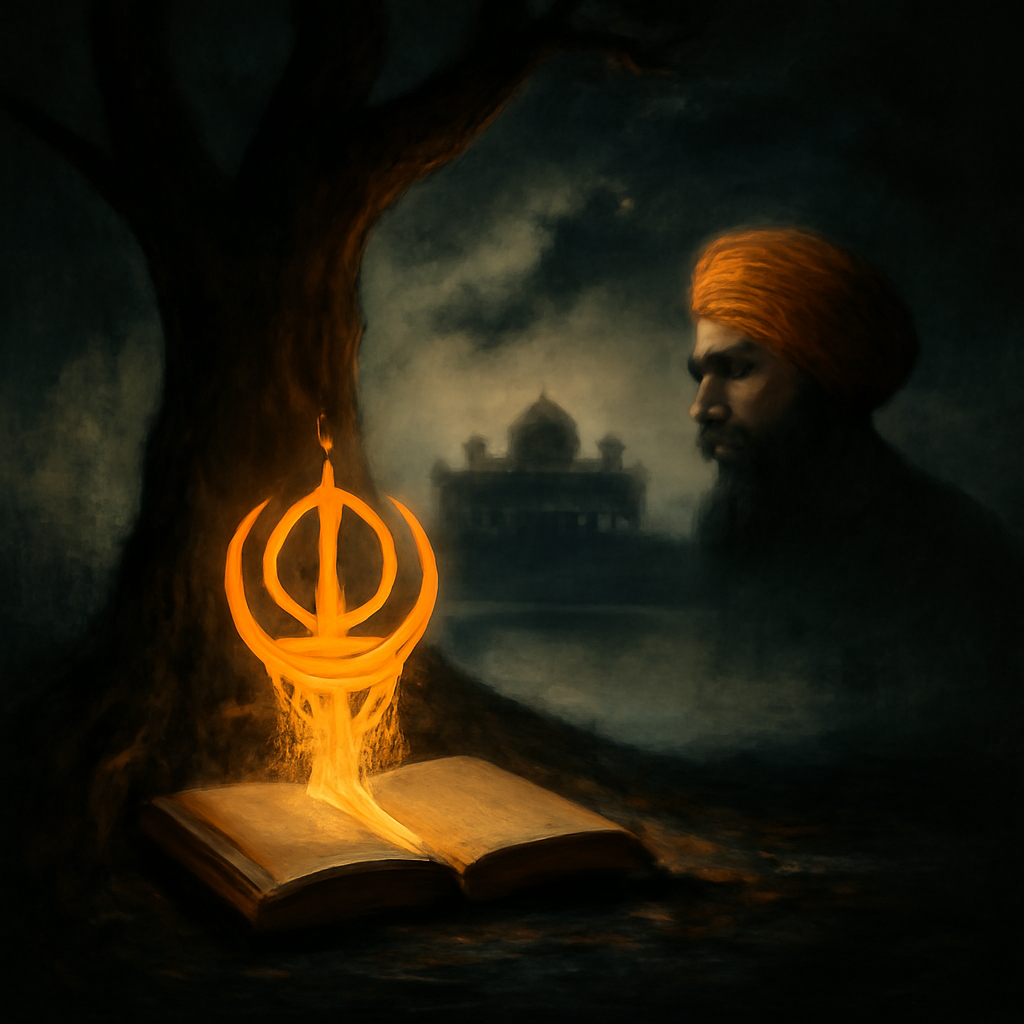
Where Sikhism Began: The Birthplace of a Unique Faith
Sikhism started over 500 years ago in a region of South Asia called Punjab, which today is split between India and Pakistan. It began with a man named Guru Nanak, who was born in 1469 in a small village called Nankana Sahib, now in Pakistan. Guru Nanak’s teachings combined ideas from both Hinduism and Islam but offered a fresh way focused on equality, honesty, and devotion to one God.
The birthplace of Sikhism is more than just a location; it’s a symbol of a peaceful message that grew into a major world religion. The city of Amritsar in India, near the border with Pakistan, became central to Sikh life because it houses the Golden Temple, the holiest place for Sikhs. This area, with its rich history and culture, remains the heart of Sikhism today, drawing millions of followers from around the world.
“Sikhism began with a single person in a small village but grew into a global faith focused on equality and one God.”
Reflect
How might the message of a small village founder still inspire millions around the world today?
1 source·Established confidence·Investigated 16 Jul 2026(1 month ago)·Investigation may be outdated
Your next question, in
Visual Trail
See Where Sikhism Began: The Birthplace of a Unique Faith
A guided visual explanation assembled from QE artwork and sourced documentary images.
01 / 05
QE visual interpretation
Frame 01
Where Sikhism Began: The Birthplace of a Unique Faith
Sikhism began in the Punjab region, now part of India and Pakistan, with Guru Nanak around 1500 AD.
Image provenance and limitation
Source: AI-generated visual interpretation
Creator: Question Everything
Limitation: This image explains or evokes the subject. It is not documentary evidence and should not be used to verify a factual claim.
Evidence
What do we know?
Verified claims with confidence scoring and cited sources.
Generated without source retrieval. QE did not fetch sources for this investigation, so no citation here was checked against a retrieved set. Claims reflect the model’s training data. 2 of 3 findings carry no openable link at all.
2 of 3 findings need extra caution. Finding 1, Finding 3 rest on weaker sourcing than the other findings.
Living footnotes
Claims remain in the reading flow. Select a citation number to inspect the source behind it.
01
HistoricalNot confirmed
Sikhism was founded by Guru Nanak in the Punjab region around 1469.
Historical records show that Guru Nanak, the first Sikh Guru, was born in 1469 in a village called Nankana Sahib, located in the Punjab region. This area was part of the Delhi Sultanate at the time and is now in modern-day Pakistan. Guru Nanak’s teachings marked the beginning of Sikhism, focusing on the belief in one God and a life of truth and equality.
02
HistoricalSupported
The Golden Temple in Amritsar is the spiritual center of Sikhism.
The Golden Temple, also known as Harmandir Sahib, was built in the late 16th century in Amritsar, a city in the Indian Punjab. It is the holiest site for Sikhs worldwide and symbolizes the openness and equality that Sikhism teaches. Devotees from all over the world visit to worship and experience the community kitchen that serves free meals daily to thousands.
03
HistoricalNot confirmed
Punjab was a cultural crossroads where Sikhism emerged blending ideas from Hinduism and Islam.
During the 15th century, Punjab was a place where many religions met and mixed. Guru Nanak’s teachings reflect this blend, rejecting rigid rituals and emphasizing equality, community service, and devotion to a single God. This mix helped Sikhism grow and stand out as a new faith distinct from its neighbors.
The complete record below preserves every citation, confidence input and recorded limitation.
Read the full evidence record3 findings · citations · limitations
Evidence review3 findings1 openable sources
01
Finding 1 of 3HistoricalNeeds caution
0/0 verified
Sikhism was founded by Guru Nanak in the Punjab region around 1469.
Historical records show that Guru Nanak, the first Sikh Guru, was born in 1469 in a village called Nankana Sahib, located in the Punjab region. This area was part of the Delhi Sultanate at the time and is now in modern-day Pakistan. Guru Nanak’s teachings marked the beginning of Sikhism, focusing on the belief in one God and a life of truth and equality.
Not confirmedmodel score 95%
Written from the model's own knowledge. No source was retrieved or checked.
UNVERIFIED — NO RETRIEVAL
›View sources and limits— limits
Supporting passage
Historical records show that Guru Nanak, the first Sikh Guru, was born in 1469 in a village called Nankana Sahib, located in the Punjab region. This area was part of the Delhi Sultanate at the time and is now in modern-day Pakistan. Guru Nanak’s teachings marked the beginning of Sikhism, focusing on the belief in one God and a life of truth and equality.
Citations (0 of 1 survived verification)
Nothing openable. No sources were retrieved for this investigation, so none were checked.
What limits this
This investigation was generated without source retrieval. The model named a source but gave no link, and no verification step ran against it.
The claim reflects the model's training data, not a checked citation.
The generator scored this 95%, which would read as “Established”. Its citations reach only “Unresolved”, so that is what is shown.
02
Finding 2 of 3Historical
2014
1 dated source
The Golden Temple in Amritsar is the spiritual center of Sikhism.
The Golden Temple, also known as Harmandir Sahib, was built in the late 16th century in Amritsar, a city in the Indian Punjab. It is the holiest site for Sikhs worldwide and symbolizes the openness and equality that Sikhism teaches. Devotees from all over the world visit to worship and experience the community kitchen that serves free meals daily to thousands.
Supportedmodel score 90%
One source, not peer-reviewed. Thinner than the score suggests.
REPORTING
›View sources and limits— 1 citation, limits
Supporting passage
The Golden Temple, also known as Harmandir Sahib, was built in the late 16th century in Amritsar, a city in the Indian Punjab. It is the holiest site for Sikhs worldwide and symbolizes the openness and equality that Sikhism teaches. Devotees from all over the world visit to worship and experience the community kitchen that serves free meals daily to thousands.
Generated without source retrieval — citations here were not verified against a retrieved set.
Rests on a single source. No independent corroboration.
No peer-reviewed source among the citations.
The generator scored this 90%, which would read as “Established”. Its citations reach only “Supported”, so that is what is shown.
03
Finding 3 of 3HistoricalNeeds caution
0/0 verified
Punjab was a cultural crossroads where Sikhism emerged blending ideas from Hinduism and Islam.
During the 15th century, Punjab was a place where many religions met and mixed. Guru Nanak’s teachings reflect this blend, rejecting rigid rituals and emphasizing equality, community service, and devotion to a single God. This mix helped Sikhism grow and stand out as a new faith distinct from its neighbors.
Not confirmedmodel score 90%
Written from the model's own knowledge. No source was retrieved or checked.
UNVERIFIED — NO RETRIEVAL
›View sources and limits— limits
Supporting passage
During the 15th century, Punjab was a place where many religions met and mixed. Guru Nanak’s teachings reflect this blend, rejecting rigid rituals and emphasizing equality, community service, and devotion to a single God. This mix helped Sikhism grow and stand out as a new faith distinct from its neighbors.
Citations (0 of 1 survived verification)
Nothing openable. No sources were retrieved for this investigation, so none were checked.
What limits this
This investigation was generated without source retrieval. The model named a source but gave no link, and no verification step ran against it.
The claim reflects the model's training data, not a checked citation.
The generator scored this 90%, which would read as “Established”. Its citations reach only “Unresolved”, so that is what is shown.
Interactive Exploration
Touch, drag, and discover
These visualizations respond to your curiosity. Interact to go deeper.
timeline
Key Events in the Start of Sikhism
Loading timeline…
relationship map
Sikhism's Roots and Influences
Mapping relationships…
Drag nodes to rearrange — tap for details
statistics card
Sikhism at a Glance
1469
Year Guru Nanak was born
Marks the beginning of Sikhism
25 million
Approximate number of Sikhs worldwide
Sikhism is one of the world's major religions
Golden Temple
Holiness center in Amritsar
Key pilgrimage site for Sikhs
Visual Gallery
Images & artifacts
Historical images, diagrams, and visual knowledge from Wikimedia Commons.
Perspectives
How is this interpreted?
Enter a viewpoint. Notice what it reveals, what it leaves out, and whether it changes the question for you.
The HistorianHistorical viewpointEstablished lens
From a historical view, Sikhism started in a region full of change and religious diversity. The Punjab region was part of various empires and experienced different cultural influences. Guru Nanak's message was revolutionary because it challenged social divisions like caste and religious conflict. This made Sikhism a faith that grew quickly among people seeking fairness and unity.
What this lens notices
01Punjab was a melting pot of religions at the time.
02Guru Nanak’s teachings rejected caste and ritualism.
03The faith promoted community and equality.
Application
Why does this matter to you?
Personal reflections and applications for your life.
Thought experimentSelf-Reflection
How can the idea of equality in Sikhism inspire your daily life?
Why it changes the question
Sikhism teaches that everyone is equal, no matter their background or social status. Thinking about this can help you treat others with more kindness and fairness in your daily interactions.
Try this
Try to notice moments where you can treat someone equally or stand up for fairness this week.
Media
QE Smart Glass
Curated media selected for this investigation.
QE Glass
YOUTUBE
Sikhism Explained
Cogito
Watch this video ad-free over on Nebula: https://nebula.tv/videos/cogito-what-is-sikhism Sikhism, the 5th largest and youngest of ...
QE Glass
YOUTUBE
History of the Sikhs
Kings and Generals
Join our YouTube members and patrons to unlock more than 230 exclusive videos: ...
QE Glass
YOUTUBE
What is Sikhism?
ReligionForBreakfast
Want to see a full Sikhism series? Join Patreon to help fund RFB World Religions series: https://patreon.com/religionforbreakfast ...
QE Glass
YOUTUBE
The Story of the Turban - Sikh Education Film
SIKH EDUCATION FILMS
The Story of the turban is a great insight into the importance of the turban within Sikhism.
QE Glass
YOUTUBE
History of Sikhism - Facts you must know about 10 Sikh Gurus, Guru Granth Sahib & Sikh ideology
StudyIQ IAS
New StudyIQ Channel - https://www.youtube.com/@StudyIQUPSCCSE | Subscribe Now for Exclusive Videos and Amazing Content. Enrol ...
QE Glass
YOUTUBE
Sikhism Explained in 5 Minutes | A Powerful Religion You Never Knew About
Stories Beyond All English
Sikhism Explained in 5 Minutes | A Powerful Religion You Never Knew About Explore the fascinating 500-year journey of Sikhism, ...
QE Glass
YOUTUBE
The Story of Sikhism - Guru Nanak to Today
CrashCourse
A clear, engaging overview of Sikhism's origins and key facts.
QE Glass
YOUTUBE
Inside the Golden Temple - Sikhism's Holiest Place
Smithsonian Channel
A visual tour of the Golden Temple and its cultural importance.
QE Glass
PODCAST
Radiolab: Exploring Sikhism’s Roots
Radiolab
A storytelling approach to Sikhism’s history and philosophy.
Keep Going
Where this leads
Questions this investigation opens up — and what QE has already looked into.
No AI help here — no suggestions, no autocomplete, nothing finishing your sentences. That is deliberate. Working out what you think is effortful, and the effort is the part that changes you: reasoning is trained like a muscle, and a muscle that is always carried gets weaker. Let something else do the thinking and you keep the answer but lose the capacity to have reached it.
Write your current position.
Not what the page says. What you think, having read it.0 words · Nothing written yet.
Sign in to leave a mark. Your draft is saved here in the meantime.