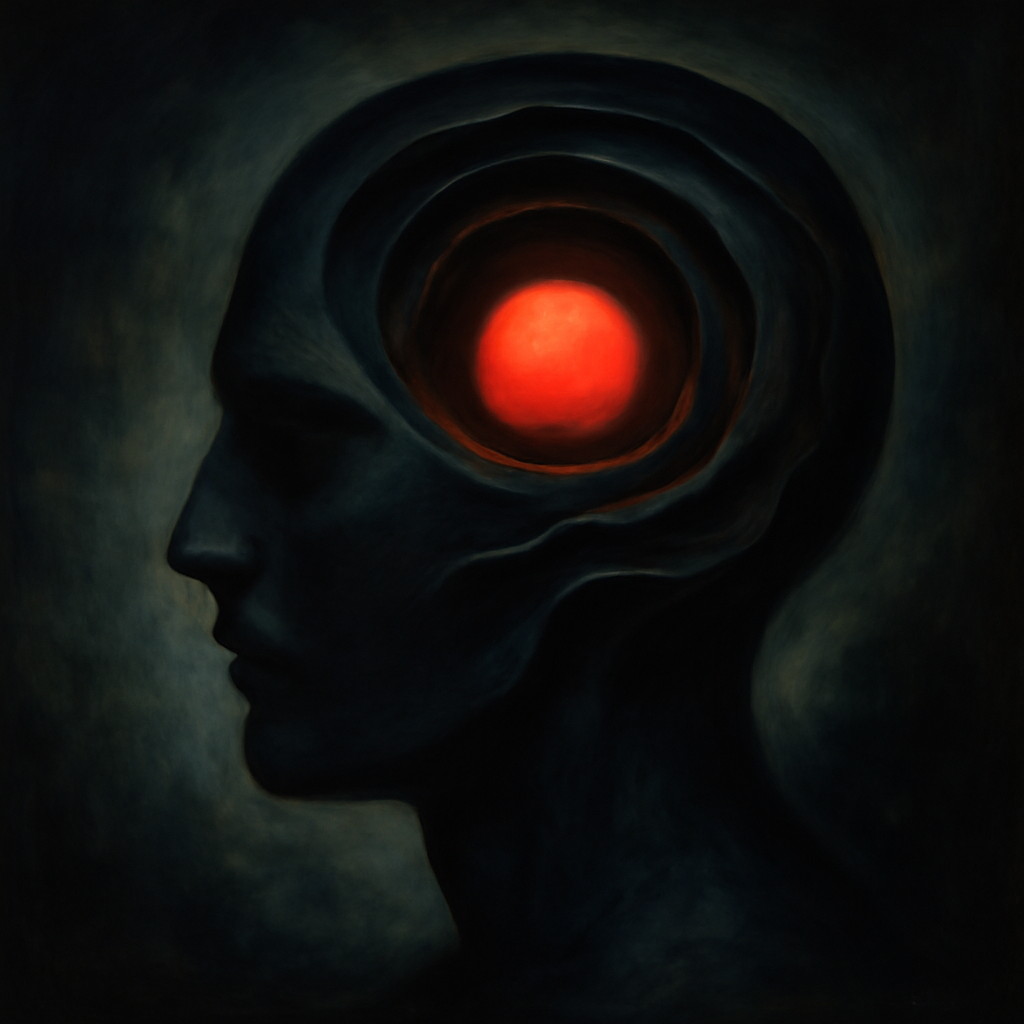
What is Consciousness? Exploring the Essence of Bewusstsein
Consciousness, or Bewusstsein in German, is one of the most profound and elusive phenomena of the human mind. It is the state of being aware—not just of the world around us, but also of ourselves as distinct individuals. It allows us to think, to feel, and to experience existence from a deeply personal perspective. This inner awareness is what separates humans from most other species and forms the core of our mental life.
Scientists and philosophers have long sought to understand how consciousness arises from the brain's complex networks. It is not confined to a single brain region but emerges from the interactions of many areas working together. Consciousness includes not only sensory perception but also self-reflection, memory, and decision-making. While still mysterious in many ways, recent research offers intriguing models, suggesting that consciousness is a dynamic process—an ongoing ignition of neuronal activity that broadcasts information across the brain, creating our rich inner world.
“Consciousness is not a single place in the brain but a dynamic dance of many regions working together to create awareness.”
Reflect
If consciousness arises from networked brain activity, could machines ever achieve a similar inner life?
3 sources·Established confidence·Investigated 16 Jul 2026(1 month ago)·Source-verified·Investigation may be outdated
Your next question, in
Visual Trail
See What is Consciousness? Exploring the Essence of Bewusstsein
A guided visual explanation assembled from QE artwork and sourced documentary images.
01 / 05
QE visual interpretation
Frame 01
What is Consciousness? Exploring the Essence of Bewusstsein
Consciousness (Bewusstsein) is our awareness of ourselves and the world, arising from complex brain activity.
Image provenance and limitation
Source: AI-generated visual interpretation
Creator: Question Everything
Limitation: This image explains or evokes the subject. It is not documentary evidence and should not be used to verify a factual claim.
Evidence
What do we know?
Verified claims with confidence scoring and cited sources.
1 of 4 findings need extra caution. Finding 4 rests on weaker sourcing than the other findings.
Living footnotes
Claims remain in the reading flow. Select a citation number to inspect the source behind it.
01
AcademicSupported
Consciousness is the ability to perceive one's own mental states and processes.
Bewusstsein, translated as consciousness, refers to the capacity to be aware of one’s thoughts, feelings, and sensations. This ability is what allows humans to experience a continuous sense of self and environment. It includes not only raw sensory input but also the awareness of these sensations as belonging to oneself. This core feature helps distinguish humans from most other animals, as it involves a high level of self-recognition and reflection.
02
AcademicSupported
Consciousness arises from complex neurophysiological processes distributed across multiple brain areas.
Modern neuroscience shows that consciousness does not reside in a single brain region. Instead, it emerges from the combined activity of many areas working together. About 30 different regions are involved in processing sensory information and integrating it into a unified experience. This distributed network creates what some call an 'inner eye'—the brain’s ability to observe itself and generate awareness.
03
AcademicSupported
Consciousness includes both awareness of the external world and self-awareness.
At its core, consciousness is the experience of being aware—not only of objects and events around us but also of ourselves as individuals. This dual quality means we perceive external stimuli while simultaneously recognizing our own thoughts and feelings. This self-awareness is fundamental to personal identity and decision-making.
04
AcademicNot confirmed
In psychology, consciousness is often divided into different states and levels, such as wakefulness and self-reflective awareness.
Consciousness is not a single uniform state. Instead, it varies in depth and clarity. We experience normal wakefulness, altered states during meditation or hypnosis, and deeper states like sleep or unconsciousness. Some psychological approaches also distinguish between basic awareness and higher levels of self-reflective thinking, which involve monitoring and directing one’s thoughts and actions.
The complete record below preserves every citation, confidence input and recorded limitation.
Read the full evidence record4 findings · citations · limitations
Evidence review4 findings3 openable sources
01
Finding 1 of 4Academic
1
0/1 verified
Consciousness is the ability to perceive one's own mental states and processes.
Bewusstsein, translated as consciousness, refers to the capacity to be aware of one’s thoughts, feelings, and sensations. This ability is what allows humans to experience a continuous sense of self and environment. It includes not only raw sensory input but also the awareness of these sensations as belonging to oneself. This core feature helps distinguish humans from most other animals, as it involves a high level of self-recognition and reflection.
Supportedmodel score 90%
One source, not peer-reviewed. Thinner than the score suggests.
REFERENCE
›View sources and limits— 1 citation, limits
Supporting passage
Bewusstsein, translated as consciousness, refers to the capacity to be aware of one’s thoughts, feelings, and sensations. This ability is what allows humans to experience a continuous sense of self and environment. It includes not only raw sensory input but also the awareness of these sensations as belonging to oneself. This core feature helps distinguish humans from most other animals, as it involves a high level of self-recognition and reflection.
Rests on a single source. No independent corroboration.
No peer-reviewed source among the citations.
The generator scored this 90%, which would read as “Established”. Its citations reach only “Supported”, so that is what is shown.
02
Finding 2 of 4Academic
1
0/1 verified
Consciousness arises from complex neurophysiological processes distributed across multiple brain areas.
Modern neuroscience shows that consciousness does not reside in a single brain region. Instead, it emerges from the combined activity of many areas working together. About 30 different regions are involved in processing sensory information and integrating it into a unified experience. This distributed network creates what some call an 'inner eye'—the brain’s ability to observe itself and generate awareness.
Supportedmodel score 95%
One source, not peer-reviewed. Thinner than the score suggests.
REFERENCE
›View sources and limits— 1 citation, limits
Supporting passage
Modern neuroscience shows that consciousness does not reside in a single brain region. Instead, it emerges from the combined activity of many areas working together. About 30 different regions are involved in processing sensory information and integrating it into a unified experience. This distributed network creates what some call an 'inner eye'—the brain’s ability to observe itself and generate awareness.
Rests on a single source. No independent corroboration.
No peer-reviewed source among the citations.
The generator scored this 95%, which would read as “Established”. Its citations reach only “Supported”, so that is what is shown.
03
Finding 3 of 4Academic
1
0/1 verified
Consciousness includes both awareness of the external world and self-awareness.
At its core, consciousness is the experience of being aware—not only of objects and events around us but also of ourselves as individuals. This dual quality means we perceive external stimuli while simultaneously recognizing our own thoughts and feelings. This self-awareness is fundamental to personal identity and decision-making.
Supportedmodel score 90%
One source, not peer-reviewed. Thinner than the score suggests.
REFERENCE
›View sources and limits— 1 citation, limits
Supporting passage
At its core, consciousness is the experience of being aware—not only of objects and events around us but also of ourselves as individuals. This dual quality means we perceive external stimuli while simultaneously recognizing our own thoughts and feelings. This self-awareness is fundamental to personal identity and decision-making.
Rests on a single source. No independent corroboration.
No peer-reviewed source among the citations.
The generator scored this 90%, which would read as “Established”. Its citations reach only “Supported”, so that is what is shown.
04
Finding 4 of 4AcademicNeeds caution
0
0/0 verified
In psychology, consciousness is often divided into different states and levels, such as wakefulness and self-reflective awareness.
Consciousness is not a single uniform state. Instead, it varies in depth and clarity. We experience normal wakefulness, altered states during meditation or hypnosis, and deeper states like sleep or unconsciousness. Some psychological approaches also distinguish between basic awareness and higher levels of self-reflective thinking, which involve monitoring and directing one’s thoughts and actions.
Not confirmedmodel score 30%
Scored as if sourced, but every citation failed verification.
NO SURVIVING CITATION
›View sources and limits— limits
Supporting passage
Consciousness is not a single uniform state. Instead, it varies in depth and clarity. We experience normal wakefulness, altered states during meditation or hypnosis, and deeper states like sleep or unconsciousness. Some psychological approaches also distinguish between basic awareness and higher levels of self-reflective thinking, which involve monitoring and directing one’s thoughts and actions.
Citations (0 of 1 survived verification)
Nothing openable. Every citation was removed by provenance validation.
What limits this
All 1 citation on this claim failed verification and were removed. Nothing openable supports it.
Interactive Exploration
Touch, drag, and discover
These visualizations respond to your curiosity. Interact to go deeper.
process flow
How Consciousness Emerges in the Brain
Sensory Input
Neural Processing
Ignition
Unified Awareness
spectrum
States of Consciousness Spectrum
UnconsciousFully Awake and Self-Aware
20%
Sleep
70%
Meditative Awareness
90%
Normal Wakefulness
100%
Self-Reflective Consciousness
relationship map
Key Concepts Connected to Consciousness
Mapping relationships…
Drag nodes to rearrange — tap for details
statistics card
Consciousness in Neuroscience Research
30+
Brain areas involved
Regions processing sensory info and awareness
1998
Publication year
Routledge Encyclopedia of Philosophy entry on consciousness
5
Common dictionary definitions
Reflecting the complexity of the term
Visual Gallery
Images & artifacts
Historical images, diagrams, and visual knowledge from Wikimedia Commons.
Perspectives
How is this interpreted?
Enter a viewpoint. Notice what it reveals, what it leaves out, and whether it changes the question for you.
The EmpiricistScientific viewpointLive tension
Scientists view consciousness as an emergent property of the brain’s complex networks. It results from the coordinated activity of neurons that broadcast information widely, allowing us to integrate sensory input, memories, and thoughts into a unified experience. Leading theories like the Global Workspace Theory propose that consciousness arises when information ignites widespread brain activity. This view is supported by brain imaging studies showing dynamic, large-scale interactions rather than a single 'seat' of consciousness.
What this lens notices
01No single brain center controls consciousness; it is distributed.
02Neuronal 'ignition' correlates with conscious perception.
Personal reflections and applications for your life.
Thought experimentSelf-Reflection
When have you felt most aware of your own thoughts or feelings?
Why it changes the question
Reflecting on moments of clear self-awareness can deepen your understanding of consciousness as a lived experience. Such moments reveal how consciousness shapes your perception and decisions.
Try this
Try a mindfulness exercise where you observe your thoughts and sensations without judgment for five minutes.
No AI help here — no suggestions, no autocomplete, nothing finishing your sentences. That is deliberate. Working out what you think is effortful, and the effort is the part that changes you: reasoning is trained like a muscle, and a muscle that is always carried gets weaker. Let something else do the thinking and you keep the answer but lose the capacity to have reached it.
Write your current position.
Not what the page says. What you think, having read it.0 words · Nothing written yet.
Sign in to leave a mark. Your draft is saved here in the meantime.