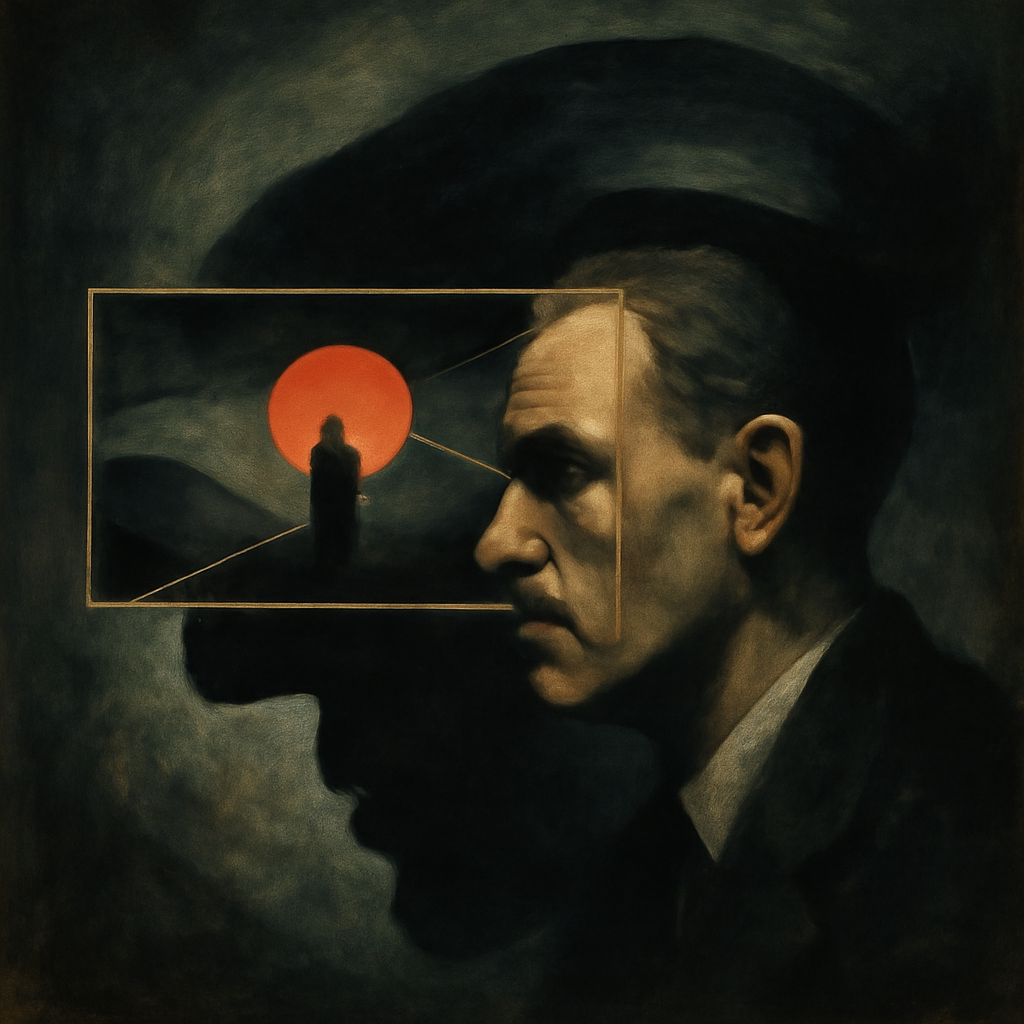
Remote Viewing: Exploring the Contours of a Controversial Psychic Phenomenon
Remote viewing refers to the claimed psychic ability to acquire information about distant or unseen targets via means beyond the known physical senses. Originating in the 1970s from parapsychological research at Stanford Research Institute, it was initially investigated with hopes of military and intelligence applications, most notably in the U.S. Stargate Project during the Cold War. Remote viewers purportedly describe locations, objects, or events separated by space and sometimes time, without prior knowledge or sensory input.
Despite decades of interest and some intriguing anecdotal accounts, remote viewing remains scientifically controversial, largely due to methodological shortcomings, lack of replicable evidence, and its classification as a pseudoscience by the mainstream scientific community. The phenomenon sits at the intersection of paranormal claims, consciousness studies, and intelligence history, raising profound questions about perception, cognition, and the limits of empirical verification. Today, remote viewing persists both as a subject of popular fascination and as a taught practice within certain esoteric and parapsychological communities, underscoring the tension between subjective experience and objective validation.
“The U.S. government once invested millions into remote viewing research, reflecting Cold War desperation, yet the phenomenon remains unproven by scientific standards.”
Reflect
If consciousness could indeed access distant or past events without sensory input, how would this reshape our understanding of reality, memory, and time?
Research·1 source·Preliminary confidence·Investigated 19 Jul 2026(2 months ago)·Grounded; verification trace not recorded·Investigation may be outdated
Your next question, in
Visual Trail
See Remote Viewing: Exploring the Contours of a Controversial Psychic Phenomenon
A guided visual explanation assembled from QE artwork and sourced documentary images.
01 / 05
QE visual interpretation
Frame 01
Remote Viewing: Exploring the Contours of a Controversial Psychic Phenomenon
Remote viewing is a disputed psychic ability to perceive distant or hidden targets without sensory input.
Image provenance and limitation
Source: AI-generated visual interpretation
Creator: Question Everything
Limitation: This image explains or evokes the subject. It is not documentary evidence and should not be used to verify a factual claim.
Evidence
What do we know?
Verified claims with confidence scoring and cited sources.
4 of 5 findings need extra caution. Finding 2, Finding 3, Finding 4, Finding 5 rest on weaker sourcing than the other findings.
Living footnotes
Claims remain in the reading flow. Select a citation number to inspect the source behind it.
01
HistoricalSupported
Remote viewing was coined as a term in 1971 by parapsychologists Russell Targ and Harold Puthoff at the Stanford Research Institute.
The term 'remote viewing' was introduced to differentiate this phenomenon from broader concepts like clairvoyance. It specifically refers to the ability to perceive details about a distant or unseen target without physical sensory input. The initial experiments involved controlled laboratory protocols where subjects attempted to describe hidden locations or objects. These foundational studies aimed to establish remote viewing as a scientific discipline distinct from general extrasensory perception (ESP).
02
HistoricalNot confirmed
The U.S. government sponsored a remote viewing research program called the Stargate Project from 1975 to 1995.
During the Cold War, the U.S. military and intelligence agencies invested approximately $20 million into the Stargate Project, which sought to harness psychic phenomena for espionage. Remote viewers were tasked with describing foreign military installations or events that were otherwise inaccessible. Despite some reports of occasional accurate descriptions, the program was ultimately terminated due to lack of consistent, actionable intelligence and methodological criticisms. Declassified documents have since revealed the extent and nature of these efforts, highlighting both the intrigue and skepticism surrounding remote viewing.
03
AcademicNot confirmed
Scientific consensus regards remote viewing as a pseudoscience due to lack of replicable evidence and methodological flaws in studies.
Despite decades of experimentation, remote viewing has not produced consistent, independently verifiable results under controlled conditions. Critics point to issues such as inadequate experimental controls, confirmation bias, and the inability to eliminate chance or fraud. The phenomenon's dependence on subjective reports and the challenge of blind testing have led mainstream science to classify it as pseudoscientific. Advocates argue for more rigorous protocols and open-minded study but acknowledge the absence of conclusive proof.
04
HistoricalNot confirmed
Remote viewing experiments historically suffered from poor controls and challenges in repeatability.
Many early remote viewing studies lacked strict experimental controls such as double-blind protocols, proper randomization, or adequate statistical rigor. This made the results vulnerable to biases, sensory leakage, or inadvertent cues. Attempts to replicate findings under more rigorous conditions often failed, undermining claims of psychic perception. Some proponents developed stricter blinding methods, but skepticism about the phenomenon's reliability remained widespread.
05
HistoricalNot confirmed
Remote viewing claims include perception of past events, a phenomenon sometimes called retrocognition.
Some remote viewers report accessing information not only spatially distant but also temporally remote, effectively 'viewing' events from the past. This aspect, known as retrocognition in parapsychology, suggests that consciousness might access information across time. Historical anecdotes, such as a remote viewer correctly describing long-gone structures or features, have been cited as examples. However, these claims are anecdotal and lack robust scientific substantiation.
The complete record below preserves every citation, confidence input and recorded limitation.
Read the full evidence record5 findings · citations · limitations
Evidence review5 findings1 openable sources
01
Finding 1 of 5Historical
0/1 verified
Remote viewing was coined as a term in 1971 by parapsychologists Russell Targ and Harold Puthoff at the Stanford Research Institute.
The term 'remote viewing' was introduced to differentiate this phenomenon from broader concepts like clairvoyance. It specifically refers to the ability to perceive details about a distant or unseen target without physical sensory input. The initial experiments involved controlled laboratory protocols where subjects attempted to describe hidden locations or objects. These foundational studies aimed to establish remote viewing as a scientific discipline distinct from general extrasensory perception (ESP).
Supportedmodel score 90%
One source, not peer-reviewed. Thinner than the score suggests.
REFERENCE
›View sources and limits— 1 citation, limits
Supporting passage
The term 'remote viewing' was introduced to differentiate this phenomenon from broader concepts like clairvoyance. It specifically refers to the ability to perceive details about a distant or unseen target without physical sensory input. The initial experiments involved controlled laboratory protocols where subjects attempted to describe hidden locations or objects. These foundational studies aimed to establish remote viewing as a scientific discipline distinct from general extrasensory perception (ESP).
Rests on a single source. No independent corroboration.
No peer-reviewed source among the citations.
The generator scored this 90%, which would read as “Established”. Its citations reach only “Supported”, so that is what is shown.
02
Finding 2 of 5HistoricalNeeds caution
0/0 verified
The U.S. government sponsored a remote viewing research program called the Stargate Project from 1975 to 1995.
During the Cold War, the U.S. military and intelligence agencies invested approximately $20 million into the Stargate Project, which sought to harness psychic phenomena for espionage. Remote viewers were tasked with describing foreign military installations or events that were otherwise inaccessible. Despite some reports of occasional accurate descriptions, the program was ultimately terminated due to lack of consistent, actionable intelligence and methodological criticisms. Declassified documents have since revealed the extent and nature of these efforts, highlighting both the intrigue and skepticism surrounding remote viewing.
Not confirmedmodel score 30%
Scored as if sourced, but every citation failed verification.
NO SURVIVING CITATION
›View sources and limits— limits
Supporting passage
During the Cold War, the U.S. military and intelligence agencies invested approximately $20 million into the Stargate Project, which sought to harness psychic phenomena for espionage. Remote viewers were tasked with describing foreign military installations or events that were otherwise inaccessible. Despite some reports of occasional accurate descriptions, the program was ultimately terminated due to lack of consistent, actionable intelligence and methodological criticisms. Declassified documents have since revealed the extent and nature of these efforts, highlighting both the intrigue and skepticism surrounding remote viewing.
Citations (0 of 1 survived verification)
Nothing openable. Every citation was removed by provenance validation.
What limits this
All 1 citation on this claim failed verification and were removed. Nothing openable supports it.
03
Finding 3 of 5AcademicNeeds caution
0
0/0 verified
Scientific consensus regards remote viewing as a pseudoscience due to lack of replicable evidence and methodological flaws in studies.
Despite decades of experimentation, remote viewing has not produced consistent, independently verifiable results under controlled conditions. Critics point to issues such as inadequate experimental controls, confirmation bias, and the inability to eliminate chance or fraud. The phenomenon's dependence on subjective reports and the challenge of blind testing have led mainstream science to classify it as pseudoscientific. Advocates argue for more rigorous protocols and open-minded study but acknowledge the absence of conclusive proof.
Not confirmedmodel score 30%
Scored as if sourced, but every citation failed verification.
NO SURVIVING CITATION
›View sources and limits— limits
Supporting passage
Despite decades of experimentation, remote viewing has not produced consistent, independently verifiable results under controlled conditions. Critics point to issues such as inadequate experimental controls, confirmation bias, and the inability to eliminate chance or fraud. The phenomenon's dependence on subjective reports and the challenge of blind testing have led mainstream science to classify it as pseudoscientific. Advocates argue for more rigorous protocols and open-minded study but acknowledge the absence of conclusive proof.
Citations (0 of 1 survived verification)
Nothing openable. Every citation was removed by provenance validation.
What limits this
All 1 citation on this claim failed verification and were removed. Nothing openable supports it.
04
Finding 4 of 5HistoricalNeeds caution
0/0 verified
Remote viewing experiments historically suffered from poor controls and challenges in repeatability.
Many early remote viewing studies lacked strict experimental controls such as double-blind protocols, proper randomization, or adequate statistical rigor. This made the results vulnerable to biases, sensory leakage, or inadvertent cues. Attempts to replicate findings under more rigorous conditions often failed, undermining claims of psychic perception. Some proponents developed stricter blinding methods, but skepticism about the phenomenon's reliability remained widespread.
Not confirmedmodel score 30%
Scored as if sourced, but every citation failed verification.
NO SURVIVING CITATION
›View sources and limits— limits
Supporting passage
Many early remote viewing studies lacked strict experimental controls such as double-blind protocols, proper randomization, or adequate statistical rigor. This made the results vulnerable to biases, sensory leakage, or inadvertent cues. Attempts to replicate findings under more rigorous conditions often failed, undermining claims of psychic perception. Some proponents developed stricter blinding methods, but skepticism about the phenomenon's reliability remained widespread.
Citations (0 of 1 survived verification)
Nothing openable. Every citation was removed by provenance validation.
What limits this
All 1 citation on this claim failed verification and were removed. Nothing openable supports it.
05
Finding 5 of 5HistoricalNeeds caution
0/0 verified
Remote viewing claims include perception of past events, a phenomenon sometimes called retrocognition.
Some remote viewers report accessing information not only spatially distant but also temporally remote, effectively 'viewing' events from the past. This aspect, known as retrocognition in parapsychology, suggests that consciousness might access information across time. Historical anecdotes, such as a remote viewer correctly describing long-gone structures or features, have been cited as examples. However, these claims are anecdotal and lack robust scientific substantiation.
Not confirmedmodel score 30%
Scored as if sourced, but every citation failed verification.
NO SURVIVING CITATION
›View sources and limits— limits
Supporting passage
Some remote viewers report accessing information not only spatially distant but also temporally remote, effectively 'viewing' events from the past. This aspect, known as retrocognition in parapsychology, suggests that consciousness might access information across time. Historical anecdotes, such as a remote viewer correctly describing long-gone structures or features, have been cited as examples. However, these claims are anecdotal and lack robust scientific substantiation.
Citations (0 of 1 survived verification)
Nothing openable. Every citation was removed by provenance validation.
What limits this
All 1 citation on this claim failed verification and were removed. Nothing openable supports it.
Interactive Exploration
Touch, drag, and discover
These visualizations respond to your curiosity. Interact to go deeper.
timeline
Key Milestones in Remote Viewing History
Loading timeline…
cause effect
Cold War Espionage and Remote Viewing Research
Causes — tap to reveal
Tap to reveal cause 1
Tap to reveal cause 2
↓
relationship map
Conceptual Connections Around Remote Viewing
Mapping relationships…
Drag nodes to rearrange — tap for details
statistics card
Scientific Assessment of Remote Viewing
1971
Year remote viewing term was coined
Origin of experimental research
$20 million
Approximate U.S. funding for Stargate Project
Government investment in remote viewing research
24 years
Duration of Stargate Project
Period of active government research
0%
Consensus scientific validation
Remote viewing lacks reproducible evidence
Visual Gallery
Images & artifacts
Historical images, diagrams, and visual knowledge from Wikimedia Commons.
Perspectives
How is this interpreted?
Enter a viewpoint. Notice what it reveals, what it leaves out, and whether it changes the question for you.
The EmpiricistScientific viewpointProvocation
The scientific community generally views remote viewing as a pseudoscience. This stance is based on the lack of reproducible evidence and methodological shortcomings in studies attempting to prove its validity. Controlled experiments frequently suffer from inadequate blinding, small sample sizes, and biases such as confirmation and hindsight effects. While some protocols have become more rigorous over time, no study has conclusively demonstrated that remote viewing operates beyond chance or known psychological mechanisms. Hence, it remains outside accepted scientific knowledge.
What this lens notices
01Failure to replicate experimental results under controlled conditions
02High susceptibility to cognitive biases and placebo effects
03Absence of a plausible mechanism consistent with neuroscience and physics
Application
Why does this matter to you?
Personal reflections and applications for your life.
Thought experimentPhilosophical
What would it mean for our understanding of reality if remote viewing were proven true beyond doubt?
Why it changes the question
Considering remote viewing invites questioning the limits of human perception and the nature of knowledge itself. It pushes us to reflect on whether consciousness might operate independently of time and space constraints, challenging the materialist worldview that dominates science.
Try this
Contemplate or journal about the implications of expanded consciousness and how it might affect your worldview.
Media
QE Smart Glass
Curated media selected for this investigation.
QE Glass
YOUTUBE
Remote Viewing Explained: How the Mind Sees Without Eyes
WatchMojo.com
Peek into the mysterious world of remote viewing, the claimed ability to perceive distant objects or locations without physical ...
QE Glass
YOUTUBE
Real-Life Psychic and Remote Viewer #1 for the CIA: Joe McMoneagle
Shawn Ryan Clips
Join this channel to get access to perks: https://www.youtube.com/channel/UCkoujZQZatbqy4KGcgjpVxQ/join Support the Shawn ...
QE Glass
PODCAST
Exploring Remote Viewing: Science, Skepticism, and the Paranormal
Science Vs
Podcast episode examining scientific criticism and cultural fascination with remote viewing.
Connected context
Connected entities
The people, places, concepts, and events that matter here.
Keep Going
Where this leads
Questions this investigation opens up — and what QE has already looked into.
No AI help here — no suggestions, no autocomplete, nothing finishing your sentences. That is deliberate. Working out what you think is effortful, and the effort is the part that changes you: reasoning is trained like a muscle, and a muscle that is always carried gets weaker. Let something else do the thinking and you keep the answer but lose the capacity to have reached it.
Write your current position.
Not what the page says. What you think, having read it.0 words · Nothing written yet.
Sign in to leave a mark. Your draft is saved here in the meantime.