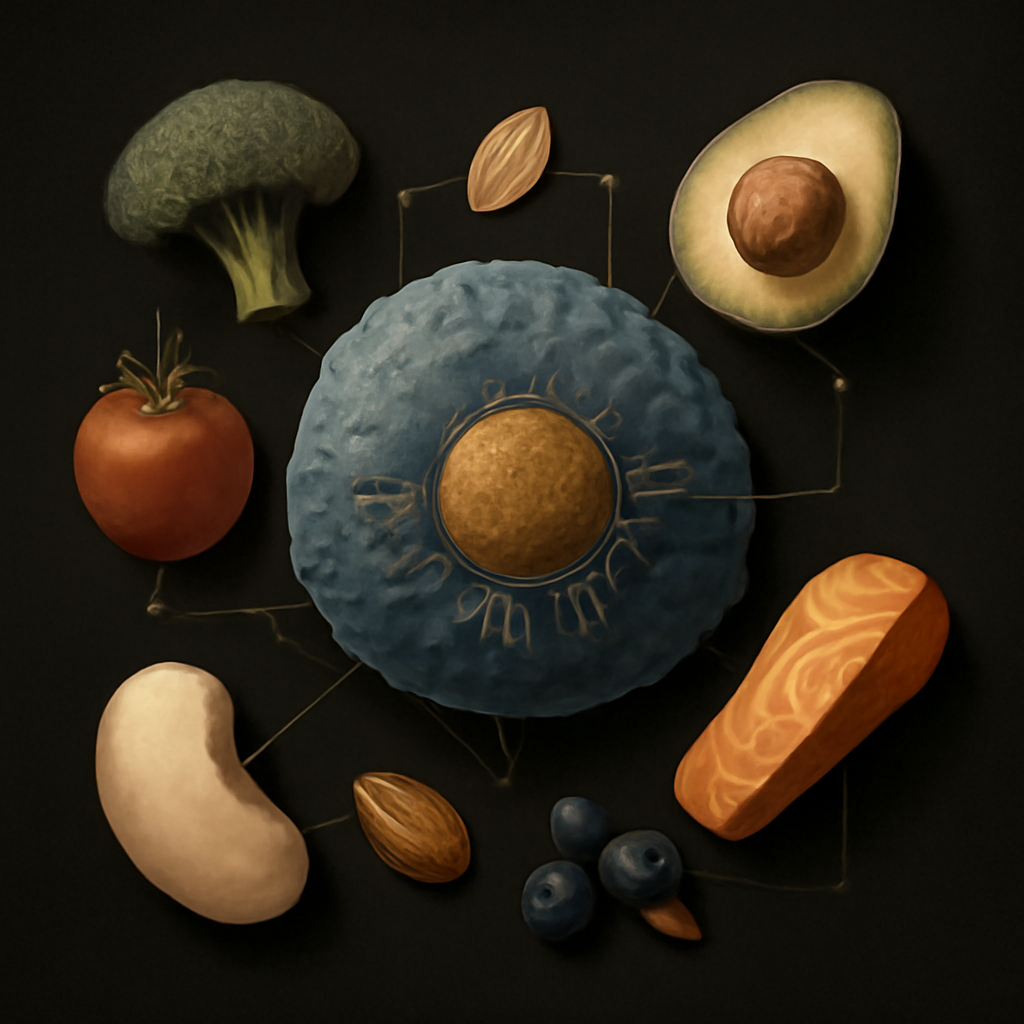
Unlocking the Cell: The Foods That Restore Insulin Sensitivity
Imagine your cells as locked vaults. Insulin is the vital key, carrying energy inside. But in millions of us, the locks have rusted. This is insulin resistance. Fortunately, nature provides its own locksmiths. Certain foods possess the quiet power to grease these cellular hinges, restoring the natural, elegant flow of energy throughout the human body.
Chief among these allies are fiber-rich champions like oats, barley, and legumes, which slow glucose absorption to a gentle trickle. Then come the deep-hued berries, packed with polyphenols that chemically coax cellular receptors open. Even humble kitchen staples like extra virgin olive oil, cinnamon, and apple cider vinegar play a role, improving how our muscles absorb sugar. By choosing these foods, we do not just eat. We tune our metabolic machinery back to its perfect, evolutionary rhythm.
✨
Wonder Moment
“A simple eight-week dietary shift incorporating lentils five times a week was shown to completely reverse insulin resistance in overweight adults.”
Reflect
If our cells can completely rewire their response to fuel in just two months, what other silent, miraculous transformations are waiting to be unlocked by our daily choices?
1 source·Developing confidence·Investigated 8 Aug 2026(18 days ago)·Source-verified·May need refresh
Your next question, in
Visual Trail
See Unlocking the Cell: The Foods That Restore Insulin Sensitivity
A guided visual explanation assembled from QE artwork and sourced documentary images.
01 / 02
QE visual interpretation
Frame 01
Unlocking the Cell: The Foods That Restore Insulin Sensitivity
Fiber-rich grains, polyphenol-packed berries, and healthy fats act like natural locksmiths, helping your cells absorb energy efficiently.
Image provenance and limitation
Source: AI-generated visual interpretation
Creator: Question Everything
Limitation: This image explains or evokes the subject. It is not documentary evidence and should not be used to verify a factual claim.
Evidence
What do we know?
Verified claims with confidence scoring and cited sources.
2 of 3 findings need extra caution. Finding 1, Finding 2 rest on weaker sourcing than the other findings.
Living footnotes
Claims remain in the reading flow. Select a citation number to inspect the source behind it.
01
ObservationalNot confirmed
Soluble fiber from foods like beans and oats feeds beneficial gut bacteria that help improve insulin sensitivity.
When we ingest soluble fiber, we are not just feeding ourselves. We are nourishing a vast, microscopic ecosystem within our gut. Friendly bacteria ferment these fibers, producing short-chain fatty acids that signal our cells to respond more efficiently to insulin. Studies confirm that foods rich in this fiber, such as oatmeal, flaxseeds, and broccoli, actively support this metabolic pathway, helping to stabilize blood sugar and prevent the sharp, exhausting spikes that wear our systems down.
02
ExperimentalNot confirmed
Dietary monounsaturated fats, notably found in avocados, enhance the body's sensitivity to insulin.
For decades, fat was the ultimate dietary villain. Yet, nature reveals a more nuanced truth. Monounsaturated fats, the rich oils abundant in avocados and extra-virgin olive oil, do not disrupt our metabolism. Instead, they soothe it. These healthy lipids help preserve the integrity of cell membranes, allowing insulin receptors to bind smoothly. Also, an avocado's exceptional fiber content slows digestion, ensuring that glucose enters the bloodstream not as a sudden flood, but as a gentle, manageable stream.
03
AcademicSupported
Adherence to a Mediterranean diet rich in olive oil and nuts improves insulin resistance in individuals with obesity.
The traditional Mediterranean diet serves as a masterclass in metabolic harmony. By prioritizing extra-virgin olive oil, nuts, and vibrant vegetables, this eating pattern floods the body with powerful antioxidants and polyphenols. These compounds, such as oleacein from olive oil, work at the cellular level to combat low-grade inflammation in fat tissue. When we reduce this quiet, internal friction, our cells can finally hear the chemical signals of insulin, unlocking their doors to receive glucose with ease.
The complete record below preserves every citation, confidence input and recorded limitation.
Read the full evidence record3 findings · citations · limitations
Evidence review3 findings1 openable sources
01
Finding 1 of 3ObservationalNeeds caution
0/0 verified
Soluble fiber from foods like beans and oats feeds beneficial gut bacteria that help improve insulin sensitivity.
When we ingest soluble fiber, we are not just feeding ourselves. We are nourishing a vast, microscopic ecosystem within our gut. Friendly bacteria ferment these fibers, producing short-chain fatty acids that signal our cells to respond more efficiently to insulin. Studies confirm that foods rich in this fiber, such as oatmeal, flaxseeds, and broccoli, actively support this metabolic pathway, helping to stabilize blood sugar and prevent the sharp, exhausting spikes that wear our systems down.
Not confirmedmodel score 30%
Scored as if sourced, but every citation failed verification.
NO SURVIVING CITATION
›View sources and limits— limits
Supporting passage
When we ingest soluble fiber, we are not just feeding ourselves. We are nourishing a vast, microscopic ecosystem within our gut. Friendly bacteria ferment these fibers, producing short-chain fatty acids that signal our cells to respond more efficiently to insulin. Studies confirm that foods rich in this fiber, such as oatmeal, flaxseeds, and broccoli, actively support this metabolic pathway, helping to stabilize blood sugar and prevent the sharp, exhausting spikes that wear our systems down.
Citations (0 of 1 survived verification)
Nothing openable. Every citation was removed by provenance validation.
What limits this
All 1 citation on this claim failed verification and were removed. Nothing openable supports it.
02
Finding 2 of 3ExperimentalNeeds caution
0
0/0 verified
Dietary monounsaturated fats, notably found in avocados, enhance the body's sensitivity to insulin.
For decades, fat was the ultimate dietary villain. Yet, nature reveals a more nuanced truth. Monounsaturated fats, the rich oils abundant in avocados and extra-virgin olive oil, do not disrupt our metabolism. Instead, they soothe it. These healthy lipids help preserve the integrity of cell membranes, allowing insulin receptors to bind smoothly. Also, an avocado's exceptional fiber content slows digestion, ensuring that glucose enters the bloodstream not as a sudden flood, but as a gentle, manageable stream.
Not confirmedmodel score 30%
Scored as if sourced, but every citation failed verification.
NO SURVIVING CITATION
›View sources and limits— limits
Supporting passage
For decades, fat was the ultimate dietary villain. Yet, nature reveals a more nuanced truth. Monounsaturated fats, the rich oils abundant in avocados and extra-virgin olive oil, do not disrupt our metabolism. Instead, they soothe it. These healthy lipids help preserve the integrity of cell membranes, allowing insulin receptors to bind smoothly. Also, an avocado's exceptional fiber content slows digestion, ensuring that glucose enters the bloodstream not as a sudden flood, but as a gentle, manageable stream.
Citations (0 of 1 survived verification)
Nothing openable. Every citation was removed by provenance validation.
What limits this
All 1 citation on this claim failed verification and were removed. Nothing openable supports it.
03
Finding 3 of 3Academic
1
0/1 verified
Adherence to a Mediterranean diet rich in olive oil and nuts improves insulin resistance in individuals with obesity.
The traditional Mediterranean diet serves as a masterclass in metabolic harmony. By prioritizing extra-virgin olive oil, nuts, and vibrant vegetables, this eating pattern floods the body with powerful antioxidants and polyphenols. These compounds, such as oleacein from olive oil, work at the cellular level to combat low-grade inflammation in fat tissue. When we reduce this quiet, internal friction, our cells can finally hear the chemical signals of insulin, unlocking their doors to receive glucose with ease.
Supportedmodel score 90%
One source, not peer-reviewed. Thinner than the score suggests.
REFERENCE
›View sources and limits— 1 citation, limits
Supporting passage
The traditional Mediterranean diet serves as a masterclass in metabolic harmony. By prioritizing extra-virgin olive oil, nuts, and vibrant vegetables, this eating pattern floods the body with powerful antioxidants and polyphenols. These compounds, such as oleacein from olive oil, work at the cellular level to combat low-grade inflammation in fat tissue. When we reduce this quiet, internal friction, our cells can finally hear the chemical signals of insulin, unlocking their doors to receive glucose with ease.
Rests on a single source. No independent corroboration.
No peer-reviewed source among the citations.
The generator scored this 90%, which would read as “Established”. Its citations reach only “Supported”, so that is what is shown.
Interactive Exploration
Touch, drag, and discover
These visualizations respond to your curiosity. Interact to go deeper.
comparison table
Glycemic Impact on Insulin Demands
High-Glycemic Foods
Low-Glycemic Foods
Digestion Speed
Rapid, causing sudden glucose surges
Slow and steady, releasing energy gradually
Pancreas Response
Forces a massive, sudden release of insulin
Requires a small, highly efficient trickle of insulin
Typical Examples
White bread, potatoes, regular sodas, and sweet pastries
Oats, quinoa, lentils, non-starchy vegetables, and berries
Tap any row to highlight and compare
statistics card
Metabolic Turning Points
5 times
Lentil consumption per week
A clinical study showed eating lentils this often for 8 weeks reversed insulin resistance in overweight adults.
35%
Increase in adiponectin
A key fat-derived hormone with anti-inflammatory properties that rose significantly after metabolic pathway activation.
Perspectives
How is this interpreted?
Enter a viewpoint. Notice what it reveals, what it leaves out, and whether it changes the question for you.
The EmpiricistScientific viewpointLive tension
Modern metabolic science views insulin sensitivity through a cellular lens, focusing heavily on mitochondrial health. When we overconsume energy, our cellular powerhouses—the mitochondria—become overwhelmed and dysfunctional, failing to process nutrients cleanly. This cellular congestion triggers the accumulation of toxic lipid intermediates like ceramides, which physically block the insulin signaling pathway. By eating nutrient-dense, low-glycemic foods, we relieve this mitochondrial stress, allowing these tiny engines to rebuild, fuse, and restore the cell's natural responsiveness to insulin.
What this lens notices
01Mitochondrial dysfunction directly correlates with insulin resistance
03Nutrient-dense diets promote mitochondrial biogenesis and repair
Application
Why does this matter to you?
Personal reflections and applications for your life.
Thought experimentPractical
How can you pair your carbohydrates to prevent blood sugar spikes?
Why it changes the question
Eating a carbohydrate alone, like an apple, causes a rapid rise in blood sugar. By pairing it with a healthy fat or protein, like peanut butter or almonds, you dramatically slow down digestion.
Try this
Next time you eat fruit or crackers, pair them with a handful of nuts, seeds, or a spoonful of unsweetened nut butter.
Media
QE Smart Glass
Curated media selected for this investigation.
QE Glass
YOUTUBE
7 Things That Boost Insulin Sensitivity or Reverse Insulin Resistance - Dr. Berg
Dr. Eric Berg DC
Get access to my FREE resources https://drbrg.co/4aNTnrY Just so you know, my full line of high-quality supplements is ...
QE Glass
YOUTUBE
Get rid of Insulin Resistance Once And For All
Dr. Boz [Annette Bosworth, MD]
What you need to know to LOWER your insulin levels and lose fat. --------------------- The Workbook: ...
QE Glass
YOUTUBE
If You Do This Your Insulin Resistance Will Be Normal In 2 Weeks!
SugarMD
Want more valuable information that I don't post here? Sign up to my newsletter and get PREMIUM knowledge as well as a FREE ...
QE Glass
YOUTUBE
How To Reverse Insulin Resistance? – Dr.Berg
Dr. Eric Berg DC
Get access to my FREE resources https://drbrg.co/3XszZxT Just so you know, my full line of high-quality supplements is ...
QE Glass
YOUTUBE
20 Ways To Reduce Insulin Resistance For Good (Doctor Explains)
Doctor Alex
Pre-diabetes and type 2 diabetes are usually the end-stage label. The real disease process is insulin resistance. It can be present ...
QE Glass
YOUTUBE
7 Insulin Resistance Diet Tips
Cleveland Clinic
For more information about insulin resistance, please visit https://cle.clinic/3ETWG47 What you eat matters. You may be able to ...
QE Glass
YOUTUBE
How to Prevent or Reverse Insulin Resistance
Nourished by Science
In this video, we discuss what insulin resistance is, how to measure whether and why we are insulin resistant, and how to reverse ...
QE Glass
PODCAST
The Truth About Insulin Resistance
ZOE Science and Nutrition
A deep dive with metabolic researchers exploring why different people respond uniquely to the same carbohydrate sources.
Keep Going
Where this leads
Questions this investigation opens up — and what QE has already looked into.
No AI help here — no suggestions, no autocomplete, nothing finishing your sentences. That is deliberate. Working out what you think is effortful, and the effort is the part that changes you: reasoning is trained like a muscle, and a muscle that is always carried gets weaker. Let something else do the thinking and you keep the answer but lose the capacity to have reached it.
Write your current position.
Not what the page says. What you think, having read it.0 words · Nothing written yet.
Sign in to leave a mark. Your draft is saved here in the meantime.