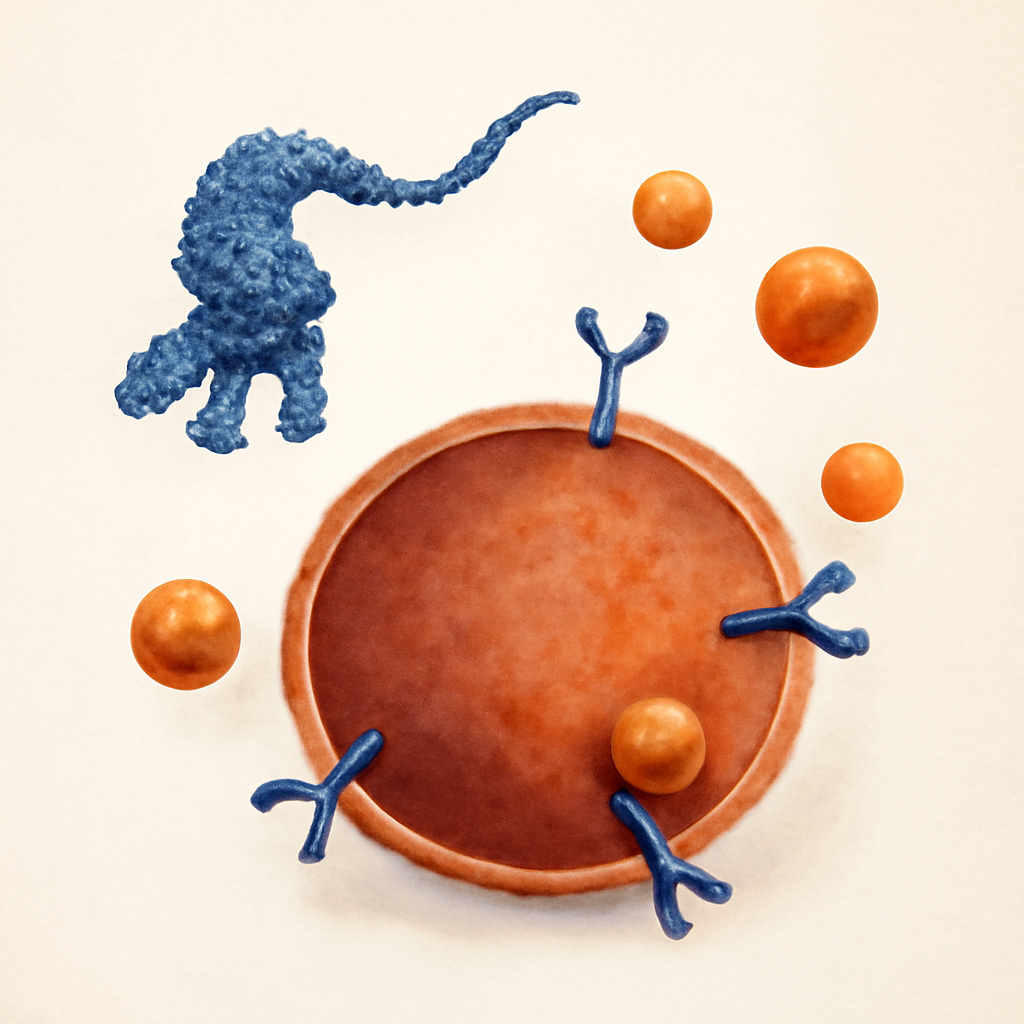
Insulin is a hormone produced by the pancreas, essential for regulating blood sugar levels. It acts like a key, unlocking cells so glucose can enter and provide energy. Without enough insulin, or when the body can't use it properly, glucose builds up in the blood, leading to diabetes.
Diabetes comes in two main forms: Type 1, where the body stops making insulin, and Type 2, where cells resist insulin's effects. Both disrupt the delicate balance of blood sugar, causing serious health risks. Understanding insulin’s role helps us grasp why managing diabetes is crucial for health and survival.
✨
Wonder Moment
“Insulin is the key hormone that controls blood sugar, and its failure is at the heart of diabetes.”
Reflect
If insulin is the body's sugar gatekeeper, how might new therapies unlock better control for millions living with diabetes?
4 sources·Developing confidence·Investigated 28 Aug 2026(today)·Source-verified
Your next question, in
Visual Trail
See Insulin and Diabetes: The Vital Connection
A guided visual explanation assembled from QE artwork and sourced documentary images.
01 / 03
QE visual interpretation
Frame 01
Insulin and Diabetes: The Vital Connection
Insulin controls blood sugar, and problems with it cause diabetes.
Image provenance and limitation
Source: AI-generated visual interpretation
Creator: Question Everything
Limitation: This image explains or evokes the subject. It is not documentary evidence and should not be used to verify a factual claim.
Evidence
What do we know?
Verified claims with confidence scoring and cited sources.
4 of 5 findings need extra caution. Finding 1, Finding 2, Finding 4, Finding 5 rest on weaker sourcing than the other findings.
Living footnotes
Claims remain in the reading flow. Select a citation number to inspect the source behind it.
01
AcademicMixed evidence
Insulin regulates blood sugar by allowing cells to absorb glucose for energy or storage.
Insulin acts like a key that opens cells to glucose from the bloodstream. Without insulin, or when cells resist insulin's effect, glucose accumulates in the blood, leading to high blood sugar levels. This disruption is the defining feature of diabetes and causes many of its symptoms and complications.
02
AcademicNot confirmed
Type 1 diabetes results from the body’s inability to produce insulin due to immune system attack on pancreatic cells.
In Type 1 diabetes, the immune system mistakenly destroys the insulin-producing beta cells in the pancreas. This leaves the body with little to no insulin, making blood sugar control impossible without insulin injections or pumps. This form often begins in childhood or adolescence but can appear at any age.
03
AcademicWell supported
Type 2 diabetes develops when cells become resistant to insulin’s effects, often linked to obesity and chronic inflammation.
Type 2 diabetes arises when the body's cells do not respond well to insulin, a state called insulin resistance. Over time, the pancreas cannot keep up with insulin demand, causing blood sugar levels to rise. Chronic inflammation in fat tissue plays a key role in this resistance, connecting obesity to diabetes risk.
04
StatisticalMixed evidence
Carbohydrate counting can improve blood sugar control for people with Type 1 diabetes.
Teaching people with Type 1 diabetes to count carbohydrates helps them calculate the right insulin dose to match their meals. Studies show that those who use carbohydrate counting have better long-term blood sugar levels, indicating improved diabetes management and fewer complications.
05
StatisticalMixed evidence
Poor knowledge and attitudes about insulin therapy hinder optimal blood sugar control in Type 2 diabetes patients.
Many patients with Type 2 diabetes struggle with insulin therapy due to gaps in understanding how to properly administer and manage insulin. This lack of knowledge correlates with higher HbA1c levels, a measure of poor blood sugar control, highlighting the need for patient-centered education to improve outcomes.
The complete record below preserves every citation, confidence input and recorded limitation.
Read the full evidence record5 findings · citations · limitations
Evidence review5 findings5 openable sources
01
Finding 1 of 5AcademicNeeds caution
1
0/1 verified
Insulin regulates blood sugar by allowing cells to absorb glucose for energy or storage.
Insulin acts like a key that opens cells to glucose from the bloodstream. Without insulin, or when cells resist insulin's effect, glucose accumulates in the blood, leading to high blood sugar levels. This disruption is the defining feature of diabetes and causes many of its symptoms and complications.
Mixed evidencemodel score 55%
Verification was mixed across 1 source.
REPORTING
›View sources and limits— 1 citation, limits
Supporting passage
Insulin acts like a key that opens cells to glucose from the bloodstream. Without insulin, or when cells resist insulin's effect, glucose accumulates in the blood, leading to high blood sugar levels. This disruption is the defining feature of diabetes and causes many of its symptoms and complications.
1 of 2 citations failed verification and are not shown.
Rests on a single source. No independent corroboration.
No peer-reviewed source among the citations.
Verification was mixed — some citations supported the claim and some did not.
02
Finding 2 of 5AcademicNeeds caution
0
0/0 verified
Type 1 diabetes results from the body’s inability to produce insulin due to immune system attack on pancreatic cells.
In Type 1 diabetes, the immune system mistakenly destroys the insulin-producing beta cells in the pancreas. This leaves the body with little to no insulin, making blood sugar control impossible without insulin injections or pumps. This form often begins in childhood or adolescence but can appear at any age.
Not confirmedmodel score 30%
Scored as if sourced, but every citation failed verification.
NO SURVIVING CITATION
›View sources and limits— limits
Supporting passage
In Type 1 diabetes, the immune system mistakenly destroys the insulin-producing beta cells in the pancreas. This leaves the body with little to no insulin, making blood sugar control impossible without insulin injections or pumps. This form often begins in childhood or adolescence but can appear at any age.
Citations (0 of 2 survived verification)
Nothing openable. Every citation was removed by provenance validation.
What limits this
All 2 citations on this claim failed verification and were removed. Nothing openable supports it.
03
Finding 3 of 5Academic
2
0/2 verified
Type 2 diabetes develops when cells become resistant to insulin’s effects, often linked to obesity and chronic inflammation.
Type 2 diabetes arises when the body's cells do not respond well to insulin, a state called insulin resistance. Over time, the pancreas cannot keep up with insulin demand, causing blood sugar levels to rise. Chronic inflammation in fat tissue plays a key role in this resistance, connecting obesity to diabetes risk.
Well supportedmodel score 90%
2 sources agree, 1 peer-reviewed.
PRIMARY STUDYREPORTING
›View sources and limits— 2 citations, limits
Supporting passage
Type 2 diabetes arises when the body's cells do not respond well to insulin, a state called insulin resistance. Over time, the pancreas cannot keep up with insulin demand, causing blood sugar levels to rise. Chronic inflammation in fat tissue plays a key role in this resistance, connecting obesity to diabetes risk.
Nothing further is recorded. QE stores no methodology field, so absence here is not a clean bill of health.
04
Finding 4 of 5StatisticalNeeds caution
0/1 verified
Carbohydrate counting can improve blood sugar control for people with Type 1 diabetes.
Teaching people with Type 1 diabetes to count carbohydrates helps them calculate the right insulin dose to match their meals. Studies show that those who use carbohydrate counting have better long-term blood sugar levels, indicating improved diabetes management and fewer complications.
Mixed evidencemodel score 55%
Verification was mixed across 1 source.
PRIMARY STUDY
›View sources and limits— 1 citation, limits
Supporting passage
Teaching people with Type 1 diabetes to count carbohydrates helps them calculate the right insulin dose to match their meals. Studies show that those who use carbohydrate counting have better long-term blood sugar levels, indicating improved diabetes management and fewer complications.
1 of 2 citations failed verification and are not shown.
Rests on a single source. No independent corroboration.
Verification was mixed — some citations supported the claim and some did not.
05
Finding 5 of 5StatisticalNeeds caution
0/1 verified
Poor knowledge and attitudes about insulin therapy hinder optimal blood sugar control in Type 2 diabetes patients.
Many patients with Type 2 diabetes struggle with insulin therapy due to gaps in understanding how to properly administer and manage insulin. This lack of knowledge correlates with higher HbA1c levels, a measure of poor blood sugar control, highlighting the need for patient-centered education to improve outcomes.
Mixed evidencemodel score 55%
Verification was mixed across 1 source.
PRIMARY STUDY
›View sources and limits— 1 citation, limits
Supporting passage
Many patients with Type 2 diabetes struggle with insulin therapy due to gaps in understanding how to properly administer and manage insulin. This lack of knowledge correlates with higher HbA1c levels, a measure of poor blood sugar control, highlighting the need for patient-centered education to improve outcomes.
These visualizations respond to your curiosity. Interact to go deeper.
process flow
How Insulin Controls Blood Sugar
Glucose enters the bloodstream after eating
Pancreas releases insulin
Cells absorb glucose
Blood sugar levels drop
statistics card
Key Diabetes Facts
422 million
People worldwide with diabetes
A global epidemic affecting health and economies.
8.1%
Average HbA1c in patients with poor insulin therapy knowledge
Higher blood sugar linked to inadequate education on insulin.
22%
Weight loss maintained with tirzepatide in obesity trials
New drugs targeting obesity-related insulin resistance show promise.
Visual Gallery
Images & artifacts
Historical images, diagrams, and visual knowledge from Wikimedia Commons.
Perspectives
How is this interpreted?
Enter a viewpoint. Notice what it reveals, what it leaves out, and whether it changes the question for you.
The EmpiricistScientific viewpointLive tension
The scientific view sees diabetes as a disease of insulin dysfunction: either the body stops producing it or cells stop responding to it. Research has uncovered that inflammation in fat tissue contributes to insulin resistance, linking metabolic health to immune responses. This has opened new paths for treatments targeting inflammation and insulin pathways to better control or prevent diabetes.
What this lens notices
01Inflammation in adipose tissue worsens insulin resistance
02Insulin resistance leads to prediabetes and type 2 diabetes
03Targeting inflammation may improve metabolic outcomes
Application
Why does this matter to you?
Personal reflections and applications for your life.
Thought experimentPractical
How can you apply carbohydrate counting to improve blood sugar control?
Why it changes the question
Understanding how to match insulin doses to carbohydrate intake empowers people with diabetes to keep blood sugar in a healthier range. This practice reduces complications and improves quality of life.
Try this
Try tracking your meals’ carb content and noting blood sugar changes to learn how your body reacts.
Media
QE Smart Glass
Curated media selected for this investigation.
QE Glass
YOUTUBE
Pharmacology for Nursing - Diabetic drugs Insulin Types & Memory Tricks (Peak, Onset, & Duration) RN
SimpleNursing
Insulin management is a critical skill for nurses and a major focus on the NCLEX. Mastering insulin types, timing, and safety ...
QE Glass
YOUTUBE
Diabetes Drugs (Oral Antihyperglycemics & Insulins)
Dirty Medicine
SUPPORT/JOIN THE CHANNEL: https://www.youtube.com/channel/UCZaDAUF7UEcRXIFvGZu3O9Q/join My goal is to reduce ...
QE Glass
YOUTUBE
Insulin - Pharmacology - Endocrine System | @LevelUpRN
Level Up RN
Cathy discusses the onset, peak, and duration of different types of insulin: - Rapid-acting: Insulin lispro (Humalog), insulin aspart ...
No AI help here — no suggestions, no autocomplete, nothing finishing your sentences. That is deliberate. Working out what you think is effortful, and the effort is the part that changes you: reasoning is trained like a muscle, and a muscle that is always carried gets weaker. Let something else do the thinking and you keep the answer but lose the capacity to have reached it.
Write your current position.
Not what the page says. What you think, having read it.0 words · Nothing written yet.
Sign in to leave a mark. Your draft is saved here in the meantime.