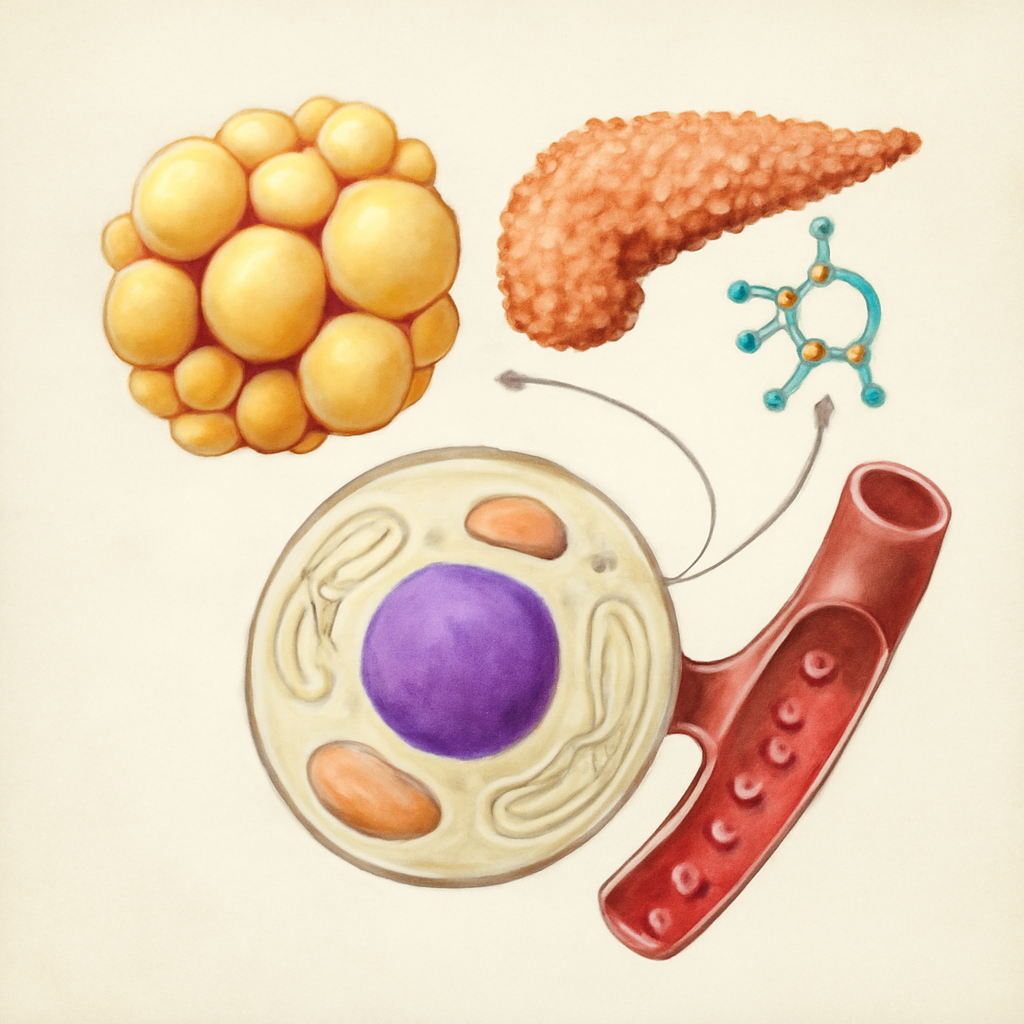
Insulin Resistance: Causes, Mechanisms, and Systemic Effects
Insulin resistance is a complex metabolic condition where cells become less responsive to insulin, a hormone crucial for regulating blood glucose. At its core, insulin resistance arises from a constellation of genetic predispositions, chronic inflammation, lipid imbalances, and environmental factors such as diet and sedentary behavior. Molecularly, it involves disruptions in insulin receptor signaling pathways, including impaired phosphorylation cascades and altered GLUT4 transporter dynamics. These defects undermine glucose uptake, forcing pancreatic beta cells to compensate by producing more insulin, which can eventually lead to beta cell exhaustion.
The systemic impact of insulin resistance extends far beyond glucose metabolism. It is a central feature of metabolic syndrome, tightly linked with hypertension, dyslipidemia, and pro-inflammatory states that increase cardiovascular risk. Additionally, insulin resistance affects lipid metabolism, promotes ectopic fat deposition, and alters cellular energy homeostasis across muscle, liver, and adipose tissues. Understanding the nuanced interplay between genetic factors, lifestyle, and molecular mechanisms is crucial for developing targeted interventions to mitigate its progression and associated complications.
✨
Wonder Moment
“Insulin resistance often begins as a subtle disruption in liver metabolism triggered by excess sugar, especially fructose, which can drive systemic metabolic dysfunction despite normal insulin signaling pathways.”
Reflect
How might rethinking insulin resistance as a liver-driven phenomenon reshape strategies for preventing and treating metabolic diseases?
4 sources·Developing confidence·Investigated 28 Aug 2026(today)·Source-verified
Your next question, in
Visual Trail
See Insulin Resistance: Causes, Mechanisms, and Systemic Effects
A guided visual explanation assembled from QE artwork and sourced documentary images.
01 / 02
QE visual interpretation
Frame 01
Insulin Resistance: Causes, Mechanisms, and Systemic Effects
Insulin resistance occurs when cells respond poorly to insulin, disrupting blood sugar control and leading to metabolic disease.
Image provenance and limitation
Source: AI-generated visual interpretation
Creator: Question Everything
Limitation: This image explains or evokes the subject. It is not documentary evidence and should not be used to verify a factual claim.
Evidence
What do we know?
Verified claims with confidence scoring and cited sources.
3 of 4 findings need extra caution. Finding 1, Finding 2, Finding 3 rest on weaker sourcing than the other findings.
Living footnotes
Claims remain in the reading flow. Select a citation number to inspect the source behind it.
01
AcademicMixed evidence
Excessive fructose consumption activates the liver protein ChREBP, which drives glucose production independently of insulin signaling, initiating insulin resistance.
Research identifies carbohydrate-responsive element-binding protein (ChREBP) in the liver as a key molecular factor activated by high fructose intake. This activation causes continued glucose production despite insulin presence, leading to elevated blood glucose and insulin levels. This mechanism challenges the traditional view that insulin resistance stems solely from defective insulin receptor signaling.
02
AcademicNot confirmed
Obesity causes insulin resistance primarily through adipose tissue inflammation and altered lipid metabolism.
Obesity leads to an expanded adipose mass infiltrated by inflammatory immune cells, especially macrophages, which secrete cytokines disrupting insulin receptor signaling. This inflammatory state impairs glucose uptake in muscle and fat tissue. Simultaneously, dysregulated lipid metabolism increases circulating free fatty acids, further exacerbating insulin resistance and contributing to metabolic syndrome.
03
AcademicMixed evidence
Genetic factors and environmental influences like diet and physical inactivity combine to impair insulin receptor function and post-receptor signaling.
Insulin resistance involves complex interactions between inherited mutations affecting insulin receptor quantity or function and lifestyle factors such as high sugar diets and sedentary behavior. These factors cause defects at multiple points including decreased receptor binding, reduced tyrosine kinase activation, and impaired glucose transporter translocation, collectively diminishing cellular insulin sensitivity.
04
AcademicWell supported
Insulin resistance is closely linked to a cluster of systemic conditions including hypertension, dyslipidemia, fatty liver, and polycystic ovary syndrome.
Beyond elevated blood glucose, insulin resistance disrupts multiple metabolic pathways, contributing to hypertension and abnormal blood lipids, collectively termed metabolic syndrome. It also promotes fat accumulation in the liver (nonalcoholic fatty liver disease) and hormonal imbalances causing polycystic ovary syndrome in women, highlighting its broad systemic impact.
The complete record below preserves every citation, confidence input and recorded limitation.
Read the full evidence record4 findings · citations · limitations
Evidence review4 findings4 openable sources
01
Finding 1 of 4AcademicNeeds caution
1
0/1 verified
Excessive fructose consumption activates the liver protein ChREBP, which drives glucose production independently of insulin signaling, initiating insulin resistance.
Research identifies carbohydrate-responsive element-binding protein (ChREBP) in the liver as a key molecular factor activated by high fructose intake. This activation causes continued glucose production despite insulin presence, leading to elevated blood glucose and insulin levels. This mechanism challenges the traditional view that insulin resistance stems solely from defective insulin receptor signaling.
Mixed evidencemodel score 55%
Verification was mixed across 1 source.
REFERENCE
›View sources and limits— 1 citation, limits
Supporting passage
Research identifies carbohydrate-responsive element-binding protein (ChREBP) in the liver as a key molecular factor activated by high fructose intake. This activation causes continued glucose production despite insulin presence, leading to elevated blood glucose and insulin levels. This mechanism challenges the traditional view that insulin resistance stems solely from defective insulin receptor signaling.
1 of 2 citations failed verification and are not shown.
Rests on a single source. No independent corroboration.
No peer-reviewed source among the citations.
Verification was mixed — some citations supported the claim and some did not.
02
Finding 2 of 4AcademicNeeds caution
0
0/0 verified
Obesity causes insulin resistance primarily through adipose tissue inflammation and altered lipid metabolism.
Obesity leads to an expanded adipose mass infiltrated by inflammatory immune cells, especially macrophages, which secrete cytokines disrupting insulin receptor signaling. This inflammatory state impairs glucose uptake in muscle and fat tissue. Simultaneously, dysregulated lipid metabolism increases circulating free fatty acids, further exacerbating insulin resistance and contributing to metabolic syndrome.
Not confirmedmodel score 30%
Scored as if sourced, but every citation failed verification.
NO SURVIVING CITATION
›View sources and limits— limits
Supporting passage
Obesity leads to an expanded adipose mass infiltrated by inflammatory immune cells, especially macrophages, which secrete cytokines disrupting insulin receptor signaling. This inflammatory state impairs glucose uptake in muscle and fat tissue. Simultaneously, dysregulated lipid metabolism increases circulating free fatty acids, further exacerbating insulin resistance and contributing to metabolic syndrome.
Citations (0 of 2 survived verification)
Nothing openable. Every citation was removed by provenance validation.
What limits this
All 2 citations on this claim failed verification and were removed. Nothing openable supports it.
03
Finding 3 of 4AcademicNeeds caution
1
0/1 verified
Genetic factors and environmental influences like diet and physical inactivity combine to impair insulin receptor function and post-receptor signaling.
Insulin resistance involves complex interactions between inherited mutations affecting insulin receptor quantity or function and lifestyle factors such as high sugar diets and sedentary behavior. These factors cause defects at multiple points including decreased receptor binding, reduced tyrosine kinase activation, and impaired glucose transporter translocation, collectively diminishing cellular insulin sensitivity.
Mixed evidencemodel score 55%
Verification was mixed across 1 source.
REFERENCE
›View sources and limits— 1 citation, limits
Supporting passage
Insulin resistance involves complex interactions between inherited mutations affecting insulin receptor quantity or function and lifestyle factors such as high sugar diets and sedentary behavior. These factors cause defects at multiple points including decreased receptor binding, reduced tyrosine kinase activation, and impaired glucose transporter translocation, collectively diminishing cellular insulin sensitivity.
1 of 2 citations failed verification and are not shown.
Rests on a single source. No independent corroboration.
No peer-reviewed source among the citations.
Verification was mixed — some citations supported the claim and some did not.
04
Finding 4 of 4Academic
2
0/2 verified
Insulin resistance is closely linked to a cluster of systemic conditions including hypertension, dyslipidemia, fatty liver, and polycystic ovary syndrome.
Beyond elevated blood glucose, insulin resistance disrupts multiple metabolic pathways, contributing to hypertension and abnormal blood lipids, collectively termed metabolic syndrome. It also promotes fat accumulation in the liver (nonalcoholic fatty liver disease) and hormonal imbalances causing polycystic ovary syndrome in women, highlighting its broad systemic impact.
Well supportedmodel score 90%
2 sources agree, 1 peer-reviewed.
REFERENCEPRIMARY STUDY
›View sources and limits— 2 citations, limits
Supporting passage
Beyond elevated blood glucose, insulin resistance disrupts multiple metabolic pathways, contributing to hypertension and abnormal blood lipids, collectively termed metabolic syndrome. It also promotes fat accumulation in the liver (nonalcoholic fatty liver disease) and hormonal imbalances causing polycystic ovary syndrome in women, highlighting its broad systemic impact.
Adults in Europe with fatty liver disease associated with insulin resistance
Highlights insulin resistance's role in liver pathology.
Perspectives
How is this interpreted?
Enter a viewpoint. Notice what it reveals, what it leaves out, and whether it changes the question for you.
The EmpiricistScientific viewpointLive tension
The prevailing scientific view situates insulin resistance as a multifactorial condition initiated by molecular disruptions in insulin signaling pathways, primarily driven by obesity-induced inflammation, lipid toxicity, and lifestyle factors. This paradigm emphasizes targeted metabolic and pharmacological interventions to restore insulin sensitivity and prevent progression to diabetes and cardiovascular disease.
What this lens notices
01Molecular studies show inflammation impairs insulin receptor signaling.
02Lipid accumulation in muscle and liver cells disrupts glucose metabolism.
03Lifestyle modifications improve insulin sensitivity in clinical trials.
Application
Why does this matter to you?
Personal reflections and applications for your life.
Thought experimentSelf-Reflection
How do your daily dietary choices potentially influence insulin sensitivity beyond calorie count alone?
Why it changes the question
Understanding that specific nutrients like fructose can disrupt liver metabolism helps personalize nutrition beyond simple calorie control. This awareness empowers more mindful food selections to support metabolic health.
Try this
Track your intake of added sugars and processed carbs for one week and reflect on how these may affect your energy and wellbeing.
Media
QE Smart Glass
Curated media selected for this investigation.
QE Glass
YOUTUBE
Insulin Resistance: Treatment & How it Affects Weight Loss | Mass General Brigham
Mass General Brigham
What is insulin resistance? Discover the causes of insulin resistance, commonly associated conditions such as fatty liver and type ...
QE Glass
YOUTUBE
Mayo Clinic Explains Insulin Resistance
Mayo Clinic
Learning about insulin resistance, or prediabetes, can be intimidating. Eleanna De Filippis, M.D., Ph.D., an endocrinologist at ...
QE Glass
YOUTUBE
337- Insulin resistance masterclass: The full body impact of metabolic dysfunction, treatment & more
Peter Attia MD
Ralph DeFronzo is a distinguished diabetes researcher & clinician whose groundbreaking work on insulin resistance has ...
QE Glass
YOUTUBE
How To Reverse Insulin Resistance? – Dr.Berg
Dr. Eric Berg DC
Get access to my FREE resources https://drbrg.co/3XszZxT Just so you know, my full line of high-quality supplements is ...
QE Glass
YOUTUBE
How to Reverse Insulin Resistance
Dr. Boz [Annette Bosworth, MD]
Insulin Resistance - it's the number one cause of stubborn belly fat. Reversing it takes special rules, find out in this video.
QE Glass
YOUTUBE
What Is Insulin? – Dr. Berg
Dr. Eric Berg DC
Support Healthy Insulin Levels: https://bit.ly/2FMmbXF What is insulin? Watch this video to find out. Just so you know, my full line ...
QE Glass
YOUTUBE
What is Insulin Resistance? – CrashCourse Biology #30
CrashCourse
A clear, engaging explanation of insulin resistance and how it fits into broader metabolic health.
QE Glass
PODCAST
Radiolab: The Trouble with Sugar
Radiolab
Investigates sugar's role in metabolic diseases with scientific depth and storytelling.
Keep Going
Where this leads
Questions this investigation opens up — and what QE has already looked into.
No AI help here — no suggestions, no autocomplete, nothing finishing your sentences. That is deliberate. Working out what you think is effortful, and the effort is the part that changes you: reasoning is trained like a muscle, and a muscle that is always carried gets weaker. Let something else do the thinking and you keep the answer but lose the capacity to have reached it.
Write your current position.
Not what the page says. What you think, having read it.0 words · Nothing written yet.
Sign in to leave a mark. Your draft is saved here in the meantime.