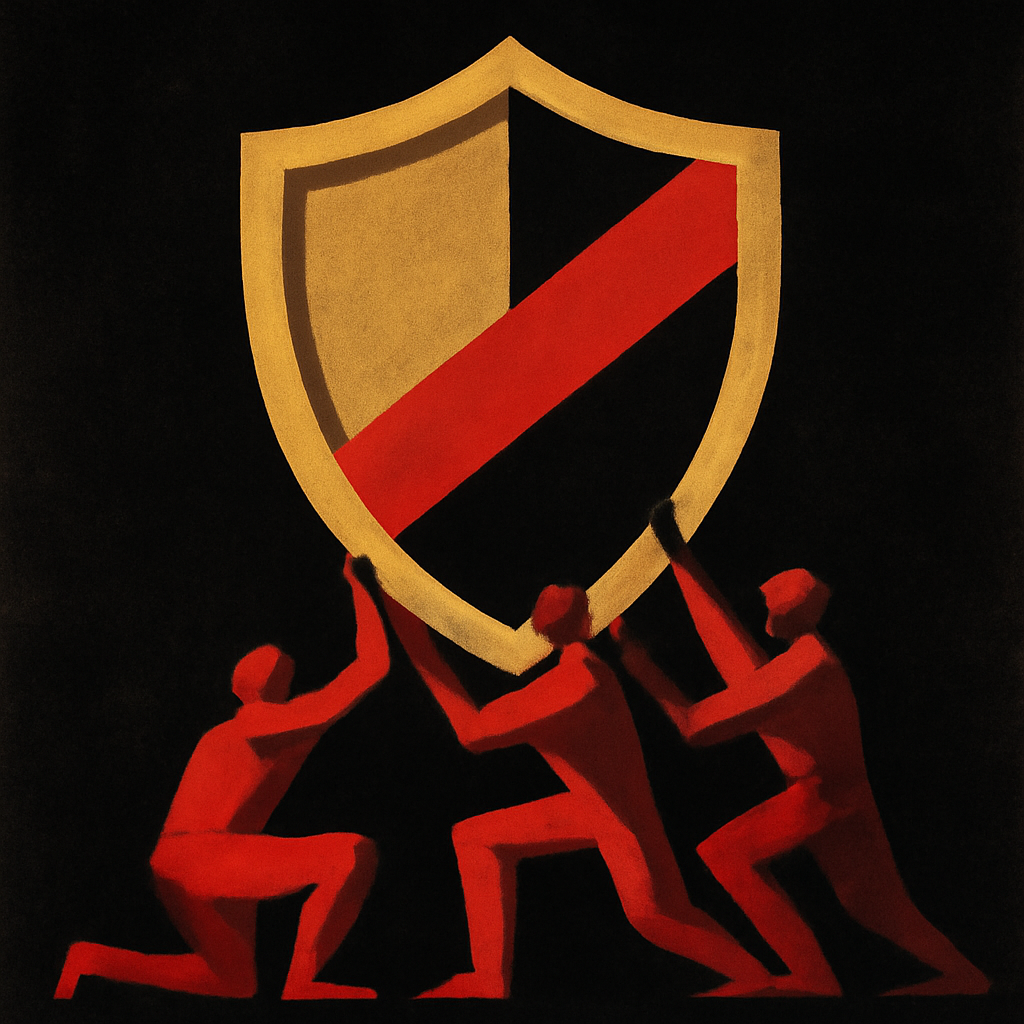
The Three Pillars of R2P: Humanity's Shared Shield
In 2005, the world agreed on a promise. Never again. The Responsibility to Protect, or R2P, emerged not as a weapon of war, but as a shield for the innocent. It fundamentally reshaped the concept of state sovereignty. No longer could rulers hide behind national borders while committing atrocities against their own people. At its heart lie three distinct pillars, forming a sequence of defense.
The first pillar places the duty squarely on the home state to protect its population. The second pillar offers a helping hand, committing the international community to assist struggling nations before crisis strikes. But it is the third pillar that carries the teeth. When a state turns on its own, or fails entirely, the global community must step in. Even with force. It is a fragile, vital pact to keep our worst impulses in check.
✨
Wonder Moment
“In 2005, the largest gathering of world leaders in human history unanimously agreed that state sovereignty is not an absolute right, but a solemn responsibility to protect human life.”
Reflect
If sovereignty is a duty rather than an absolute right, how might future generations redefine the borders of national independence?
2 sources·Established confidence·Investigated 11 Aug 2026(16 days ago)·Source-verified·May need refresh
Your next question, in
Visual Trail
See The Three Pillars of R2P: Humanity's Shared Shield
A guided visual explanation assembled from QE artwork and sourced documentary images.
01 / 02
QE visual interpretation
Frame 01
The Three Pillars of R2P: Humanity's Shared Shield
A global commitment to prevent mass atrocities, built on state duty, international assistance, and timely collective action.
Image provenance and limitation
Source: AI-generated visual interpretation
Creator: Question Everything
Limitation: This image explains or evokes the subject. It is not documentary evidence and should not be used to verify a factual claim.
Evidence
What do we know?
Verified claims with confidence scoring and cited sources.
1 of 3 findings need extra caution. Finding 3 rests on weaker sourcing than the other findings.
Living footnotes
Claims remain in the reading flow. Select a citation number to inspect the source behind it.
01
HistoricalSupported
The Responsibility to Protect doctrine was born from the global failure to prevent mass atrocities in Rwanda and the Balkans during the 1990s.
During the 1994 Rwandan genocide and the 1995 Srebrenica massacre, the international community stood by, paralyzed. These horrific events shook the global conscience. In response, UN Secretary-General Kofi Annan helped establish the International Commission on Intervention and State Sovereignty. Their work redefined sovereignty itself, shifting it from an absolute right of rulers to a conditional duty to protect citizens from atrocities.
02
ObservationalSupported
The first pillar of the doctrine places the primary responsibility of protecting populations directly on the home state.
Under Pillar One, every individual state has the absolute duty to protect its people from four specific crimes: genocide, war crimes, ethnic cleansing, and crimes against humanity. This means governments must actively prevent these atrocities and their incitement within their borders. Sovereignty is no longer a shield for tyrants. Instead, it is a pledge of safety. A state's first and most sacred contract is to keep its own citizens alive.
03
ObservationalNot confirmed
The third pillar permits international military intervention only as a last resort and with UN Security Council authorization.
When a state manifestly fails to protect its citizens, Pillar Three comes into play. The international community must step in with collective action. This can range from peaceful diplomacy and economic sanctions to military force. However, force is strictly a last resort. It requires explicit authorization from the UN Security Council under Chapter VII. This delicate rule balances the urge to save lives with the need to prevent lawless invasions.
The complete record below preserves every citation, confidence input and recorded limitation.
Read the full evidence record3 findings · citations · limitations
Evidence review3 findings2 openable sources
01
Finding 1 of 3Historical
2024
1 dated source
The Responsibility to Protect doctrine was born from the global failure to prevent mass atrocities in Rwanda and the Balkans during the 1990s.
During the 1994 Rwandan genocide and the 1995 Srebrenica massacre, the international community stood by, paralyzed. These horrific events shook the global conscience. In response, UN Secretary-General Kofi Annan helped establish the International Commission on Intervention and State Sovereignty. Their work redefined sovereignty itself, shifting it from an absolute right of rulers to a conditional duty to protect citizens from atrocities.
Supportedmodel score 95%
One source, not peer-reviewed. Thinner than the score suggests.
REFERENCE
›View sources and limits— 1 citation, limits
Supporting passage
During the 1994 Rwandan genocide and the 1995 Srebrenica massacre, the international community stood by, paralyzed. These horrific events shook the global conscience. In response, UN Secretary-General Kofi Annan helped establish the International Commission on Intervention and State Sovereignty. Their work redefined sovereignty itself, shifting it from an absolute right of rulers to a conditional duty to protect citizens from atrocities.
Rests on a single source. No independent corroboration.
No peer-reviewed source among the citations.
The generator scored this 95%, which would read as “Established”. Its citations reach only “Supported”, so that is what is shown.
02
Finding 2 of 3Observational
0/1 verified
The first pillar of the doctrine places the primary responsibility of protecting populations directly on the home state.
Under Pillar One, every individual state has the absolute duty to protect its people from four specific crimes: genocide, war crimes, ethnic cleansing, and crimes against humanity. This means governments must actively prevent these atrocities and their incitement within their borders. Sovereignty is no longer a shield for tyrants. Instead, it is a pledge of safety. A state's first and most sacred contract is to keep its own citizens alive.
Supportedmodel score 100%
One source, not peer-reviewed. Thinner than the score suggests.
REFERENCE
›View sources and limits— 1 citation, limits
Supporting passage
Under Pillar One, every individual state has the absolute duty to protect its people from four specific crimes: genocide, war crimes, ethnic cleansing, and crimes against humanity. This means governments must actively prevent these atrocities and their incitement within their borders. Sovereignty is no longer a shield for tyrants. Instead, it is a pledge of safety. A state's first and most sacred contract is to keep its own citizens alive.
Rests on a single source. No independent corroboration.
No peer-reviewed source among the citations.
The generator scored this 100%, which would read as “Established”. Its citations reach only “Supported”, so that is what is shown.
03
Finding 3 of 3ObservationalNeeds caution
0/0 verified
The third pillar permits international military intervention only as a last resort and with UN Security Council authorization.
When a state manifestly fails to protect its citizens, Pillar Three comes into play. The international community must step in with collective action. This can range from peaceful diplomacy and economic sanctions to military force. However, force is strictly a last resort. It requires explicit authorization from the UN Security Council under Chapter VII. This delicate rule balances the urge to save lives with the need to prevent lawless invasions.
Not confirmedmodel score 30%
Scored as if sourced, but every citation failed verification.
NO SURVIVING CITATION
›View sources and limits— limits
Supporting passage
When a state manifestly fails to protect its citizens, Pillar Three comes into play. The international community must step in with collective action. This can range from peaceful diplomacy and economic sanctions to military force. However, force is strictly a last resort. It requires explicit authorization from the UN Security Council under Chapter VII. This delicate rule balances the urge to save lives with the need to prevent lawless invasions.
Citations (0 of 1 survived verification)
Nothing openable. Every citation was removed by provenance validation.
What limits this
All 1 citation on this claim failed verification and were removed. Nothing openable supports it.
Interactive Exploration
Touch, drag, and discover
These visualizations respond to your curiosity. Interact to go deeper.
process flow
The Three Pillars of R2P
Pillar I: State Responsibility
Pillar II: International Assistance
Pillar III: Collective Action
statistics card
R2P Scope and Adoption
4
Specific Mass Atrocities
R2P applies strictly to genocide, war crimes, ethnic cleansing, and crimes against humanity.
2005
Year of Unanimous Adoption
Endorsed by world leaders at the United Nations World Summit to ensure 'never again' becomes reality.
Perspectives
How is this interpreted?
Enter a viewpoint. Notice what it reveals, what it leaves out, and whether it changes the question for you.
The EmpiricistScientific viewpointLive tension
Systemic political scientists view R2P as a vital evolutionary step in international law. It transitions the global order from Westphalian sovereignty, which protected states, to human security, which protects individuals. By creating a standardized framework of risk analysis, R2P helps international bodies spot the early warning signs of mass violence before the first shots are fired.
What this lens notices
01Redefines state sovereignty as a conditional duty
02Establishes institutional early warning systems
03Reduces unilateral military actions under human rights pretexts
Application
Why does this matter to you?
Personal reflections and applications for your life.
Thought experimentSelf-Reflection
When do you have a responsibility to step into someone else's conflict?
Why it changes the question
Just as nations balance sovereignty and intervention, we face similar boundaries in our daily relationships. Deciding when to offer unsolicited help or intervene in a friend's crisis requires a delicate balance of respect and care.
Try this
Observe a minor conflict today and practice identifying the boundary between helpful assistance and intrusive overreach.
Media
QE Smart Glass
Curated media selected for this investigation.
QE Glass
YOUTUBE
How is power divided in the United States government? - Belinda Stutzman
TED-Ed
View full lesson: http://ed.ted.com/lessons/how-is-power-divided-in-the-united-states-government-belinda-stutzman Article II of the ...
QE Glass
YOUTUBE
Political Ideology: Crash Course Government and Politics #35
CrashCourse
So today Craig is going to look at political ideology in America. We're going to focus on liberals and conservatives and talk about ...
QE Glass
YOUTUBE
The Responsibility to Protect Doctrine in Foreign Policy
Noah Zerbe
Join us in this engaging lecture as we delve into the concept of the Responsibility to Protect (R2P) doctrine in international law ...
QE Glass
YOUTUBE
What Is The Responsibility To Protect (R2P) Doctrine? - We Are Liberal
We Are Liberal
What Is The Responsibility To Protect (R2P) Doctrine? In this informative video, we will discuss the Responsibility to Protect (R2P) ...
QE Glass
YOUTUBE
The prohibition of the use of force (part 2)| IntlLaw Academy's lectures with professor James
IntlLaw
Hello, welcome to IntlLaw, In this lecture, Professor James continues our examination of the prohibition of the use of force in ...
QE Glass
YOUTUBE
A Moral Responsability to act #R2P
House of Atwooki Ngemero
The Responsibility to Protect (R2P) doctrine, unanimously adopted by the UN General Assembly at the 2005 World Summit, was ...
QE Glass
YOUTUBE
What is the responsibility to protect (R2P)?
Oxford Martin School
Speakers Professor Jennifer Welsh, Co-Director, Oxford Institute for Ethics, Law and Armed Conflict Further Information Is it the ...
QE Glass
PODCAST
The Dilemma of R2P
The Red Line
An in-depth audio exploration of the practical challenges and geopolitical tensions surrounding military intervention.
Connected context
Connected entities
The people, places, concepts, and events that matter here.
Keep Going
Where this leads
Questions this investigation opens up — and what QE has already looked into.
No AI help here — no suggestions, no autocomplete, nothing finishing your sentences. That is deliberate. Working out what you think is effortful, and the effort is the part that changes you: reasoning is trained like a muscle, and a muscle that is always carried gets weaker. Let something else do the thinking and you keep the answer but lose the capacity to have reached it.
Write your current position.
Not what the page says. What you think, having read it.0 words · Nothing written yet.
Sign in to leave a mark. Your draft is saved here in the meantime.