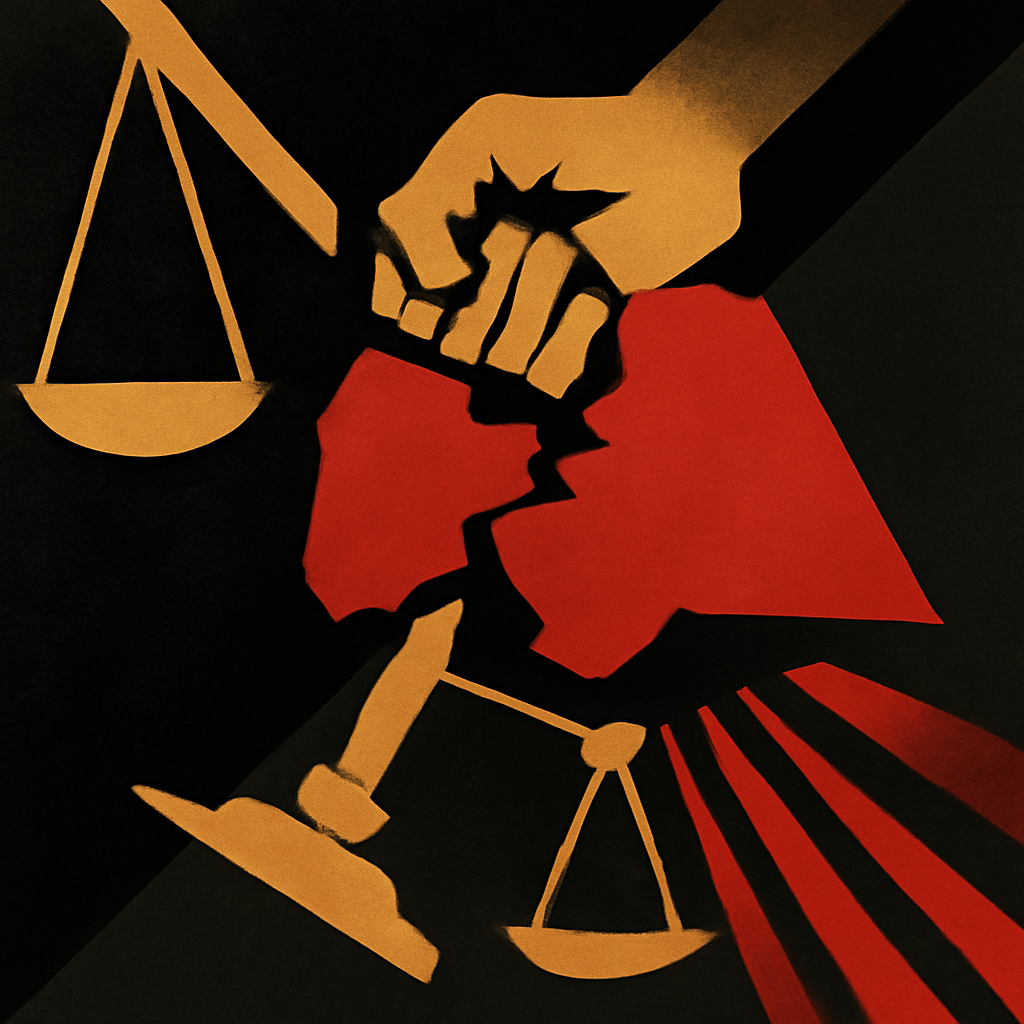
The Fracture of Sovereignty: How Libya Redefined Global Intervention
In 2011, a historic shift shook the foundations of international law. For decades, a nation’s borders were sacred, shielded by the absolute rule of state sovereignty. But as violence flared in Libya, the United Nations invoked a radical new doctrine: the Responsibility to Protect. Known as R2P, this principle declared that if a state fails to protect its own citizens, the global community must step in. It was a high-water mark for humanitarian intervention.
The triumph was short-lived. What began as a mission to protect civilians quickly evolved into regime change, ending in the chaotic collapse of the Libyan state. The aftermath sent shockwaves through global diplomacy. Nations like Russia and China felt betrayed, viewing R2P as a Trojan horse for Western agendas. Today, the Libyan precedent stands as a cautionary tale. It effectively froze the evolution of humanitarian law, making collective action in future crises nearly impossible.
✨
Wonder Moment
“The 2011 intervention in Libya marked the first time the United Nations Security Council authorized military force against a functioning, recognized government solely to protect its own citizens.”
Reflect
If a state's right to rule depends entirely on how it treats its people, does traditional national sovereignty still exist, or have we entered an era of global oversight?
2 sources·Established confidence·Investigated 10 Aug 2026(16 days ago)·Source-verified·May need refresh
Your next question, in
Visual Trail
See The Fracture of Sovereignty: How Libya Redefined Global Intervention
A guided visual explanation assembled from QE artwork and sourced documentary images.
01 / 05
QE visual interpretation
Frame 01
The Fracture of Sovereignty: How Libya Redefined Global Intervention
The 2011 intervention in Libya tested the 'Responsibility to Protect' doctrine, ultimately paralyzing future UN efforts to stop humanitarian crises.
Image provenance and limitation
Source: AI-generated visual interpretation
Creator: Question Everything
Limitation: This image explains or evokes the subject. It is not documentary evidence and should not be used to verify a factual claim.
Evidence
What do we know?
Verified claims with confidence scoring and cited sources.
1 of 3 findings need extra caution. Finding 2 rests on weaker sourcing than the other findings.
Living footnotes
Claims remain in the reading flow. Select a citation number to inspect the source behind it.
01
HistoricalSupported
United Nations Security Council Resolution 1973 marked the first time the UN authorized military force for human protection against a functioning, recognized government.
On March 17, 2011, the Security Council passed Resolution 1973. It was a watershed moment. For the first time, the international community bypassed a state's sovereign immunity to protect its citizens from its own government. The resolution authorized "all necessary measures" to shield civilians. This shifted the global norm. Sovereignty was no longer an absolute shield. Instead, it became a conditional responsibility.
02
HistoricalNot confirmed
The 2011 intervention in Libya was the first operational use of the Responsibility to Protect (R2P) doctrine to authorize military action.
Before Libya, the Responsibility to Protect—or R2P—was mostly a noble idea. It lived in political speeches. But the threat of a massacre in Benghazi changed everything. By invoking R2P to justify military action, the UN Security Council turned a moral concept into a concrete legal precedent. It proved that the international community could, and would, intervene when a state failed its primary duty to protect its own people.
03
ObservationalSupported
The aftermath of the Libyan intervention exposed a gap in international law regarding post-conflict reconstruction and state stabilization.
NATO's air campaign successfully removed Muammar Gaddafi, but it left a dangerous power vacuum. International law provided clear rules for starting an intervention, but almost no framework for rebuilding. Without a post-conflict plan, Libya descended into a decade of civil war and state fragility. The intervention revealed a tragic truth: international law is highly effective at dismantling a regime, but remarkably ill-equipped to put a broken nation back together.
The complete record below preserves every citation, confidence input and recorded limitation.
Read the full evidence record3 findings · citations · limitations
Evidence review3 findings2 openable sources
01
Finding 1 of 3Historical
2011
1 dated source
United Nations Security Council Resolution 1973 marked the first time the UN authorized military force for human protection against a functioning, recognized government.
On March 17, 2011, the Security Council passed Resolution 1973. It was a watershed moment. For the first time, the international community bypassed a state's sovereign immunity to protect its citizens from its own government. The resolution authorized "all necessary measures" to shield civilians. This shifted the global norm. Sovereignty was no longer an absolute shield. Instead, it became a conditional responsibility.
Supportedmodel score 95%
A single peer-reviewed source. No independent corroboration.
PRIMARY STUDY
›View sources and limits— 1 citation, limits
Supporting passage
On March 17, 2011, the Security Council passed Resolution 1973. It was a watershed moment. For the first time, the international community bypassed a state's sovereign immunity to protect its citizens from its own government. The resolution authorized "all necessary measures" to shield civilians. This shifted the global norm. Sovereignty was no longer an absolute shield. Instead, it became a conditional responsibility.
Rests on a single source. No independent corroboration.
The generator scored this 95%, which would read as “Established”. Its citations reach only “Supported”, so that is what is shown.
02
Finding 2 of 3HistoricalNeeds caution
0/0 verified
The 2011 intervention in Libya was the first operational use of the Responsibility to Protect (R2P) doctrine to authorize military action.
Before Libya, the Responsibility to Protect—or R2P—was mostly a noble idea. It lived in political speeches. But the threat of a massacre in Benghazi changed everything. By invoking R2P to justify military action, the UN Security Council turned a moral concept into a concrete legal precedent. It proved that the international community could, and would, intervene when a state failed its primary duty to protect its own people.
Not confirmedmodel score 30%
Scored as if sourced, but every citation failed verification.
NO SURVIVING CITATION
›View sources and limits— limits
Supporting passage
Before Libya, the Responsibility to Protect—or R2P—was mostly a noble idea. It lived in political speeches. But the threat of a massacre in Benghazi changed everything. By invoking R2P to justify military action, the UN Security Council turned a moral concept into a concrete legal precedent. It proved that the international community could, and would, intervene when a state failed its primary duty to protect its own people.
Citations (0 of 1 survived verification)
Nothing openable. Every citation was removed by provenance validation.
What limits this
All 1 citation on this claim failed verification and were removed. Nothing openable supports it.
03
Finding 3 of 3Observational
0/1 verified
The aftermath of the Libyan intervention exposed a gap in international law regarding post-conflict reconstruction and state stabilization.
NATO's air campaign successfully removed Muammar Gaddafi, but it left a dangerous power vacuum. International law provided clear rules for starting an intervention, but almost no framework for rebuilding. Without a post-conflict plan, Libya descended into a decade of civil war and state fragility. The intervention revealed a tragic truth: international law is highly effective at dismantling a regime, but remarkably ill-equipped to put a broken nation back together.
Supportedmodel score 90%
One source, not peer-reviewed. Thinner than the score suggests.
REFERENCE
›View sources and limits— 1 citation, limits
Supporting passage
NATO's air campaign successfully removed Muammar Gaddafi, but it left a dangerous power vacuum. International law provided clear rules for starting an intervention, but almost no framework for rebuilding. Without a post-conflict plan, Libya descended into a decade of civil war and state fragility. The intervention revealed a tragic truth: international law is highly effective at dismantling a regime, but remarkably ill-equipped to put a broken nation back together.
Rests on a single source. No independent corroboration.
No peer-reviewed source among the citations.
The generator scored this 90%, which would read as “Established”. Its citations reach only “Supported”, so that is what is shown.
Interactive Exploration
Touch, drag, and discover
These visualizations respond to your curiosity. Interact to go deeper.
timeline
The Escalation to Intervention
Loading timeline…
spectrum
The Spectrum of National Sovereignty
Absolute Westphalian SovereigntyConditional Global Responsibility
15%
Non-Intervention Principle
40%
Traditional UN Charter
75%
Responsibility to Protect (R2P)
95%
Universal Jurisdiction
Visual Gallery
Images & artifacts
Historical images, diagrams, and visual knowledge from Wikimedia Commons.
Perspectives
How is this interpreted?
Enter a viewpoint. Notice what it reveals, what it leaves out, and whether it changes the question for you.
The EmpiricistScientific viewpointProvocation
International legal scholars view the Libya intervention as a profound shift from the Westphalian model of absolute state sovereignty. Sovereignty is no longer seen as an unconditional right. Instead, it is a conditional responsibility. If a state attacks its own people, it forfeits its sovereign immunity. This creates a new legal reality where human rights can supersede national borders, transforming how we define the state.
What this lens notices
01Sovereignty is redefined as a responsibility, not an absolute right.
02Human rights violations can justify external military intervention.
03The UN Security Council gains a stronger mandate for civilian protection.
Application
Why does this matter to you?
Personal reflections and applications for your life.
Thought experimentPhilosophical
How do you balance immediate help with long-term consequences?
Why it changes the question
The Libya intervention shows that doing the right thing in the moment can lead to unforeseen disasters later. It forces us to think about our own lives and decisions.
Try this
When faced with a crisis, map out the secondary and tertiary consequences of your proposed solution before acting.
Media
QE Smart Glass
Curated media selected for this investigation.
QE Glass
YOUTUBE
Panel on International Intervention in Libya Part 1 (Don Rothwell & Gideon Boas)
Castan Centre Video Archive
Expert panelists explored the legal and political issues surrounding the intervention in Libya. Panelists Professor Donald R ...
QE Glass
YOUTUBE
Libya 2011 Reassessing the International Intervention Source
War Studies KCL
Ian Martin reassesses the international intervention in Libya in 2011. Key questions he explores are: Was the intervention justified ...
QE Glass
YOUTUBE
R2P in Libya, why not in Syria?
War and Peace Talk
"The problem with R2P is that people misunderstand that it is actually a legitimate concept, that it is supported by international law.
QE Glass
YOUTUBE
R2P for Regime Change?
Carnegie Council for Ethics in International Affairs
Ambassador Herman Schaper addresses the critique that "Responsibility to Protect" was used in Libya simply to bring about ...
QE Glass
YOUTUBE
Roméo Dallaire: A Failure to Implement R2P in Libya
Carnegie Council for Ethics in International Affairs
Roméo A. Dallaire, humanitarian and retired Canadian Army lieutenant-general, says that NATO's intervention in Libya led to the ...
QE Glass
YOUTUBE
Does UN Charter Allow Libyan No-Fly Zone?
The Real News Network
Jules Lobel: UN Security Council has authority to declare no-fly zone but practice is very dangerous.
QE Glass
YOUTUBE
All Necessary Measures? – The United Nations and the International Intervention in Libya 2011
War Studies KCL
The international intervention after the 2011 Libyan uprising against Muammar Gaddafi was initially considered a remarkable ...
QE Glass
PODCAST
R2P and the Legacy of the Libya Intervention
International Law Behind the Headlines
An in-depth look at how the Libyan crisis reshaped the international legal framework surrounding state sovereignty.
Connected context
Connected entities
The people, places, concepts, and events that matter here.
Keep Going
Where this leads
Questions this investigation opens up — and what QE has already looked into.
No AI help here — no suggestions, no autocomplete, nothing finishing your sentences. That is deliberate. Working out what you think is effortful, and the effort is the part that changes you: reasoning is trained like a muscle, and a muscle that is always carried gets weaker. Let something else do the thinking and you keep the answer but lose the capacity to have reached it.
Write your current position.
Not what the page says. What you think, having read it.0 words · Nothing written yet.
Sign in to leave a mark. Your draft is saved here in the meantime.