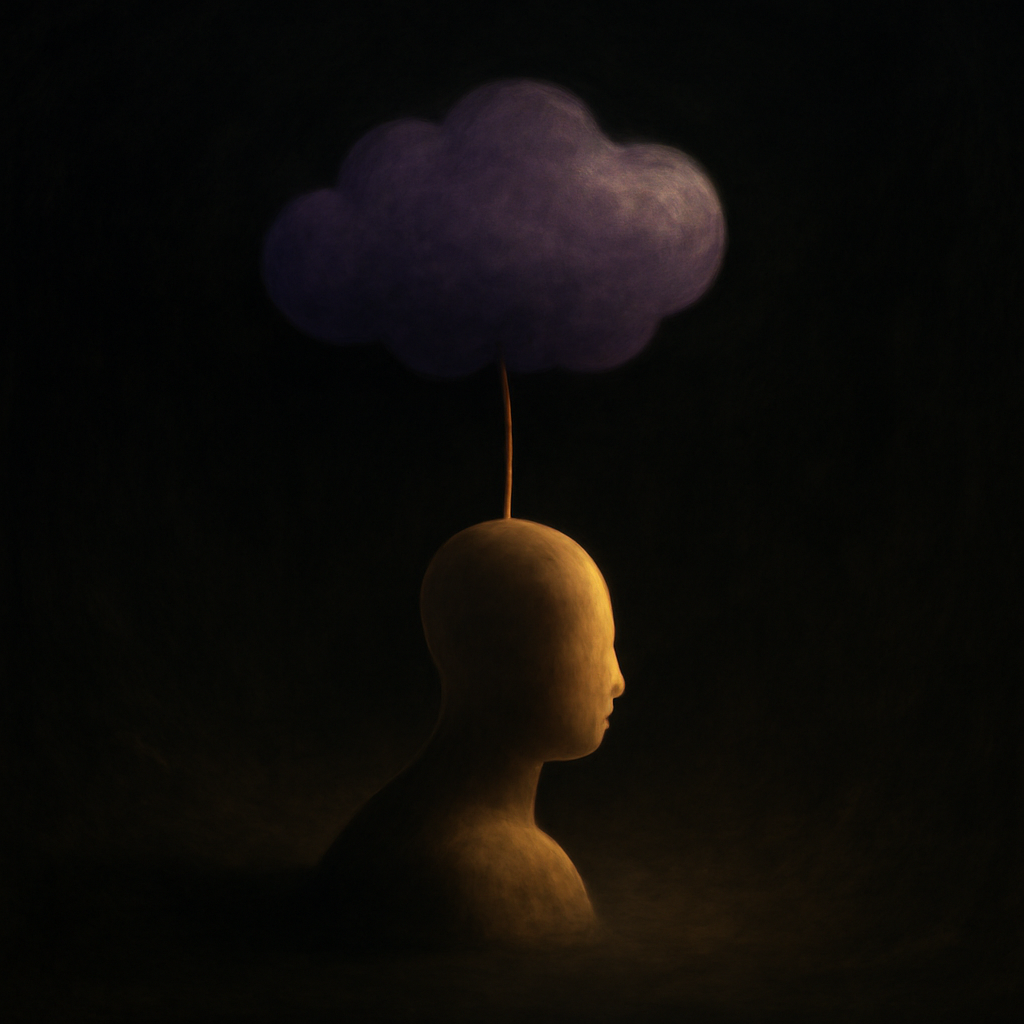
Think about your brain. It is a wet, physical organ about the size of two clenched fists. Now think about your mind—your memories, the rich taste of chocolate, or the feeling of joy. These thoughts do not have a physical shape, a weight, or a color. This is the heart of the mind-body problem. It is the ultimate puzzle of how a physical lump of tissue inside your skull creates the invisible, private world of your conscious mind.
“Even if science maps every single neuron firing in the human brain, it still cannot explain why pinching your arm actually feels like pain rather than just electrical signals.”
Reflect
If we eventually build a robot that behaves exactly like a human, how could we ever prove it actually feels love or pain on the inside?
Research·Preliminary confidence·Investigated 2 Aug 2026(1 month ago)·Grounded; verification trace not recorded·Investigation may be outdated
Your next question, in
Visual Trail
See The Mind-Body Problem: How Thoughts Meet Matter
A guided visual explanation assembled from QE artwork and sourced documentary images.
01 / 05
QE visual interpretation
Frame 01
The Mind-Body Problem: How Thoughts Meet Matter
The mind-body problem is the mystery of how our physical brain creates our invisible thoughts, feelings, and conscious experiences.
Image provenance and limitation
Source: AI-generated visual interpretation
Creator: Question Everything
Limitation: This image explains or evokes the subject. It is not documentary evidence and should not be used to verify a factual claim.
Evidence
What do we know?
Verified claims with confidence scoring and cited sources.
Living footnotes
Claims remain in the reading flow. Select a citation number to inspect the source behind it.
01
HistoricalNot confirmed
The philosopher René Descartes made the mind-body problem a central puzzle in the 1600s by arguing that mind and body are completely separate.
Descartes argued that the physical body is made of matter and takes up space, but the mind is immaterial and has no physical form. He suggested they connect at a tiny spot in the brain called the pineal gland. This sparked a massive debate that still puzzles scientists and philosophers today. How can a completely non-physical thought, like 'I want water,' physically cause your hand to reach out and grab a glass?
02
ObservationalNot confirmed
Consciousness has a unique subjective feeling, which philosophers call 'what it is like' to experience something.
In 1974, philosopher Thomas Nagel wrote about what it is like to be a bat. He argued that even if we knew every physical fact about a bat's brain and sonar system, we still wouldn't know how it actually feels to be a bat. This subjective experience, like the taste of chocolate or the sting of a stubbed toe, cannot be fully captured by physical descriptions of brain cells.
03
ObservationalNot confirmed
Many modern researchers use physicalism, the idea that everything is ultimately physical and the mind cannot be separated from the body.
Today, many neuroscientists and computer experts believe the mind and body are one. They argue that thoughts and feelings are physical things, created by the complex wiring of our brains, much like how software runs on computer hardware. However, explaining exactly how these physical brain cells create subjective feelings remains one of the hardest challenges in science, leading some to argue that consciousness is an emergent property that cannot be simplified.
The complete record below preserves every citation, confidence input and recorded limitation.
Read the full evidence record3 findings · citations · limitations
Evidence review3 findings0 openable sources
01
Finding 1 of 3Historical
0/0 verified
The philosopher René Descartes made the mind-body problem a central puzzle in the 1600s by arguing that mind and body are completely separate.
Descartes argued that the physical body is made of matter and takes up space, but the mind is immaterial and has no physical form. He suggested they connect at a tiny spot in the brain called the pineal gland. This sparked a massive debate that still puzzles scientists and philosophers today. How can a completely non-physical thought, like 'I want water,' physically cause your hand to reach out and grab a glass?
Not confirmedmodel score 30%
Scored as if sourced, but every citation failed verification.
NO SURVIVING CITATION
›View sources and limits— limits
Supporting passage
Descartes argued that the physical body is made of matter and takes up space, but the mind is immaterial and has no physical form. He suggested they connect at a tiny spot in the brain called the pineal gland. This sparked a massive debate that still puzzles scientists and philosophers today. How can a completely non-physical thought, like 'I want water,' physically cause your hand to reach out and grab a glass?
Citations (0 of 1 survived verification)
Nothing openable. Every citation was removed by provenance validation.
What limits this
All 1 citation on this claim failed verification and were removed. Nothing openable supports it.
02
Finding 2 of 3Observational
0/0 verified
Consciousness has a unique subjective feeling, which philosophers call 'what it is like' to experience something.
In 1974, philosopher Thomas Nagel wrote about what it is like to be a bat. He argued that even if we knew every physical fact about a bat's brain and sonar system, we still wouldn't know how it actually feels to be a bat. This subjective experience, like the taste of chocolate or the sting of a stubbed toe, cannot be fully captured by physical descriptions of brain cells.
Not confirmedmodel score 30%
Scored as if sourced, but every citation failed verification.
NO SURVIVING CITATION
›View sources and limits— limits
Supporting passage
In 1974, philosopher Thomas Nagel wrote about what it is like to be a bat. He argued that even if we knew every physical fact about a bat's brain and sonar system, we still wouldn't know how it actually feels to be a bat. This subjective experience, like the taste of chocolate or the sting of a stubbed toe, cannot be fully captured by physical descriptions of brain cells.
Citations (0 of 1 survived verification)
Nothing openable. Every citation was removed by provenance validation.
What limits this
All 1 citation on this claim failed verification and were removed. Nothing openable supports it.
03
Finding 3 of 3Observational
0/0 verified
Many modern researchers use physicalism, the idea that everything is ultimately physical and the mind cannot be separated from the body.
Today, many neuroscientists and computer experts believe the mind and body are one. They argue that thoughts and feelings are physical things, created by the complex wiring of our brains, much like how software runs on computer hardware. However, explaining exactly how these physical brain cells create subjective feelings remains one of the hardest challenges in science, leading some to argue that consciousness is an emergent property that cannot be simplified.
Not confirmedmodel score 30%
Scored as if sourced, but every citation failed verification.
NO SURVIVING CITATION
›View sources and limits— limits
Supporting passage
Today, many neuroscientists and computer experts believe the mind and body are one. They argue that thoughts and feelings are physical things, created by the complex wiring of our brains, much like how software runs on computer hardware. However, explaining exactly how these physical brain cells create subjective feelings remains one of the hardest challenges in science, leading some to argue that consciousness is an emergent property that cannot be simplified.
Citations (0 of 1 survived verification)
Nothing openable. Every citation was removed by provenance validation.
What limits this
All 1 citation on this claim failed verification and were removed. Nothing openable supports it.
Interactive Exploration
Touch, drag, and discover
These visualizations respond to your curiosity. Interact to go deeper.
comparison table
Three Ways to Look at the Mind and Body
What is the Mind?
Can a Robot Have One?
Dualism
An immaterial soul separate from the body
No, only biological souls have minds
Physicalism
Just physical brain activity
Yes, if we copy the brain's physical structure
Functionalism
A program run by the brain
Yes, if we write the right software
Tap any row to highlight and compare
spectrum
Where Theories Stand on the Mind-Body Connection
Purely Physical (Only Matter Exists)Purely Mental (Only Mind Exists)
10%
Physicalism
35%
Functionalism
60%
Property Dualism
85%
Substance Dualism
Visual Gallery
Images & artifacts
Historical images, diagrams, and visual knowledge from Wikimedia Commons.
Perspectives
How is this interpreted?
Enter a viewpoint. Notice what it reveals, what it leaves out, and whether it changes the question for you.
The EmpiricistScientific viewpointLive tension
The mind is simply what the brain does. Every thought, feeling, and memory is just a pattern of electricity and chemicals moving through our brain cells. If you damage a specific part of the brain, you change the mind. Therefore, there is no separate soul or immaterial mind. Once we understand the brain perfectly, the mystery of the mind will be completely solved, just like how we solved the mystery of genetics.
What this lens notices
01Brain damage directly alters personality and memories
02Brain scans show physical activity during thoughts
03Drugs can change how we feel and think
Application
Why does this matter to you?
Personal reflections and applications for your life.
Thought experimentSelf-Reflection
How much of your day is spent living in your thoughts versus your physical body?
Why it changes the question
We often treat our minds and bodies as separate, ignoring physical tension while stressing over mental problems. Realizing they are deeply connected can help you treat your body better to improve your mood.
Try this
Spend five minutes doing a simple body scan, focusing on physical sensations to ground your racing thoughts.
Media
QE Smart Glass
Curated media selected for this investigation.
QE Glass
YOUTUBE
Dualism in Descartes and Classical Philosophy
Dr. Jordan B Cooper
Renes Descartes promoted what is known as substance dualism and created the mind-body problem in modern philosophy.
QE Glass
YOUTUBE
What the Buddha can teach us about the mind-body problem | Zizek, Chadha, Faggin, Nida-Rümelin
The Institute of Art and Ideas
Slavoj Žižek, Monima Chadha, Martine Nida-Rümelin and Federico Faggin discuss whether the mind and body could be viewed ...
QE Glass
YOUTUBE
What is the Mind-Body Problem?
Dr Tevin Naidu
From Plato and Descartes to modern neuroscience and AI, the Mind-Body Problem remains philosophy's oldest puzzle and ...
QE Glass
YOUTUBE
Introduction to Philosophy of Mind
A Little Bit of Philosophy
A brief overview of Philosophy of Mind focusing on the mind/body problem. This video introduces Interactionism, Occasionalism, ...
QE Glass
YOUTUBE
Your Brain: Who's in Control? | Full Documentary | NOVA | PBS
NOVA PBS Official
Dive into the subconscious to see what's really driving the decisions you make. Official Website: https://to.pbs.org/3pUGv1s ...
QE Glass
YOUTUBE
Your Brain: Perception Deception | Full Documentary | NOVA | PBS
NOVA PBS Official
Neuroscientists discover the tricks and shortcuts the brain takes to help us survive. Official Website: https://to.pbs.org/3Ic9dRS ...
QE Glass
YOUTUBE
The Mind-Body Problem Explained"(Full Documentary)
Logic over Spirit
In this 1 hour introduction to Philosophy of Mind, we examine the mind-body problem that has puzzled philosophers for centuries.
QE Glass
YOUTUBE
Level 1 to 100 Philosophy Concepts to Fall Asleep To
Smarter While You Sleep
Expand your mind while you sleep—subscribe! https://youtube.com/@SmarterWhileYouSleep?sub_confirmation=1 0:00 – The ...
QE Glass
YOUTUBE
Where Does Your Mind Reside?: Crash Course Philosophy #22
CrashCourse
Today we continue our unit on identity by asking where the mind resides. Hank explains the mind-body problem and several ...
QE Glass
PODCAST
Philosophize This! - Episode on Descartes and the Mind-Body Split
Philosophize This!
A friendly podcast episode that breaks down René Descartes' ideas about the mind and body without using heavy academic jargon.
Connected context
Connected entities
The people, places, concepts, and events that matter here.
Keep Going
Where this leads
Questions this investigation opens up — and what QE has already looked into.
No AI help here — no suggestions, no autocomplete, nothing finishing your sentences. That is deliberate. Working out what you think is effortful, and the effort is the part that changes you: reasoning is trained like a muscle, and a muscle that is always carried gets weaker. Let something else do the thinking and you keep the answer but lose the capacity to have reached it.
Write your current position.
Not what the page says. What you think, having read it.0 words · Nothing written yet.
Sign in to leave a mark. Your draft is saved here in the meantime.