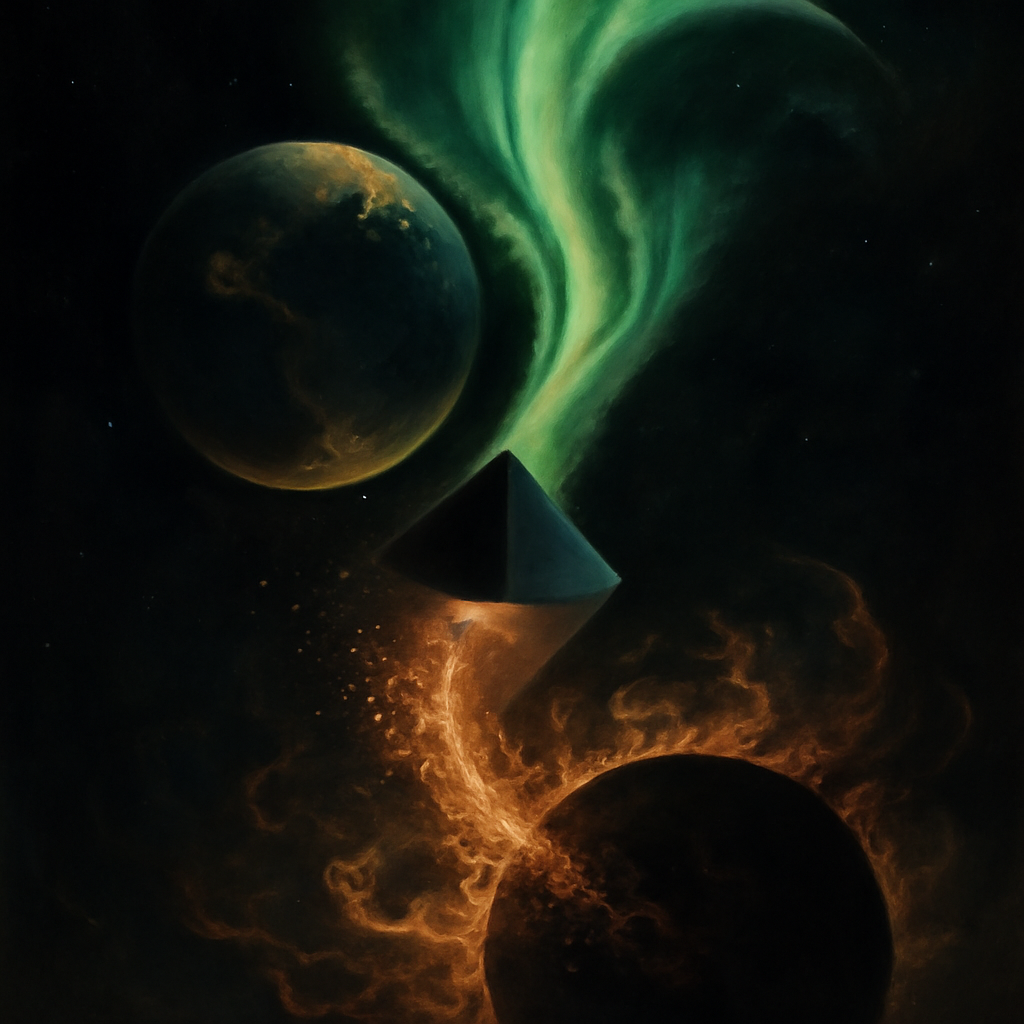
The Magic Behind the Northern Lights: What Causes the Aurora Borealis?
The northern lights, or aurora borealis, are one of nature's most stunning light shows. They appear as colorful waves or curtains of light dancing across the night sky, mostly near the North Pole. But these dazzling displays are actually caused by a cosmic dance between the Sun and Earth. The Sun sends out a stream of tiny charged particles called the solar wind. When this wind reaches Earth, the planet's magnetic field guides these particles toward the poles. There, they crash into gases in the upper atmosphere, making those gases glow in beautiful colors like green, red, and even purple.
This light show isn't just random. It happens more often and brighter when the Sun is more active, sending out bursts of energy like solar flares. These charged particles hit Earth's magnetic shield and atmosphere with more force, lighting up the sky farther from the poles and making the auroras more visible. So, every time you see the northern lights, you're actually watching a spectacular show powered by the Sun's energy and Earth's magnetic defenses.
“The northern lights are a glowing, colorful message written in the sky by charged particles from the Sun crashing into Earth's atmosphere.”
Reflect
If the Sun’s energy can create such beauty visible from Earth, what other invisible cosmic forces shape the world around us every day?
Research·1 source·Developing confidence·Investigated 19 Jul 2026(2 months ago)·Grounded; verification trace not recorded·Investigation may be outdated
Your next question, in
Visual Trail
See The Magic Behind the Northern Lights: What Causes the Aurora Borealis?
A guided visual explanation assembled from QE artwork and sourced documentary images.
01 / 05
QE visual interpretation
Frame 01
The Magic Behind the Northern Lights: What Causes the Aurora Borealis?
Northern lights shine when solar particles hit Earth's atmosphere near the poles, making gases glow in bright colors.
Image provenance and limitation
Source: AI-generated visual interpretation
Creator: Question Everything
Limitation: This image explains or evokes the subject. It is not documentary evidence and should not be used to verify a factual claim.
Evidence
What do we know?
Verified claims with confidence scoring and cited sources.
3 of 4 findings need extra caution. Finding 1, Finding 2, Finding 4 rest on weaker sourcing than the other findings.
Living footnotes
Claims remain in the reading flow. Select a citation number to inspect the source behind it.
01
AcademicNot confirmed
The northern lights are caused by charged particles from the Sun colliding with gases in Earth's atmosphere.
The Sun constantly releases a stream of charged particles called the solar wind. When these particles reach Earth, most are blocked by its magnetic field, but some get funneled toward the poles. There, they slam into oxygen and nitrogen atoms high in the atmosphere. This collision excites the atoms, making them release light in different colors, creating the aurora borealis, or northern lights.
02
AcademicNot confirmed
The colors of the northern lights depend on which gases the solar particles hit in Earth's atmosphere.
When the charged particles crash into oxygen high in the atmosphere, they create green and sometimes red light. Nitrogen causes blue and purple colors. The different gases glow in unique colors because they release different amounts of energy when hit by the particles. This mix of colors makes the northern lights so mesmerizing and varied.
03
AcademicSupported
The Earth's magnetic field directs solar particles toward the poles, which is why auroras mainly appear near the North and South Poles.
Earth acts like a giant magnet with magnetic north and south poles. The magnetic field shields the planet from most solar particles. But at the poles, the magnetic field lines curve down and funnel the particles into the atmosphere. This is why the northern lights mostly show up in places like Alaska, Canada, and Scandinavia, near the Arctic Circle, and the southern lights appear near Antarctica.
04
AcademicNot confirmed
Solar activity, like solar flares and coronal mass ejections, increases the frequency and brightness of the northern lights.
The Sun goes through cycles of activity about every 11 years. During periods called solar maximums, the Sun sends out more charged particles and stronger storms. These energetic particles hit Earth's magnetic field with more force, causing brighter and more colorful auroras that can be seen farther from the poles than usual. This is why some years are better than others for spotting the northern lights.
The complete record below preserves every citation, confidence input and recorded limitation.
Read the full evidence record4 findings · citations · limitations
Evidence review4 findings1 openable sources
01
Finding 1 of 4AcademicNeeds caution
0
0/0 verified
The northern lights are caused by charged particles from the Sun colliding with gases in Earth's atmosphere.
The Sun constantly releases a stream of charged particles called the solar wind. When these particles reach Earth, most are blocked by its magnetic field, but some get funneled toward the poles. There, they slam into oxygen and nitrogen atoms high in the atmosphere. This collision excites the atoms, making them release light in different colors, creating the aurora borealis, or northern lights.
Not confirmedmodel score 30%
Scored as if sourced, but every citation failed verification.
NO SURVIVING CITATION
›View sources and limits— limits
Supporting passage
The Sun constantly releases a stream of charged particles called the solar wind. When these particles reach Earth, most are blocked by its magnetic field, but some get funneled toward the poles. There, they slam into oxygen and nitrogen atoms high in the atmosphere. This collision excites the atoms, making them release light in different colors, creating the aurora borealis, or northern lights.
Citations (0 of 1 survived verification)
Nothing openable. Every citation was removed by provenance validation.
What limits this
All 1 citation on this claim failed verification and were removed. Nothing openable supports it.
02
Finding 2 of 4AcademicNeeds caution
0
0/0 verified
The colors of the northern lights depend on which gases the solar particles hit in Earth's atmosphere.
When the charged particles crash into oxygen high in the atmosphere, they create green and sometimes red light. Nitrogen causes blue and purple colors. The different gases glow in unique colors because they release different amounts of energy when hit by the particles. This mix of colors makes the northern lights so mesmerizing and varied.
Not confirmedmodel score 30%
Scored as if sourced, but every citation failed verification.
NO SURVIVING CITATION
›View sources and limits— limits
Supporting passage
When the charged particles crash into oxygen high in the atmosphere, they create green and sometimes red light. Nitrogen causes blue and purple colors. The different gases glow in unique colors because they release different amounts of energy when hit by the particles. This mix of colors makes the northern lights so mesmerizing and varied.
Citations (0 of 1 survived verification)
Nothing openable. Every citation was removed by provenance validation.
What limits this
All 1 citation on this claim failed verification and were removed. Nothing openable supports it.
03
Finding 3 of 4Academic
1
0/1 verified
The Earth's magnetic field directs solar particles toward the poles, which is why auroras mainly appear near the North and South Poles.
Earth acts like a giant magnet with magnetic north and south poles. The magnetic field shields the planet from most solar particles. But at the poles, the magnetic field lines curve down and funnel the particles into the atmosphere. This is why the northern lights mostly show up in places like Alaska, Canada, and Scandinavia, near the Arctic Circle, and the southern lights appear near Antarctica.
Supportedmodel score 90%
One source, not peer-reviewed. Thinner than the score suggests.
REFERENCE
›View sources and limits— 1 citation, limits
Supporting passage
Earth acts like a giant magnet with magnetic north and south poles. The magnetic field shields the planet from most solar particles. But at the poles, the magnetic field lines curve down and funnel the particles into the atmosphere. This is why the northern lights mostly show up in places like Alaska, Canada, and Scandinavia, near the Arctic Circle, and the southern lights appear near Antarctica.
Rests on a single source. No independent corroboration.
No peer-reviewed source among the citations.
The generator scored this 90%, which would read as “Established”. Its citations reach only “Supported”, so that is what is shown.
04
Finding 4 of 4AcademicNeeds caution
0
0/0 verified
Solar activity, like solar flares and coronal mass ejections, increases the frequency and brightness of the northern lights.
The Sun goes through cycles of activity about every 11 years. During periods called solar maximums, the Sun sends out more charged particles and stronger storms. These energetic particles hit Earth's magnetic field with more force, causing brighter and more colorful auroras that can be seen farther from the poles than usual. This is why some years are better than others for spotting the northern lights.
Not confirmedmodel score 30%
Scored as if sourced, but every citation failed verification.
NO SURVIVING CITATION
›View sources and limits— limits
Supporting passage
The Sun goes through cycles of activity about every 11 years. During periods called solar maximums, the Sun sends out more charged particles and stronger storms. These energetic particles hit Earth's magnetic field with more force, causing brighter and more colorful auroras that can be seen farther from the poles than usual. This is why some years are better than others for spotting the northern lights.
Citations (0 of 1 survived verification)
Nothing openable. Every citation was removed by provenance validation.
What limits this
All 1 citation on this claim failed verification and were removed. Nothing openable supports it.
Interactive Exploration
Touch, drag, and discover
These visualizations respond to your curiosity. Interact to go deeper.
process flow
How the Northern Lights Form
Solar Wind Release
Interaction with Earth's Magnetic Field
Collision with Atmosphere
Light Emission
statistics card
Aurora Colors and Their Causes
Green
Most common color
Caused by oxygen atoms about 100 km above Earth.
Red
Rare high-altitude color
From oxygen atoms higher up, above 200 km.
Blue and Purple
Nitrogen colors
Produced when solar particles hit nitrogen molecules.
timeline
Solar Cycle and Aurora Activity
Loading timeline…
Visual Gallery
Images & artifacts
Historical images, diagrams, and visual knowledge from Wikimedia Commons.
Perspectives
How is this interpreted?
Enter a viewpoint. Notice what it reveals, what it leaves out, and whether it changes the question for you.
The EmpiricistScientific viewpointEstablished lens
Scientists study the northern lights by observing solar activity and Earth's magnetic field. They use satellites to watch charged particles from the Sun and track how they interact with our planet's atmosphere. This helps predict when and where auroras will appear. The science also helps us understand space weather, which can affect technology like satellites and power grids on Earth.
What this lens notices
01Solar wind particles cause auroras by exciting atmospheric gases.
02Earth’s magnetic field funnels particles to the poles.
Personal reflections and applications for your life.
Thought experimentSelf-Reflection
Have you ever felt a deep connection watching the night sky?
Why it changes the question
Seeing the northern lights is a powerful reminder that we live on a small planet in a vast universe, connected to the Sun’s energy in real time. It can inspire awe and curiosity about our place in the cosmos.
Try this
Next time you see the stars, take a moment to imagine the invisible forces shaping what you see, like Earth’s magnetic field and the Sun’s particles.
Media
QE Smart Glass
Curated media selected for this investigation.
QE Glass
YOUTUBE
What is an aurora? - Michael Molina
TED-Ed
Explore the science behind what causes the incredible light and color of the Aurora Borealis and Aurora Australis. -- Why do we ...
QE Glass
YOUTUBE
What Causes The Northern Lights?
Veritasium
The aurora borealis or northern lights is one of the most spectacular natural displays on the planet. Theories about its origins have ...
QE Glass
YOUTUBE
How Is the Aurora Borealis Created: Northern Lights - A Simple Explanation (Full Documentary)
Space Weather News
Get Solar Viewing Glasses here: https://amzn.to/3NP4EA6 Welcome back to Space Weather News! Today, we have a special ...
QE Glass
YOUTUBE
Aurora Borealis - Fire In The Sky | Full Documentary
Free High-Quality Documentaries
In the earth's polar regions, a ghostly flicker and colourful glow often brighten the night sky. Whoever sees an aurora event will ...
QE Glass
YOUTUBE
What Causes The Northern Lights?
BrainStuff - HowStuffWorks
There are many misconceptions about what causes the Aurora Borealis when it really requires solar winds, magnetic fields and ...
QE Glass
YOUTUBE
What Is an Aurora?
NASA Space Place
An aurora looks like a beautiful display of lights in the sky. We can also see auroras from space! The name of an aurora changes ...
QE Glass
YOUTUBE
Northern Lights Explained: What Causes the Aurora Borealis?
History of Simple Things
The northern lights, also called the aurora borealis, are among the most stunning sights in nature. But what exactly causes these ...
QE Glass
YOUTUBE
The Science Behind the Northern Lights | Star Gazers
Star Gazers
A clear and engaging explanation of how the Sun and Earth create the northern lights.
QE Glass
YOUTUBE
What causes the Northern Lights? | Royal Museums Greenwich
Royal Museums Greenwich
A short video describing the magnetic and solar processes behind auroras.
QE Glass
PODCAST
Science Vs - Northern Lights
Science Vs
An entertaining podcast episode diving into the science and myths of the northern lights.
Keep Going
Where this leads
Questions this investigation opens up — and what QE has already looked into.
No AI help here — no suggestions, no autocomplete, nothing finishing your sentences. That is deliberate. Working out what you think is effortful, and the effort is the part that changes you: reasoning is trained like a muscle, and a muscle that is always carried gets weaker. Let something else do the thinking and you keep the answer but lose the capacity to have reached it.
Write your current position.
Not what the page says. What you think, having read it.0 words · Nothing written yet.
Sign in to leave a mark. Your draft is saved here in the meantime.