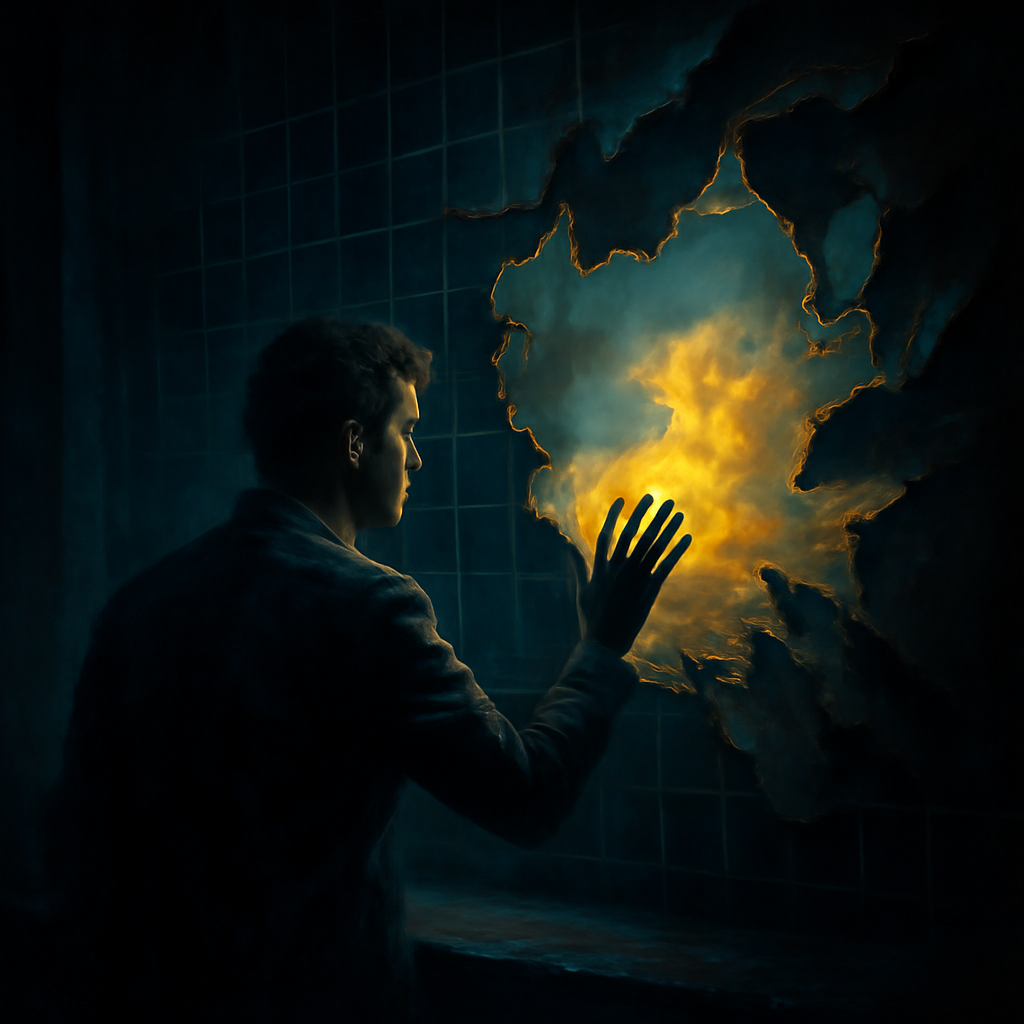
Do We Live in a Simulation? Exploring the Reality Behind Our Reality
Imagine waking up one day to discover that everything you thought was real—the sky, the trees, even your own memories—is part of an incredibly advanced computer simulation. This idea, known as the simulation hypothesis, has fascinated philosophers, scientists, and thinkers for decades. At its heart, it suggests that our entire universe might be a digital construct created by a higher intelligence or future civilization. But what evidence do we have to support this? And what does it mean for our understanding of existence?
The hypothesis gained renewed attention when philosopher Nick Bostrom proposed a trilemma: either civilizations never reach a stage capable of running such simulations, they choose not to, or we are almost certainly living in one. Influential figures like Elon Musk and Neil deGrasse Tyson have weighed in, suggesting the odds might be surprisingly high. Yet, skeptics caution about the immense energy and computational power required to simulate an entire universe, raising doubts about its feasibility. Today, scientists are exploring ways to detect possible 'glitches' or signatures in physics that could hint at artificial origins. Meanwhile, the philosophical implications challenge us to reconsider what we call 'real' and how that shapes our lives.
“If future civilizations run countless simulations, the chance that we are in the original 'base reality' might be vanishingly small.”
Reflect
What would it mean for your life if this universe is just one of many simulated by beings far beyond our comprehension?
Research·2 sources·Developing confidence·Investigated 20 Jul 2026(2 months ago)·Grounded; verification trace not recorded·Investigation may be outdated
Your next question, in
Visual Trail
See Do We Live in a Simulation? Exploring the Reality Behind Our Reality
A guided visual explanation assembled from QE artwork and sourced documentary images.
01 / 05
QE visual interpretation
Frame 01
Do We Live in a Simulation? Exploring the Reality Behind Our Reality
The simulation hypothesis asks if our universe is a complex computer simulation created by an advanced intelligence.
Image provenance and limitation
Source: AI-generated visual interpretation
Creator: Question Everything
Limitation: This image explains or evokes the subject. It is not documentary evidence and should not be used to verify a factual claim.
Evidence
What do we know?
Verified claims with confidence scoring and cited sources.
3 of 4 findings need extra caution. Finding 2, Finding 3, Finding 4 rest on weaker sourcing than the other findings.
Living footnotes
Claims remain in the reading flow. Select a citation number to inspect the source behind it.
01
ObservationalSupported
Nick Bostrom proposed that if advanced civilizations run many simulations, we are likely living in one.
Philosopher Nick Bostrom formulated an argument suggesting that among three possibilities, one must be true: human civilization will almost certainly go extinct before becoming technologically mature; advanced civilizations lose interest in creating ancestor simulations; or we are almost certainly living in a computer simulation. This argument has shaped much of the modern discussion around the topic, framing it as a serious philosophical and scientific question rather than mere science fiction.
02
ObservationalNot confirmed
Astrophysicist Neil deGrasse Tyson estimates about a 50-50 chance that we might be living in a simulation.
Neil deGrasse Tyson, a well-known astrophysicist, has publicly stated that he believes there is roughly a 50% chance that our reality is a simulation. His reasoning stems from the rapid advancement of computer graphics and artificial intelligence, suggesting that future civilizations could have the capability to simulate entire universes with conscious beings. Tyson's view brings the discussion into popular culture and scientific mainstream, highlighting its relevance today.
03
ObservationalNot confirmed
There is currently no empirical evidence confirming that we live in a simulation.
Despite the compelling philosophical arguments, no direct experimental or observational proof exists to confirm the simulation hypothesis. Researchers have proposed looking for anomalies such as discrete spacetime or computational limits manifesting in physical laws, but so far, telescopes and particle experiments have not detected any definitive signs. The lack of evidence means the hypothesis remains speculative, though it continues to inspire scientific inquiry and debate.
04
ObservationalMixed evidence
The energy demands to simulate a universe at full detail make the simulation hypothesis unlikely according to some astrophysicists.
Astrophysicist Franco Vazza analyzed the energy requirements for simulating the entire visible universe or even a detailed Earth simulation. His work suggests that the available energy in our observable universe is insufficient to support such a large-scale, high-resolution simulation. This energy constraint challenges the practical feasibility of the simulation hypothesis, implying that if simulations exist, they might be limited in scope or resolution.
The complete record below preserves every citation, confidence input and recorded limitation.
Read the full evidence record4 findings · citations · limitations
Evidence review4 findings2 openable sources
01
Finding 1 of 4Observational
0/1 verified
Nick Bostrom proposed that if advanced civilizations run many simulations, we are likely living in one.
Philosopher Nick Bostrom formulated an argument suggesting that among three possibilities, one must be true: human civilization will almost certainly go extinct before becoming technologically mature; advanced civilizations lose interest in creating ancestor simulations; or we are almost certainly living in a computer simulation. This argument has shaped much of the modern discussion around the topic, framing it as a serious philosophical and scientific question rather than mere science fiction.
Supportedmodel score 90%
One source, not peer-reviewed. Thinner than the score suggests.
REFERENCE
›View sources and limits— 1 citation, limits
Supporting passage
Philosopher Nick Bostrom formulated an argument suggesting that among three possibilities, one must be true: human civilization will almost certainly go extinct before becoming technologically mature; advanced civilizations lose interest in creating ancestor simulations; or we are almost certainly living in a computer simulation. This argument has shaped much of the modern discussion around the topic, framing it as a serious philosophical and scientific question rather than mere science fiction.
Rests on a single source. No independent corroboration.
No peer-reviewed source among the citations.
The generator scored this 90%, which would read as “Established”. Its citations reach only “Supported”, so that is what is shown.
02
Finding 2 of 4ObservationalNeeds caution
0/0 verified
Astrophysicist Neil deGrasse Tyson estimates about a 50-50 chance that we might be living in a simulation.
Neil deGrasse Tyson, a well-known astrophysicist, has publicly stated that he believes there is roughly a 50% chance that our reality is a simulation. His reasoning stems from the rapid advancement of computer graphics and artificial intelligence, suggesting that future civilizations could have the capability to simulate entire universes with conscious beings. Tyson's view brings the discussion into popular culture and scientific mainstream, highlighting its relevance today.
Not confirmedmodel score 30%
Scored as if sourced, but every citation failed verification.
NO SURVIVING CITATION
›View sources and limits— limits
Supporting passage
Neil deGrasse Tyson, a well-known astrophysicist, has publicly stated that he believes there is roughly a 50% chance that our reality is a simulation. His reasoning stems from the rapid advancement of computer graphics and artificial intelligence, suggesting that future civilizations could have the capability to simulate entire universes with conscious beings. Tyson's view brings the discussion into popular culture and scientific mainstream, highlighting its relevance today.
Citations (0 of 1 survived verification)
Nothing openable. Every citation was removed by provenance validation.
What limits this
All 1 citation on this claim failed verification and were removed. Nothing openable supports it.
03
Finding 3 of 4ObservationalNeeds caution
0/0 verified
There is currently no empirical evidence confirming that we live in a simulation.
Despite the compelling philosophical arguments, no direct experimental or observational proof exists to confirm the simulation hypothesis. Researchers have proposed looking for anomalies such as discrete spacetime or computational limits manifesting in physical laws, but so far, telescopes and particle experiments have not detected any definitive signs. The lack of evidence means the hypothesis remains speculative, though it continues to inspire scientific inquiry and debate.
Not confirmedmodel score 30%
Scored as if sourced, but every citation failed verification.
NO SURVIVING CITATION
›View sources and limits— limits
Supporting passage
Despite the compelling philosophical arguments, no direct experimental or observational proof exists to confirm the simulation hypothesis. Researchers have proposed looking for anomalies such as discrete spacetime or computational limits manifesting in physical laws, but so far, telescopes and particle experiments have not detected any definitive signs. The lack of evidence means the hypothesis remains speculative, though it continues to inspire scientific inquiry and debate.
Citations (0 of 1 survived verification)
Nothing openable. Every citation was removed by provenance validation.
What limits this
All 1 citation on this claim failed verification and were removed. Nothing openable supports it.
04
Finding 4 of 4ObservationalNeeds caution
0/1 verified
The energy demands to simulate a universe at full detail make the simulation hypothesis unlikely according to some astrophysicists.
Astrophysicist Franco Vazza analyzed the energy requirements for simulating the entire visible universe or even a detailed Earth simulation. His work suggests that the available energy in our observable universe is insufficient to support such a large-scale, high-resolution simulation. This energy constraint challenges the practical feasibility of the simulation hypothesis, implying that if simulations exist, they might be limited in scope or resolution.
Mixed evidencemodel score 60%
Verification was mixed across 1 source.
REFERENCE
›View sources and limits— 1 citation, limits
Supporting passage
Astrophysicist Franco Vazza analyzed the energy requirements for simulating the entire visible universe or even a detailed Earth simulation. His work suggests that the available energy in our observable universe is insufficient to support such a large-scale, high-resolution simulation. This energy constraint challenges the practical feasibility of the simulation hypothesis, implying that if simulations exist, they might be limited in scope or resolution.
Rests on a single source. No independent corroboration.
No peer-reviewed source among the citations.
Verification was mixed — some citations supported the claim and some did not.
Interactive Exploration
Touch, drag, and discover
These visualizations respond to your curiosity. Interact to go deeper.
timeline
Key Milestones in the Simulation Hypothesis
Loading timeline…
relationship map
Concept Connections Around the Simulation Hypothesis
Mapping relationships…
Drag nodes to rearrange — tap for details
cause effect
Causes and Effects of the Simulation Hypothesis Debate
Causes — tap to reveal
Tap to reveal cause 1
Tap to reveal cause 2
Tap to reveal cause 3
↓
statistics card
Perspectives on the Simulation Hypothesis
50%
Estimated chance of living in a simulation
Attributed to Neil deGrasse Tyson's public statement
3 propositions
Bostrom's trilemma options
Possible outcomes about advanced civilizations and simulations
No confirmed evidence
Current empirical support
No experimental proof for simulation signatures
Energy constraints
Challenge for full-universe simulation
Astrophysical analyses question feasibility
Visual Gallery
Images & artifacts
Historical images, diagrams, and visual knowledge from Wikimedia Commons.
Perspectives
How is this interpreted?
Enter a viewpoint. Notice what it reveals, what it leaves out, and whether it changes the question for you.
The PhilosopherPhilosophical viewpointProvocation
From a philosophical standpoint, the simulation hypothesis extends an ancient question: what is reality? Philosophers like René Descartes and Bishop Berkeley pondered whether our perceptions could be deceiving us. In modern times, this takes the form of whether consciousness could exist within a digital environment indistinguishable from 'base reality.' Some argue that if a simulated world is rich and consistent enough, it should be considered real in its own right. This challenges our concepts of existence, meaning, and identity.
What this lens notices
01Conscious experiences may not require physical substrates.
02A sufficiently advanced simulation could replicate all aspects of perceived reality.
03The distinction between 'real' and 'simulated' reality becomes blurred.
Application
Why does this matter to you?
Personal reflections and applications for your life.
Thought experimentSelf-Reflection
If you discovered your reality was a simulation, how would it change your sense of purpose?
Why it changes the question
Considering this question encourages you to explore what really matters in life. Whether or not the universe is simulated, your experiences and choices shape your reality. Reflecting on this can deepen your appreciation of existence and prompt meaningful living.
Try this
Try journaling your thoughts about reality and purpose. How do these ideas influence your daily decisions?
Media
QE Smart Glass
Curated media selected for this investigation.
QE Glass
YOUTUBE
Decoding the Universe: Quantum | Full Documentary | NOVA | PBS
NOVA PBS Official
Dive into the universe at the tiniest – and weirdest – of scales. Official Website: https://to.pbs.org/3CkDYDR | #novapbs When we ...
QE Glass
YOUTUBE
SIMULATION THEORY (Documentary) - Is Reality Simulated?
metaRising
Elon Musk has argued that we almost certainly live in a simulated reality. Is he correct? This documentary explores the ...
QE Glass
YOUTUBE
We Live in a Simulation. The evidence is everywhere. All you have to do is look.
The Why Files
Taking care of your health just got easier – start here with my sponsor Zocdoc: https://Zocdoc.com/whyfiles PROOF THAT ...
QE Glass
YOUTUBE
Michio Kaku has some news about simulation theory
Big Think
Sorry, you're not Neo and this isn't "The Matrix." Michio Kaku gets real about simulation theory. Subscribe to Big Think on ...
QE Glass
YOUTUBE
Are we living in a simulation? - Zohreh Davoudi
TED-Ed
Is our reality a detailed computer simulation? And how can we know for sure? Explore the scientific and philosophical theories ...
QE Glass
YOUTUBE
Neil deGrasse Tyson Explains the Simulation Hypothesis
StarTalk
Keep Looking Up! #StarTalk #NeilDeGrasseTyson 0:00 - Introduction 0:23 - The Simulation Hypothesis 3:39 - The argument that ...
QE Glass
PODCAST
Radiolab Explores: Are We Living in a Simulation?
Radiolab
A deep dive into the scientific and philosophical questions surrounding the simulation idea.
QE Glass
YOUTUBE
Are We Living in a Simulation with David Chalmers [S3 Ep.12]
Coleman Hughes
Welcome to another episode of Conversations with Coleman. My guest today is David Chalmers. David is a professor of ...
Connected context
Connected entities
The people, places, concepts, and events that matter here.
Keep Going
Where this leads
Questions this investigation opens up — and what QE has already looked into.
No AI help here — no suggestions, no autocomplete, nothing finishing your sentences. That is deliberate. Working out what you think is effortful, and the effort is the part that changes you: reasoning is trained like a muscle, and a muscle that is always carried gets weaker. Let something else do the thinking and you keep the answer but lose the capacity to have reached it.
Write your current position.
Not what the page says. What you think, having read it.0 words · Nothing written yet.
Sign in to leave a mark. Your draft is saved here in the meantime.