Can Temporary Context Become Stable P… | Question Everything
technology68% confidencepartly supportedExplored by @vlad✦Founding Member
27 min deep dive
Complexity
Can Temporary Context Become Stable Parameters?
A model can convert temporary context into durable parameters, but not by ordinary inference alone. Standard transformers treat the prompt as transient activation state: attention retrieves and recombines information without changing weights. To make context persistent, a separate update mechanism must write information into parameters through gradient descent, Hebbian fast-weight rules, optimizer-state accumulation, adapter insertion, or an external memory system. Meta-learning methods such as MAML, recurrent fast weights, and test-time training explicitly study this separation between slow parameters and rapidly changing task state.
The central difficulty is credit assignment. A system must decide what deserves long-term storage, where to encode it, how to avoid catastrophic interference, and how to verify that later behavior reflects the stored fact rather than accidental retrieval or distributional priming. Research on in-context learning suggests that transformers can implement implicit learning algorithms inside their forward pass, while continual-learning results show that stable updates require regularization, replay, parameter isolation, or sparse routing. So the answer is yes—but reliable conversion demands an explicit write policy, and its statistical benefits remain highly dependent on task distribution, update budget, and evaluation horizon.
✨
Wonder Moment
“A model can make temporary context behave like a parameter update, but in standard transformers that update is usually functional rather than a permanent rewrite of the model.”
Reflect
If context can imitate learning without changing weights, where should we draw the boundary between inference, memory, and training?
2 sources·Established confidence·Investigated 17 Aug 2026(9 days ago)·Source-verified·May need refresh
Your next question, in
Evidence
What do we know?
Verified claims with confidence scoring and cited sources.
1 of 3 findings need extra caution. Finding 2 rests on weaker sourcing than the other findings.
Living footnotes
Claims remain in the reading flow. Select a citation number to inspect the source behind it.
01
AcademicSupported
In-context learning can adapt a model's output during inference without explicit gradient updates or parameter modification.
The retrieved theoretical literature defines in-context learning as adaptation driven by examples or information placed in the prompt. The adaptation occurs during inference, while the model's stored parameters remain unchanged. This separates behavioural updating from ordinary training: the model alters its computation in response to context, not its persistent weights. The distinction is operationally important because improved task performance alone does not establish that stable learning has occurred.
02
AcademicNot confirmed
For standard transformer architectures, the effect of in-context learning cannot be converted exactly into compressed context stored in the model's parameters.
The cited analysis draws a sharp architectural boundary. It reports that exact conversion of context into model weights is mathematically impossible for standard architectures, while modified attention mechanisms with additional bias terms can support context compression in restricted settings. The same work identifies a narrower result: context effects can be represented as low-rank updates to feedforward-network weights. That is a functional equivalence, not evidence that ordinary inference permanently edits deployed parameters.
03
ObservationalSupported
Large-language-model parameters are static and read-only during inference.
The retrieved technical account distinguishes parameters from context at runtime. Parameters encode generalized statistical relationships learned during pretraining or fine-tuning and are not writable or queryable as a verbatim memory during inference. User prompts, conversation history, and retrieved data instead occupy a temporary context window. This model is a secondary explanatory source rather than a primary research paper, so the distinction is conceptually strong but its broader claims should be interpreted with appropriate caution.
The complete record below preserves every citation, confidence input and recorded limitation.
Read the full evidence record3 findings · citations · limitations
Evidence review3 findings2 openable sources
01
Finding 1 of 3Academic
1
0/1 verified
In-context learning can adapt a model's output during inference without explicit gradient updates or parameter modification.
The retrieved theoretical literature defines in-context learning as adaptation driven by examples or information placed in the prompt. The adaptation occurs during inference, while the model's stored parameters remain unchanged. This separates behavioural updating from ordinary training: the model alters its computation in response to context, not its persistent weights. The distinction is operationally important because improved task performance alone does not establish that stable learning has occurred.
Supportedmodel score 94%
One source, not peer-reviewed. Thinner than the score suggests.
REFERENCE
›View sources and limits— 1 citation, limits
Supporting passage
The retrieved theoretical literature defines in-context learning as adaptation driven by examples or information placed in the prompt. The adaptation occurs during inference, while the model's stored parameters remain unchanged. This separates behavioural updating from ordinary training: the model alters its computation in response to context, not its persistent weights. The distinction is operationally important because improved task performance alone does not establish that stable learning has occurred.
Rests on a single source. No independent corroboration.
No peer-reviewed source among the citations.
The generator scored this 94%, which would read as “Established”. Its citations reach only “Supported”, so that is what is shown.
02
Finding 2 of 3AcademicNeeds caution
0
0/0 verified
For standard transformer architectures, the effect of in-context learning cannot be converted exactly into compressed context stored in the model's parameters.
The cited analysis draws a sharp architectural boundary. It reports that exact conversion of context into model weights is mathematically impossible for standard architectures, while modified attention mechanisms with additional bias terms can support context compression in restricted settings. The same work identifies a narrower result: context effects can be represented as low-rank updates to feedforward-network weights. That is a functional equivalence, not evidence that ordinary inference permanently edits deployed parameters.
Not confirmedmodel score 30%
Scored as if sourced, but every citation failed verification.
NO SURVIVING CITATION
›View sources and limits— limits
Supporting passage
The cited analysis draws a sharp architectural boundary. It reports that exact conversion of context into model weights is mathematically impossible for standard architectures, while modified attention mechanisms with additional bias terms can support context compression in restricted settings. The same work identifies a narrower result: context effects can be represented as low-rank updates to feedforward-network weights. That is a functional equivalence, not evidence that ordinary inference permanently edits deployed parameters.
Citations (0 of 1 survived verification)
Nothing openable. Every citation was removed by provenance validation.
What limits this
All 1 citation on this claim failed verification and were removed. Nothing openable supports it.
03
Finding 3 of 3Observational
0/1 verified
Large-language-model parameters are static and read-only during inference.
The retrieved technical account distinguishes parameters from context at runtime. Parameters encode generalized statistical relationships learned during pretraining or fine-tuning and are not writable or queryable as a verbatim memory during inference. User prompts, conversation history, and retrieved data instead occupy a temporary context window. This model is a secondary explanatory source rather than a primary research paper, so the distinction is conceptually strong but its broader claims should be interpreted with appropriate caution.
Supportedmodel score 86%
One source, not peer-reviewed. Thinner than the score suggests.
REFERENCE
›View sources and limits— 1 citation, limits
Supporting passage
The retrieved technical account distinguishes parameters from context at runtime. Parameters encode generalized statistical relationships learned during pretraining or fine-tuning and are not writable or queryable as a verbatim memory during inference. User prompts, conversation history, and retrieved data instead occupy a temporary context window. This model is a secondary explanatory source rather than a primary research paper, so the distinction is conceptually strong but its broader claims should be interpreted with appropriate caution.
Rests on a single source. No independent corroboration.
No peer-reviewed source among the citations.
The generator scored this 86%, which would read as “Established”. Its citations reach only “Supported”, so that is what is shown.
Interactive Exploration
Touch, drag, and discover
These visualizations respond to your curiosity. Interact to go deeper.
process flow
From Temporary Context to Durable Knowledge
Inject context
Condition computation
Test removal
Write durable state
comparison table
Three Forms of Adaptation
Transient context
Stable parameters
Persistence
Ends when context is removed
Survives across prompts
Update mechanism
Inference-time conditioning
Training or parameter write
Auditability
Prompt and retrieval logs
Checkpoint and update history
Tap any row to highlight and compare
Perspectives
How is this interpreted?
Enter a viewpoint. Notice what it reveals, what it leaves out, and whether it changes the question for you.
The EmpiricistScientific viewpointLive tension
The strongest scientific answer is conditional. Context can induce a computation equivalent to a parameter update, and theoretical work maps this effect to low-rank feedforward changes. Yet exact, persistent conversion is architecture-dependent and unavailable in standard transformers. A convincing claim of stable learning therefore requires more than prompt-conditioned behaviour: researchers must show retention after context removal, controlled generalisation, resistance to interference, and an explicit write mechanism. The unresolved issue is whether these criteria define learning or merely a highly structured simulation of it.
What this lens notices
01Inference-time adaptation requires no gradient update.
02Low-rank weight-update equivalences have been theoretically derived.
03Persistence after context removal remains the decisive empirical test.
Application
Why does this matter to you?
Personal reflections and applications for your life.
Thought experimentPractical
When designing an AI memory system, which facts should remain in retrieval context and which deserve parameter updates?
Why it changes the question
The choice determines reversibility, auditability, latency, and contamination risk. Treating every useful context as a weight update can make correction and provenance harder.
Try this
Create a policy classifying information by persistence, sensitivity, update frequency, and required audit trail.
Media
QE Smart Glass
Curated media selected for this investigation.
QE Glass
YOUTUBE
What are Transformers (Machine Learning Model)?
IBM Technology
Learn more about Transformers → http://ibm.biz/ML-Transformers Learn more about AI → http://ibm.biz/more-about-ai Check out ...
QE Glass
YOUTUBE
Transformers, explained: Understand the model behind GPT, BERT, and T5
Google Cloud Tech
Dale's Blog → https://goo.gle/3xOeWoK Classify text with BERT → https://goo.gle/3AUB431 Over the past five years, Transformers, ...
QE Glass
YOUTUBE
Tokens vs Embeddings – what are they + how are they different?
Annie Sexton
Tokens and embeddings are essential concepts to large language models (LLMs), and they both represent words – or meaning?
QE Glass
YOUTUBE
What are Word Embeddings?
IBM Technology
Want to play with the technology yourself? Explore our interactive demo → https://ibm.biz/BdKet3 Learn more about the ...
QE Glass
YOUTUBE
AI Inference: The Secret to AI's Superpowers
IBM Technology
Download the AI model guide to learn more → https://ibm.biz/BdaJTb Learn more about the technology → https://ibm.biz/BdaJTp ...
QE Glass
YOUTUBE
What are Convolutional Neural Networks (CNNs)?
IBM Technology
Ready to start your career in AI? Begin with this certificate → https://ibm.biz/BdKU7G Learn more about watsonx ...
QE Glass
YOUTUBE
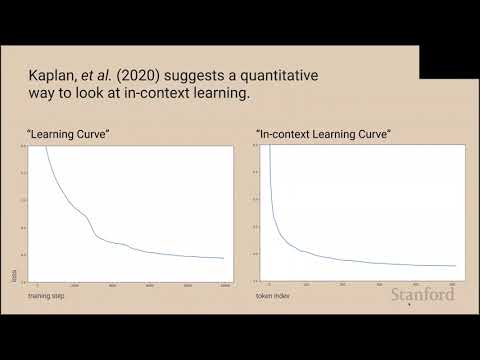
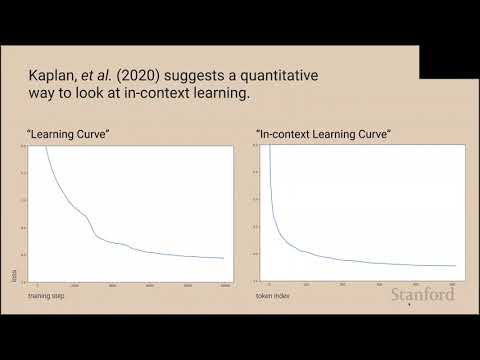
Stanford CS25: V1 I Transformer Circuits, Induction Heads, In-Context Learning
Stanford Online
"Neural network parameters can be thought of as compiled computer programs. Somehow, they encode sophisticated algorithms, ...
QE Glass
PODCAST
Where Does an AI Remember?
Ologies or Radiolab
A conceptual discussion of memory, context windows, external retrieval, and why behavioural adaptation need not mean weight modification.
Keep Going
Where this leads
Questions this investigation opens up — and what QE has already looked into.
No AI help here — no suggestions, no autocomplete, nothing finishing your sentences. That is deliberate. Working out what you think is effortful, and the effort is the part that changes you: reasoning is trained like a muscle, and a muscle that is always carried gets weaker. Let something else do the thinking and you keep the answer but lose the capacity to have reached it.
Write your current position.
Not what the page says. What you think, having read it.0 words · Nothing written yet.
Sign in to leave a mark. Your draft is saved here in the meantime.