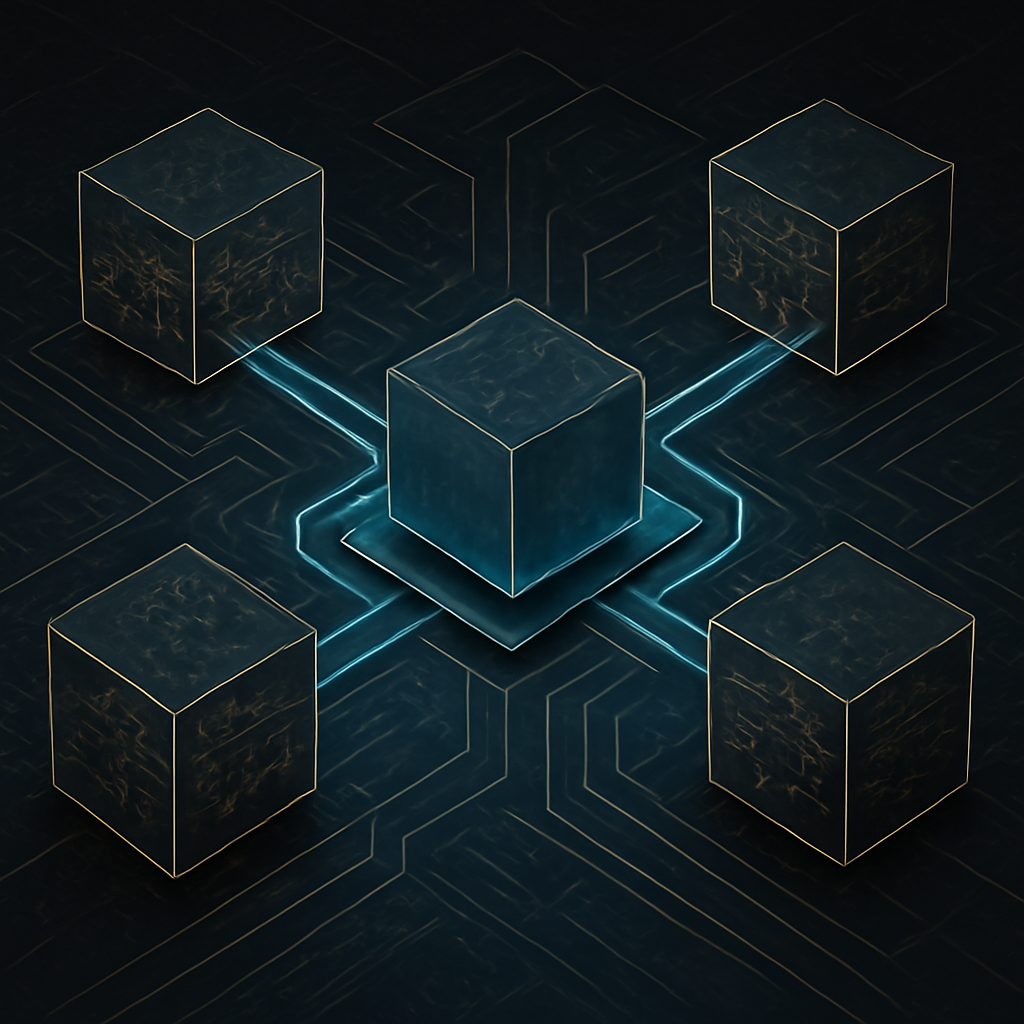
The Digital Council: How AI Routers Choose the Perfect Model
Imagine a grand council chamber. Instead of asking a single all-knowing oracle, your question is presented to a diverse panel of specialists. This is the essence of an LLM model council. At the gates stands the Router, a swift and clever gatekeeper. It listens to your query, instantly judging its complexity, tone, and intent. In milliseconds, it decides who is best suited for the task. A complex math problem goes to one specialist, while a poetic request is handed to another.
Behind the scenes, this digital orchestra works in perfect harmony. Sometimes, multiple models draft answers simultaneously. A separate "judge" model then compares their work, blending their strengths and discarding their errors to deliver a single, flawless response. It is a masterclass in efficiency. By dividing the labor, these systems achieve breathtaking speed and accuracy, all while keeping computational costs remarkably low. It is intelligence, cooperative and refined.
✨
Wonder Moment
“By querying three rival AI brains simultaneously and using a fourth to referee their disagreements, we can instantly strip away the false confidence of a single machine.”
Reflect
If the smartest machines on Earth cannot agree on a single truth, how can we ever expect a single human mind to hold the complete picture?
2 sources·Established confidence·Investigated 7 Aug 2026(20 days ago)·Source-verified·May need refresh
Your next question, in
Visual Trail
See The Digital Council: How AI Routers Choose the Perfect Model
A guided visual explanation assembled from QE artwork and sourced documentary images.
01 / 02
QE visual interpretation
Frame 01
The Digital Council: How AI Routers Choose the Perfect Model
An LLM council uses a smart router to send your query to the best specialized AI model, sometimes blending their answers for the perfect response.
Image provenance and limitation
Source: AI-generated visual interpretation
Creator: Question Everything
Limitation: This image explains or evokes the subject. It is not documentary evidence and should not be used to verify a factual claim.
Evidence
What do we know?
Verified claims with confidence scoring and cited sources.
1 of 3 findings need extra caution. Finding 3 rests on weaker sourcing than the other findings.
Living footnotes
Claims remain in the reading flow. Select a citation number to inspect the source behind it.
01
ObservationalSupported
Perplexity's Model Council runs user queries across three frontier AI models simultaneously in parallel.
When you ask a question, the system does not pick just one path. Instead, it dispatches your query to three different frontier models, such as Claude, GPT, and Gemini, at the exact same time. Running them in parallel ensures that each model works independently from the same starting line. This prevents any single model's bias or blind spots from dominating the initial search, laying a diverse foundation of raw answers.
02
ObservationalSupported
A separate synthesizer model reviews and merges the parallel outputs to highlight agreements and conflicts.
Once the three independent models finish their work, a fourth model acts as the council's chair. This synthesizer carefully compares the three drafts. It looks for common ground where the models agree and flags the friction points where they diverge. Instead of hiding these contradictions, the synthesizer displays them side-by-side in a structured comparison table, letting the human researcher see exactly where the machines hesitate.
03
StatisticalNot confirmed
The Model Council feature is restricted exclusively to Perplexity Max and Enterprise Max subscribers on the web.
This advanced multi-model architecture requires massive computational power. Querying three frontier models simultaneously and running a synthesizer on top is incredibly resource-intensive. Because of these high infrastructure costs, Perplexity limits this feature to its web platform for Max and Enterprise Max subscribers. It is currently unavailable on mobile apps or to free and lower-tier pro users, acting as a premium tool for high-stakes research.
The complete record below preserves every citation, confidence input and recorded limitation.
Read the full evidence record3 findings · citations · limitations
Evidence review3 findings2 openable sources
01
Finding 1 of 3Observational
0/1 verified
Perplexity's Model Council runs user queries across three frontier AI models simultaneously in parallel.
When you ask a question, the system does not pick just one path. Instead, it dispatches your query to three different frontier models, such as Claude, GPT, and Gemini, at the exact same time. Running them in parallel ensures that each model works independently from the same starting line. This prevents any single model's bias or blind spots from dominating the initial search, laying a diverse foundation of raw answers.
Supportedmodel score 100%
One source, not peer-reviewed. Thinner than the score suggests.
REFERENCE
›View sources and limits— 1 citation, limits
Supporting passage
When you ask a question, the system does not pick just one path. Instead, it dispatches your query to three different frontier models, such as Claude, GPT, and Gemini, at the exact same time. Running them in parallel ensures that each model works independently from the same starting line. This prevents any single model's bias or blind spots from dominating the initial search, laying a diverse foundation of raw answers.
1 of 2 citations failed verification and are not shown.
Rests on a single source. No independent corroboration.
No peer-reviewed source among the citations.
The generator scored this 100%, which would read as “Established”. Its citations reach only “Supported”, so that is what is shown.
02
Finding 2 of 3Observational
0/1 verified
A separate synthesizer model reviews and merges the parallel outputs to highlight agreements and conflicts.
Once the three independent models finish their work, a fourth model acts as the council's chair. This synthesizer carefully compares the three drafts. It looks for common ground where the models agree and flags the friction points where they diverge. Instead of hiding these contradictions, the synthesizer displays them side-by-side in a structured comparison table, letting the human researcher see exactly where the machines hesitate.
Supportedmodel score 100%
One source, not peer-reviewed. Thinner than the score suggests.
REFERENCE
›View sources and limits— 1 citation, limits
Supporting passage
Once the three independent models finish their work, a fourth model acts as the council's chair. This synthesizer carefully compares the three drafts. It looks for common ground where the models agree and flags the friction points where they diverge. Instead of hiding these contradictions, the synthesizer displays them side-by-side in a structured comparison table, letting the human researcher see exactly where the machines hesitate.
1 of 2 citations failed verification and are not shown.
Rests on a single source. No independent corroboration.
No peer-reviewed source among the citations.
The generator scored this 100%, which would read as “Established”. Its citations reach only “Supported”, so that is what is shown.
03
Finding 3 of 3StatisticalNeeds caution
0/0 verified
The Model Council feature is restricted exclusively to Perplexity Max and Enterprise Max subscribers on the web.
This advanced multi-model architecture requires massive computational power. Querying three frontier models simultaneously and running a synthesizer on top is incredibly resource-intensive. Because of these high infrastructure costs, Perplexity limits this feature to its web platform for Max and Enterprise Max subscribers. It is currently unavailable on mobile apps or to free and lower-tier pro users, acting as a premium tool for high-stakes research.
Not confirmedmodel score 30%
Scored as if sourced, but every citation failed verification.
NO SURVIVING CITATION
›View sources and limits— limits
Supporting passage
This advanced multi-model architecture requires massive computational power. Querying three frontier models simultaneously and running a synthesizer on top is incredibly resource-intensive. Because of these high infrastructure costs, Perplexity limits this feature to its web platform for Max and Enterprise Max subscribers. It is currently unavailable on mobile apps or to free and lower-tier pro users, acting as a premium tool for high-stakes research.
Citations (0 of 1 survived verification)
Nothing openable. Every citation was removed by provenance validation.
What limits this
All 1 citation on this claim failed verification and were removed. Nothing openable supports it.
Interactive Exploration
Touch, drag, and discover
These visualizations respond to your curiosity. Interact to go deeper.
process flow
The Path of a Query Through the Model Council
Query Input
Parallel Dispatch
Independent Generation
Synthesizer Review
Unified Presentation
statistics card
The Architecture of Multi-Model Systems
3
Parallel Models
The number of independent frontier AI brains queried at the same time.
1
Synthesizer
The referee model that reviews, compares, and merges the final outputs.
100%
Transparency
Unlike single-model chats, conflicts and agreements are laid bare in a table.
Perspectives
How is this interpreted?
Enter a viewpoint. Notice what it reveals, what it leaves out, and whether it changes the question for you.
The EmpiricistScientific viewpointEstablished lens
Computer scientists view this as a practical application of ensemble theory. No single neural network is perfect. Each has its own training biases, token weights, and mathematical blind spots. By pooling their outputs, we drastically reduce the risk of hallucination. It is the digital equivalent of a medical board. When three world-class experts look at the same data, the truth usually lies in their consensus, while their disagreements point directly to where we must dig deeper.
What this lens notices
01Reduces individual model hallucination rates
02Capitalizes on specialized model strengths
03Applies proven ensemble machine learning theory
Application
Why does this matter to you?
Personal reflections and applications for your life.
Thought experimentPhilosophical
How often do you trust a single source of information in your daily life?
Why it changes the question
Just like AI models, humans have blind spots and biases. Relying on a single news outlet, book, or mentor limits your understanding of complex issues.
Try this
The next time you research an important topic, consult three distinct sources with differing viewpoints and write down where they agree and disagree.
Media
QE Smart Glass
Curated media selected for this investigation.
QE Glass
YOUTUBE
How to Use Perplexity's Model Council Without PAYING $200
AsapGuide
In this video, I will show you how to use Perplexity's Model Council feature without paying $200 a month for the Max plan. Model ...
QE Glass
PODCAST
Why Multi-Model AI is the Future of Search
The AI Breakdown
An episode exploring why tech companies are moving away from single-model answers toward collaborative, multi-model architectures.
Keep Going
Where this leads
Questions this investigation opens up — and what QE has already looked into.
No AI help here — no suggestions, no autocomplete, nothing finishing your sentences. That is deliberate. Working out what you think is effortful, and the effort is the part that changes you: reasoning is trained like a muscle, and a muscle that is always carried gets weaker. Let something else do the thinking and you keep the answer but lose the capacity to have reached it.
Write your current position.
Not what the page says. What you think, having read it.0 words · Nothing written yet.
Sign in to leave a mark. Your draft is saved here in the meantime.