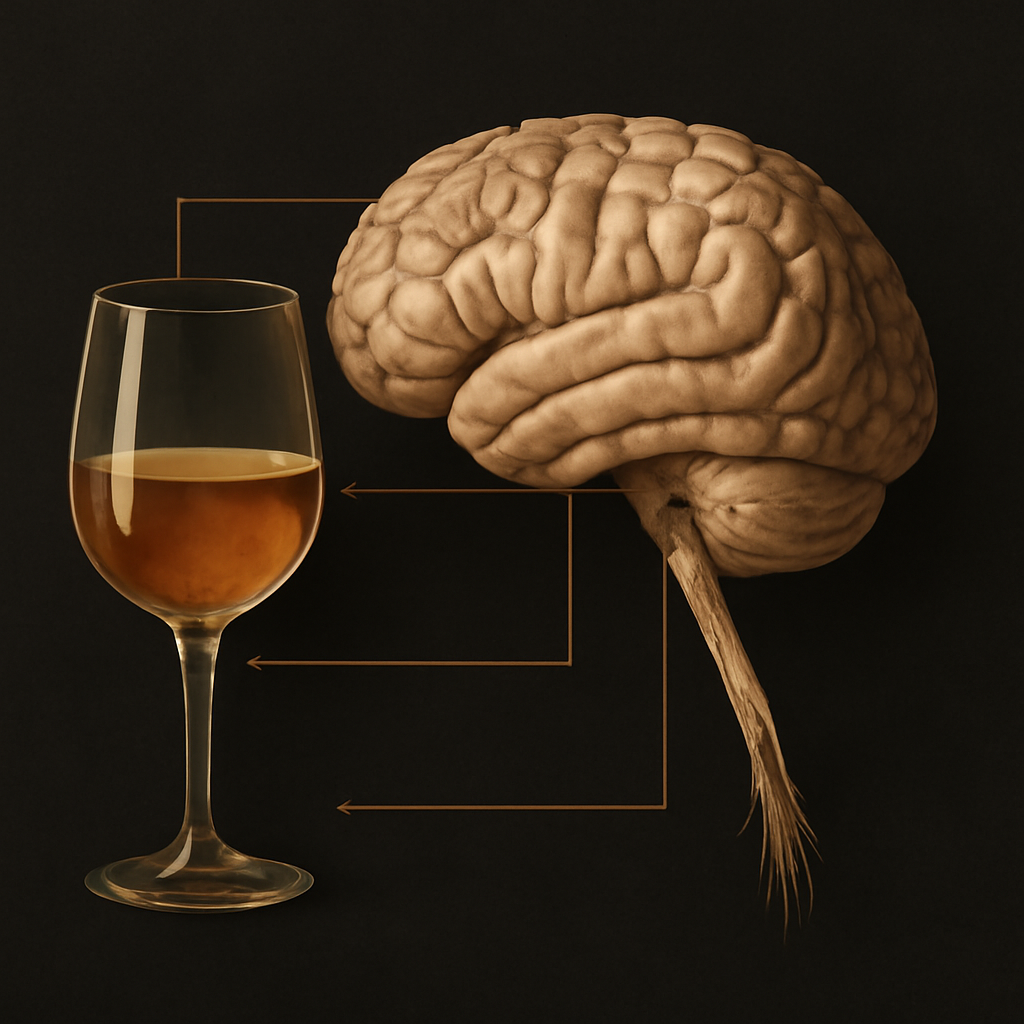
Imagine your brain is a bustling, high-tech office. Hundreds of messages are flying back and forth every second. Now, imagine someone walks in and starts turning down the lights, slowing down the internet, and sending the security guards home early. That is exactly what alcohol does. It is not actually a wild party drug for your brain cells. It is a chemical dimmer switch. It slows down everything.
When you take a sip, alcohol sneaks into your bloodstream and rushes straight to your head. Once inside, it acts like a master imposter. It mimics the brain's natural calming chemicals while blocking the ones that keep you alert. Your thinking brain starts to doze off, your worries fade away, and your muscles lose their grip. It feels great at first because your doubts and fears are the very first things to get switched off.
But as you keep drinking, the dimmer switch turns lower and lower. The parts of your brain that control speech, balance, and even your heartbeat begin to struggle. Understanding how this process works shows us why a few drinks can make us feel like the life of the party, while a few more can make us lose control of our bodies and memories entirely.
“It takes just six minutes for alcohol to reach your brain and begin changing your mind. During a blackout, you aren't forgetting what happened—your brain's 'record' button was turned completely off, meaning those memories never existed in the first place.”
Reflect
If alcohol works by slowly turning off different parts of our brain, who are we when we are drunk? Are we our 'true' selves without rules, or are we just a beautifully complex machine with its parts slowly being unplugged?
Developing confidence·Investigated 13 Jul 2026(1 month ago)·Investigation may be outdated
Your next question, in
Visual Trail
See Your Brain on Alcohol: The Slow-Motion Shut Down
A guided visual explanation assembled from QE artwork and sourced documentary images.
01 / 05
QE visual interpretation
Frame 01
Your Brain on Alcohol: The Slow-Motion Shut Down
Alcohol acts like a chemical dimmer switch, slowing down your brain's communication and turning off your filters one by one.
Image provenance and limitation
Source: AI-generated visual interpretation
Creator: Question Everything
Limitation: This image explains or evokes the subject. It is not documentary evidence and should not be used to verify a factual claim.
Evidence
What do we know?
Verified claims with confidence scoring and cited sources.
Generated without source retrieval. QE did not fetch sources for this investigation, so no citation here was checked against a retrieved set. Claims reflect the model’s training data. 4 of 4 findings carry no openable link at all.
Living footnotes
Claims remain in the reading flow. Select a citation number to inspect the source behind it.
01
ObservationalNot confirmed
Alcohol presses the brain's chemical brake pedal.
Your brain uses a chemical called GABA to calm you down when you get too stressed. It acts like a brake pedal. When alcohol enters the brain, it hooks onto the same spots that GABA uses. This tricks the brain into thinking there is a massive wave of calming chemicals.
This is why your first drink makes you feel relaxed and less worried. Your brain cells stop firing so fast, and the background noise in your head quiets down. It is a physical slowdown that feels like a mental release.
02
ObservationalNot confirmed
Alcohol blocks the brain's gas pedal.
To balance the brakes, your brain has a gas pedal chemical called glutamate. This chemical keeps you alert, helps you learn, and keeps your thoughts moving quickly. Alcohol blocks glutamate from doing its job.
With the brakes pressed down and the gas pedal blocked, your brain activity plummets. This double-whammy is the reason your reaction times slow down. It is why you cannot catch a keys-drop as fast, and why your speech starts to slur as your brain struggles to coordinate your mouth muscles.
03
ExperimentalNot confirmed
Alcohol switches off your decision-making center first.
The very front part of your brain, right behind your forehead, is called the prefrontal cortex. Think of it as the 'adult in the room.' It handles planning, self-control, and thinking about consequences.
Alcohol targets this area first. When the 'adult' goes to sleep, your filter vanishes. You might say things you normally keep to yourself, buy things you cannot afford, or think dancing on a table is a fantastic idea. You feel brave, but really, you have just lost your warning system.
04
ObservationalNot confirmed
Blackouts happen because the brain's 'save' button is disabled.
Have you ever woken up after a heavy night of drinking and realized you cannot remember how you got home? This is a blackout. It does not mean you passed out; it means your brain stopped recording.
Deep inside your brain is a tiny, curved structure called the hippocampus. Its job is to take what is happening right now and write it into your long-term memory, like hitting 'save' on a computer document. Alcohol temporarily pulls the plug on this saving process. You can still walk, talk, and argue, but your brain is not writing any of it down.
The complete record below preserves every citation, confidence input and recorded limitation.
Read the full evidence record4 findings · citations · limitations
Evidence review4 findings0 openable sources
01
Finding 1 of 4Observational
0/0 verified
Alcohol presses the brain's chemical brake pedal.
Your brain uses a chemical called GABA to calm you down when you get too stressed. It acts like a brake pedal. When alcohol enters the brain, it hooks onto the same spots that GABA uses. This tricks the brain into thinking there is a massive wave of calming chemicals.
This is why your first drink makes you feel relaxed and less worried. Your brain cells stop firing so fast, and the background noise in your head quiets down. It is a physical slowdown that feels like a mental release.
Not confirmedmodel score 100%
Written from the model's own knowledge. No source was retrieved or checked.
UNVERIFIED — NO RETRIEVAL
›View sources and limits— limits
Supporting passage
Your brain uses a chemical called GABA to calm you down when you get too stressed. It acts like a brake pedal. When alcohol enters the brain, it hooks onto the same spots that GABA uses. This tricks the brain into thinking there is a massive wave of calming chemicals.
This is why your first drink makes you feel relaxed and less worried. Your brain cells stop firing so fast, and the background noise in your head quiets down. It is a physical slowdown that feels like a mental release.
Citations (0 of 1 survived verification)
Nothing openable. No sources were retrieved for this investigation, so none were checked.
What limits this
This investigation was generated without source retrieval. The model named a source but gave no link, and no verification step ran against it.
The claim reflects the model's training data, not a checked citation.
The generator scored this 100%, which would read as “Established”. Its citations reach only “Unresolved”, so that is what is shown.
02
Finding 2 of 4Observational
0/0 verified
Alcohol blocks the brain's gas pedal.
To balance the brakes, your brain has a gas pedal chemical called glutamate. This chemical keeps you alert, helps you learn, and keeps your thoughts moving quickly. Alcohol blocks glutamate from doing its job.
With the brakes pressed down and the gas pedal blocked, your brain activity plummets. This double-whammy is the reason your reaction times slow down. It is why you cannot catch a keys-drop as fast, and why your speech starts to slur as your brain struggles to coordinate your mouth muscles.
Not confirmedmodel score 95%
Written from the model's own knowledge. No source was retrieved or checked.
UNVERIFIED — NO RETRIEVAL
›View sources and limits— limits
Supporting passage
To balance the brakes, your brain has a gas pedal chemical called glutamate. This chemical keeps you alert, helps you learn, and keeps your thoughts moving quickly. Alcohol blocks glutamate from doing its job.
With the brakes pressed down and the gas pedal blocked, your brain activity plummets. This double-whammy is the reason your reaction times slow down. It is why you cannot catch a keys-drop as fast, and why your speech starts to slur as your brain struggles to coordinate your mouth muscles.
Citations (0 of 1 survived verification)
Nothing openable. No sources were retrieved for this investigation, so none were checked.
What limits this
This investigation was generated without source retrieval. The model named a source but gave no link, and no verification step ran against it.
The claim reflects the model's training data, not a checked citation.
The generator scored this 95%, which would read as “Established”. Its citations reach only “Unresolved”, so that is what is shown.
03
Finding 3 of 4Experimental
0
0/0 verified
Alcohol switches off your decision-making center first.
The very front part of your brain, right behind your forehead, is called the prefrontal cortex. Think of it as the 'adult in the room.' It handles planning, self-control, and thinking about consequences.
Alcohol targets this area first. When the 'adult' goes to sleep, your filter vanishes. You might say things you normally keep to yourself, buy things you cannot afford, or think dancing on a table is a fantastic idea. You feel brave, but really, you have just lost your warning system.
Not confirmedmodel score 100%
Written from the model's own knowledge. No source was retrieved or checked.
UNVERIFIED — NO RETRIEVAL
›View sources and limits— limits
Supporting passage
The very front part of your brain, right behind your forehead, is called the prefrontal cortex. Think of it as the 'adult in the room.' It handles planning, self-control, and thinking about consequences.
Alcohol targets this area first. When the 'adult' goes to sleep, your filter vanishes. You might say things you normally keep to yourself, buy things you cannot afford, or think dancing on a table is a fantastic idea. You feel brave, but really, you have just lost your warning system.
Citations (0 of 1 survived verification)
Nothing openable. No sources were retrieved for this investigation, so none were checked.
What limits this
This investigation was generated without source retrieval. The model named a source but gave no link, and no verification step ran against it.
The claim reflects the model's training data, not a checked citation.
The generator scored this 100%, which would read as “Established”. Its citations reach only “Unresolved”, so that is what is shown.
04
Finding 4 of 4Observational
0/0 verified
Blackouts happen because the brain's 'save' button is disabled.
Have you ever woken up after a heavy night of drinking and realized you cannot remember how you got home? This is a blackout. It does not mean you passed out; it means your brain stopped recording.
Deep inside your brain is a tiny, curved structure called the hippocampus. Its job is to take what is happening right now and write it into your long-term memory, like hitting 'save' on a computer document. Alcohol temporarily pulls the plug on this saving process. You can still walk, talk, and argue, but your brain is not writing any of it down.
Not confirmedmodel score 100%
Written from the model's own knowledge. No source was retrieved or checked.
UNVERIFIED — NO RETRIEVAL
›View sources and limits— limits
Supporting passage
Have you ever woken up after a heavy night of drinking and realized you cannot remember how you got home? This is a blackout. It does not mean you passed out; it means your brain stopped recording.
Deep inside your brain is a tiny, curved structure called the hippocampus. Its job is to take what is happening right now and write it into your long-term memory, like hitting 'save' on a computer document. Alcohol temporarily pulls the plug on this saving process. You can still walk, talk, and argue, but your brain is not writing any of it down.
Citations (0 of 1 survived verification)
Nothing openable. No sources were retrieved for this investigation, so none were checked.
What limits this
This investigation was generated without source retrieval. The model named a source but gave no link, and no verification step ran against it.
The claim reflects the model's training data, not a checked citation.
The generator scored this 100%, which would read as “Established”. Its citations reach only “Unresolved”, so that is what is shown.
Interactive Exploration
Touch, drag, and discover
These visualizations respond to your curiosity. Interact to go deeper.
process flow
The Journey of a Sip
The Swallow
The Bloodstream
The Rush
The Takeover
spectrum
The Brain's Dimmer Switch
Slightly RelaxedTotally Shut Down
20%
The Warm Glow
50%
The Clumsy Zone
80%
The Memory Gap
95%
The Danger Zone
cause effect
The Science of Hangxiety
Causes — tap to reveal
Tap to reveal cause 1
Tap to reveal cause 2
↓
statistics card
Alcohol by the Numbers
6 Minutes
Speed of Impact
How fast alcohol can be detected in your brain after your first sip.
1 Hour
Processing Time
How long it takes your liver to break down a single normal-sized drink.
0
New Memories Saved
What happens during a blackout, even though you are awake.
Visual Gallery
Images & artifacts
Historical images, diagrams, and visual knowledge from Wikimedia Commons.
Perspectives
How is this interpreted?
Enter a viewpoint. Notice what it reveals, what it leaves out, and whether it changes the question for you.
The EmpiricistScientific viewpointEstablished lens
From a biological view, alcohol is a toxin that the body scrambles to get rid of. The liver has to work overtime to break it down, while the brain tries to adapt to the chemical chaos. If you drink regularly, the brain tries to fight back by turning down its natural brakes and turning up its gas pedals to stay awake. This is why heavy drinkers feel jittery and anxious when they stop: their brain is running on overdrive without the alcohol to hold it back.
What this lens notices
01The brain changes its physical structure to cope with regular alcohol use.
02Withdrawal symptoms are the brain's over-active gas pedal running wild.
03Brain scans show physical shrinkage in long-term heavy drinkers.
Application
Why does this matter to you?
Personal reflections and applications for your life.
Thought experimentSelf-Reflection
Next time you reach for a drink, ask yourself: what job am I hiring this drink to do?
Why it changes the question
We often drink to relieve stress, feel brave, or fit in. Knowing that alcohol chemically turns off your brain's worry center helps you see that the relief is just a temporary chemical trick, not a real solution to what is bothering you.
Try this
Try pausing before your first drink of the night and rating your stress level from 1 to 10. See if there is a non-chemical way to lower that number by even one point.
Media
QE Smart Glass
Curated media selected for this investigation.
QE Glass
YOUTUBE
How does alcohol make you drunk? - Judy Grisel
TED-Ed
Follow alcohol on its journey through the body to find out how it causes drunkenness and why it affects people differently.
QE Glass
YOUTUBE
The Neuroscience of Addiction - with Marc Lewis
The Royal Institution
Neuroscientist and former addict Marc Lewis makes the case that addiction isn't a disease at all, although it has been recently ...
QE Glass
YOUTUBE
Addiction I Full Documentary I NOVA I PBS
NOVA PBS Official
Official Website: https://to.pbs.org/3lxnr4s NOVA | PBS Hear firsthand from individuals struggling with opioid addiction and follow ...
QE Glass
YOUTUBE
How does alcohol cause hangovers? - Judy Grisel
TED-Ed
Discover how alcohol impacts your body's processes and causes hangovers, and find out what causes the most common ...
QE Glass
YOUTUBE
Alcohol and the Brain: Explained
Institute of Alcohol Studies
Alcohol very easily finds its way into the brain, and when there, has a profound effect on many of the brain's structures and ...
QE Glass
YOUTUBE
What Alcohol Does to Your Body, Brain & Health
Andrew Huberman
In this episode, I discuss the physiological effects that drinking alcohol has on the brain and body at different levels of ...
QE Glass
YOUTUBE
What Happens To Your Body When You Stop Drinking Alcohol
The Infographics Show
Drinking alcohol is one of the most popular things to do across the globe. Some people spend their entire weekends sitting at the ...
QE Glass
PODCAST
What Alcohol Does to Your Body, Brain & Health
Huberman Lab
A deep but easy-to-understand breakdown of how alcohol alters your brain chemistry, sleep, and long-term health.
Keep Going
Where this leads
Questions this investigation opens up — and what QE has already looked into.
No AI help here — no suggestions, no autocomplete, nothing finishing your sentences. That is deliberate. Working out what you think is effortful, and the effort is the part that changes you: reasoning is trained like a muscle, and a muscle that is always carried gets weaker. Let something else do the thinking and you keep the answer but lose the capacity to have reached it.
Write your current position.
Not what the page says. What you think, having read it.0 words · Nothing written yet.
Sign in to leave a mark. Your draft is saved here in the meantime.