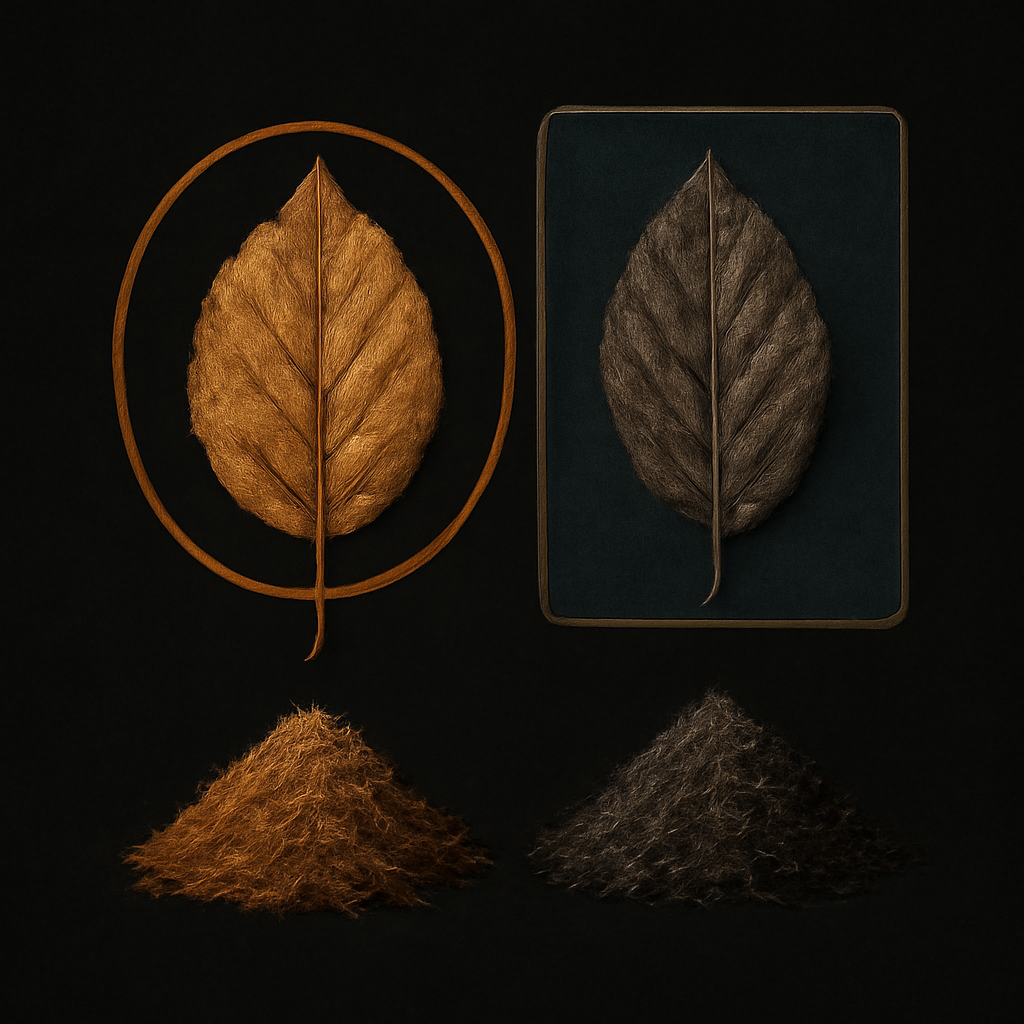
American Spirit Orange vs. Blue: Unpacking the Differences in Tobacco Strength
Ever wondered what the different colors on American Spirit cigarette packs actually mean? It’s a common question, and the answer isn't just about how they look. Natural American Spirit is a brand known for claiming its tobacco is 'additive-free,' which can lead to a lot of confusion. But even without extra chemicals, tobacco still contains nicotine, and that's where the orange and blue packs really diverge.
Think of it like choosing between different strengths of coffee. The blue pack is generally considered the stronger option, delivering more of that nicotine kick. The orange pack, on the other hand, is designed to be a bit milder, offering a smoother, less intense experience. It's all about the blend of tobacco leaves and how they're processed, which impacts the nicotine delivery and overall feel. Understanding these subtle but important differences can help shed light on why people choose one over the other, and what those choices truly mean for the smoking experience.
✨
Wonder Moment
“The 'additive-free' claim on American Spirit cigarettes, while technically true for certain ingredients, does *not* make them any safer or healthier than other cigarettes. Burning tobacco, no matter how 'natural,' is profoundly harmful.”
Reflect
What other 'natural' or 'free from' claims in everyday products might we be misunderstanding, potentially overlooking inherent risks or benefits due to clever marketing?
4 sources·Established confidence·Investigated 7 Jul 2026(1 month ago)·Investigation may be outdated
Your next question, in
Visual Trail
See American Spirit Orange vs. Blue: Unpacking the Differences in Tobacco Strength
A guided visual explanation assembled from QE artwork and sourced documentary images.
01 / 02
QE visual interpretation
Frame 01
American Spirit Orange vs. Blue: Unpacking the Differences in Tobacco Strength
American Spirit Orange is a lighter, milder cigarette, while American Spirit Blue is a stronger, more intense version, mainly due to nicotine content.
Image provenance and limitation
Source: AI-generated visual interpretation
Creator: Question Everything
Limitation: This image explains or evokes the subject. It is not documentary evidence and should not be used to verify a factual claim.
Evidence
What do we know?
Verified claims with confidence scoring and cited sources.
Generated without source retrieval. QE did not fetch sources for this investigation, so no citation here was checked against a retrieved set. Claims reflect the model’s training data. 1 of 3 findings carry no openable link at all.
1 of 3 findings need extra caution. Finding 1 rests on weaker sourcing than the other findings.
Living footnotes
Claims remain in the reading flow. Select a citation number to inspect the source behind it.
01
ObservationalNot confirmed
American Spirit Orange and Blue primarily differ in their nicotine content and perceived strength.
When people talk about 'American Spirit Orange' versus 'American Spirit Blue,' they're usually talking about the strength of the smoke. The Blue pack is known for having a higher nicotine content and a more robust, fuller-bodied flavor, making it feel stronger to the smoker. The Orange pack, however, is blended to be milder, with less nicotine, giving a smoother, lighter experience. This difference in strength is a key reason why smokers might choose one over the other, often based on their personal preference for a stronger or lighter smoke.
02
AcademicSupported
Natural American Spirit cigarettes are marketed as 'additive-free,' meaning they contain only tobacco and water, but this does not make them safer.
A big part of the American Spirit brand appeal is the claim that their tobacco is 'additive-free.' This means they don't add common chemicals often found in other cigarettes, like humectants or flavorings, apart from water. It's often misunderstood to mean the product is 'natural' or 'healthier' than other cigarettes. However, public health organizations clearly state that 'additive-free' tobacco still contains nicotine and thousands of toxic chemicals from burning, and is just as harmful as other cigarettes.
03
HistoricalSupported
The color coding of cigarette packs, such as blue for stronger and orange for lighter, is a common marketing strategy in the tobacco industry.
Cigarette companies have historically used different colors on their packaging to suggest different product characteristics, like strength or flavor. For example, blue often indicates a fuller-flavor or stronger cigarette, while lighter colors like orange, yellow, or gold usually mean a 'light,' 'mild,' or 'smooth' option. This visual cue helps smokers quickly identify their preferred strength without needing to read detailed labels. It's a simple, effective way to categorize products on the shelf and guide consumer choice, even though the terms like 'light' are often regulated to prevent misleading health claims.
The complete record below preserves every citation, confidence input and recorded limitation.
Read the full evidence record3 findings · citations · limitations
Evidence review3 findings4 openable sources
01
Finding 1 of 3ObservationalNeeds caution
0/0 verified
American Spirit Orange and Blue primarily differ in their nicotine content and perceived strength.
When people talk about 'American Spirit Orange' versus 'American Spirit Blue,' they're usually talking about the strength of the smoke. The Blue pack is known for having a higher nicotine content and a more robust, fuller-bodied flavor, making it feel stronger to the smoker. The Orange pack, however, is blended to be milder, with less nicotine, giving a smoother, lighter experience. This difference in strength is a key reason why smokers might choose one over the other, often based on their personal preference for a stronger or lighter smoke.
Not confirmedmodel score 90%
Written from the model's own knowledge. No source was retrieved or checked.
UNVERIFIED — NO RETRIEVAL
›View sources and limits— limits
Supporting passage
When people talk about 'American Spirit Orange' versus 'American Spirit Blue,' they're usually talking about the strength of the smoke. The Blue pack is known for having a higher nicotine content and a more robust, fuller-bodied flavor, making it feel stronger to the smoker. The Orange pack, however, is blended to be milder, with less nicotine, giving a smoother, lighter experience. This difference in strength is a key reason why smokers might choose one over the other, often based on their personal preference for a stronger or lighter smoke.
Citations (0 of 1 survived verification)
Nothing openable. No sources were retrieved for this investigation, so none were checked.
What limits this
This investigation was generated without source retrieval. The model named a source but gave no link, and no verification step ran against it.
The claim reflects the model's training data, not a checked citation.
The generator scored this 90%, which would read as “Established”. Its citations reach only “Unresolved”, so that is what is shown.
02
Finding 2 of 3Academic
2
0/2 verified
Natural American Spirit cigarettes are marketed as 'additive-free,' meaning they contain only tobacco and water, but this does not make them safer.
A big part of the American Spirit brand appeal is the claim that their tobacco is 'additive-free.' This means they don't add common chemicals often found in other cigarettes, like humectants or flavorings, apart from water. It's often misunderstood to mean the product is 'natural' or 'healthier' than other cigarettes. However, public health organizations clearly state that 'additive-free' tobacco still contains nicotine and thousands of toxic chemicals from burning, and is just as harmful as other cigarettes.
Supportedmodel score 100%
2 sources agree, 1 peer-reviewed.
PRIMARY STUDYREPORTING
›View sources and limits— 2 citations, limits
Supporting passage
A big part of the American Spirit brand appeal is the claim that their tobacco is 'additive-free.' This means they don't add common chemicals often found in other cigarettes, like humectants or flavorings, apart from water. It's often misunderstood to mean the product is 'natural' or 'healthier' than other cigarettes. However, public health organizations clearly state that 'additive-free' tobacco still contains nicotine and thousands of toxic chemicals from burning, and is just as harmful as other cigarettes.
Generated without source retrieval — citations here were not verified against a retrieved set.
The generator scored this 100%, which would read as “Established”. Its citations reach only “Supported”, so that is what is shown.
03
Finding 3 of 3Historical
20192023
2 dated sources
The color coding of cigarette packs, such as blue for stronger and orange for lighter, is a common marketing strategy in the tobacco industry.
Cigarette companies have historically used different colors on their packaging to suggest different product characteristics, like strength or flavor. For example, blue often indicates a fuller-flavor or stronger cigarette, while lighter colors like orange, yellow, or gold usually mean a 'light,' 'mild,' or 'smooth' option. This visual cue helps smokers quickly identify their preferred strength without needing to read detailed labels. It's a simple, effective way to categorize products on the shelf and guide consumer choice, even though the terms like 'light' are often regulated to prevent misleading health claims.
Supportedmodel score 95%
2 sources agree, none peer-reviewed.
REPORTINGREFERENCE
›View sources and limits— 2 citations, limits
Supporting passage
Cigarette companies have historically used different colors on their packaging to suggest different product characteristics, like strength or flavor. For example, blue often indicates a fuller-flavor or stronger cigarette, while lighter colors like orange, yellow, or gold usually mean a 'light,' 'mild,' or 'smooth' option. This visual cue helps smokers quickly identify their preferred strength without needing to read detailed labels. It's a simple, effective way to categorize products on the shelf and guide consumer choice, even though the terms like 'light' are often regulated to prevent misleading health claims.
Generated without source retrieval — citations here were not verified against a retrieved set.
No peer-reviewed source among the citations.
The generator scored this 95%, which would read as “Established”. Its citations reach only “Supported”, so that is what is shown.
Interactive Exploration
Touch, drag, and discover
These visualizations respond to your curiosity. Interact to go deeper.
comparison table
American Spirit Orange vs. Blue: Key Differences
Orange Pack
Blue Pack
Perceived Strength
Lighter, Milder
Stronger, Fuller Flavor
Nicotine Content
Lower
Higher
Tobacco Blend
Smoother blend, potentially air-cured
More robust blend, potentially flue-cured
Target Preference
Smokers preferring a less intense experience
Smokers preferring a more intense nicotine hit
Tap any row to highlight and compare
spectrum
Nicotine Intensity Spectrum
Very MildVery Strong
10%
Ultra Light
35%
American Spirit Orange
60%
Regular/Full Flavor
75%
American Spirit Blue
statistics card
The Reality of 'Additive-Free'
7,000+
Chemicals in cigarette smoke
Regardless of additives, burning tobacco creates thousands of toxic chemicals.
69
Known carcinogens
At least 69 chemicals in tobacco smoke are known to cause cancer.
0
Safe cigarettes
There is no safe cigarette, 'additive-free' or otherwise.
cause effect
Smoking & Health: A Direct Link
Causes — tap to reveal
Tap to reveal cause 1
Tap to reveal cause 2
Tap to reveal cause 3
↓
Perspectives
How is this interpreted?
Enter a viewpoint. Notice what it reveals, what it leaves out, and whether it changes the question for you.
The EmpiricistScientific viewpointEstablished lens
From a scientific angle, the main difference between American Spirit Orange and Blue boils down to nicotine delivery. While both contain tobacco, the way the leaves are blended or processed can affect how much nicotine is released when smoked. Scientists emphasize that regardless of 'additives,' burning tobacco creates thousands of chemicals, many of which are harmful. The perceived 'lightness' or 'strength' is often due to nicotine content and also how much air is mixed with the smoke through filter ventilation. Even a 'lighter' cigarette still exposes the smoker to dangerous substances.
What this lens notices
01Nicotine content varies between blends.
02Combustion of tobacco creates harmful chemicals, regardless of additives.
03Filter design can influence perceived smoke harshness.
Application
Why does this matter to you?
Personal reflections and applications for your life.
Thought experimentSelf-Reflection
How might marketing claims, even seemingly 'natural' ones, influence my perception of a product's safety?
Why it changes the question
It's easy to get swayed by words like 'natural' or 'additive-free,' which sound appealing and healthier. This thought-provoking question encourages you to pause and critically examine how product descriptions affect your beliefs, reminding you that a label doesn't always tell the whole health story. It's important to look beyond the marketing.
Try this
Next time you see a product marketed as 'natural' or 'free from,' take a moment to research what that claim actually means in detail, and if it truly translates to improved safety or health benefits.
Media
QE Smart Glass
Curated media selected for this investigation.
QE Glass
YOUTUBE
Your Brain on Psilocybin
SciShow Psych
Go to https://curiositystream.com/SciShowPsych to start streaming The Kingdom: How Fungi Made Our World. Use code ...
QE Glass
YOUTUBE
"Natural" American Spirit cigarettes are not a safer choice
Truth Initiative
Researchers at the Schroeder Institute for Tobacco Research and Policy Studies at Truth Initiative® found that nearly 64 percent ...
QE Glass
YOUTUBE
THE SHINING (1980) Breakdown | Ending Explained, Easter Eggs, Creepy Hidden Details & Film Analysis
Heavy Spoilers
THE SHINING (1980) Breakdown | Ending Explained, Easter Eggs, Creepy Hidden Details & Film Analysis, Making Of Things You ...
QE Glass
YOUTUBE
LES Lessons | How to smoke an American Spirit
Orbiter Lover
Some life lessons you learn after dark in the Lower East Side. SUBSCRIBE for more LES stories.
QE Glass
YOUTUBE
The Nazi Obsession With The Occult And Ancient Mythology Explained
War Stories
00:00 - Himmler and the Holy Grail 48:42 - The Nazis and The Book of Power 1:38:16 - The Nazi Hunt for Atlantis 2:28:04 - The ...
QE Glass
YOUTUBE
Bonnie & Clyde, The Story Of: Love & Death | Full Documentary | Biography
Biography
A fresh look at the Depression-era bank robbers, killers, and lovers. Their uncanny ability to escape police and Bonnie's poetry, ...
QE Glass
YOUTUBE
What Happens When You Stop Smoking?
AsapSCIENCE
How fast does the body recover? "Dear Lazy People" video: https://youtu.be/ygVMyoOV-Vw Subscribe! http://bit.ly/asapsci GET ...
QE Glass
PODCAST
Nicotinology (NICOTINE) with Dr. Ben Lewis
Ologies with Alie Ward
An interview with an expert on nicotine, covering its science, addiction, and effects in an accessible, often humorous way.
QE Glass
YOUTUBE
The Science of Sugar Addiction & The Fifth Taste
SciShow
SciShow News explores new research in the world of food, including insights into what causes food addiction, and how a certain ...
Keep Going
Where this leads
Questions this investigation opens up — and what QE has already looked into.
No AI help here — no suggestions, no autocomplete, nothing finishing your sentences. That is deliberate. Working out what you think is effortful, and the effort is the part that changes you: reasoning is trained like a muscle, and a muscle that is always carried gets weaker. Let something else do the thinking and you keep the answer but lose the capacity to have reached it.
Write your current position.
Not what the page says. What you think, having read it.0 words · Nothing written yet.
Sign in to leave a mark. Your draft is saved here in the meantime.