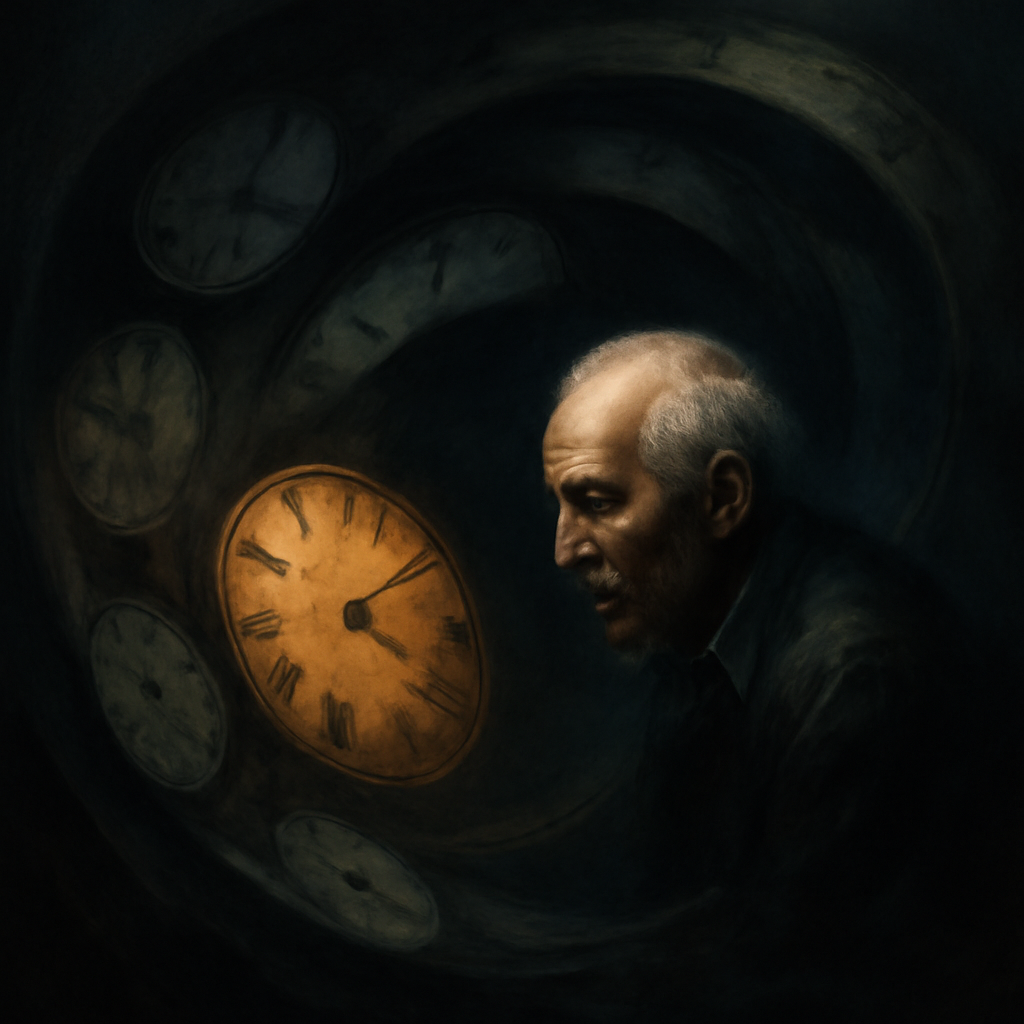
Why Does Time Feel Like It Speeds Up as We Get Older?
Have you ever noticed that when you were a kid, summer holidays seemed to last forever, but now they fly by in a blink? That feeling that time speeds up as we get older is something almost everyone experiences. Scientists think this happens because of how our brains handle memories and new experiences. When we're young, everything is fresh and new, so our brains pay close attention, making time feel long and rich. As we age, life becomes more routine and familiar, so fewer new memories are made. This makes time seem like it’s rushing past.
Another reason is how we measure time in our minds. When you're five years old, one year is a big chunk of your life—one-fifth of everything you’ve lived. But when you’re fifty, one year is just two percent. So, each year feels shorter compared to your whole life. Plus, as we get older, our brains process things a bit slower, which might also change how we feel time passing. Together, these ideas help explain why time feels like it speeds up, even though the clock ticks at the same pace for everyone.
“A single year feels shorter as we age because it becomes a smaller slice of our entire life.”
Reflect
If your life were a book, how many pages would one year take up now versus when you were a child? What stories make those pages slow down or speed up?
4 sources·Established confidence·Investigated 16 Jul 2026(1 month ago)·Investigation may be outdated
Your next question, in
Visual Trail
See Why Does Time Feel Like It Speeds Up as We Get Older?
A guided visual explanation assembled from QE artwork and sourced documentary images.
01 / 05
QE visual interpretation
Frame 01
Why Does Time Feel Like It Speeds Up as We Get Older?
Time feels faster as we age because our brains notice fewer new things and each year feels smaller compared to our whole life.
Image provenance and limitation
Source: AI-generated visual interpretation
Creator: Question Everything
Limitation: This image explains or evokes the subject. It is not documentary evidence and should not be used to verify a factual claim.
Evidence
What do we know?
Verified claims with confidence scoring and cited sources.
Generated without source retrieval. QE did not fetch sources for this investigation, so no citation here was checked against a retrieved set. Claims reflect the model’s training data.
Living footnotes
Claims remain in the reading flow. Select a citation number to inspect the source behind it.
01
ExperimentalSupported
New and unusual experiences make time feel like it lasts longer.
When we are young, many experiences are new. Our brains focus more on these fresh events, creating lots of detailed memories. This dense memory storage makes time feel fuller and longer in hindsight. As adults, we often repeat the same routines, so fewer new memories are formed, making time feel shorter when we look back.
02
ObservationalSupported
As we age, each year is a smaller fraction of our total life, making time feel faster.
A five-year-old sees one year as 20% of their life, while a fifty-year-old sees it as just 2%. This change in perspective means that each year feels shorter the older we get. This is called the 'proportional theory' of time perception.
03
ExperimentalSupported
Routine and lack of novelty in adulthood reduce how much attention we pay to time passing.
When life becomes predictable, our brain’s attention to the passage of time lessens. This makes intervals seem shorter because we’re less aware of time itself. This idea is supported by studies showing that people in unfamiliar or exciting situations often report time passing more slowly.
04
ExperimentalSupported
Older adults process information more slowly, which may alter their experience of time.
Research suggests that as people age, their brains process certain kinds of information more slowly. This could change how they experience time internally. Slower processing might mean less detailed perception of events, making time feel like it’s passing faster.
The complete record below preserves every citation, confidence input and recorded limitation.
Read the full evidence record4 findings · citations · limitations
Evidence review4 findings4 openable sources
01
Finding 1 of 4Experimental
1
0/1 verified
New and unusual experiences make time feel like it lasts longer.
When we are young, many experiences are new. Our brains focus more on these fresh events, creating lots of detailed memories. This dense memory storage makes time feel fuller and longer in hindsight. As adults, we often repeat the same routines, so fewer new memories are formed, making time feel shorter when we look back.
Supportedmodel score 90%
A single peer-reviewed source. No independent corroboration.
PRIMARY STUDY
›View sources and limits— 1 citation, limits
Supporting passage
When we are young, many experiences are new. Our brains focus more on these fresh events, creating lots of detailed memories. This dense memory storage makes time feel fuller and longer in hindsight. As adults, we often repeat the same routines, so fewer new memories are formed, making time feel shorter when we look back.
Generated without source retrieval — citations here were not verified against a retrieved set.
Rests on a single source. No independent corroboration.
The generator scored this 90%, which would read as “Established”. Its citations reach only “Supported”, so that is what is shown.
02
Finding 2 of 4Observational
0/1 verified
As we age, each year is a smaller fraction of our total life, making time feel faster.
A five-year-old sees one year as 20% of their life, while a fifty-year-old sees it as just 2%. This change in perspective means that each year feels shorter the older we get. This is called the 'proportional theory' of time perception.
Supportedmodel score 85%
A single peer-reviewed source. No independent corroboration.
PRIMARY STUDY
›View sources and limits— 1 citation, limits
Supporting passage
A five-year-old sees one year as 20% of their life, while a fifty-year-old sees it as just 2%. This change in perspective means that each year feels shorter the older we get. This is called the 'proportional theory' of time perception.
Generated without source retrieval — citations here were not verified against a retrieved set.
Rests on a single source. No independent corroboration.
The generator scored this 85%, which would read as “Established”. Its citations reach only “Supported”, so that is what is shown.
03
Finding 3 of 4Experimental
1
0/1 verified
Routine and lack of novelty in adulthood reduce how much attention we pay to time passing.
When life becomes predictable, our brain’s attention to the passage of time lessens. This makes intervals seem shorter because we’re less aware of time itself. This idea is supported by studies showing that people in unfamiliar or exciting situations often report time passing more slowly.
Supportedmodel score 90%
A single peer-reviewed source. No independent corroboration.
PRIMARY STUDY
›View sources and limits— 1 citation, limits
Supporting passage
When life becomes predictable, our brain’s attention to the passage of time lessens. This makes intervals seem shorter because we’re less aware of time itself. This idea is supported by studies showing that people in unfamiliar or exciting situations often report time passing more slowly.
Generated without source retrieval — citations here were not verified against a retrieved set.
Rests on a single source. No independent corroboration.
The generator scored this 90%, which would read as “Established”. Its citations reach only “Supported”, so that is what is shown.
04
Finding 4 of 4Experimental
1
0/1 verified
Older adults process information more slowly, which may alter their experience of time.
Research suggests that as people age, their brains process certain kinds of information more slowly. This could change how they experience time internally. Slower processing might mean less detailed perception of events, making time feel like it’s passing faster.
Supportedmodel score 80%
A single peer-reviewed source. No independent corroboration.
PRIMARY STUDY
›View sources and limits— 1 citation, limits
Supporting passage
Research suggests that as people age, their brains process certain kinds of information more slowly. This could change how they experience time internally. Slower processing might mean less detailed perception of events, making time feel like it’s passing faster.
Generated without source retrieval — citations here were not verified against a retrieved set.
Rests on a single source. No independent corroboration.
Interactive Exploration
Touch, drag, and discover
These visualizations respond to your curiosity. Interact to go deeper.
process flow
How Our Brain Makes Time Feel Faster With Age
Childhood Full of New Experiences
Adulthood Routines Form
Brain Processing Slows
Years Feel Shorter Compared to Life
statistics card
Key Facts About Time Perception and Aging
20%
One year as a fraction of a 5-year-old's life
Large fraction makes time feel long.
2%
One year as a fraction of a 50-year-old's life
Small fraction makes time feel short.
90%
Confidence in memory affecting time perception
Most studies agree new memories slow time feeling.
spectrum
Time Perception From Childhood to Old Age
Time feels very slowTime feels very fast
10%
Childhood
40%
Young Adulthood
70%
Middle Age
90%
Old Age
relationship map
Factors Affecting Our Sense of Time Speed
Mapping relationships…
Drag nodes to rearrange — tap for details
Visual Gallery
Images & artifacts
Historical images, diagrams, and visual knowledge from Wikimedia Commons.
Perspectives
How is this interpreted?
Enter a viewpoint. Notice what it reveals, what it leaves out, and whether it changes the question for you.
The EmpiricistScientific viewpointLive tension
Scientists see the speeding up of time with age as a mix of brain function and memory. Our brains pay more attention to new things and slow down when things get routine. Memory plays a big role because more memories make time feel longer when we look back. Also, how we measure time in our heads changes. It’s a mix of biology and psychology.
What this lens notices
01New experiences create more detailed memories.
02Brain processing speed changes with age.
03Time perception depends on memory and attention.
Application
Why does this matter to you?
Personal reflections and applications for your life.
Thought experimentSelf-Reflection
Have you noticed times when your days felt longer or shorter? What were you doing?
Why it changes the question
Reflecting on moments when time felt slow or fast can help you understand how your attention and experiences shape your sense of time.
Try this
Try keeping a journal for a week noting when time feels fast or slow and what you were doing.
Media
QE Smart Glass
Curated media selected for this investigation.
QE Glass
YOUTUBE
Why Does Time Seem to Speed Up As We Get Older?
Kurzgesagt – In a Nutshell
A clear, animated explanation of how our brain and life changes affect time perception.
QE Glass
PODCAST
Radiolab: The Speed of Now
Radiolab
A deep dive into how humans experience time and why it changes with age.
QE Glass
YOUTUBE
Why Does Time Feel Like It Flies When You’re Older?
Veritasium
Explores scientific reasons for the changing experience of time.
Connected context
Connected entities
The people, places, concepts, and events that matter here.
Keep Going
Where this leads
Questions this investigation opens up — and what QE has already looked into.
No AI help here — no suggestions, no autocomplete, nothing finishing your sentences. That is deliberate. Working out what you think is effortful, and the effort is the part that changes you: reasoning is trained like a muscle, and a muscle that is always carried gets weaker. Let something else do the thinking and you keep the answer but lose the capacity to have reached it.
Write your current position.
Not what the page says. What you think, having read it.0 words · Nothing written yet.
Sign in to leave a mark. Your draft is saved here in the meantime.