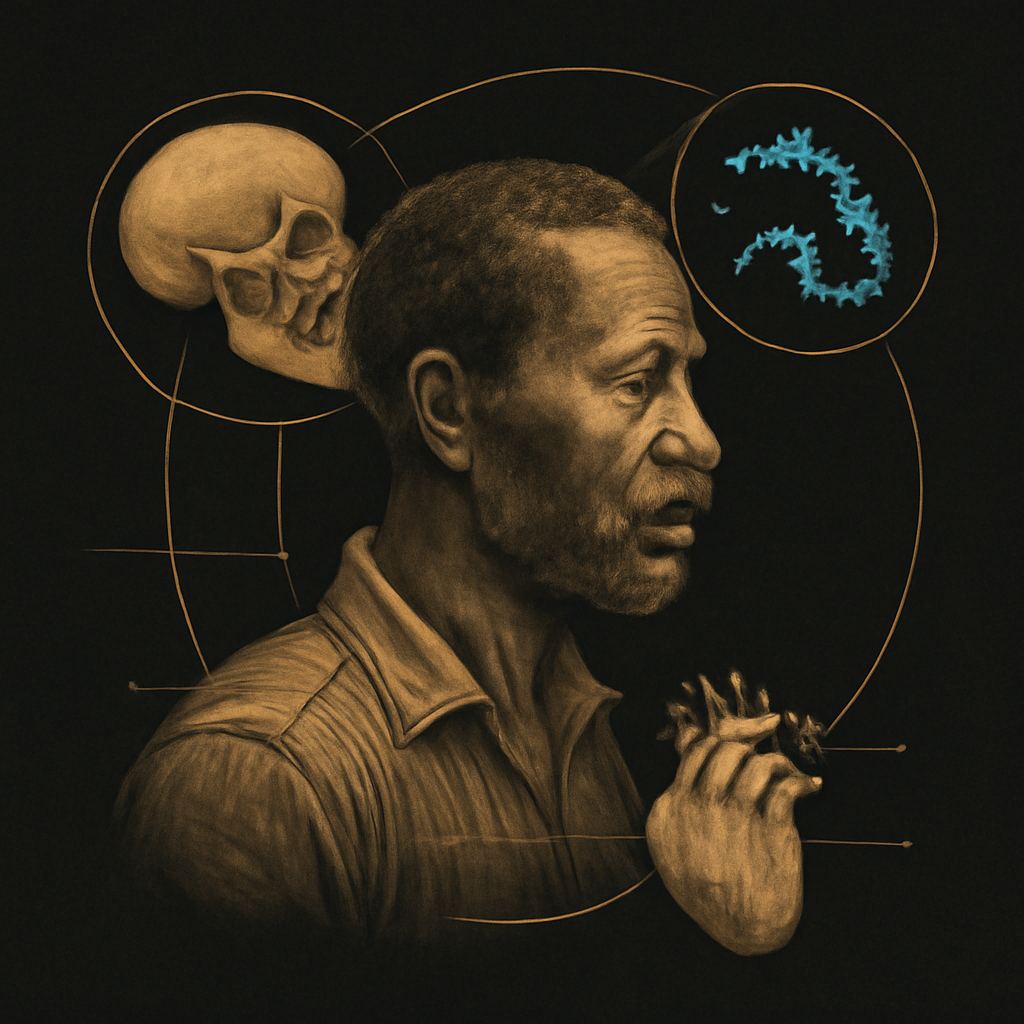
This is a CONFIRMED historical event. For forty years, the US government ran a secret medical study on poor Black men in Alabama. These men had syphilis, a painful and deadly disease. Government doctors promised them free healthcare. But it was a lie. They actually gave the men fake pills and water shots. They just wanted to watch how the disease slowly destroyed the human body.
The worst part? In the 1940s, doctors found that penicillin easily cured syphilis. Yet, the researchers actively blocked the men from getting it. They even let them pass the disease to their wives and children. This horror finally ended in 1972 when a whistleblower told the press. The government eventually apologized, but the damage was done. It shattered trust in medicine for generations.
“For forty years, the American government watched hundreds of Black men suffer from a deadly disease without treating them, even though a cheap, simple cure was widely available.”
Reflect
How can we build trust in medical science when the institutions meant to heal us have historically been used to harm us?
Research·2 sources·Developing confidence·Investigated 2 Aug 2026(1 month ago)·Grounded; verification trace not recorded·Investigation may be outdated
Your next question, in
Visual Trail
See The Tuskegee Syphilis Study
A guided visual explanation assembled from QE artwork and sourced documentary images.
01 / 05
QE visual interpretation
Frame 01
The Tuskegee Syphilis Study
A confirmed government study where US doctors secretly withheld life-saving treatment from Black men for 40 years just to watch them die.
Image provenance and limitation
Source: AI-generated visual interpretation
Creator: Question Everything
Limitation: This image explains or evokes the subject. It is not documentary evidence and should not be used to verify a factual claim.
Evidence
What do we know?
Verified claims with confidence scoring and cited sources.
2 of 3 findings need extra caution. Finding 1, Finding 3 rest on weaker sourcing than the other findings.
Living footnotes
Claims remain in the reading flow. Select a citation number to inspect the source behind it.
01
HistoricalNot confirmed
Researchers lied to 600 Black men, telling them they were being treated for 'bad blood' while actually tracking how syphilis destroys the body.
In 1932, the U.S. government started a study in Alabama. They recruited poor Black sharecroppers. They promised free meals and doctor visits. But they hid the truth. They never told 399 of the men they had syphilis. Instead, they used the vague term 'bad blood' to cover it up. They wanted to see what the disease would do to their bodies over time, all the way to death.
02
HistoricalSupported
Medical officials actively blocked the men from getting penicillin, which was the standard cure for syphilis.
By 1945, penicillin was known as a safe, easy cure for syphilis. But researchers did not give it to the men. They even stopped them from getting treatment elsewhere. They wanted to keep watching the disease ruin their bodies. Because of this, over 100 men died. Some passed the disease to their wives and children. The study only stopped in 1972 when a whistleblower told the newspapers.
03
HistoricalNot confirmed
The same government researcher helped run another study in Guatemala where people were intentionally infected with sexually transmitted diseases.
This was not a one-time mistake. From 1946 to 1948, the U.S. government ran another secret experiment in Guatemala. Led by Dr. John Cutler, who also worked on the Tuskegee study, researchers did not just watch a disease. They actually infected nearly 700 people on purpose. This included prisoners, soldiers, and mental health patients. They did this without consent to test if penicillin could prevent infections.
The complete record below preserves every citation, confidence input and recorded limitation.
Read the full evidence record3 findings · citations · limitations
Evidence review3 findings2 openable sources
01
Finding 1 of 3HistoricalNeeds caution
0/0 verified
Researchers lied to 600 Black men, telling them they were being treated for 'bad blood' while actually tracking how syphilis destroys the body.
In 1932, the U.S. government started a study in Alabama. They recruited poor Black sharecroppers. They promised free meals and doctor visits. But they hid the truth. They never told 399 of the men they had syphilis. Instead, they used the vague term 'bad blood' to cover it up. They wanted to see what the disease would do to their bodies over time, all the way to death.
Not confirmedmodel score 30%
Scored as if sourced, but every citation failed verification.
NO SURVIVING CITATION
›View sources and limits— limits
Supporting passage
In 1932, the U.S. government started a study in Alabama. They recruited poor Black sharecroppers. They promised free meals and doctor visits. But they hid the truth. They never told 399 of the men they had syphilis. Instead, they used the vague term 'bad blood' to cover it up. They wanted to see what the disease would do to their bodies over time, all the way to death.
Citations (0 of 2 survived verification)
Nothing openable. Every citation was removed by provenance validation.
What limits this
All 2 citations on this claim failed verification and were removed. Nothing openable supports it.
02
Finding 2 of 3Historical
20222021
2 dated sources
Medical officials actively blocked the men from getting penicillin, which was the standard cure for syphilis.
By 1945, penicillin was known as a safe, easy cure for syphilis. But researchers did not give it to the men. They even stopped them from getting treatment elsewhere. They wanted to keep watching the disease ruin their bodies. Because of this, over 100 men died. Some passed the disease to their wives and children. The study only stopped in 1972 when a whistleblower told the newspapers.
Supportedmodel score 99%
2 sources agree, none peer-reviewed.
REFERENCE ×2
›View sources and limits— 2 citations, limits
Supporting passage
By 1945, penicillin was known as a safe, easy cure for syphilis. But researchers did not give it to the men. They even stopped them from getting treatment elsewhere. They wanted to keep watching the disease ruin their bodies. Because of this, over 100 men died. Some passed the disease to their wives and children. The study only stopped in 1972 when a whistleblower told the newspapers.
The generator scored this 99%, which would read as “Established”. Its citations reach only “Supported”, so that is what is shown.
03
Finding 3 of 3HistoricalNeeds caution
0/0 verified
The same government researcher helped run another study in Guatemala where people were intentionally infected with sexually transmitted diseases.
This was not a one-time mistake. From 1946 to 1948, the U.S. government ran another secret experiment in Guatemala. Led by Dr. John Cutler, who also worked on the Tuskegee study, researchers did not just watch a disease. They actually infected nearly 700 people on purpose. This included prisoners, soldiers, and mental health patients. They did this without consent to test if penicillin could prevent infections.
Not confirmedmodel score 30%
Scored as if sourced, but every citation failed verification.
NO SURVIVING CITATION
›View sources and limits— limits
Supporting passage
This was not a one-time mistake. From 1946 to 1948, the U.S. government ran another secret experiment in Guatemala. Led by Dr. John Cutler, who also worked on the Tuskegee study, researchers did not just watch a disease. They actually infected nearly 700 people on purpose. This included prisoners, soldiers, and mental health patients. They did this without consent to test if penicillin could prevent infections.
Citations (0 of 1 survived verification)
Nothing openable. Every citation was removed by provenance validation.
What limits this
All 1 citation on this claim failed verification and were removed. Nothing openable supports it.
Interactive Exploration
Touch, drag, and discover
These visualizations respond to your curiosity. Interact to go deeper.
timeline
The Forty-Year Timeline of the Tuskegee Study
Loading timeline…
statistics card
The Human Cost of the Tuskegee Experiment
600
Total participants
Black men from Macon County, Alabama, who were mostly poor sharecroppers.
399
Men with syphilis
The group whose disease was left untreated to observe its progression.
40
Years of study
The experiment ran from 1932 to 1972 without the men's informed consent.
100+
Deaths
Over one hundred men died from syphilis or related complications during the study.
Visual Gallery
Images & artifacts
Historical images, diagrams, and visual knowledge from Wikimedia Commons.
Perspectives
How is this interpreted?
Enter a viewpoint. Notice what it reveals, what it leaves out, and whether it changes the question for you.
The EmpiricistScientific viewpointEstablished lens
Modern scientists view Tuskegee as a total failure of medical ethics. It led to strict new laws. Today, every medical study must have independent reviews to protect human rights. Researchers must get clear, informed consent from participants. This means explaining all risks and benefits in plain language before anyone signs up. No one can be experimented on in secret ever again.
What this lens notices
01Led to the National Research Act of 1974
02Established Institutional Review Boards to monitor studies
03Made informed consent a legal requirement
Application
Why does this matter to you?
Personal reflections and applications for your life.
Thought experimentSelf-Reflection
How do past historical wrongs shape how you view official advice from the government or doctors today?
Why it changes the question
Trust is hard to build but very easy to destroy. Understanding history helps us see why some communities are wary of medical recommendations.
Try this
Research the history of medical practices in your own community to see how past events influence current attitudes.
Media
QE Smart Glass
Curated media selected for this investigation.
QE Glass
YOUTUBE
The Tuskegee Study
Black History in Two Minutes or so
In 1932 the United States Public Health Service commissioned a study on the effects of untreated syphilis. 600 poor black men ...
QE Glass
YOUTUBE
The Appalling Tuskegee Syphilis Experiment
Today I Found Out
If you happen to like our videos and have a few bucks to spare to support our efforts, check out our Patreon page where we've got ...
QE Glass
YOUTUBE
The Tuskegee Syphilis Experiment: A Tragedy of Race and Medicine
UNHCOLA
Delivered Tuesday, April 24, 2012 by James H. Jones, PhD; Historian, Professor Emeritus, University of Arkansas and Author, Bad ...
QE Glass
YOUTUBE
The Tuskegee Syphilis Experiment and Medical Ethics
fybmaryland
University of Maryland Associate Professor of Philosophy, Dr. Sam Kerstein, explains the Tuskegee Syphilis Experiment and how ...
QE Glass
YOUTUBE
Tuskegee Syphilis Experiment: Short Documentary of Deadly Deception
Daily Dose Documentary
Daily Dose Documentary provides history documentaries like this one delivered to your inbox daily: ...
QE Glass
YOUTUBE
The Tuskegee Experiment: Crash Course Black American History #29
CrashCourse
From 1932 to 1972, the United States Public Health Service and the Centers for Disease Control and Prevention operated an ...
QE Glass
PODCAST
The Great Lies of Tuskegee
Radiolab
An in-depth audio documentary exploring the voices of the families affected and the whistleblowers who stopped it.
Connected context
Connected entities
The people, places, concepts, and events that matter here.
Keep Going
Where this leads
Questions this investigation opens up — and what QE has already looked into.
No AI help here — no suggestions, no autocomplete, nothing finishing your sentences. That is deliberate. Working out what you think is effortful, and the effort is the part that changes you: reasoning is trained like a muscle, and a muscle that is always carried gets weaker. Let something else do the thinking and you keep the answer but lose the capacity to have reached it.
Write your current position.
Not what the page says. What you think, having read it.0 words · Nothing written yet.
Sign in to leave a mark. Your draft is saved here in the meantime.