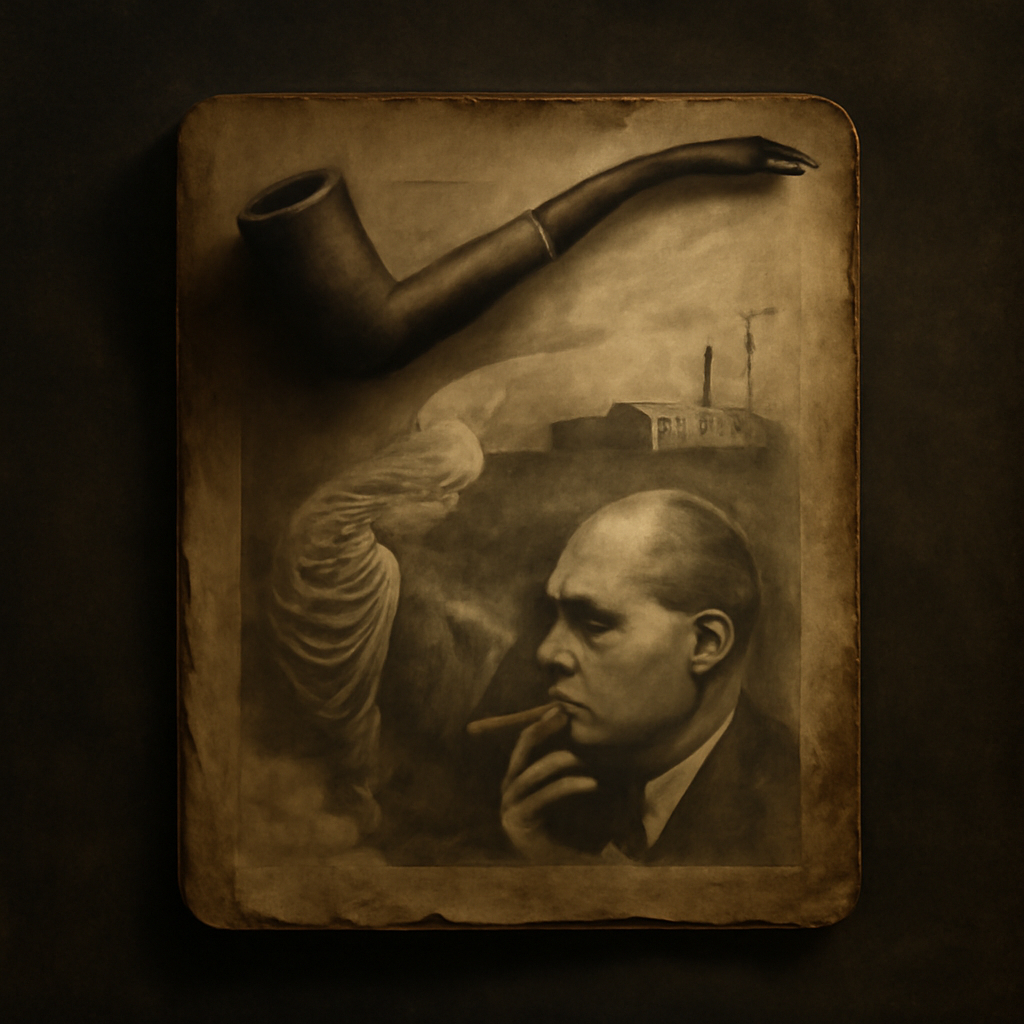
This is CONFIRMED. For decades, the world's biggest cigarette companies publicly lied about the dangers of smoking while privately knowing the deadly truth. Declassified internal documents, released through massive lawsuits, prove that industry scientists linked smoking to lung cancer as early as the 1950s. They knew nicotine was highly addictive. Yet, in public, they ran massive ad campaigns claiming there was "no proof" of any danger. They spent millions to create doubt, buy off scientists, and keep people hooked.
The evidence is written in their own words. In 1963, a top tobacco lawyer wrote that they were "in the business of selling nicotine, an addictive drug." But publicly, executives swore under oath that cigarettes did not cause cancer or addiction. While some defenders argued the early science was still developing, the courts ruled that the industry deliberately misled the public. It was one of the biggest corporate cover-ups in human history.
“Tobacco companies privately knew their products caused cancer and were highly addictive by the mid-1950s, yet they publicly denied it for decades until a court forced them to admit the truth.”
Reflect
If a massive industry could successfully hide a deadly truth for fifty years, what modern corporate secrets are we still waiting to uncover?
Research·1 source·Developing confidence·Investigated 2 Aug 2026(1 month ago)·Grounded; verification trace not recorded·Investigation may be outdated
Your next question, in
Visual Trail
See The Tobacco Files: What Big Tobacco Hid
A guided visual explanation assembled from QE artwork and sourced documentary images.
01 / 02
QE visual interpretation
Frame 01
The Tobacco Files: What Big Tobacco Hid
It is confirmed that tobacco companies knew smoking caused cancer and was addictive by the 1950s, but lied to the public for decades to protect profits.
Image provenance and limitation
Source: AI-generated visual interpretation
Creator: Question Everything
Limitation: This image explains or evokes the subject. It is not documentary evidence and should not be used to verify a factual claim.
Evidence
What do we know?
Verified claims with confidence scoring and cited sources.
2 of 3 findings need extra caution. Finding 1, Finding 3 rest on weaker sourcing than the other findings.
Living footnotes
Claims remain in the reading flow. Select a citation number to inspect the source behind it.
01
HistoricalNot confirmed
Tobacco companies privately agreed that cigarettes caused cancer by the mid-1950s.
In public, cigarette companies released a statement in 1954 claiming there was no proof smoking caused lung cancer. But behind closed doors, their own scientists knew the truth. By 1958, three top scientists from British American Tobacco visited the US. They found that almost every expert they met, inside and outside the industry, believed the cancer link was already proven. They chose to keep this quiet to protect their profits.
02
HistoricalSupported
The tobacco industry secretly paid Hollywood to place cigarettes in movies and television.
During the 1980s, major tobacco firms hired aggressive agencies to put their brands in popular films and TV shows. They wanted smoking to look cool and positive. One company, RJ Reynolds, even gave free cigarettes to actors every month to get them hooked. They did this to keep people smoking, even as they publicly claimed they did not target young people or try to recruit new smokers.
03
HistoricalNot confirmed
Tobacco executives lied under oath to Congress about the addictiveness of nicotine.
In 1994, top tobacco bosses testified before the US Congress. They swore under oath that nicotine was not addictive and that they did not manipulate nicotine levels to hook smokers. However, internal documents later proved they knew nicotine was highly addictive. In fact, a court in 2006 found them guilty of a massive, 50-year conspiracy to lie to the public about the dangers and addictiveness of smoking.
The complete record below preserves every citation, confidence input and recorded limitation.
Read the full evidence record3 findings · citations · limitations
Evidence review3 findings1 openable sources
01
Finding 1 of 3HistoricalNeeds caution
0/0 verified
Tobacco companies privately agreed that cigarettes caused cancer by the mid-1950s.
In public, cigarette companies released a statement in 1954 claiming there was no proof smoking caused lung cancer. But behind closed doors, their own scientists knew the truth. By 1958, three top scientists from British American Tobacco visited the US. They found that almost every expert they met, inside and outside the industry, believed the cancer link was already proven. They chose to keep this quiet to protect their profits.
Not confirmedmodel score 30%
Scored as if sourced, but every citation failed verification.
NO SURVIVING CITATION
›View sources and limits— limits
Supporting passage
In public, cigarette companies released a statement in 1954 claiming there was no proof smoking caused lung cancer. But behind closed doors, their own scientists knew the truth. By 1958, three top scientists from British American Tobacco visited the US. They found that almost every expert they met, inside and outside the industry, believed the cancer link was already proven. They chose to keep this quiet to protect their profits.
Citations (0 of 1 survived verification)
Nothing openable. Every citation was removed by provenance validation.
What limits this
All 1 citation on this claim failed verification and were removed. Nothing openable supports it.
02
Finding 2 of 3Historical
2002
1 dated source
The tobacco industry secretly paid Hollywood to place cigarettes in movies and television.
During the 1980s, major tobacco firms hired aggressive agencies to put their brands in popular films and TV shows. They wanted smoking to look cool and positive. One company, RJ Reynolds, even gave free cigarettes to actors every month to get them hooked. They did this to keep people smoking, even as they publicly claimed they did not target young people or try to recruit new smokers.
Supportedmodel score 95%
A single peer-reviewed source. No independent corroboration.
PRIMARY STUDY
›View sources and limits— 1 citation, limits
Supporting passage
During the 1980s, major tobacco firms hired aggressive agencies to put their brands in popular films and TV shows. They wanted smoking to look cool and positive. One company, RJ Reynolds, even gave free cigarettes to actors every month to get them hooked. They did this to keep people smoking, even as they publicly claimed they did not target young people or try to recruit new smokers.
Rests on a single source. No independent corroboration.
The generator scored this 95%, which would read as “Established”. Its citations reach only “Supported”, so that is what is shown.
03
Finding 3 of 3HistoricalNeeds caution
0/0 verified
Tobacco executives lied under oath to Congress about the addictiveness of nicotine.
In 1994, top tobacco bosses testified before the US Congress. They swore under oath that nicotine was not addictive and that they did not manipulate nicotine levels to hook smokers. However, internal documents later proved they knew nicotine was highly addictive. In fact, a court in 2006 found them guilty of a massive, 50-year conspiracy to lie to the public about the dangers and addictiveness of smoking.
Not confirmedmodel score 30%
Scored as if sourced, but every citation failed verification.
NO SURVIVING CITATION
›View sources and limits— limits
Supporting passage
In 1994, top tobacco bosses testified before the US Congress. They swore under oath that nicotine was not addictive and that they did not manipulate nicotine levels to hook smokers. However, internal documents later proved they knew nicotine was highly addictive. In fact, a court in 2006 found them guilty of a massive, 50-year conspiracy to lie to the public about the dangers and addictiveness of smoking.
Citations (0 of 1 survived verification)
Nothing openable. Every citation was removed by provenance validation.
What limits this
All 1 citation on this claim failed verification and were removed. Nothing openable supports it.
Interactive Exploration
Touch, drag, and discover
These visualizations respond to your curiosity. Interact to go deeper.
timeline
Timeline of Deception: What They Knew vs. What They Said
Loading timeline…
statistics card
The Real Cost of the Cover-Up
10 Million
Deaths in the US
Number of Americans who have died from tobacco-related causes since 1964.
$206 Billion
Settlement Cost
The amount major US tobacco companies were forced to pay to settle lawsuits over health costs.
15x
Combined Risk
How much more likely you are to get oral cancer when combining smoking with alcohol.
Perspectives
How is this interpreted?
Enter a viewpoint. Notice what it reveals, what it leaves out, and whether it changes the question for you.
The EmpiricistScientific viewpointEstablished lens
Public health scientists argue that the tobacco industry's deception caused millions of preventable deaths. By funding fake research and creating false doubt, the industry delayed life-saving laws and warning labels. To scientists, this was not just a clever marketing campaign. It was a deadly, organized effort to put corporate profits ahead of human lives, using science itself as a weapon to confuse the public.
What this lens notices
01Deceived the public about cancer risks
02Delayed public health regulations
03Manipulated scientific research
Application
Why does this matter to you?
Personal reflections and applications for your life.
Thought experimentPractical
How can you spot when a company is trying to create 'fake doubt' about a product's safety?
Why it changes the question
Tobacco companies didn't try to prove cigarettes were safe; they just tried to make people think the science was undecided. Recognizing this tactic helps you see through modern marketing tricks.
Try this
Look at a controversial product today and check if the critics are funded by the industry selling it.
Media
QE Smart Glass
Curated media selected for this investigation.
QE Glass
YOUTUBE
Tobacco and Cancer Study Controversy
Voice of America
A lung cancer study is being discredited because it was funded in part by a tobacco company.
QE Glass
YOUTUBE
Cancer-Free Word Podcast: Vaping, Tobacco & Nicotine w/ Ted Wagener
Ohio State University Comprehensive Cancer Center-James Cancer Hospital & Solove Research Institute
Is vaping creating a new generation of smokers and increasing the cancer risk? Ted Wagener, PhD, the director of the OSUCCC ...
QE Glass
YOUTUBE
Tobacco is a Killer
Zulu Warrior
Tobacco has shaped human history for centuries — but behind the smoke lies one of the deadliest substances ever consumed.
QE Glass
YOUTUBE
Fight Against the Global Tobacco Epidemic with Dr. Geoffrey T Fong
Centre for International Governance Innovation
Tobacco use has been recognized by the World Health Organization as the number one preventable cause of premature death ...
QE Glass
YOUTUBE
Interview: Clarence Cook Little from Council for Tobacco Research
dna
Clarence Cook Little speaks about Cancer causign agents in tobacco smoke and tar. Filter Cigarettes.
QE Glass
YOUTUBE
Richard Doll: The man who stopped smoking
The BMJ
Richard Doll was a luminary of clinical research whose case control study, published in the BMJ in 1950, first identified smoking ...
QE Glass
YOUTUBE
Addressing Passive Smoking: Advocating for the Abolition of Tobacco Smoking and Cigarette Sales
My future in jobs
From the 1920s to the 1950s, the tobacco industry undertook a marketing campaign to hide the hazards of smoking and lure new ...
QE Glass
PODCAST
How the Tobacco Industry Smoke-Screened the World
Behind the Bastards
An engaging, narrative podcast episode exploring the historical lies and secret tactics of Big Tobacco.
Connected context
Connected entities
The people, places, concepts, and events that matter here.
Keep Going
Where this leads
Questions this investigation opens up — and what QE has already looked into.
No AI help here — no suggestions, no autocomplete, nothing finishing your sentences. That is deliberate. Working out what you think is effortful, and the effort is the part that changes you: reasoning is trained like a muscle, and a muscle that is always carried gets weaker. Let something else do the thinking and you keep the answer but lose the capacity to have reached it.
Write your current position.
Not what the page says. What you think, having read it.0 words · Nothing written yet.
Sign in to leave a mark. Your draft is saved here in the meantime.