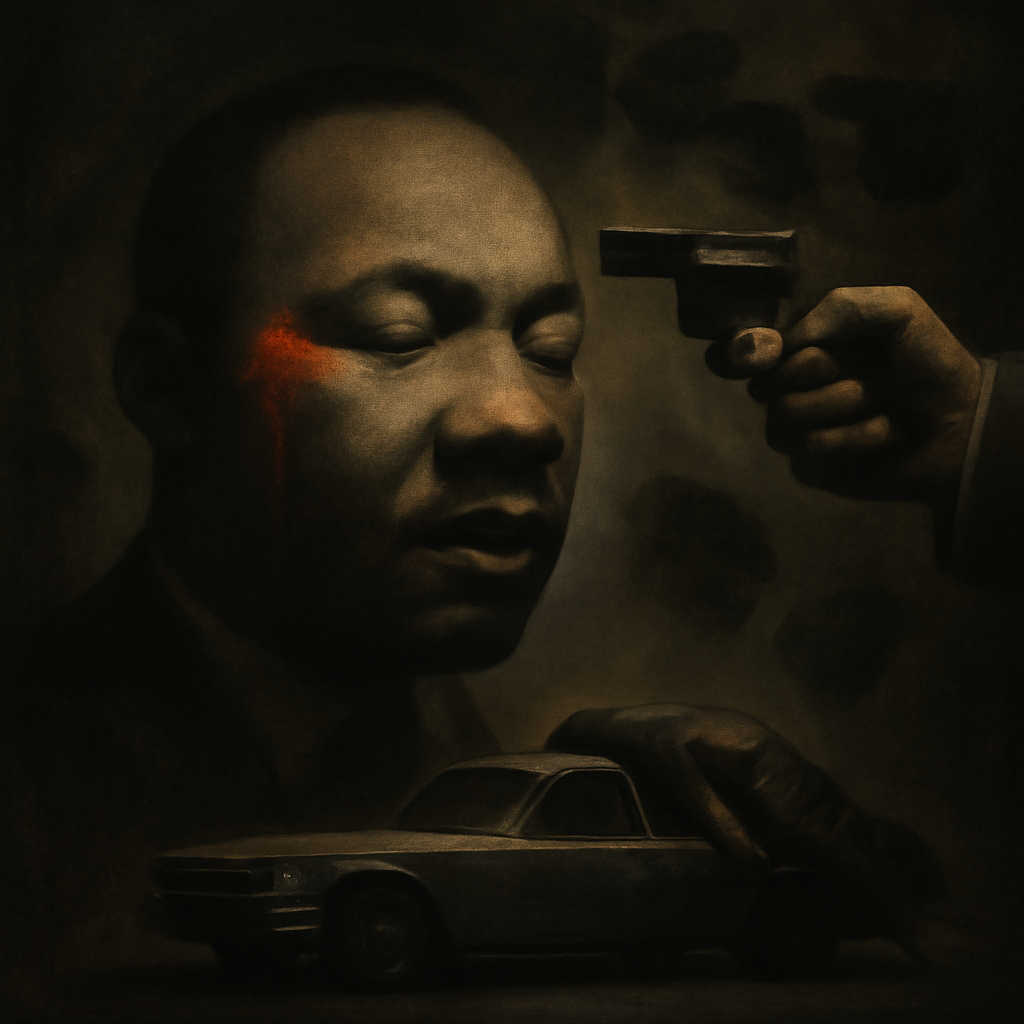
Who Killed Martin Luther King Jr.? Unraveling the Truth Behind the Assassination
On April 4, 1968, the world lost one of its most iconic voices of justice and equality, Dr. Martin Luther King Jr., when he was fatally shot on the balcony of the Lorraine Motel in Memphis, Tennessee. The official story names James Earl Ray, a small-time criminal and escaped convict, as the assassin who fired the single bullet that ended King's life. Ray pleaded guilty and was sentenced to 99 years in prison, but he later recanted, claiming innocence and sparking decades of debate and conspiracy theories.
Despite the conviction, questions linger. King's family and some investigators suspect a larger conspiracy involving government agencies and other actors. Civil rights activists and scholars have probed these claims, weighing evidence and analyzing the turbulent political context of the 1960s. This knowledge page navigates the complex web of facts, investigations, and theories to bring clearer understanding to one of America's most painful moments.
“Though James Earl Ray was legally convicted as Martin Luther King Jr.'s assassin, the persistent doubts and conflicting stories reflect the deep scars and complexities of a nation grappling with its own struggles for justice.”
Reflect
What does it say about a society when the truth behind a pivotal event remains debated decades later, and how does that shape our understanding of history and justice?
Research·5 sources·Established confidence·Investigated 19 Jul 2026(2 months ago)·Grounded; verification trace not recorded·Investigation may be outdated
Your next question, in
Visual Trail
See Who Killed Martin Luther King Jr.? Unraveling the Truth Behind the Assassination
A guided visual explanation assembled from QE artwork and sourced documentary images.
01 / 05
QE visual interpretation
Frame 01
Who Killed Martin Luther King Jr.? Unraveling the Truth Behind the Assassination
James Earl Ray was convicted of killing Martin Luther King Jr., though debates about a conspiracy persist.
Image provenance and limitation
Source: AI-generated visual interpretation
Creator: Question Everything
Limitation: This image explains or evokes the subject. It is not documentary evidence and should not be used to verify a factual claim.
Evidence
What do we know?
Verified claims with confidence scoring and cited sources.
1 of 5 findings need extra caution. Finding 1 rests on weaker sourcing than the other findings.
Living footnotes
Claims remain in the reading flow. Select a citation number to inspect the source behind it.
01
HistoricalNot confirmed
James Earl Ray was convicted for the assassination of Martin Luther King Jr.
James Earl Ray, an escaped convict and career criminal, was arrested in London in June 1968 after fleeing the United States. He pleaded guilty to the assassination of Martin Luther King Jr. in March 1969, thus avoiding a jury trial and the possibility of the death penalty. Ray was sentenced to 99 years in prison and remained incarcerated until his death in 1998. His fingerprints were found on the murder weapon, and he was identified by eyewitnesses at the scene. Despite his guilty plea, Ray later retracted it, claiming he was coerced and maintained his innocence for the rest of his life.
02
HistoricalSupported
Martin Luther King Jr. was shot on the balcony of the Lorraine Motel in Memphis, Tennessee, on April 4, 1968.
On the evening of April 4, 1968, Dr. Martin Luther King Jr. stood on the balcony outside his second-floor room at the Lorraine Motel. Suddenly, a sniper’s bullet struck him in the face, causing severe injuries. He was rushed to a nearby hospital but was pronounced dead an hour later. This tragic event triggered nationwide riots and marked a turning point in the Civil Rights Movement. The precise origin of the shot was traced back to a nearby boarding house, where the murder weapon was discovered.
03
HistoricalSupported
Some investigations and the King family have claimed that there was a conspiracy involving others besides James Earl Ray.
While the official investigations concluded that James Earl Ray acted alone, the King family has long believed otherwise. In 1999, a wrongful death civil lawsuit filed by the King family found that there was a conspiracy involving multiple parties, including government agencies. Lloyd Jowers, a local restaurant owner, claimed involvement in the assassination plot, alleging that the fatal shot was fired by someone else. Subsequent government investigations, however, found Jowers’s claims unsubstantiated, but the debate over a wider conspiracy persists among historians and activists.
04
HistoricalSupported
James Earl Ray escaped from prison before assassinating Martin Luther King Jr.
Before assassinating Dr. King, James Earl Ray had escaped from the Missouri State Penitentiary on April 23, 1967. After nearly a year on the run, during which he obtained a false Canadian passport, Ray traveled to Memphis. It was from a nearby boarding house that he fired the fatal shot. His escape and criminal background made him a prime suspect once forensic and eyewitness evidence pointed in his direction.
05
HistoricalSupported
James Earl Ray maintained his innocence after pleading guilty, fueling decades of conspiracy theories.
After his guilty plea, James Earl Ray quickly recanted, claiming that he had been coerced into confessing. He spent years trying to withdraw his plea and sought a new trial, arguing that he was innocent and that others were involved in the assassination. Despite these claims, all appeals failed, and the official record holds him responsible. Nevertheless, his assertions of innocence have fueled many conspiracy theories and alternative explanations that continue to fascinate historians and the public alike.
The complete record below preserves every citation, confidence input and recorded limitation.
Read the full evidence record5 findings · citations · limitations
Evidence review5 findings5 openable sources
01
Finding 1 of 5HistoricalNeeds caution
0/0 verified
James Earl Ray was convicted for the assassination of Martin Luther King Jr.
James Earl Ray, an escaped convict and career criminal, was arrested in London in June 1968 after fleeing the United States. He pleaded guilty to the assassination of Martin Luther King Jr. in March 1969, thus avoiding a jury trial and the possibility of the death penalty. Ray was sentenced to 99 years in prison and remained incarcerated until his death in 1998. His fingerprints were found on the murder weapon, and he was identified by eyewitnesses at the scene. Despite his guilty plea, Ray later retracted it, claiming he was coerced and maintained his innocence for the rest of his life.
Not confirmedmodel score 30%
Scored as if sourced, but every citation failed verification.
NO SURVIVING CITATION
›View sources and limits— limits
Supporting passage
James Earl Ray, an escaped convict and career criminal, was arrested in London in June 1968 after fleeing the United States. He pleaded guilty to the assassination of Martin Luther King Jr. in March 1969, thus avoiding a jury trial and the possibility of the death penalty. Ray was sentenced to 99 years in prison and remained incarcerated until his death in 1998. His fingerprints were found on the murder weapon, and he was identified by eyewitnesses at the scene. Despite his guilty plea, Ray later retracted it, claiming he was coerced and maintained his innocence for the rest of his life.
Citations (0 of 2 survived verification)
Nothing openable. Every citation was removed by provenance validation.
What limits this
All 2 citations on this claim failed verification and were removed. Nothing openable supports it.
02
Finding 2 of 5Historical
0/1 verified
Martin Luther King Jr. was shot on the balcony of the Lorraine Motel in Memphis, Tennessee, on April 4, 1968.
On the evening of April 4, 1968, Dr. Martin Luther King Jr. stood on the balcony outside his second-floor room at the Lorraine Motel. Suddenly, a sniper’s bullet struck him in the face, causing severe injuries. He was rushed to a nearby hospital but was pronounced dead an hour later. This tragic event triggered nationwide riots and marked a turning point in the Civil Rights Movement. The precise origin of the shot was traced back to a nearby boarding house, where the murder weapon was discovered.
Supportedmodel score 98%
One source, not peer-reviewed. Thinner than the score suggests.
REFERENCE
›View sources and limits— 1 citation, limits
Supporting passage
On the evening of April 4, 1968, Dr. Martin Luther King Jr. stood on the balcony outside his second-floor room at the Lorraine Motel. Suddenly, a sniper’s bullet struck him in the face, causing severe injuries. He was rushed to a nearby hospital but was pronounced dead an hour later. This tragic event triggered nationwide riots and marked a turning point in the Civil Rights Movement. The precise origin of the shot was traced back to a nearby boarding house, where the murder weapon was discovered.
Rests on a single source. No independent corroboration.
No peer-reviewed source among the citations.
The generator scored this 98%, which would read as “Established”. Its citations reach only “Supported”, so that is what is shown.
03
Finding 3 of 5Historical
2024
1 dated source
Some investigations and the King family have claimed that there was a conspiracy involving others besides James Earl Ray.
While the official investigations concluded that James Earl Ray acted alone, the King family has long believed otherwise. In 1999, a wrongful death civil lawsuit filed by the King family found that there was a conspiracy involving multiple parties, including government agencies. Lloyd Jowers, a local restaurant owner, claimed involvement in the assassination plot, alleging that the fatal shot was fired by someone else. Subsequent government investigations, however, found Jowers’s claims unsubstantiated, but the debate over a wider conspiracy persists among historians and activists.
Supportedmodel score 70%
2 sources agree, none peer-reviewed.
REFERENCE ×2
›View sources and limits— 2 citations, limits
Supporting passage
While the official investigations concluded that James Earl Ray acted alone, the King family has long believed otherwise. In 1999, a wrongful death civil lawsuit filed by the King family found that there was a conspiracy involving multiple parties, including government agencies. Lloyd Jowers, a local restaurant owner, claimed involvement in the assassination plot, alleging that the fatal shot was fired by someone else. Subsequent government investigations, however, found Jowers’s claims unsubstantiated, but the debate over a wider conspiracy persists among historians and activists.
James Earl Ray escaped from prison before assassinating Martin Luther King Jr.
Before assassinating Dr. King, James Earl Ray had escaped from the Missouri State Penitentiary on April 23, 1967. After nearly a year on the run, during which he obtained a false Canadian passport, Ray traveled to Memphis. It was from a nearby boarding house that he fired the fatal shot. His escape and criminal background made him a prime suspect once forensic and eyewitness evidence pointed in his direction.
Supportedmodel score 95%
One source, not peer-reviewed. Thinner than the score suggests.
REFERENCE
›View sources and limits— 1 citation, limits
Supporting passage
Before assassinating Dr. King, James Earl Ray had escaped from the Missouri State Penitentiary on April 23, 1967. After nearly a year on the run, during which he obtained a false Canadian passport, Ray traveled to Memphis. It was from a nearby boarding house that he fired the fatal shot. His escape and criminal background made him a prime suspect once forensic and eyewitness evidence pointed in his direction.
Rests on a single source. No independent corroboration.
No peer-reviewed source among the citations.
The generator scored this 95%, which would read as “Established”. Its citations reach only “Supported”, so that is what is shown.
05
Finding 5 of 5Historical
0/1 verified
James Earl Ray maintained his innocence after pleading guilty, fueling decades of conspiracy theories.
After his guilty plea, James Earl Ray quickly recanted, claiming that he had been coerced into confessing. He spent years trying to withdraw his plea and sought a new trial, arguing that he was innocent and that others were involved in the assassination. Despite these claims, all appeals failed, and the official record holds him responsible. Nevertheless, his assertions of innocence have fueled many conspiracy theories and alternative explanations that continue to fascinate historians and the public alike.
Supportedmodel score 90%
One source, not peer-reviewed. Thinner than the score suggests.
REFERENCE
›View sources and limits— 1 citation, limits
Supporting passage
After his guilty plea, James Earl Ray quickly recanted, claiming that he had been coerced into confessing. He spent years trying to withdraw his plea and sought a new trial, arguing that he was innocent and that others were involved in the assassination. Despite these claims, all appeals failed, and the official record holds him responsible. Nevertheless, his assertions of innocence have fueled many conspiracy theories and alternative explanations that continue to fascinate historians and the public alike.
Rests on a single source. No independent corroboration.
No peer-reviewed source among the citations.
The generator scored this 90%, which would read as “Established”. Its citations reach only “Supported”, so that is what is shown.
Interactive Exploration
Touch, drag, and discover
These visualizations respond to your curiosity. Interact to go deeper.
timeline
Key Events Surrounding Martin Luther King Jr.'s Assassination
Loading timeline…
relationship map
Actors and Theories in the Assassination of Martin Luther King Jr.
Mapping relationships…
Drag nodes to rearrange — tap for details
funnel
Investigations and Legal Proceedings After the Assassination
FBI and Police Investigation1
Ray's Guilty Plea and Sentencing0.8
Ray's Appeals and Claims of Innocence0.6
King Family Wrongful Death Lawsuit0.4
Government Reviews0.3
Hover or tap stages for details
statistics card
Key Facts About the Assassination and Investigations
99 years
Sentence given to James Earl Ray
He pleaded guilty to avoid the death penalty.
April 4, 1968
Date of Martin Luther King Jr.'s assassination
Shot on a motel balcony in Memphis, Tennessee.
1999
Year of King family civil lawsuit verdict
Verdict found conspiracy involving others beyond Ray.
30+
Number of eyewitnesses and witnesses in civil trial
Testified about conspiracy allegations.
Visual Gallery
Images & artifacts
Historical images, diagrams, and visual knowledge from Wikimedia Commons.
Perspectives
How is this interpreted?
Enter a viewpoint. Notice what it reveals, what it leaves out, and whether it changes the question for you.
The HistorianHistorical viewpointLive tension
The historical perspective largely focuses on the evidence gathered by law enforcement and judicial processes that identified James Earl Ray as the assassin. This view is supported by forensic evidence, eyewitness accounts, and Ray's own guilty plea. Historians who support this perspective emphasize the thorough investigations conducted by the FBI and the House Select Committee on Assassinations, which found no conclusive proof of a larger conspiracy. They argue that Ray was a lone, desperate criminal whose actions tragically changed American history.
What this lens notices
01Forensic evidence linked Ray to the murder weapon.
02Ray’s presence near the scene was confirmed by witnesses.
03Multiple government investigations upheld Ray’s guilt.
Application
Why does this matter to you?
Personal reflections and applications for your life.
Thought experimentSelf-Reflection
What does Martin Luther King Jr.'s assassination teach us about the cost of standing up for justice?
Why it changes the question
Reflecting on King's death helps us understand the dangers activists face when challenging powerful systems. It invites us to consider how far we are willing to go to defend our values and the importance of protecting voices for equality.
Try this
Write a personal reflection or journal entry about a cause you care deeply about and what it means to stand firm in your beliefs.
Media
QE Smart Glass
Curated media selected for this investigation.
QE Glass
YOUTUBE
Martin Luther King, Jr: Crash Course Black American History #36
CrashCourse
Today we're going to learn about perhaps the best-known leader in the Civil Rights Era, Martin Luther King, Jr. From his rise to ...
QE Glass
YOUTUBE
MLK, Jr. Remembered | National Geographic
National Geographic
Thanks to the efforts of a humble Baptist preacher, Martin Luther King, Jr., the law is bound to uphold equal rights for all people ...
QE Glass
YOUTUBE
Martin Luther King Jr: Risked Life for Civil Rights Movement | Biography
Biography
Learn more about Martin Luther King Jr.'s efforts to transform the United States' understanding of racial inequality and his ...
QE Glass
YOUTUBE
A Fun, Animated History of the Reformation and the Man Who Started It All | Short Film Showcase
National Geographic
On October 31, 1517, a rebellious German monk named Martin Luther is said to have nailed his Ninety-Five Theses to the door of ...
QE Glass
YOUTUBE
Eyewitness to Murder: The Assassination of Martin Luther King Jr. (2011)
CNN
Soledad O'Brien looks at the assassination of civil rights icon Martin Luther King Jr., speaking with experts and associates of ...
QE Glass
YOUTUBE
The Story of Martin Luther King Jr. Stories about civil rights for kids. Kids Academy
Kids Academy
Who was Martin Luther King and why is there a national holiday marking his birthday? Watch our new video about this great man ...
QE Glass
YOUTUBE
The Story of Martin Luther King Jr. Stories about civil rights for kids. Kids Academy
Kids Academy
Who was Martin Luther King and why is there a national holiday marking his birthday? Watch our new video about this great man ...
QE Glass
YOUTUBE
Martin Luther King, Jr.: Leader of the 20th Century Civil Rights Movement | Biography
Biography
Learn about MLK's family life, his role in the Civil Rights Movement, and his famous "I Have a Dream" speech. Explore how his ...
QE Glass
YOUTUBE
Martin Luther King, Jr.: Leader of the 20th Century Civil Rights Movement | Biography
Biography
Learn about MLK's family life, his role in the Civil Rights Movement, and his famous "I Have a Dream" speech. Explore how his ...
QE Glass
YOUTUBE
Who Really Killed Martin Luther King Jr?
Real Stories
April 4 1968 was a day that changed the landscape forever. The life of the most influential voice of social justice was ended.
QE Glass
PODCAST
The MLK Tapes: A True Crime Exploration of Martin Luther King Jr.'s Assassination
Tenderfoot TV and iHeartMedia
Podcast featuring rare eyewitness testimonies and new interviews shedding light on the assassination.
QE Glass
YOUTUBE
Judge Joe Brown Exposes The Shocking Truth About Who Killed Martin Luther King Jr.
The Art Of Dialogue
Judge Joe Brown reveals who was really behind the assassination of Martin Luther King.
QE Glass
PODCAST
Radiolab: The Killing of Martin Luther King Jr.
Radiolab
A deep dive into the complexities and unresolved questions surrounding King's death.
Keep Going
Where this leads
Questions this investigation opens up — and what QE has already looked into.
No AI help here — no suggestions, no autocomplete, nothing finishing your sentences. That is deliberate. Working out what you think is effortful, and the effort is the part that changes you: reasoning is trained like a muscle, and a muscle that is always carried gets weaker. Let something else do the thinking and you keep the answer but lose the capacity to have reached it.
Write your current position.
Not what the page says. What you think, having read it.0 words · Nothing written yet.
Sign in to leave a mark. Your draft is saved here in the meantime.