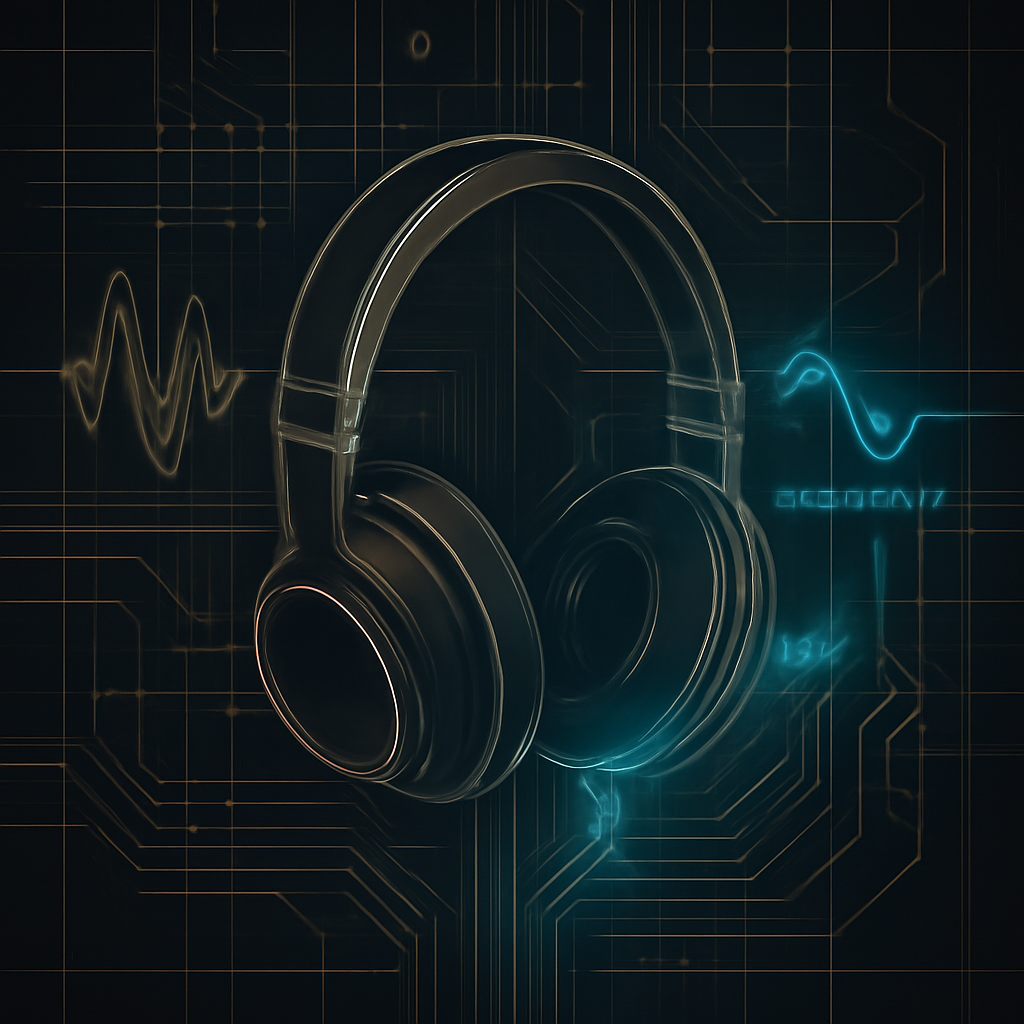
The Magic of Anti-Noise: How Headphones Silence the World
Imagine sitting on a noisy train. The engine rumbles. People talk. But when you slip on your headphones, the chaos vanishes. It feels like magic, but it is actually clever physics.
Traditional headphones just block sound physically, like putting your fingers in your ears. Active noise-cancelling headphones do something much wilder. They listen to the noise around you, create an exact opposite sound wave, and play it directly into your ears. When these two sounds meet, they smash into each other and disappear. You are left with pure, beautiful silence.
“Active noise-cancelling headphones do not actually block sound; they create more noise that perfectly fights and destroys the original noise.”
Reflect
If we can erase sound with more sound, could we eventually build silent zones in public parks or busy cities without using walls?
Research·2 sources·Established confidence·Investigated 4 Aug 2026(1 month ago)·Grounded; verification trace not recorded·Investigation may be outdated
Your next question, in
Visual Trail
See The Magic of Anti-Noise: How Headphones Silence the World
A guided visual explanation assembled from QE artwork and sourced documentary images.
01 / 05
QE visual interpretation
Frame 01
The Magic of Anti-Noise: How Headphones Silence the World
They use tiny microphones to listen to noise, then instantly make a 'mirror-image' sound that cancels it out.
Image provenance and limitation
Source: AI-generated visual interpretation
Creator: Question Everything
Limitation: This image explains or evokes the subject. It is not documentary evidence and should not be used to verify a factual claim.
Evidence
What do we know?
Verified claims with confidence scoring and cited sources.
1 of 3 findings need extra caution. Finding 1 rests on weaker sourcing than the other findings.
Living footnotes
Claims remain in the reading flow. Select a citation number to inspect the source behind it.
01
ObservationalNot confirmed
Active noise control works by creating a sound wave that is the exact opposite of the outside noise.
Think of sound as a wave with high and low points. When an outside noise wave goes up, the headphone speaker plays a wave that goes down. These two waves are 'out of phase'. They collide and flatten each other out. This turns the sound wave back into flat, quiet air.
02
HistoricalSupported
Active noise cancellation is much better at wiping out low-frequency rumbles than high-frequency sounds.
Low noises, like a plane engine or a train track, have long, steady waves. This gives the headphone chip enough time to copy and reverse them. Quick, sharp noises, like a baby crying or a dog barking, change too fast for the technology to keep up.
03
ObservationalSupported
Some advanced headphones use microphones both outside and inside the ear cup to cancel noise.
This is called a hybrid system. An outer microphone catches the noise before it hits your ear. An inner microphone listens inside the ear cup to see what noise slipped through. The chip then cleans up any leftover sound, giving you a much deeper level of quiet.
The complete record below preserves every citation, confidence input and recorded limitation.
Read the full evidence record3 findings · citations · limitations
Evidence review3 findings2 openable sources
01
Finding 1 of 3ObservationalNeeds caution
0/0 verified
Active noise control works by creating a sound wave that is the exact opposite of the outside noise.
Think of sound as a wave with high and low points. When an outside noise wave goes up, the headphone speaker plays a wave that goes down. These two waves are 'out of phase'. They collide and flatten each other out. This turns the sound wave back into flat, quiet air.
Not confirmedmodel score 30%
Scored as if sourced, but every citation failed verification.
NO SURVIVING CITATION
›View sources and limits— limits
Supporting passage
Think of sound as a wave with high and low points. When an outside noise wave goes up, the headphone speaker plays a wave that goes down. These two waves are 'out of phase'. They collide and flatten each other out. This turns the sound wave back into flat, quiet air.
Citations (0 of 1 survived verification)
Nothing openable. Every citation was removed by provenance validation.
What limits this
All 1 citation on this claim failed verification and were removed. Nothing openable supports it.
02
Finding 2 of 3Historical
2024
1 dated source
Active noise cancellation is much better at wiping out low-frequency rumbles than high-frequency sounds.
Low noises, like a plane engine or a train track, have long, steady waves. This gives the headphone chip enough time to copy and reverse them. Quick, sharp noises, like a baby crying or a dog barking, change too fast for the technology to keep up.
Supportedmodel score 100%
One source, not peer-reviewed. Thinner than the score suggests.
REFERENCE
›View sources and limits— 1 citation, limits
Supporting passage
Low noises, like a plane engine or a train track, have long, steady waves. This gives the headphone chip enough time to copy and reverse them. Quick, sharp noises, like a baby crying or a dog barking, change too fast for the technology to keep up.
Rests on a single source. No independent corroboration.
No peer-reviewed source among the citations.
The generator scored this 100%, which would read as “Established”. Its citations reach only “Supported”, so that is what is shown.
03
Finding 3 of 3Observational
0/1 verified
Some advanced headphones use microphones both outside and inside the ear cup to cancel noise.
This is called a hybrid system. An outer microphone catches the noise before it hits your ear. An inner microphone listens inside the ear cup to see what noise slipped through. The chip then cleans up any leftover sound, giving you a much deeper level of quiet.
Supportedmodel score 100%
One source, not peer-reviewed. Thinner than the score suggests.
REFERENCE
›View sources and limits— 1 citation, limits
Supporting passage
This is called a hybrid system. An outer microphone catches the noise before it hits your ear. An inner microphone listens inside the ear cup to see what noise slipped through. The chip then cleans up any leftover sound, giving you a much deeper level of quiet.
Rests on a single source. No independent corroboration.
No peer-reviewed source among the citations.
The generator scored this 100%, which would read as “Established”. Its citations reach only “Supported”, so that is what is shown.
Interactive Exploration
Touch, drag, and discover
These visualizations respond to your curiosity. Interact to go deeper.
process flow
How Noise is Erased in Milliseconds
The Noise Arrives
Microphones Listen
The Chip Flips the Wave
The Speaker Plays the Counter-Wave
Sound Collides and Vanishes
comparison table
Active vs. Passive Noise Control
Active Noise Cancellation (ANC)
Passive Noise Isolation
How it works
Uses electronics to create a counter-wave
Uses thick foam or rubber to physically block sound
Best for
Low, steady rumbles (plane engines, hums)
High, sudden sounds (voices, dog barks)
Power needed
Yes, requires battery power
No, works without batteries
Tap any row to highlight and compare
Visual Gallery
Images & artifacts
Historical images, diagrams, and visual knowledge from Wikimedia Commons.
Perspectives
How is this interpreted?
Enter a viewpoint. Notice what it reveals, what it leaves out, and whether it changes the question for you.
The EmpiricistScientific viewpointEstablished lens
From a physics standpoint, we are manipulating air pressure. Sound is just air pushing against your eardrum. By playing an opposite sound, we stop the air from moving. It is a pure application of wave interference to control our local environment.
What this lens notices
01Sound travels in physical waves of pressure.
02Opposite waves cancel each other out physically.
03This is called destructive interference.
Application
Why does this matter to you?
Personal reflections and applications for your life.
Thought experimentBehavioural
Do you use noise-cancelling to escape or to focus?
Why it changes the question
Using these headphones can lower your stress on noisy commutes. However, relying on them too much might make your ears more sensitive to normal daily sounds.
Try this
Try taking a 15-minute 'silent walk' without any headphones to practice listening to the world around you.
Media
QE Smart Glass
Curated media selected for this investigation.
QE Glass
YOUTUBE
The surprising science behind your noise cancelling headphones - BBC
BBC
So it makes sense, but it also doesn't. #SecretGeniusOfModernLife Subscribe and to the BBC ...
QE Glass
YOUTUBE
How Noise-Canceling Headphones Create Silence in Microseconds | WSJ Tech Behind
The Wall Street Journal
Noise canceling is a hallmark feature of top headphones across brands, from Apple AirPods Pro and Beats earbuds to Sony and ...
QE Glass
YOUTUBE
Here's a quick explainer of how ANC, or active noise cancellation, works. #audio #technology
The Verge
Active noise cancellation, or ANC, has come a long way since Bose launched the first consumer noise-canceling headphones ...
QE Glass
YOUTUBE
How Does Noise-Cancelling Technology Work in Headphones?
History of Simple Things
Ever wonder how noise-cancelling headphones work their magic? In this video, we break down the science behind ...
QE Glass
YOUTUBE
Sony WH-1000XM6 Review: Back on the Throne!
Marques Brownlee
Sony's new noise cancelling headphones are long-awaited and awesome. When you make the best product in the category, you ...
QE Glass
YOUTUBE
How Noise-Canceling Headphones Work
Insider Tech
Noise-cancelling headphones have become pretty popular over the last decade or so — here's how they work. The concept ...
QE Glass
YOUTUBE
The Surprising Science Behind Noise Cancelling Headphones | The Secret Genius of Modern Life - BBC
BBC
So it makes sense, but it also doesn't #SecretGenius #iPlayer Subscribe and to the BBC https://bit.ly/BBCYouTubeSub ...
QE Glass
PODCAST
Twenty Thousand Hertz - Noise Cancelling
Twenty Thousand Hertz
An incredibly well-produced podcast episode diving into the history and sound design of active noise cancelling technology.
Connected context
Connected entities
The people, places, concepts, and events that matter here.
Keep Going
Where this leads
Questions this investigation opens up — and what QE has already looked into.
No AI help here — no suggestions, no autocomplete, nothing finishing your sentences. That is deliberate. Working out what you think is effortful, and the effort is the part that changes you: reasoning is trained like a muscle, and a muscle that is always carried gets weaker. Let something else do the thinking and you keep the answer but lose the capacity to have reached it.
Write your current position.
Not what the page says. What you think, having read it.0 words · Nothing written yet.
Sign in to leave a mark. Your draft is saved here in the meantime.